REVIEW · BAYEUX
Private guided Allied D-Day Tour from Bayeux
Book on Viator →Operated by Allied Victory Tours · Bookable on Viator
D-Day in one guided, human-sized day. This private Allied D-Day tour from Bayeux strings together the invasion’s key landing sectors and memorial stops, so the day feels connected instead of scattered. Private means you’re not sharing the experience with strangers and rushing to keep up.
I love two things most: the round-trip pickup around Bayeux plus a quiet, air-conditioned private vehicle, and the way the guide ties terrain to specific people. At stops like Ver-sur-Mer, you’ll hear about Stanley Hollis of the 6th Battalion, the Green Howards, and the story behind his Victoria Cross.
One consideration: time is tight. Most stops run about 30 to 60 minutes, so if you want long museum time or slow wandering, you’ll have to pace yourself (or plan a second day).
In This Review
- Key things to know before you go
- Why this Bayeux Allied D-Day route works so well
- Price for a small private group: what you’re really paying for
- Starting in Bayeux: pickup that keeps your day from feeling like logistics
- How the day flows: Juno to Omaha in one continuous story
- Courseulles-sur-Mer: the Canadian Juno-sector story you can actually picture
- Ver-sur-Mer: British beach progress and the Victoria Cross of Stanley Hollis
- Vestiges du Port de Mulberry: the engineering fix Allies needed fast
- Bayeux War Cemetery: a calm pause before the cliffs and the beach
- Pointe du Hoc: US Rangers on 100ft cliffs and into preserved German bunkers
- Omaha Beach: why Saving Private Ryan still works as a visual guide
- Cimetiere Americain de Colleville-sur-Mer: 170 acres of names and the flags coming down
- What the guide experience adds (and why people remember Mike)
- Pacing, comfort, and who should book this private day
- Should you book this private Allied D-Day tour from Bayeux?
- FAQ
- How many people are in the private group?
- Where do you get picked up in Bayeux?
- What time does the tour start, and how long is it?
- Is the tour available in English?
- Are admissions and fees included?
- Is lunch included?
- Is this tour suitable for children?
- Are service animals allowed?
- What is the cancellation policy?
Key things to know before you go
- Private group up to 8 with your own guide, so questions don’t feel awkward and the pace can bend to you.
- Bayeux pickup included from hotels, B&Bs, guest houses, gîtes, and Airbnb-style stays in town.
- A full day across major sectors from the Canadian landing area to Pointe du Hoc and on to Omaha Beach.
- No lunch included, so you’ll want to plan food timing around the route.
- Short visits at many sites (30–60 minutes each) means you’ll see a lot, but you won’t linger.
- Stays reflective by design, with both Bayeux War Cemetery and the American Cemetery built into the emotional arc.
Why this Bayeux Allied D-Day route works so well
If you’ve ever tried to do D-Day sites on your own, you know the problem. You can reach the place, but the story doesn’t always click. This kind of private guided route is built to fix that.
The big win here is flow. You start on the coastal sectors tied to the Canadian and British landings, then move to the engineering remains of the Mulberry harbour, and finish with the US story at Omaha Beach and the American Cemetery. In one day, you get the invasion as a chain of connected actions, not seven disconnected photo stops.
And because it’s private (up to 8 people), you can actually ask the question that pops up mid-drive: Why was that defence placed there? What changed after the first hours? What did success look like at that beach? The day is structured, but it isn’t rigid.
You can also read our reviews of more guided tours in Bayeux

Price for a small private group: what you’re really paying for
The price is $1,051.28 per group (up to 8), for an 8 to 9 hour day with private vehicle transport and a guide.
Here’s the value math that matters: at full capacity (8 people), you’re effectively at about $131 per person for private, round-trip transport from Bayeux plus guided interpretation across multiple D-Day sites. If you’re traveling as a couple or solo, the per-person cost climbs, but you still get something you can’t buy cheaply by yourself: someone who can translate what you’re seeing into what it meant on June 6, 1944 and after.
Also note what’s included and what isn’t. All fees and taxes are included, and the listed sites have admission ticket free time built in. Optional museum tickets are separate, and lunch isn’t included, so you’re not forced into a set meal stop that may not fit your style.
Starting in Bayeux: pickup that keeps your day from feeling like logistics
This tour starts at 8:30 am and ends back at the meeting point. Pickup is offered from all hotels, B&Bs, guest houses, gîtes, and Airbnb stays in Bayeux. If you’re outside the exact area, other pickup spots in or near Bayeux can be arranged.
This matters more than it sounds. Normandy roads can be straightforward, but parking near the big sites can steal time you’d rather spend reading the terrain and hearing the story. Having a private vehicle lined up lets you stay on schedule and show up at each stop ready to listen.
It’s also a good fit if you don’t want to think about public transit connections. The tour is described as being near public transportation, but for a day packed with sites, private transport is the comfort win.
How the day flows: Juno to Omaha in one continuous story
The itinerary is designed like a guided “route of decisions.” You won’t just stand at random points. Each stop connects to a tactical theme:
- Canadian landing preparation and the reality of strong coastal defences
- British sector progress from an exposed beach
- The engineering answer to a massive logistics problem: Mulberry
- Two cemetery stops that bring names and scale into focus
- The US Rangers at Pointe du Hoc
- Omaha’s high-casualty landing story
The timing is intentionally compact. You get about 45 minutes at the first two landing-sector stops, 30 minutes for Mulberry remains and Bayeux War Cemetery, 1 hour at Pointe du Hoc, 45 minutes at Omaha Beach, and 1 hour at the American Cemetery.
That schedule is a trade: you’ll cover more ground than most self-guided days, but you won’t treat any one site as a half-day project.
Courseulles-sur-Mer: the Canadian Juno-sector story you can actually picture
Your first stop is Courseulles-sur-Mer, on the western flank of the Juno sector. This is where Canadian forces landed on D-Day.
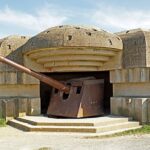
What makes this stop meaningful is the focus on planning and preparation by the Canadian 3rd Infantry Division, especially how they were set to land elements of the Canadian Scottish and Royal Winnipeg Rifles against one of the best prepared German coastal defence areas in the region.
In plain terms: you’re not only seeing coastline. You’re learning what it looked like from the attackers’ side—how they expected the fight to unfold, and why that mattered.
Time on site is about 45 minutes and the admission is ticket free. Drawback? If you’re hoping for a long, museum-style experience before you move on, this start is interpretive and visual. You’ll likely want to save extra museum time for later if that’s your thing.
You can also read our reviews of more private tours in Bayeux


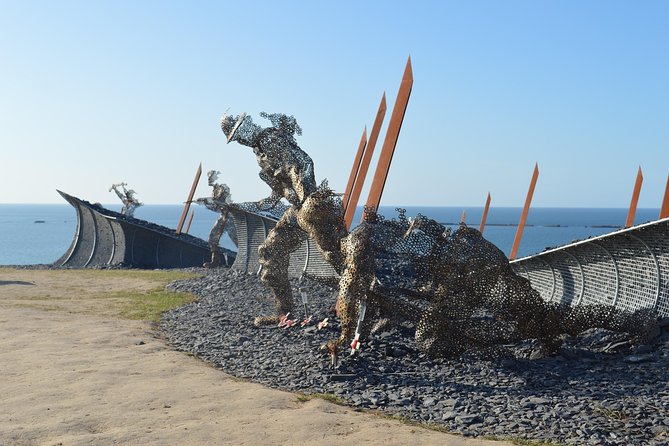
Ver-sur-Mer: British beach progress and the Victoria Cross of Stanley Hollis
Next up is Ver-sur-Mer, a British landing sector. Here the story centers on how the men of the 50th Infantry Division were able to break through from an open and exposed beach.
The highlight is the personal anchor: Company Sergeant Major Stanley Hollis of the 6th Battalion, the Green Howards. The tour connects his actions on D-Day to his receiving the only Victoria Cross connected with this landing sector.
This is the kind of stop that changes how you look at terrain. An exposed beach isn’t just a view—it’s a problem. Wind, sight lines, and enemy positions all affect how long it takes to move from water to cover. When you hear one named person’s path through that problem, it turns the coastline into a sequence of choices.
Like the first stop, you get about 45 minutes, with ticket free entry listed. Good shoes help here; you’ll be moving around outdoors.
Vestiges du Port de Mulberry: the engineering fix Allies needed fast
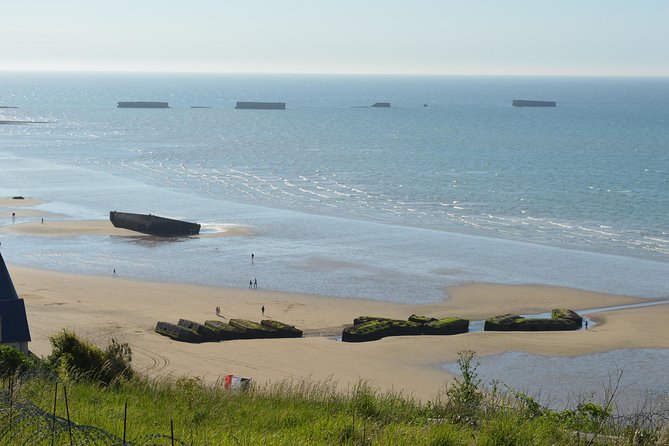
Then you shift from landings to logistics at Vestiges du Port de Mulberry. This is where you can see remains of the artificial harbour the Allies built—known as Mulberry.
This invention mattered because it became the most important Allied port in North-West Europe until December 1944. That’s a huge timeline detail. Many people think about the first day only, but Mulberry is part of why the invasion could keep growing after the beachhead.
The stop is about 30 minutes and marked as ticket free. You’ll get enough time to understand the idea and notice what’s left, but don’t expect a long, hands-on engineering interpretation. If you love military engineering, you’ll probably want to ask questions on the move between stops.
Bayeux War Cemetery: a calm pause before the cliffs and the beach
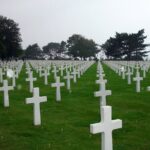
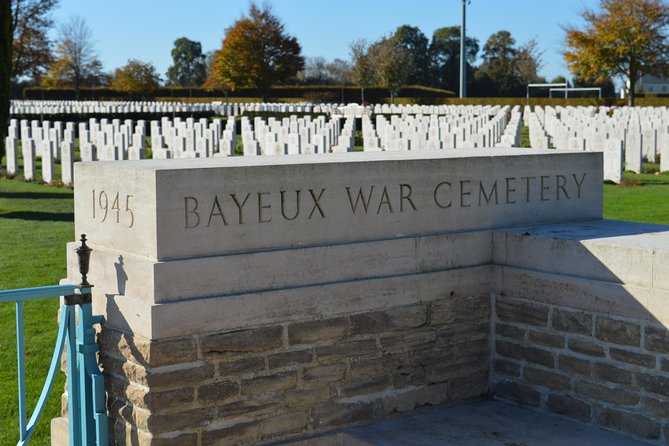
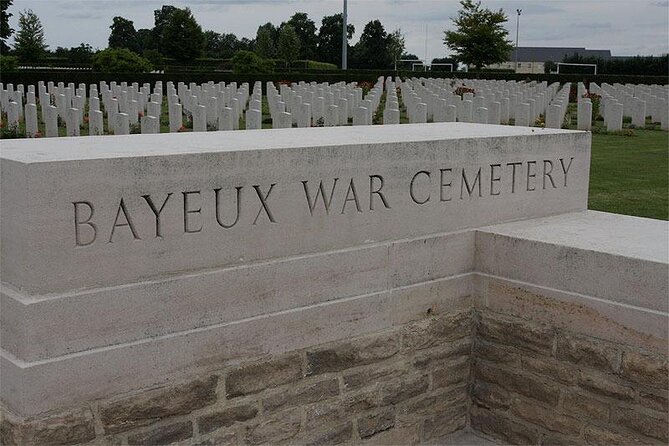
Next is Bayeux War Cemetery. It’s a reflective stop, and the numbers give it weight: 6452 soldiers of various nationalities, including German, with final resting and memorial grounds in the same place.
You get about 30 minutes. That’s a deliberate reset. After the coastal and tactical stories, this cemetery gives you a different kind of understanding: not strategy, but cost.
Practical note: plan for quiet time. This is one of the few stops where you’ll likely want your phone away for a few minutes.
Pointe du Hoc: US Rangers on 100ft cliffs and into preserved German bunkers
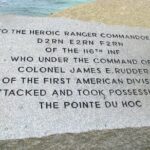
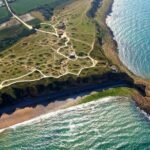
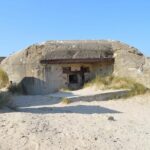
At Pointe du Hoc, you’ll face the story from the US perspective. The Germans had a long-range gun battery on top of 100ft-high cliffs, and US Army Rangers were tasked with assaulting the position, scaling the cliffs, and destroying the guns.
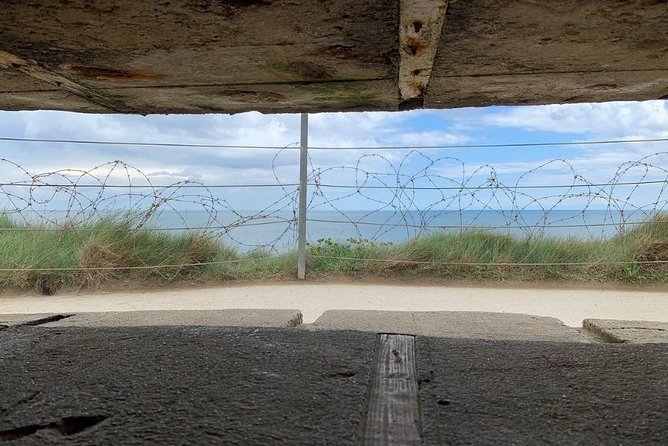
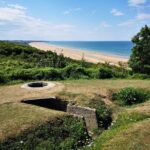
This stop is preserved as a battlefield, and you can go into the German bunkers and see hundreds of bomb craters, plus the cliffs the Rangers scaled.
Time here is about 1 hour and marked ticket free. The payoff is that this isn’t only a view from a distance. It’s a place that makes the mission feel physical—craters underfoot and bunkers you can’t pretend you’ve just read about.
Consideration: because of the terrain and bunker access, comfortable footwear matters. Also, if you’re traveling with limited mobility, this cliff-top setting may be harder to enjoy.
Omaha Beach: why Saving Private Ryan still works as a visual guide
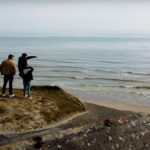
Then comes Omaha Beach, the second American sector. The tour visits a part of the beach tied to the opening scenes of the film Saving Private Ryan. You’ll hear about the units involved, what could and did go wrong, and how initiative, determination, and leadership helped make success possible.
Time here is about 45 minutes, ticket free. This isn’t a long beach walk tour. It’s focused interpretation: you’re shown the places where stories happened, then given the context to understand why the story was so difficult.
If you’re a film-watcher, you’ll probably appreciate how a famous scene can help your brain orient quickly. Just don’t confuse visual memory with history; the guide’s job here is to separate what you remember from what the record means.
Cimetiere Americain de Colleville-sur-Mer: 170 acres of names and the flags coming down
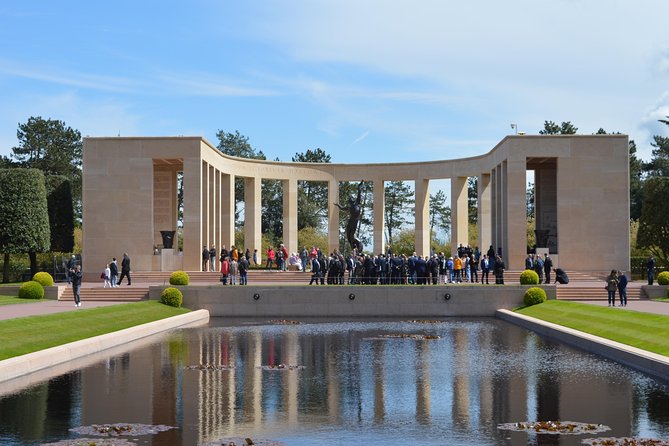
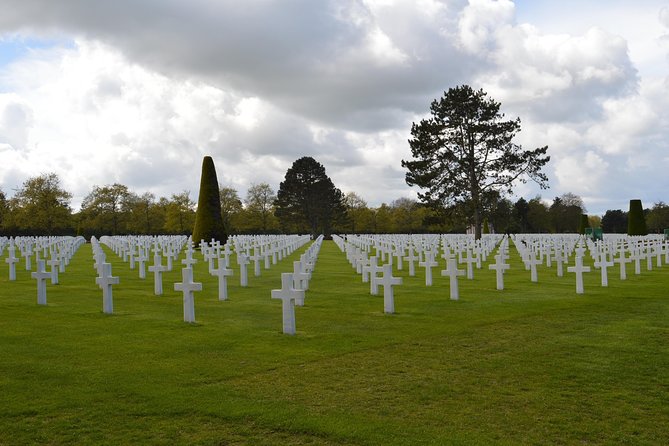
The final major stop is the Cimetiere Americain de Colleville-sur-Mer, also known as the American Cemetery overlooking the eastern side of Omaha Beach.
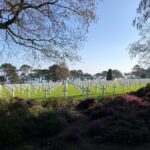
This cemetery holds final resting places for 9380 American servicemen and women from the Normandy campaign. It covers more than 170 acres and is maintained by the American Battle Monuments Commission.
You get about 1 hour. This is your emotional capstone: you’ll have a chance to pay respects, and you can witness the lowering of the flags.
That detail changes how the day lands. The lowering of flags is brief, but it makes the scale feel real. It’s also a moment where a good guide does something subtle: they keep the story human without making it theatrical.
If you have a specific family connection, ask your guide early if there’s time to find meaningful areas on site. This route aims to bring you there with enough room to be present, not frantic.
What the guide experience adds (and why people remember Mike)
This kind of tour lives or dies on the guide. In this case, the experience is built around storytelling tied to specific sites, not vague summaries.
In many bookings with Allied Victory Tours, the guide has been Mike, and the themes that come up again and again are:
- Deep command of the events and terrain
- Stories that follow individuals and the days after D-Day, not only June 6
- A sense of humor that keeps the day from becoming one long solemn lecture
- Flexibility to adjust the route to what your group wants to focus on
A good example of how this changes the experience: if you’re the type who asks, then asks again, you’ll likely appreciate that the guide can handle both the high-detail and the casual learner. Some groups even include people who are basically D-Day geeks, and the guide still keeps things readable for everyone.
Also, this provider has a bigger “Normandy world” than just a single day tour. Based on information shared by guests, Mike and his wife run an on-theme B&B with 1930s/40s touches and a WWII-focused onsite museum connected to women’s stories from the era. If you’re staying several days, it can turn your trip from one guided drive into a full immersion of sorts, without you having to do all the planning yourself.
Pacing, comfort, and who should book this private day
This tour is best for people who want:
- A high-yield day that hits multiple Normandy D-Day landmarks
- A guide to explain what you’re seeing in the moment
- A route that mixes tactical sites with cemetery reflection
It’s less ideal if:
- You want long museum time or lots of wandering with no schedule pressure
- You’re traveling with kids under 8 (this tour is stated as not suitable for children under that age)
- You prefer fully independent exploration with your own pace
Comfort-wise, plan for a full day in the car and outdoors. The tour includes an air-conditioned vehicle, which is a genuine quality-of-life upgrade in Normandy weather shifts.
One more practical note: the tour is listed as service animals allowed. If you rely on one, that’s an important checkbox.
Should you book this private Allied D-Day tour from Bayeux?
I’d book it if you want an organized, private D-Day day that connects the dots. You’re getting transport, a guide, and several key sites in one route, including both the landings and the cemetery reflection. The structure works because it keeps you from doing the hardest part yourself: figuring out what each place means.
Skip it or consider a longer plan if you know you’ll want extra museum time or you travel slowly. The stop lengths are short by design, so it’s a “see a lot and learn it well” day, not a “camp out at one location” day.
If you’re torn between doing this and trying to self-drive, remember this: D-Day sites are easier to understand with a guide who can point out what to notice and tell you what mattered. For a one-day Normandy hit from Bayeux, this private format is one of the most efficient ways to do that.
FAQ
How many people are in the private group?
The tour is private for your group and is listed as up to 8 people.
Where do you get picked up in Bayeux?
Pickup is offered from hotels, B&Bs, guest houses, gîtes, and Airbnb stays in Bayeux. Other pickup locations in or near Bayeux can be arranged.
What time does the tour start, and how long is it?
Start time is 8:30 am. The duration is listed as about 8 to 9 hours.
Is the tour available in English?
Yes. The tour is offered in English.
Are admissions and fees included?
The tour includes all fees and taxes, and the listed stops have admission ticket free time. Optional museum entry tickets are not included.
Is lunch included?
No. Lunch is not included.
Is this tour suitable for children?
It is not suitable for children under the age of 8.
Are service animals allowed?
Yes, service animals are allowed.
What is the cancellation policy?
You can cancel for a full refund up to 24 hours in advance of the experience’s start time. If you cancel less than 24 hours before, the amount paid is not refunded.