REVIEW · BAYEUX
Bayeux Full Day Sidecar Tour: Omaha, Arromanches & Pointe du Hoc
Book on Viator →Operated by Normandy Time Riders, D-Day Sidecar Tours · Bookable on Viator
The most memorable part of this private Normandy sidecar tour is the way it links major D-Day sites with the small roads between them. You move from the cliffs at Pointe du Hoc to quiet Port-en-Bessin, then pause at a Norman cider farm, seeing both the war story and the countryside around it.
I like the back-road routing, which can help you avoid traffic, and I like the personal scale. One or two people share one sidecar, while three or four use two sidecars. The main trade-off is the price: at $399 per person, this is a special-occasion tour rather than a budget way to see the beaches.
In This Review
- Key points at a glance
- Why a sidecar changes the Normandy day
- Arromanches and the Mulberry harbor
- Port-en-Bessin, a quiet harbor with a wartime role
- Longues-sur-Mer and the German coastal guns
- Omaha Beach, where the scale of the battle sinks in
- The American Cemetery at Colleville-sur-Mer
- Pointe du Hoc and the Ranger assault
- A taste of Normandy at Ferme de la Sapiniere
- The ride through Bayeux and the Norman countryside
- Is $399 per person fair value?
- Who should book this sidecar tour?
- My call: book it for the route and the personal scale
- FAQ
- Where does the Bayeux sidecar tour begin?
- Where does the tour finish?
- How long does the tour last?
- Is the tour private?
- How many passengers share a sidecar?
- Is the tour offered in English?
- Is cider tasting included?
Key points at a glance
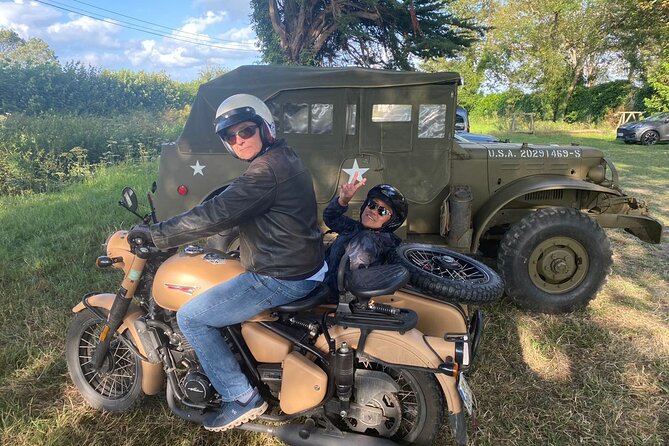
- One private sidecar per two passengers: You get a small-group ride rather than a large coach.
- The major American D-Day sites are included: Omaha Beach, the American Cemetery, and Pointe du Hoc receive the most time.
- Arromanches and Longues-sur-Mer add British and German perspectives: The route goes beyond the usual Omaha Beach circuit.
- Back roads show Normandy between the battle sites: The ride itself is part of the experience.
- Cider tasting is optional: You can sample Normandy’s apple-based tradition without making it the center of the day.
- English-speaking guides include Manuel and Thierry: The tour is designed for explanation as well as transport.
Why a sidecar changes the Normandy day
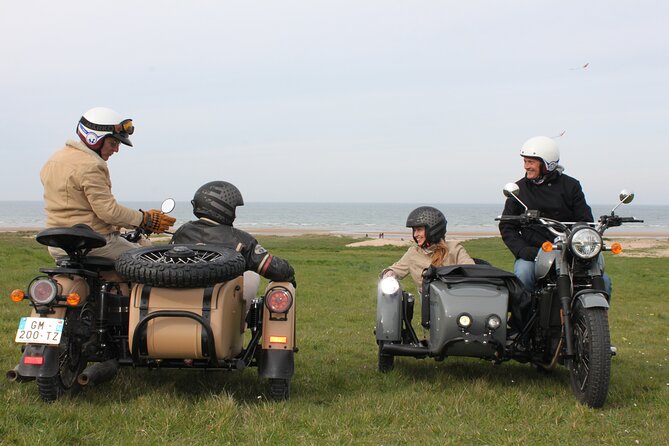
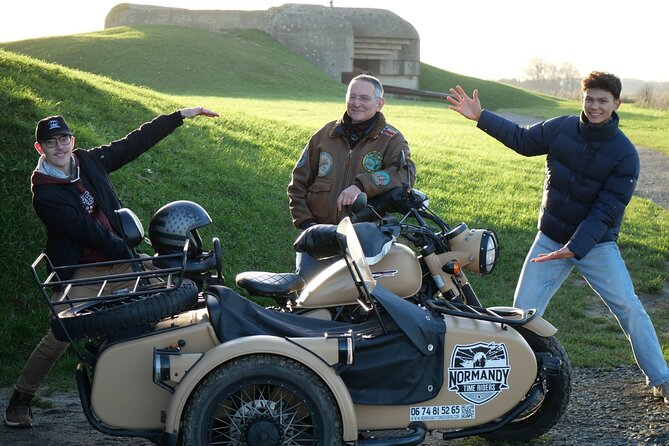
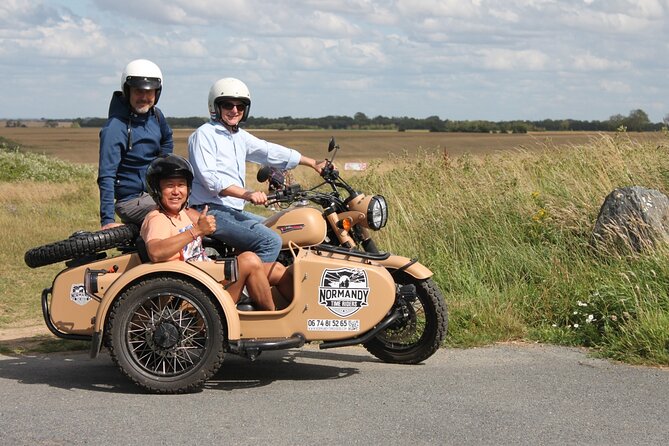
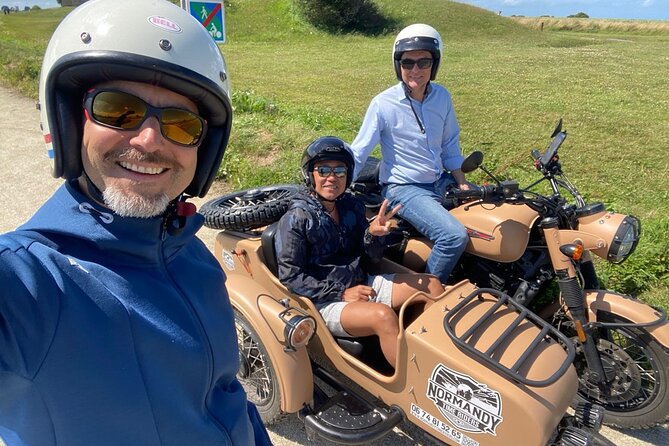
Most Normandy beach tours are built around a van or minibus. This one puts you in an open-air sidecar, with one guide for every one or two passengers. That changes the rhythm. You are not simply being delivered to monuments. You are moving through the lanes, villages, and open countryside that connect them.
The private format matters. Your group is the only group on the activity, so the day does not have to follow the needs of forty people. You can listen closely, take in the views, and ask questions as the route unfolds. The guides named for this experience, Manuel and Thierry, bring a personal touch, with Manuel described as attentive to passenger needs and Thierry noted for using less direct roads to avoid traffic.
There is also a practical side to the sidecar. It gives you a clear view as you ride, but it is more exposed than a car. The tour requires good weather, and poor conditions can lead to a changed date or a full refund. Pack layers and treat the forecast seriously. Normandy can feel very different from one hour to the next.
The starting point is beside the Bayeux Tourist Office on Rue Saint-Jean. The full day runs about six to seven hours and returns to the same meeting point. That makes it easy to pair with a Bayeux hotel or a day when you want to keep your evening free.
A few more Bayeux tours and experiences worth a look
Arromanches and the Mulberry harbor
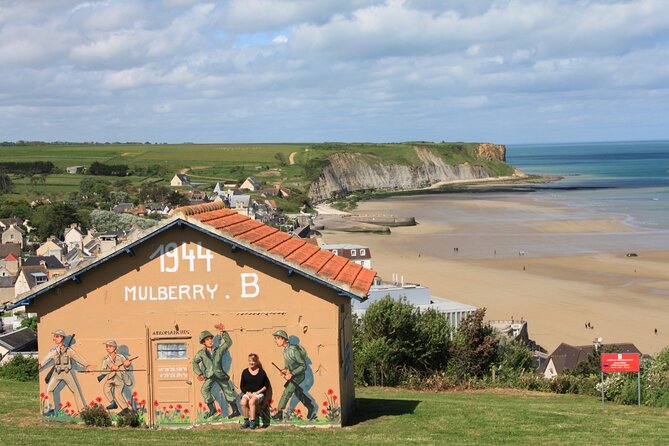
Your first major stop is Arromanches-les-Bains, where you spend about 50 minutes. The town is linked to the Mulberry A artificial harbor, a huge wartime engineering project used to bring supplies ashore after the invasion.
This stop gives you a useful reminder: D-Day was not only about troops reaching the beach. Once the landing began, the Allies needed fuel, vehicles, food, weapons, and medical supplies. Artificial harbors helped turn a beachhead into a functioning supply route.
The sidecar format works well here because the stop is short but important. You have enough time to understand the purpose of the harbor and look out across the water without turning the visit into a long museum session. If you want a full museum visit, ask how that would affect the timing, since the listed stop is about 50 minutes.
Arromanches also gives the day a different mood from Omaha. The remains connected with the harbor point to logistics and engineering, while later stops focus more directly on combat and sacrifice. That range makes the route stronger than a simple beach checklist.
Port-en-Bessin, a quiet harbor with a wartime role
The next stop is Port-en-Bessin-Huppain, with about 30 minutes in the fishing port. Today, the setting is calm and picturesque. During the Normandy landings, it served as an important logistics hub for Allied forces.
I like this kind of stop because it connects military events to an ordinary working place. Ports are easy to understand as places of movement: supplies arrive, equipment is unloaded, and people try to keep an operation running. Your guide explains how the harbor fit into the invasion and how soldiers worked to secure it.
Do not expect a long independent visit here. Thirty minutes is enough for a look and a focused explanation, but not enough for an extended meal or a slow exploration of every quay. The value lies in the story and the contrast between the port’s peaceful appearance and its wartime purpose.
Longues-sur-Mer and the German coastal guns
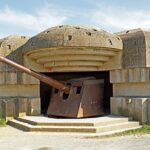
At Longues-sur-Mer, you spend about 40 minutes at a well-preserved German coastal battery. Four concrete casemates face the English Channel, part of the Atlantic Wall defenses built to protect the coast from an Allied attack.
This is one of the best stops for understanding the physical shape of the defenses. At Omaha, you picture soldiers coming ashore. At Longues-sur-Mer, you see the fixed artillery positions that made the approach so dangerous. The bunkers and gun emplacements are large, stark, and easy to read without much imagination.
The site also gives you broad views toward the sea and surrounding fields. That setting helps explain why the position mattered. You can see how a coastal battery could watch the water and threaten ships or landing areas.
Fortifications can blur together after several days in Normandy, but this stop earns its place because it presents the German side of the battle. The tour is not only a march through American memory sites. It also shows the defensive system the Allies had to overcome.
Omaha Beach, where the scale of the battle sinks in
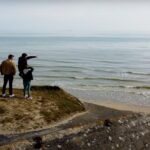
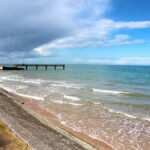
The stop at Omaha Beach lasts about 30 minutes. That may sound brief, but a short pause on the sand can be powerful. The beach is broad and open, and its peaceful appearance makes the events of June 6, 1944 difficult to reconcile with the terrain in front of you.
American troops landed here as part of Operation Overlord under heavy fire. Obstacles, German defenses, exposed approaches, and confusion made the first hours extremely costly. Your guide places the beach within that larger story, helping you see why this stretch of coast became one of the most difficult landing areas.
I would use this stop for reflection rather than trying to see everything. Walk a little, look back toward the cliffs, and listen. The tour does not charge an admission fee for the beach, and the point is the setting itself.
Thirty minutes is enough for orientation, but some people will wish for longer. If Omaha is the one place you most want to experience slowly, keep that in mind when comparing this tour with a longer van itinerary. The advantage here is that the day covers several major places without losing the personal feel of a private outing.

The American Cemetery at Colleville-sur-Mer
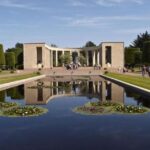
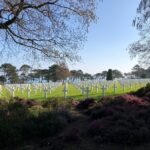
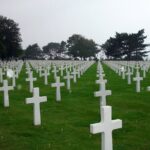
The American Cemetery receives about 50 minutes, giving it more breathing room than Omaha Beach. It sits above the coast at Colleville-sur-Mer, overlooking the beach where many of the buried soldiers landed.
The rows of white marble crosses and Stars of David create a quiet, ordered space. More than 9,000 Allied soldiers are buried here, while the memorial records the names of more than 1,500 missing soldiers. Those numbers are difficult to grasp until you see the cemetery’s size and repetition.
I find this stop important because it shifts the focus from military movement to human cost. The beaches explain what happened. The cemetery reminds you who paid for it. Give yourself time to walk quietly, even if your guide has finished the main explanation.
The site is free to enter according to the tour details, and the visit is included in the route. Since this is sacred ground, plan on a respectful pace. The open-air sidecar is useful for moving between sites, but the cemetery itself rewards slowing down.
Pointe du Hoc and the Ranger assault
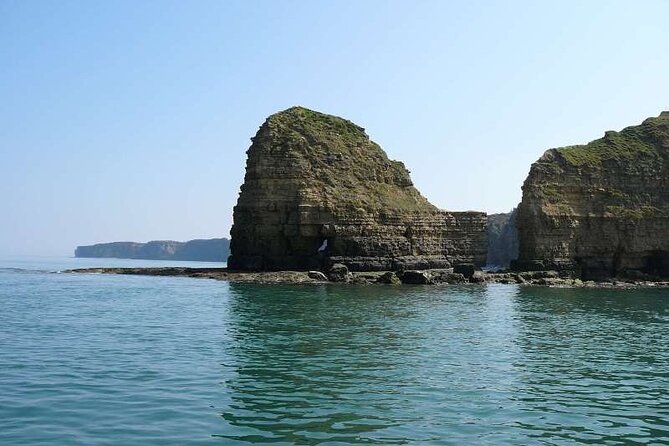
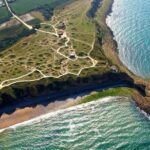
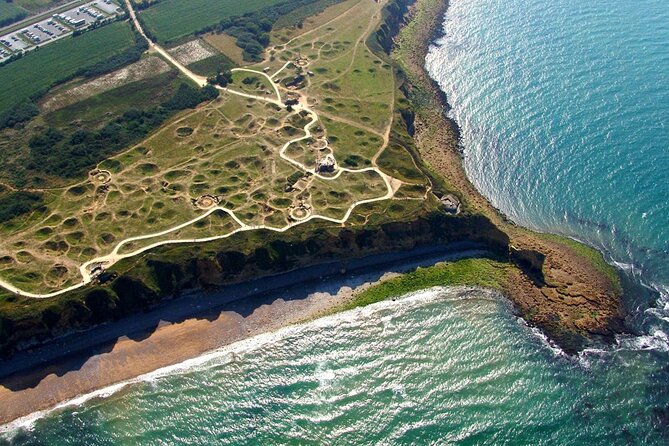
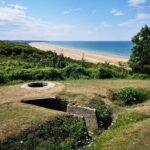
Pointe du Hoc is the longest major stop, at about one hour and 20 minutes. That extra time is well used. The clifftop area contains German bunkers, gun positions, and ground still marked by the violence of the assault.
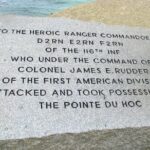
Before D-Day, German artillery at this point could threaten nearby landing areas, including Omaha and Utah Beaches. United States Army Rangers were assigned to scale the cliffs and silence the guns. They reached the top under fire, then had to hold the position through fierce fighting.
Here, you can walk among the fortifications rather than view them from a distance. The broken ground and concrete structures make the attack easier to picture than a simple spoken account can. The site asks you to pay attention to distance, height, and exposure.
Pointe du Hoc can also be physically demanding in a modest way. The tour data says most people can participate, but it does not promise a flat or effortless visit. Wear sensible shoes and allow yourself time around uneven wartime remains. The long stop means you are less rushed than at Omaha, but you should still expect an active visit.
A taste of Normandy at Ferme de la Sapiniere
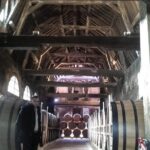
After the main D-Day sites, the tour turns to Ferme de la Sapiniere for about 40 minutes. Cider tasting is optional. That is useful for anyone who wants the regional food element without giving up a military history focus.
The farm has roots reaching back to the 16th century, and its cider is made from locally grown apples. The tasting offers a change of pace after the beaches, cemeteries, and bunkers. You get a glimpse of Normandy as an agricultural region, not only as a battlefield.
I would treat this as a pleasant extra rather than the reason to book the tour. If you enjoy local drinks, it adds flavor to the day. If you prefer to keep your attention on D-Day, you can skip the tasting and still receive the central experience.
The stop also helps prevent the day from becoming emotionally heavy from beginning to end. Normandy’s wartime sites deserve respect, but the region is a living place. Its farms, cider, ports, and towns are part of the full picture.
The ride through Bayeux and the Norman countryside
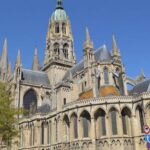
On the return to Bayeux, the route passes through the town for about 20 minutes. You may catch sight of Bayeux Cathedral, a medieval building dating from the 11th century, along with timber-framed streets.
This is not a substitute for a proper Bayeux walking tour. It is a closing glimpse, and you should plan a separate visit if you want to study the cathedral or explore the old center. Still, seeing the town at the end gives the day a satisfying geographic shape. You leave from Bayeux, cross the coast and inland roads, then return to the same historic town.
The back-road routing is one of the strongest practical features. Taking smaller roads can reduce time lost in traffic and show you more of the countryside. It also makes the transport feel less like a transfer between attractions. You are out in Normandy, not sealed inside a vehicle on a major road.
Is $399 per person fair value?
At $399 per person, the cost is high. You should compare it with what you are buying: a six to seven hour private tour, an English-speaking guide, transport between widely scattered sites, and the distinctive sidecar setup.
The price makes more sense for two people who want a private experience and do not want to share a large vehicle. It is less attractive for a solo visitor on a tight budget, especially since the listed price is per person. For three or four passengers, two sidecars are used, keeping the small-group format but increasing the total cost.
You also avoid the work of planning a route through Arromanches, Port-en-Bessin, Longues-sur-Mer, Omaha, Colleville-sur-Mer, Pointe du Hoc, and the cider farm. These places are spread across Normandy, and a self-drive day requires navigation, parking choices, timing, and a designated driver.
The value depends on your priorities. If you mainly want long stretches of free time at one or two sites, a slower private car tour may suit you better. If you want an unusual ride, direct explanation, and a broad route in one day, the sidecar can justify the premium.
Who should book this sidecar tour?
I would recommend it most strongly to couples, friends, or families of up to four who want a personal day and enjoy unusual transport. It also suits anyone who has already read about D-Day and wants to connect the facts to the actual places.
The tour is especially good for people who value a guide’s stories and local routing. Manuel and Thierry are named guides associated with the experience, and the tour’s strongest praise centers on attentive service, clear explanations, and the ability to cover many sites by using back roads.
You should think twice if you dislike open-air riding, need guaranteed shelter from changing weather, or want to spend half a day inside museums. The activity requires good weather, and the schedule gives each stop a set amount of time. It is a moving overview with meaningful pauses, not a slow academic tour.
Free cancellation is available if you cancel at least 24 hours before the start time. Changes made inside that window are not accepted, and poor weather may lead to another date or a full refund. That policy gives you some protection, but it does not remove the need to watch the forecast.
My call: book it for the route and the personal scale
Book this tour if you want to see the key American D-Day sites while also understanding the harbor, German defenses, fishing port, and Norman countryside around them. The sidecar makes the day memorable, and the private format keeps the experience focused on your group.
I would not book it simply because it is the fastest or cheapest way to see Normandy. It is neither. Book it because you want a guide-led day with character, open-air travel, back roads, and enough time at Pointe du Hoc and the American Cemetery to make those stops count.
For a first visit from Bayeux, the route is well chosen. Just bring layers, wear practical shoes, and decide in advance how much time you want to give the optional cider tasting.
FAQ
Where does the Bayeux sidecar tour begin?
The tour begins at the Bayeux Tourist Office on Rue Saint-Jean, 14400 Bayeux, France.
Where does the tour finish?
The activity ends back at the original meeting point in Bayeux.
How long does the tour last?
The tour lasts approximately six to seven hours.
Is the tour private?
Yes. Only your group participates in the activity.
How many passengers share a sidecar?
One or two passengers use one sidecar. Groups of three or four use two sidecars.
Is the tour offered in English?
Yes. The experience is offered in English.
Is cider tasting included?
Cider tasting at Ferme de la Sapiniere is optional.