REVIEW · BAYEUX
Omaha and Utah beaches
Book on Viator →Operated by OVERLORDTOUR · Bookable on Viator
Cold air hits, then history takes over.
This is a full-day, guided hit of Omaha and Utah beaches that keeps you moving without the stress of driving. I love that you get round-trip transport from central Bayeux and a guide who turns place names into a clear story. The main drawback to know up front: it is a long day, so if you hate early starts or lots of stops, plan for patience.
I especially liked how guides in this program bring the campaign to life with examples and visuals—one guide (Theo) was praised for using maps and photos to help it all click. Another guide (Adam) set a pace that felt right, with time to look, not just rush past. If you come expecting quiet beach vibes and minimal talking, you may find it more intense than you imagined.
In This Review
- Key highlights you’ll actually care about
- A one-van plan for Omaha and Utah without a rental car
- What you get for the money: transport, guiding, and free entry
- Longues-sur-Mer Battery: start where the coastline tells the first story
- Omaha Beach and the American Cemetery: the day’s emotional core
- Pointe du Hoc: when elevation turns into a story
- Sainte-Mère-Église and La Fière: towns that connect the battlefield to real life
- DeGlopper Action and Utah Beach: the route builds momentum
- Sainte-Marie-du-Mont and the medical stops: when the tour turns human
- Hiesville, General Taylor’s Headquarter and General Pratt Memorial: the leadership layer
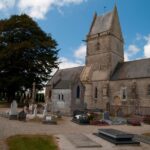
- Angoville au Plain: rural Normandy where the story lingers
- Pace, group size, and why the guide matters so much
- Who this tour is for (and who should think twice)
- Should you book Omaha and Utah beaches from Bayeux?
- FAQ
- What time does the tour start in Bayeux?
- How long is the Omaha and Utah beaches tour?
- How much does the tour cost?
- Is the tour offered in English?
- Is admission included for the stops?
- What’s included and what’s not included?
- What sites does the tour visit?
- How big is the group?
- Is the tour cancellable?
Key highlights you’ll actually care about
- Omaha + Utah in one day with a guide who connects the dots across sectors
- American Cemetery of Colleville and other major memorial stops that hit hard in person
- Pointe du Hoc plus Normandy towns and action points on the same route
- Small-group format (max 16) for better questions and less crowd chaos
- Comfort-focused logistics with a private vehicle run from Bayeux
A one-van plan for Omaha and Utah without a rental car
If you only have a day or two in Normandy, this kind of tour is a lifesaver. You start in Bayeux (Place du Québec) at 8:20 am and end back where you began, so you are not fighting parking lots, signage, or timing.
The route is built like a day-long storyline. You begin with German defenses and the lead-in sites, then you land at the American beaches, then you work your way through memorials, towns, medical stations, and command points. That flow matters, because it stops D-Day from feeling like a random list of stops.
And yes, it is a tour price that will make you pause—$183.81 per person. But for this part of France, you are paying for private transport and a guide who can explain what you are seeing in real time.
You can also read our reviews of more tours and experiences in Bayeux.
What you get for the money: transport, guiding, and free entry
Here is the value math as I see it. You are paying for:
- a driver/guide plus a local/professional guide setup
- transport by private vehicle (so you do not spend your day doing logistics)
- admission included for the stops that require it (the ticket is marked free)
What you do not get: food and drinks. That is normal for a day tour, but it changes how you should plan. If you want a low-stress day, bring snacks for the gaps and plan on buying lunch on your own when the route allows it.
Also, the group size caps at 16 travelers, which is one reason reviews repeatedly praise the pace. In a small group, you can usually hear the guide and still have moments to look around.
Longues-sur-Mer Battery: start where the coastline tells the first story
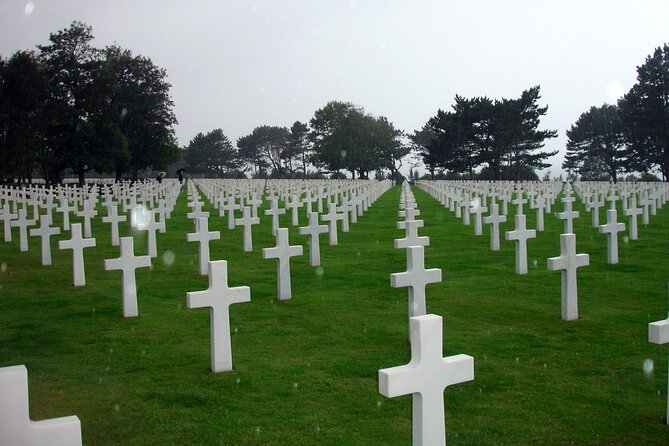
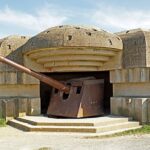
Most D-Day tours jump right to Omaha. This one starts earlier, with Longues-sur-Mer Battery, which gives you context before you walk onto the beaches.
This first stop sets your expectations: Normandy’s coastline was not just a shoreline. It was defended ground, with positions meant to delay and punish the landing forces. When you come in with that framing, Omaha and Utah do not feel like separate events. They start feeling like parts of one pressure campaign.
One practical tip: if you like photos, take a few early. Later in the day you will be focused, and the emotional weight of the memorial stops can make you stop thinking about pictures.
Omaha Beach and the American Cemetery: the day’s emotional core
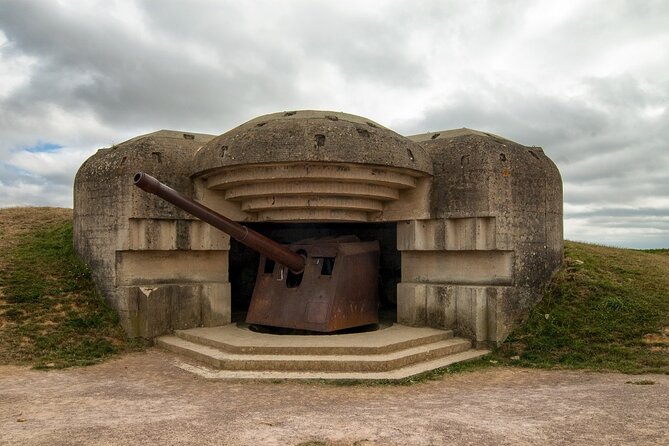
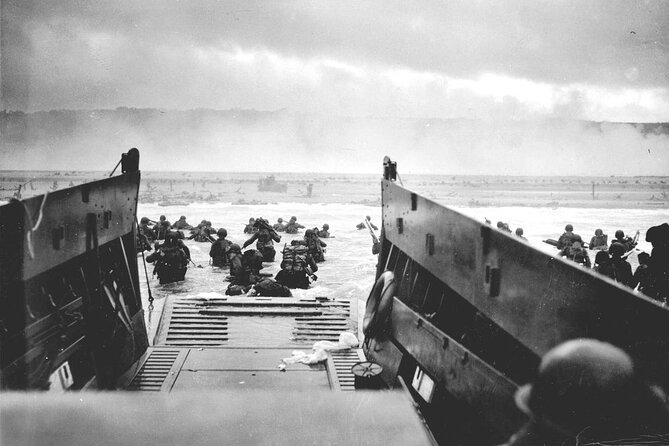
Then you hit Omaha Beach. The big value here is that a guide can help you map what you see to what happened—why certain areas mattered and how the fighting unfolded.
After that comes the American Cemetery of Colleville. This is the stop people talk about when they want you to understand what sacrifice means. The layout is designed for reflection, and it tends to slow everyone down—no matter how chatty the group was before.
If you are the type who needs a moment to process, schedule your head for it. Omaha plus the cemetery is not a quick “see and go” situation. It is the point in the day where your brain goes quiet.
Pointe du Hoc: when elevation turns into a story
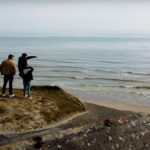
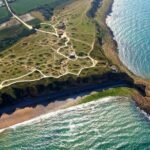
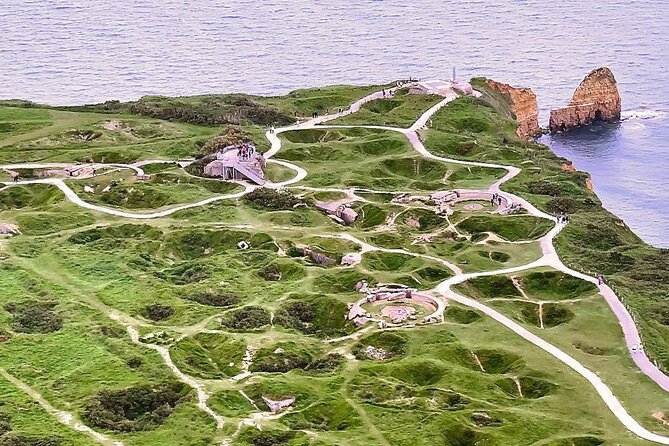
Next on the route is Pointe du Hoc. The name alone signals high ground and danger, and the main reason this stop works is that it keeps the story from becoming only about the shoreline.
Guides tend to focus on how terrain shaped the fight. You are also visiting a place where remnants and structures help the mind picture what troops faced. Even when you know the basics already, seeing it in person can make the scale feel real.
I recommend wearing shoes you trust. You will likely want to walk a bit around the viewpoints, and the air can turn slippery if it has been raining.

Sainte-Mère-Église and La Fière: towns that connect the battlefield to real life

From the beach zone, the tour moves into nearby sites, starting with Sainte-Mère-Église. This is one of those places where the war story is tied to a town you can still picture as a lived-in place.
Then you go to La Fière. The practical value here is continuity. You see how the action points connect to movement inland and to the broader aim of pushing the invasion forward.
If you tend to tune out during history lectures, towns like this are helpful. They give your eyes a place to rest while the guide explains why the location mattered.
DeGlopper Action and Utah Beach: the route builds momentum
The itinerary includes DeGlopper Action before reaching Utah Beach. Even if you have only heard a few D-Day names, adding these “action” sites helps the day feel less like the highlights reel and more like how the campaign actually progressed.
Then you arrive at Utah Beach. This stop balances Omaha. Where Omaha tends to feel overwhelming, Utah often lands as “here is another leg of the same plan,” and it clicks once you have the earlier context.
What I like about doing both beaches in one day is perspective. You start noticing patterns: what kinds of obstacles mattered, how landing zones differed, and why certain moments were make-or-break.
Sainte-Marie-du-Mont and the medical stops: when the tour turns human
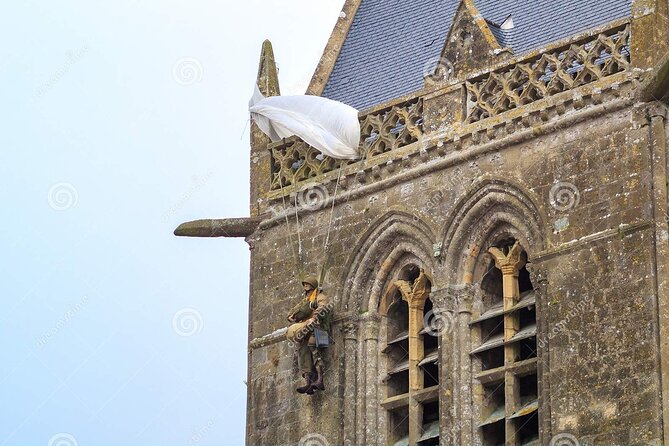
After Utah, the route includes Sainte Marie du Mont, then moves toward medical and support locations such as Holdy Battery and 1st Aid Station and La Colombière Hospital.
These parts of the day can be a gut punch in a different way. They shift attention from the “big moments” to what happens when people get hurt, when help is needed, and when survival depends on logistics you never see in movies.
If you are bringing a family or teens, this is where the story often becomes more relatable. The battlefield stops being abstract and becomes human needs: care, shelter, and time.
Hiesville, General Taylor’s Headquarter and General Pratt Memorial: the leadership layer
The tour also includes Hiesville, General Taylor’s Headquarter and General Pratt Memorial. This matters because it adds the command layer to what you see on the ground.
A lot of D-Day coverage focuses on troops and tactics. These stops help you understand that orders, planning, and coordination were part of the same struggle. Even if the sites are quiet, they help you picture the decisions behind the movement.
If you like history that feels grounded, these “named people, named locations” stops are a good match. They give your memory anchors.
Angoville au Plain: rural Normandy where the story lingers
Finally, the itinerary includes Angoville au Plain. This kind of stop is what makes the day feel more real than a checklist of famous sites.
Rural villages and fields are where people lived, worked, and endured. When the guide points out why a specific place matters, the countryside stops being just scenery. It becomes part of the map of the campaign.
And it is also a good reminder that this war did not only happen on beaches. It spread into towns, farms, and roads—everywhere armies needed to move and hide.
Pace, group size, and why the guide matters so much
The biggest theme in the experience is that the guide drives the day. Multiple guides get praised for passion, clarity, and a pace that feels neither rushed nor padded.
A small group helps with that. With up to 16 people, it is easier to ask questions and for the driver to keep things running smoothly. If you are the type who learns best by seeing the place and then hearing context, this format works well.
One more practical note: be ready for changing weather. Cold mornings and on-and-off rain are common in Normandy. If you want comfort, bring layers. You will spend time outside looking at viewpoints, and warmth can make the day feel better.
Who this tour is for (and who should think twice)
This is a strong choice if:
- you want to see Omaha and Utah in one day without dealing with driving yourself
- you like guided history that connects multiple sites into one story
- you want a smaller group and more time to reflect at key memorial places
It may not be ideal if:
- you prefer slow travel and long unstructured time in one place
- you get cranky when a day starts early and ends late
- you hate emotionally heavy stops and long walking moments
If you are traveling with limited time, this tour is one of the easiest ways to get your bearings fast and leave with a meaningful mental map of the landings.
Should you book Omaha and Utah beaches from Bayeux?
If you want value in the form of transport + guiding + a route that covers the campaign logic, I think you should book this. The price is not cheap, but a guided day that includes major memorials, beaches, and context across the front is hard to replicate on your own without spending time, energy, and money.
I would book it confidently if Omaha and Utah are on your must-see list and you want someone to explain what you are seeing beyond the basics. I would pause only if your ideal Normandy day is quiet, flexible, and light on crowds and talking.
If you want a D-Day day that feels structured, reflective, and deeply memorable, this is a solid bet.
FAQ
What time does the tour start in Bayeux?
The tour starts at 8:20 am at Place du Québec, 14400 Bayeux, France.
How long is the Omaha and Utah beaches tour?
It runs about 9 hours.
How much does the tour cost?
The price is $183.81 per person.
Is the tour offered in English?
Yes, it is offered in English.
Is admission included for the stops?
Admission is listed as free for the experience.
What’s included and what’s not included?
Included: a driver/guide, a local guide / professional guide, and transport by private vehicle. Not included: food and drinks (including lunch) and hotel pickup/drop-off.
What sites does the tour visit?
The route includes Longues-sur-Mer Battery, Omaha Beach, the American Cemetery of Colleville, Pointe du Hoc, Sainte Mère Eglise, La Fière, DeGlopper Action, Utah Beach, Sainte Marie du Mont, Holdy Battery and 1st Aid Station, La Colombière Hospital, Hiesville (General Taylor’s Headquarter), General Pratt Memorial, and Angoville au Plain.
How big is the group?
The maximum group size is 16 travelers.
Is the tour cancellable?
Yes. There is free cancellation if you cancel at least 24 hours before the experience’s start time for a full refund.