REVIEW · BAYEUX
Normandy American D-Day Experience – Group tour from Bayeux
Book on Viator →Operated by Bayeux Shuttle · Bookable on Viator
One day can hold a lot of Normandy. This American D-Day tour from Bayeux strings together Omaha Beach, Utah Beach, and key memorial stops with expert-style storytelling plus easy round-trip minivan transport. It’s a strong pick if you want the big-picture operation and the human details without spending your whole trip driving between sites.
I like that the pace is structured but not rushed-toward-random. You get short guide-led context at each stop, plus real time to stand where history happened. The main downside: it’s an 8.5-hour day with limited free time at each site, so if you want to linger for unit-by-unit details, you may feel the pinch.
In This Review
- Key highlights to know before you go
- Why Bayeux Works for an American D-Day Day
- Starting at 8:45: The Quiet Importance of Being Early
- Omaha Beach Morning: Beach Views Plus a Sand Walk
- Colleville American Cemetery: The Visit That Slows Your Breathing
- Pointe du Hoc: Rangers, Cliffs, and Why It Was So Hard
- Airborne Museum: The Ticket You’ll Appreciate During a Long Day
- Sainte-Mère-Eglise: The Village That Connects Drop Points to Roads
- The Bocage Drive: Hedgerows Explain the Fighting
- Utah Beach and the Monuments: From the 4th Infantry to the 101st
- The Pace on an 8.5-Hour Day: Structured, Not Relaxing
- Guides Make or Break It: The Storytelling Factor
- Value and Price: What $179.58 Buys You
- What to Bring for a Comfortable D-Day
- Who Should Book This Tour from Bayeux
- Should You Book This Normandy American D-Day Experience?
- FAQ
- Where does the tour start and end?
- What time does the tour start?
- How long is the tour?
- How many people are on the tour?
- What language is the tour in?
- What’s included in the price?
- Is lunch included?
- Do I need tickets for the other stops?
- What’s the policy on luggage?
- Does the tour run in bad weather?
Key highlights to know before you go
- Max 20 passengers means less crowd pressure and a better chance to hear the guide
- Omaha Beach includes a short sand walk (time depends on tides)
- Colleville American Cemetery gets its own focused visit with guided context and personal time
- Pointe du Hoc includes the Rangers’ cliff story, then time to explore on your own
- Airborne Museum admission is included, which saves time and money
- Utah Beach + Sainte-Mère-Eglise connect the airborne storyline to the landings below
Why Bayeux Works for an American D-Day Day
Bayeux is a smart base for this kind of tour because you skip the stress of lining up car rentals, parking, and figuring out the timing between distant sites. You start from central Bayeux at 8:45 am and end back at the same meeting point, so your day doesn’t turn into a logistics puzzle.
The other reason Bayeux feels good is emotional. You’re moving through Norman farmland, hedgerows, and quiet villages, but you’re not doing it with blank directions. A guide sets the stage early, then keeps adding context as you go, which makes each stop click into place.
You can also read our reviews of more tours and experiences in Bayeux.
Starting at 8:45: The Quiet Importance of Being Early
The departure point is Parking Québec-Orangerie, Pl. du Québec, 14400 Bayeux. The tour uses a clear rule: if you aren’t there by the advertised boarding time, the minivan leaves. That matters because missed tours are not a do-over, and there’s no time padding built into an 8.5-hour schedule.
Also plan for the van. It’s an air-conditioned minivan, with a small-group cap (up to about 20–21). There’s a luggage limit too: large items aren’t permitted, and only small carry-ons or overnight bags are accepted. If you’re traveling with extra gear, pack light for this day.
Omaha Beach Morning: Beach Views Plus a Sand Walk
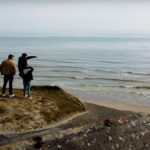
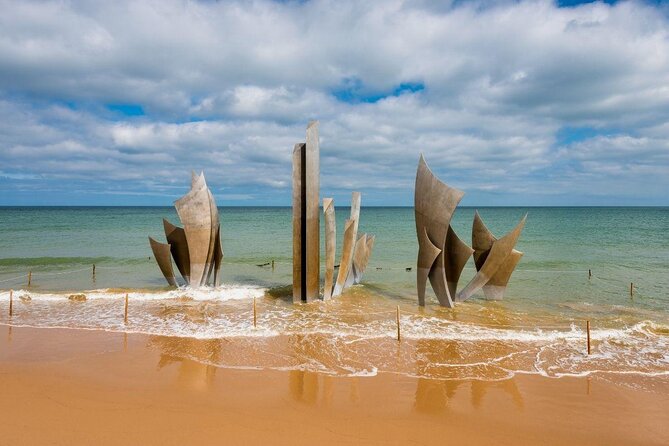
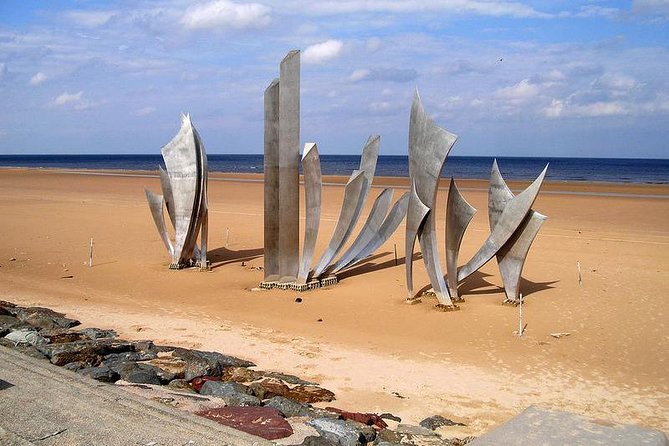
Omaha Beach is the emotional opening act. Early on, your guide gives you an overview of the June 6, 1944 landings, then you get around 15 minutes of free time on the sand. The important practical note is that this walk can depend on tidal conditions.
That’s actually a big part of why this tour works: you’re not only looking from afar. You’re standing where the shoreline meets the story, then you can absorb the details at your own speed for a short window. Even 15 minutes feels different than reading the maps.
One more thing I like here is the “guide first, wander second” method. You’re given the framework before you get free time, so your questions don’t come out of nowhere. You know what to look for when you’re on the beach.
Colleville American Cemetery: The Visit That Slows Your Breathing

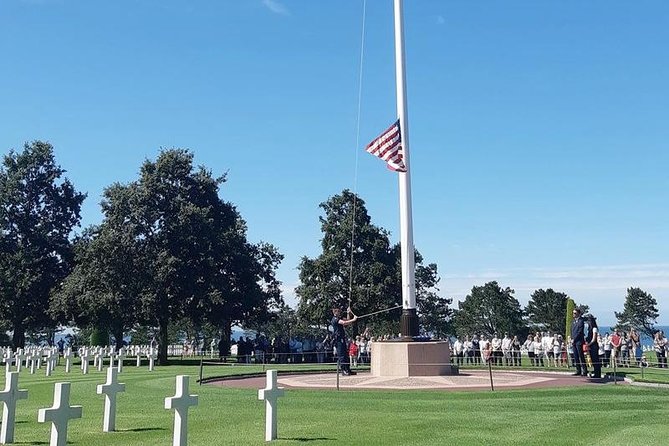
Next comes Cimetiere Americain de Colleville-sur-Mer. This stop is built for meaning, not photo hops. Your guide leads you into the cemetery and explains key facts like when it was built, why it’s located here, and the stories of the men and women buried there. After that, you get about 45 minutes to explore on your own.
This is the kind of place where you can feel your mind doing two jobs at once: remembering the history and recognizing the scale of human loss. The guided explanation helps you read the grounds with intention, not just emotion. Then the free time is what makes it real, because you can pause where something calls to you.
Practical tip: wear shoes you can stand in for a while. This isn’t a quick stop, and the ground and pathways ask for comfort.
Pointe du Hoc: Rangers, Cliffs, and Why It Was So Hard
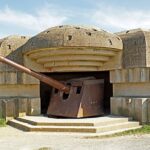
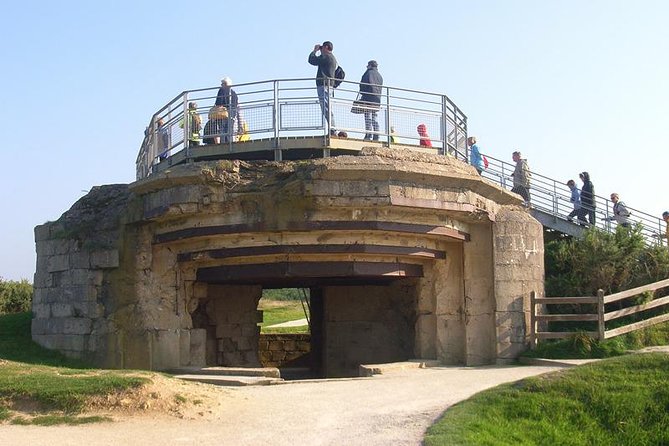
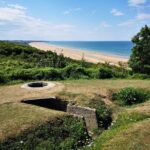
At Pointe du Hoc, you’ll hear about the role of American Rangers who had to scale the cliffs to silence long-range German guns. That detail matters because it turns “a dramatic cliff” into a specific mission with a purpose.
After the guide’s explanation, you get enough independent exploration time to walk the area and connect what you heard to what you can see. The tricky part with cliff sites is that you can’t soak up every angle, especially on a tight day, so I’d treat this stop as “get the big mission idea first, then wander with focus.”


Airborne Museum: The Ticket You’ll Appreciate During a Long Day
The Airborne Museum is included, with entry paid as part of your tour. That’s useful because museum tickets can eat time and add complexity if you’re trying to plan around a group schedule.
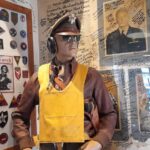
You’ll receive guided time and about 45 minutes to tour the museum yourself. This is where the airborne story starts to feel less abstract. The goal of this kind of museum visit isn’t to cover everything; it’s to build the mental model so later stops in villages and beaches make sense.
A quick note from the vibe of the day: 45 minutes is plenty to see the main exhibits, but not enough to read every label slowly. If you’re the type who loves soaking up every detail, consider planning extra museum time on another day in the region.
Sainte-Mère-Eglise: The Village That Connects Drop Points to Roads
Then you roll into Sainte-Mère-Eglise, a small Norman town tied to the main N13 road linking Cherbourg, Bayeux, and Caen. Your guide explains why that road mattered for moving equipment during the battle of Normandy.
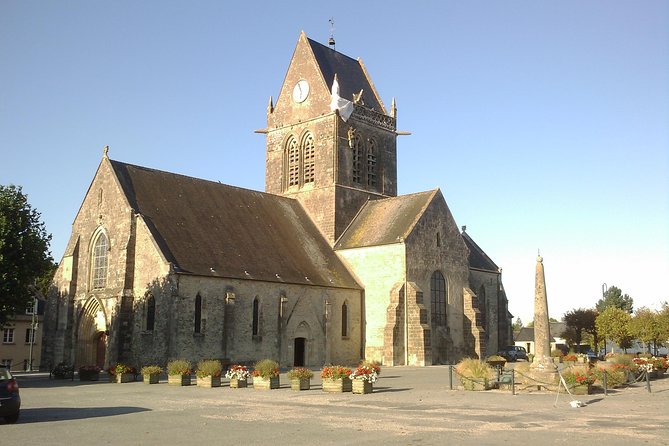
This stop is also famous because it was an objective for the 82nd Airborne Paratroopers and because of its pop-culture connection to The Longest Day. You’ll hear the John Steele story too—caught on a church steeple during the drop.
You get about 45 minutes of free time here. I like using village time for two things: (1) step into the atmosphere, and (2) reset your brain before the next beach segment. It’s also a chance to notice how ordinary these places look now, which makes the wartime urgency feel sharper.
The Bocage Drive: Hedgerows Explain the Fighting
As you travel between sites, the tour includes commentary on the hedgerow terrain, often described as bocage. This is one of the most helpful parts of a guided D-Day day because hedgerows explain why the ground fought back.
You’ll hear how the Germans used the countryside for defensive advantage and how the allies overcame it. Even if you don’t remember every tactical point, you’ll likely remember the visual idea: the land wasn’t open and simple—it was broken up, choked by natural barriers, and hard to move through.
This kind of driving explanation is also why a group tour can beat DIY. You’re not just passing scenery—you’re getting a lens for seeing it.
Utah Beach and the Monuments: From the 4th Infantry to the 101st
Utah Beach is where the day keeps expanding. Your guide gives a detailed account of the landings by the American 4th Infantry Division, and then you get around 50 minutes of time at the beach area with monuments.
This stop feels like a payoff after earlier context. You’ve heard about Omaha and Pointe du Hoc, so Utah’s story doesn’t arrive as a random second beach—it’s part of a coordinated operation. Use the beach time for monuments, not just photos. Reading names and dates is part of the education here.
Later, you’ll make brief stops for extra memorial context, including a monument connected to Richard Winters. The tour also takes time to explain the significance of a nearby village objective for the 101st Airborne to help forces landing on Utah Beach.
The big takeaway: by the time you reach Utah and the later memorial points, you have a clearer map of how airborne operations and beach landings braided together.
The Pace on an 8.5-Hour Day: Structured, Not Relaxing
This is a full tour day. The duration is listed at about 8 hours 30 minutes, and you should expect a late-afternoon return to the meeting point. The structure is consistent: short guide briefing, free time window, then on to the next site.
That structure is great for history buffs who want many top landmarks in one day. It also explains why the tour works well for first-timers: you’ll see Omaha, the American Cemetery, Pointe du Hoc, Sainte-Mère-Eglise, Airborne Museum, Utah, and related memorial context without needing to stitch it together yourself.
Where it can feel tough is time. Several stops provide around 40–50 minutes of free time, which is enough to absorb a site but not enough for deep, slow exploration. If you love unit-by-unit details or you want to do long museum reading, you’ll likely want a second visit to Normandy after this day.
Guides Make or Break It: The Storytelling Factor
Across the many experiences with this tour style, the guide approach is a major reason people rate it so highly. You’ll get narration throughout the day, with guides described as patient, funny in the right moments, and able to answer questions without making you feel rushed.
Specific guide names come up often—Fred, Pierre, Pierre-Alexandre, Charles, Robin, Jarod, Jeff, and Mathieu—and they’re praised for turning what you read in books into something you can picture on the ground. That matters because D-Day can feel like a blur of names and dates until someone helps you organize it.
If you’re choosing between tours, I’d treat the guide as your real “ticket.” This tour’s best value is that your guide gives you the story logic so every stop lands with meaning.
Value and Price: What $179.58 Buys You
At $179.58 per person, you’re paying for more than transport. You’re buying:
- Round-trip minivan from central Bayeux
- A professional guide with commentary all day
- Air-conditioned comfort on a long route
- Airborne Museum entry included
When you add those together, the cost makes more sense than it looks on the surface. DIY travel is possible, but you’ll spend time planning routes, timing admissions, and driving a loop that can eat your energy. Paying for a guided day like this buys back mental bandwidth.
One more value point: the tour limits the group size (maximum around 20–21 passengers), so you’re less likely to feel like a nameless person in the back row.
What to Bring for a Comfortable D-Day
The tour runs in all weather, so dress for the outdoors. You’ll spend time outside at beaches and memorial areas, and you’ll be in transit between sites too.
I’d plan around the reality that lunch isn’t included. That means you should either bring a plan for a snack or be ready to purchase something near the stops during free time. If you’re quick, you can often grab food without losing a lot of your museum or village time.
Also, bring a small bag you can carry within the allowed limits. Big luggage isn’t a fit for the van.
Who Should Book This Tour from Bayeux
This is a strong fit if you:
- Want to see Omaha + Utah and the major American memorial points in one day
- Like a guided structure that turns maps into stories
- Are visiting Normandy for the first time and want the “main event” overview
You might want a different plan if you:
- Need long, quiet time at museums or want deep reading at every monument
- Prefer total freedom to wander at your own pace without short free-time windows
- Are sensitive to long days with a lot of driving segments
Should You Book This Normandy American D-Day Experience?
If your goal is a powerful, organized American D-Day day trip that hits the headline sites without you spending weeks planning, I’d book it. The biggest strength is the combination of major landmarks in one route plus a guide-driven narrative that helps you understand what you’re seeing.
Just go in with the right expectations: you’ll get guided context and a workable amount of free time, but you won’t get to slow-walk every detail. For most people, that’s exactly what they need on a first Normandy trip.
If you’re ready for a long, meaningful day—be on time, keep your bag light, and listen to the story as much as you look around.
FAQ
Where does the tour start and end?
It starts at Parking Québec-Orangerie, Pl. du Québec, 14400 Bayeux, France and ends back at the same meeting point.
What time does the tour start?
The start time is 8:45 am.
How long is the tour?
The duration is approximately 8 hours 30 minutes.
How many people are on the tour?
The tour has a maximum of 20 passengers per tour (with information also showing a maximum of 21 travelers).
What language is the tour in?
The tour is offered in English.
What’s included in the price?
Transport by air-conditioned minivan, a professional guide, and admission to the Airborne Museum are included.
Is lunch included?
No, lunch is not included.
Do I need tickets for the other stops?
Admission is listed as free for the stops at Omaha Beach area, the American Cemetery, and other memorial sites, while the Airborne Museum admission is included in the cost.
What’s the policy on luggage?
Large items of luggage are not permitted on board. Only small carry on cases or overnight bags will be accepted.
Does the tour run in bad weather?
Yes, it operates in all weather conditions, and you should dress appropriately.