REVIEW · BAYEUX
Normandy American D-Day Beaches Full Day Tour from Bayeux
Book on Viator →Operated by GoldBeachCompany · Bookable on Viator
The beaches feel closer than the map. This full-day D-Day tour from Bayeux combines small-group time with hands-on stops at Omaha and Utah, so the story sticks (even when the weather doesn’t). One thing to plan for: it’s a long day with walking and open-air views, so bring layers and expect wind and rain.
I also like that you get a real guide-led day, not a rushed bus loop. Pickup starts at 8:30am from Place du Québec, and the group stays small (often 8 people max), with guides praised for being friendly and ready for questions; one standout moment is the taps-style ceremony at the American Cemetery that people remember for years.
In This Review
- Quick hits before you go
- From Bayeux to the Coast: timing and small-group feel
- Omaha Beach on foot: seeing the land where 34,000 US troops fought
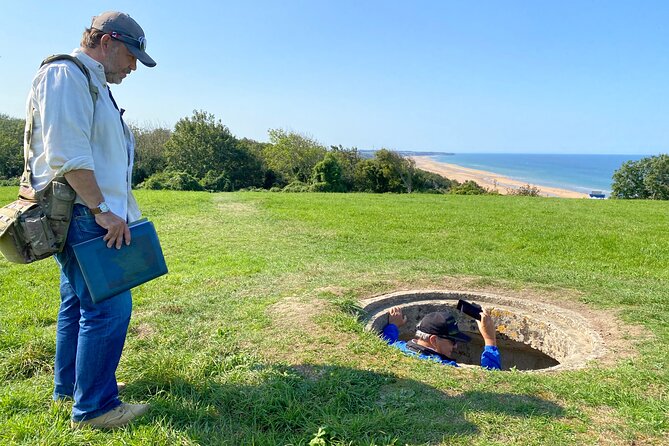
- Pointe du Hoc and the 90-foot cliff: Rangers, bunkers, and bomb craters
- Cimetiere Americain de Colleville-sur-Mer: the quiet stop that lands
- Utah Beach Landing Museum: artifacts and the B-26 Marauder on display
- Sainte-Mère-Église and the 82nd Airborne: seeing a town changed forever
- Lunch break and walking comfort: the small details that matter
- Value for $169.30: why this price feels fair for a one-day sweep
- Should you book this D-Day day trip from Bayeux?
- FAQ
- How long is the Normandy American D-Day Beaches tour from Bayeux?
- What stops are included in the full day?
- Is the Utah Beach Landing Museum ticket included?
- What does the tour price include, and is lunch covered?
- How many people are in the group?
- What happens if the weather is poor?
Quick hits before you go
- Max 8 people means you can actually hear your guide and ask questions without yelling over a crowd.
- English guide and a mobile ticket keep things simple on the day.
- Omaha Beach + Pointe du Hoc give you the toughest terrain and the fiercest fighting in one sweep.
- Utah Beach Landing Museum includes admission, plus a B-26 Marauder display.
- American Cemetery in Colleville-sur-Mer is the emotional core of the day, with a solemn ceremony moment at the site.
- Lunch is on your own (you’ll be sent to a place where you can buy it), so plan light snacks too.
From Bayeux to the Coast: timing and small-group feel
You start in Bayeux at Place du Québec, with hotel pickup offered across the area. The tour begins at 8:30am, and it runs about 9 hours, with a return back to Bayeux after the last stop. Expect a minivan with air-conditioning, which is a big deal in heat and nice when the Channel breeze turns chilly.
The small group size is more than a comfort perk. With up to eight people, you don’t lose time waiting for everyone to catch up, and your guide can pace the day around your group’s questions. That’s why this tour tends to get strong ratings: the day feels guided, not mechanical.
You’ll also want to think about the seating reality of a small vehicle. One review mentioned that in an 8-passenger van, you may shuffle seats as you stop and get in and out. It’s not a dealbreaker, but if you’re the sort who hates repositioning, keep it in mind.
A few more Bayeux tours and experiences worth a look
Omaha Beach on foot: seeing the land where 34,000 US troops fought
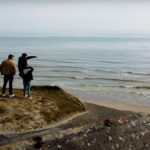
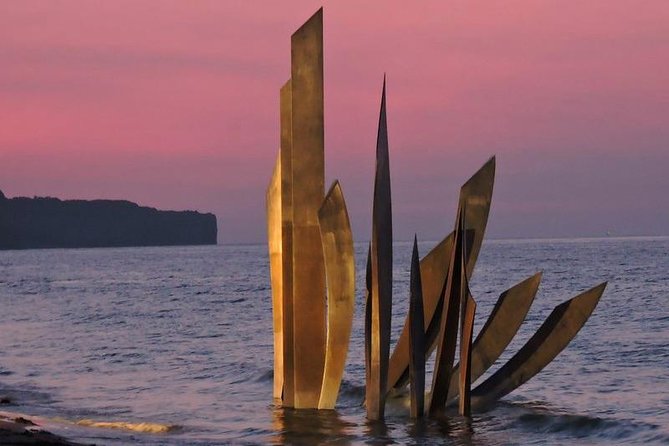
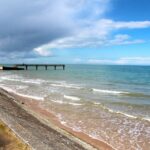
Omaha Beach is the first major stop, and it’s set up for walking rather than just looking. You’ll get a chance to stand where thousands of US soldiers came ashore on June 6, 1944, with your guide explaining what happened there and why it was so hard. The sheer scale matters: over 34,000 US soldiers fought to establish a beachhead at Omaha.
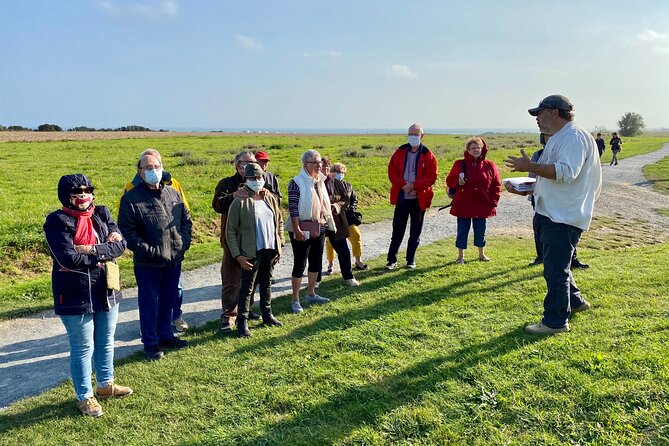
This is one of those places where the guide’s storytelling changes your perception fast. Without that context, it’s easy to see a wide stretch of sand and miss the logic of the terrain. With the context, you start noticing how the beach shape and the surrounding defenses influenced decisions—what could be reached, what couldn’t, and why that mattered.
Admission for this stop is free, which helps the day feel financially straightforward. The time is about one hour, so you get enough walking time to absorb it without feeling like you’re stuck on a loop. If it’s windy (and Normandy often is), take your time crossing open areas and keep your camera steady.
Pointe du Hoc and the 90-foot cliff: Rangers, bunkers, and bomb craters
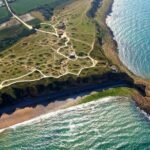
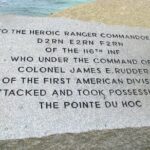
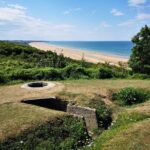
Next comes Pointe du Hoc, one of the stops people often call out as intense and unforgettable. This is tied to the mission where the US 2nd Ranger Battalion climbed roughly a 90-foot (27-meter) cliff to take back a strategic position. It’s not just a scenic viewpoint; it’s a battlefield scarred by history.
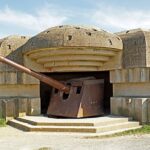
You’ll spend about one hour here, with time to look closely at the landscape of the attack—battle-damaged bunkers and bomb craters. Seeing those details in person does something photos can’t: it makes the mission feel physical. You’re not just learning dates. You’re looking at a site where survival meant improvisation and grit.
Admission here is free as well, so you’re not stacking costs at every stop. One practical note: since you’ll be near uneven terrain, good shoes matter more than style. If your footwear is slick or thin, plan for the day to feel longer than the schedule.
Cimetiere Americain de Colleville-sur-Mer: the quiet stop that lands

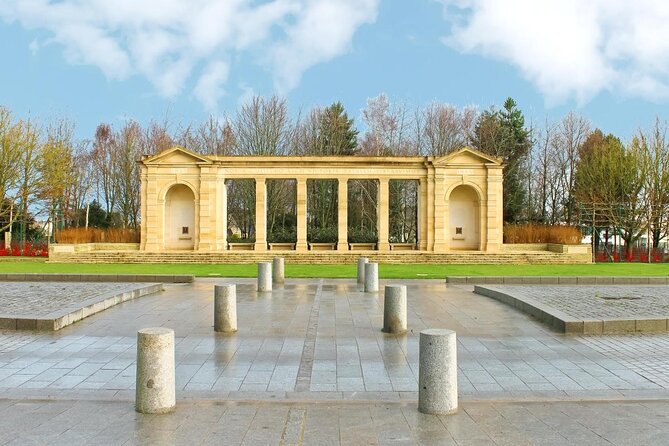
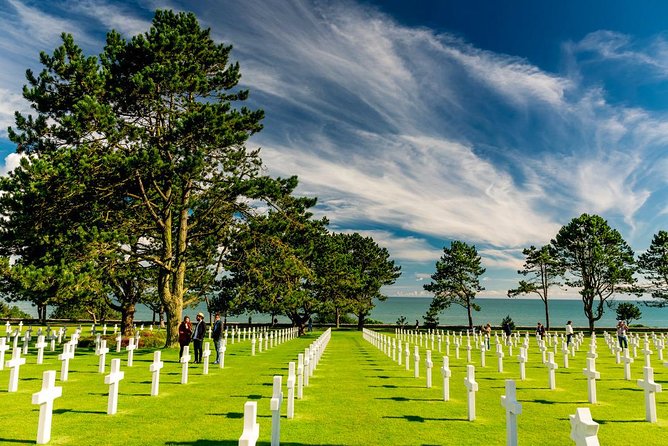
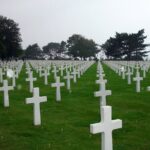
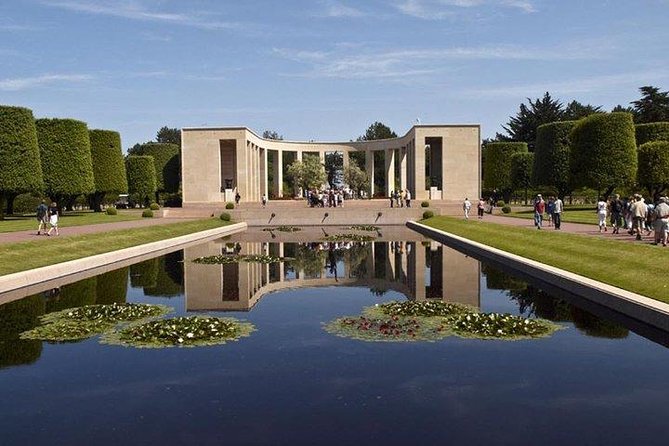
If you remember only one part of the tour, make it the American Cemetery. This is where the day shifts from battlefield explanation into remembrance. The cemetery in Colleville-sur-Mer holds more than 9,300 American soldiers, and the tone is solemn in a way you can’t manufacture.
You’ll have about one hour at the cemetery. Your guide will set the scene before you walk, which helps you understand what you’re looking at and why the place has such emotional weight. Several people highlighted the moment at the cemetery that feels like taps, and it’s easy to see why: it brings the history down to one human reality—young lives cut short.
Admission is free, and the time allocation gives you enough minutes to reflect without feeling rushed. If you tend to get emotional easily, plan for that. It’s not a performance; it’s a place meant for silence and respect.
Also, take a moment to look slowly. When you rush, you miss the organization and the scale. When you slow down, you start to understand that this is not one story—it’s thousands.
Utah Beach Landing Museum: artifacts and the B-26 Marauder on display
After the emotional gravity of the cemetery, the day moves to Utah Beach and its museum. The Utah Beach Landing Museum is a strong mid-to-late day stop because it gives you objects and context, not just location.
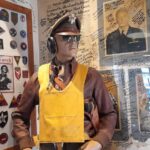
Museum admission is included, and you’ll typically get about one hour inside. The museum is described as one of the best US beach museums in Normandy, and the big hook is the collection of artifacts plus a B-26 Marauder displayed within the museum. That aircraft gives you a tangible connection to the air war and the broader operation, not only the shoreline.
This stop works well because it helps you connect dots. The beaches you walked earlier can feel like isolated scenes. The museum helps you see how the invasion effort fit together: infantry landing, air support, coordination, and the wider machinery of D-Day.
If you’re traveling with family members or anyone who gets museum fatigue easily, Utah Beach Museum is still manageable. One hour is enough to see the key items without turning it into a full afternoon commitment.

Sainte-Mère-Église and the 82nd Airborne: seeing a town changed forever
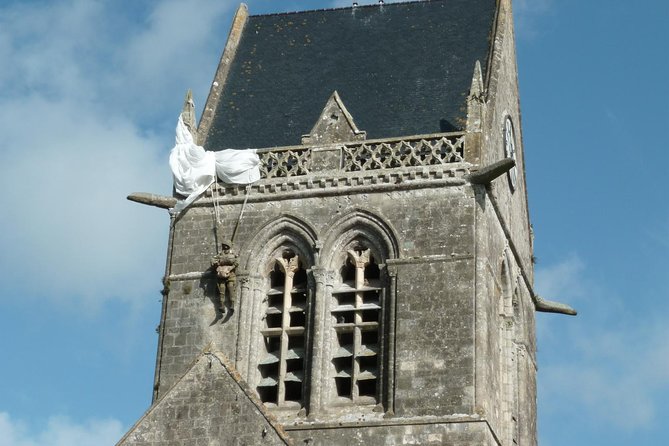
Sainte-Mère-Église is where you get a sense of how D-Day played out beyond the shoreline. The town is tied to the actions of the 82nd Airborne Division in the early hours of June 6, 1944, which is why it’s often described as frozen in time from the first assault period.
You’ll spend around one hour here. It’s a different kind of stop than Omaha or Pointe du Hoc: instead of cliffs and craters, you’re learning how the airborne operation landed in and around the town. The result is a broader view of the invasion, because it shows how the battle wasn’t only about one beach entrance.
Admission for this stop is free, which keeps the day simple. If you have any interest in paratrooper history, this is a strong capstone before you head back to Bayeux.
Don’t expect a theme-park version of the story. This is a real town. The value is that you can stand in a place where history happened and let your guide tie it back to the morning landings.
Lunch break and walking comfort: the small details that matter
Lunch is not included, but the tour does plan for it. You’ll get a break organized at a place where you can buy lunch. I like this setup because it lets you choose what fits your appetite instead of forcing one group meal that everyone has to accept.
The smart move is to go into lunch time already having eaten a quick snack earlier. Normandy days can swing from sunny to windy quickly, and you don’t want to be hungry while you’re trying to focus on battlefield sites.
Also, be honest about walking. Even though the stops are only about one hour each (some are shorter), you’re still moving through coastal areas and terrain that can be uneven. One review stressed that good walking shoes are a must, especially in winter when cold winds come off the Channel. Bring layers, a rain shell if it looks sketchy, and gloves if you run cold.
If it’s December or off-season, dress like the day will be gray and windy. You’ll spend enough time outdoors that being under-dressed becomes a distraction.
Value for $169.30: why this price feels fair for a one-day sweep
At $169.30 per person, this is not a bargain-basement day trip. But when you look at what’s included, it starts to make sense.
You’re paying for a guide, air-conditioned minivan transport, and pickup and drop-off from Bayeux. On top of that, several key sites have free admission, and the one paid component—Utah Beach Landing Museum—is included in the tour. That means your money isn’t getting eaten by ticket lines throughout the day.
The biggest value is time. If you were trying to piece these stops together on your own, you’d be spending energy on planning routes, coordinating driving times, and figuring out what to look at at each location. Here, your guide does that work for you, and you can spend your time absorbing what you came for.
Group size also matters to value. With up to eight people, you get more personal guide attention than you would on larger tours. Reviews repeatedly point to guides by name—people like David, Eric, Julie, Alex, Igor, Eliza, Amadine, and Kate—so the company clearly puts effort into guiding quality.
Should you book this D-Day day trip from Bayeux?
Book it if you want a one-day overview of the American D-Day experience and you prefer a guide to connect the sites. This is especially good for first-timers who have limited time in Normandy, because you hit the core locations: Omaha, Pointe du Hoc, the American Cemetery, Utah Beach, and Sainte-Mère-Église.
Skip it or consider another format if you dislike walking in wind or you’re traveling on a schedule that can’t handle a long day. This tour is also weather-dependent in practice since it’s largely outdoors; if conditions are rough, you might want flexibility in your dates.
If you care about being respectful and getting the story right, this kind of small-group guided day is a smart choice. You’re not just collecting photos. You’re learning how these places connect, and you’re leaving with a memory that sits with you long after the drive back.
FAQ
How long is the Normandy American D-Day Beaches tour from Bayeux?
It runs for about 9 hours. The start time is 8:30am, and the day ends back in Bayeux after the final stop.
What stops are included in the full day?
You’ll visit Omaha Beach, Pointe du Hoc, American Cemetery in Colleville-sur-Mer, Utah Beach Landing Museum, and Sainte-Mère-Église.
Is the Utah Beach Landing Museum ticket included?
Yes. The Utah Beach Landing Museum admission is included, while the other major stops listed are free.
What does the tour price include, and is lunch covered?
Your price includes pickup and drop-off in Bayeux, a guide, and transport by air-conditioned minivan. Lunch is not included, but you’ll get a break at a place where you can buy lunch.
How many people are in the group?
This tour has a maximum of eight travelers, which keeps the experience more intimate.
What happens if the weather is poor?
The experience requires good weather. If it’s canceled due to poor weather, you’ll be offered a different date or a full refund.
If you want, tell me your travel month and who you’re going with (adults, kids, mobility level). I can help you decide if the day’s walking time and weather risk fit your plans.