REVIEW · BAYEUX
British & American D-Day Experience from Bayeux
Book on Viator →Operated by Bayeux Shuttle · Bookable on Viator
D-Day felt real to me the moment the route starts at Gold Beach. This small-group tour strings together the American and British sectors with a pro guide who explains what you’re seeing on the ground—then answers your questions as you go. Two stops especially click: time on the sand at Omaha when tides allow, and a full visit to the American cemetery and British memorial so the day lands where it should.
I like that the tour keeps moving without rushing the meaning out of the story: gun batteries, a key WWII harbor, cliff-top Rangers, and the view from the bluffs. One thing to consider is logistics—this is an all-weather day with real driving and some walking, and the operator is strict about on-time departure from Bayeux. If you show up late, you may have to take a cab at your own expense to rejoin.
In This Review
- Key highlights at a glance
- Entering The Day: Bayeux Pick-Up, Time Discipline, and What to Expect
- Price and Value: What $179.21 Gets You for an 8-Hour Loop
- Gold Beach and the Plan Behind It: British Assault and the Link-Up Goal
- Arromanches and Mulberry B: Port Winston’s Concrete Ghosts
- Longues-sur-Mer Atlantik Wall: Guns Still in Place
- Pointe du Hoc: The Cliff Guns and the Ranger Story
- Omaha Beach: Walking the Sand, Seeing the Bluffs
- The American Cemetery at Colleville-sur-Mer: 172 Acres to Pause
- British Normandy Memorial Near Ver-sur-Mer: Names and Charging Infantry
- What Makes the Guides Work: On-the-Ground Q&A (Not Just Facts)
- Tour Logistics That Can Make or Break Your Day
- Who This D-Day Tour Is Best For
- Should You Book This Bayeux D-Day Tour?
- FAQ
- How long is the tour and what time does it start?
- What does the tour cost, and is lunch included?
- Which D-Day sites are included on this route?
- Can I walk on Omaha Beach?
- Are museum or entrance fees included?
- How large is the group, and how do you travel between sites?
- Is the tour offered in English, and do I get a ticket on my phone?
- What happens if I arrive late to the meeting point?
- Does the tour run in bad weather?
Key highlights at a glance
Gold and Omaha in one day: You see how the British and Americans fit together.
Mulberry B harbor remains at Arromanches: Learn why port Winston mattered.
Atlantic Wall guns you can still see in place: Longues-sur-Mer includes the weapons.
Pointe du Hoc Rangers story: Hear how the cliff assault connects to the broader plan.
Memorial time with breathing room: Visitor center first, then reflection in the cemetery.
Entering The Day: Bayeux Pick-Up, Time Discipline, and What to Expect
The whole day starts with a simple rule: be at the departure point on time. The meet-up is at Pl. du Québec in Bayeux, with a start time of 8:45 am. The operator makes it clear that if you’re not there by the advertised boarding time, the van leaves. There’s no “we’ll wait a few minutes,” and there are no refunds if you miss the service.
This matters because you’re visiting multiple sites spread across the Normandy coast. The plan only works if everyone is there when the minivan rolls. My advice is boring but effective: aim to arrive early enough that you’re not stress-scanning for the right curb. Parking near the pick-up area can be tricky if you’re late to the morning, so give yourself slack.
Once you’re on board, you’re in an air-conditioned minivan—useful in summer heat and equally useful in a rainy, windy Normandy afternoon. The group size caps at 19 travelers, which helps keep the day conversational rather than lecture-mode.
You can also read our reviews of more tours and experiences in Bayeux.
Price and Value: What $179.21 Gets You for an 8-Hour Loop
At $179.21 per person for about 8 hours, this isn’t the cheapest way to tour Normandy—but it’s not trying to be. The value comes from three things you can’t copy on your own with equal ease:
- A professional guide who ties the geography to the battle decisions.
- Transportation by air-conditioned minivan so you aren’t driving between widely spaced points.
- A route that balances British and American sites rather than doing one beach and calling it “the day.”
What’s not included: lunch, and museum entrance fees. Many of the stops are marked as admission ticket free, but you shouldn’t count on everything being free in every format. If you want a museum exhibit inside a visitor center, check on-site details once you’re there.
Also, this is the kind of tour you’ll feel more from if you plan meals. Bring a snack or be ready to find lunch nearby, because the schedule includes several short-but-focused stops rather than one long mid-day break. One review noted a guide pointing the group toward an authentic restaurant with options for different tastes, which is exactly the style of help that makes a day like this easier to manage.
And yes, it runs in all weather conditions, so plan your outfit with the assumption that Normandy will do Normandy things—clouds, mist, and sudden rain included.
Gold Beach and the Plan Behind It: British Assault and the Link-Up Goal
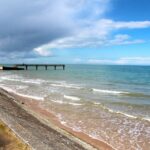
Gold Beach is where the day starts emotionally and strategically. On D-Day, British forces assaulted Gold Beach with objectives that reached far beyond the shoreline. The guide will connect the dots: the British push west to capture Arromanches and link up with the Americans landing at Omaha, then move east to connect with forces heading toward Juno, and finally press inland with the goal of capturing the medieval town of Bayeux.
This stop is powerful because it’s not just “here’s where they landed.” It’s about why this beach mattered to the map of the whole operation. You’re seeing a starting point that feeds into later moves—link-ups, inland progress, and the practical problem of moving men and matériel where it counts.
Expect about 5 minutes of scheduled time for the Bayeux shuttle departure before the coast scenes begin. After that, you’ll have a short window on Gold Beach with your guide giving context so you can look beyond the obvious: where defenders positioned themselves, how the shoreline shaped movement, and how British decisions depended on American progress.
Practical note: shore visits mean wind and damp ground. Wear shoes you don’t mind getting a little grimy.
Arromanches and Mulberry B: Port Winston’s Concrete Ghosts
Next comes a site that feels half museum, half engineering lesson: the Vestiges du Port de Mulberry in Arromanches. This is tied to the Mulberry B artificial harbor, better known after Churchill as port Winston.
What’s compelling here is the “how” of victory. This wasn’t just heroic landing stories; it was logistics that had to work under fire. Your guide will show the remains of this construction project and explain why the harbor was significant in Normandy’s outcome—how it helped keep supplies flowing when normal ports couldn’t.
Even though the stop is around 30 minutes, it’s the kind of time that pays off later in the day. Once you understand why they needed a functioning harbor, the rest of the itinerary makes more sense: gun batteries, threatened shipping lanes, and beaches that could only succeed if the follow-on flow worked.
If you like WWII beyond the big headline battles—strategy, engineering, and decision-making—this is one of the stops that delivers.
Longues-sur-Mer Atlantik Wall: Guns Still in Place
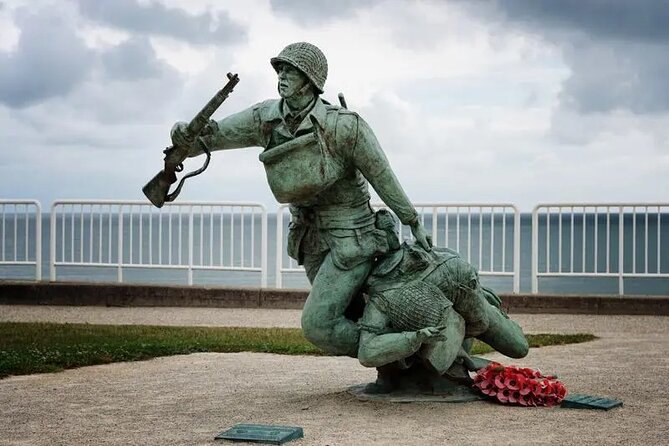
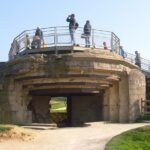
At Longues-sur-Mer, you’re looking at a gun battery site that’s unusually intact for this part of the Atlantic Wall. The description is specific: it’s the only position along the Atlantik Wall in this area of France where the guns still remain in situ.
That one detail changes how you experience the stop. Instead of seeing a cleared-out ruin and guessing what was there, you can study what the defenders built and how it functioned. The guide explains how it was constructed, how it operated, and the end of its usefulness—how it was ultimately silenced.
Plan for about 20 minutes. It’s not long, so come ready to absorb. If you’re the type who likes to ask “what am I looking at exactly,” this is a good time. A guide on location can point out the practical layout and help you translate concrete and angles into battlefield reality.
If it’s raining, expect the ground to be slick. Keep your footing steady—short stops still involve walking.


Pointe du Hoc: The Cliff Guns and the Ranger Story
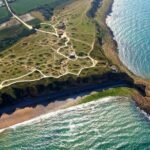
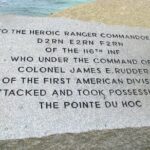
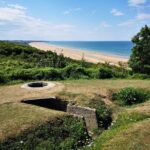
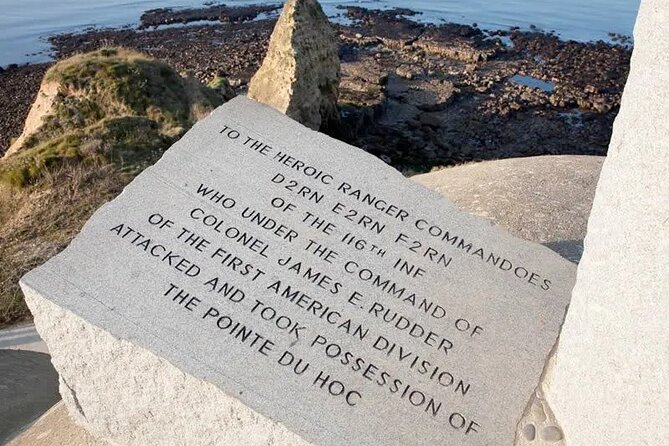
Then you reach one of Normandy’s most famous American targets: Pointe du Hoc. This German gun battery position sat between the two American landing beaches, so the threat wasn’t hypothetical—it was directly tied to Allied shipping. The site included six long-range gun positions plus many other concrete bunkers.
Your guide will connect why the planners had little choice. Those guns had to be destroyed early, even though the location made it brutally hard. This is where the US Army Rangers come in: the story centers on bravery scaling nearly 100 feet of cliffs to reach the targets and neutralize them.
The emotional punch here works best when you slow down and really look at the terrain. The cliffs aren’t just scenery; they’re part of the reason the mission was so difficult. The gun positions and bunkers help explain why this wasn’t a quick, easy strike.
You’ll have about 45 minutes at Pointe du Hoc. That longer window compared with some other stops helps, because you’ll want time to process the view and the scale.
Bring rain gear if the forecast is sketchy. One review explicitly called out bringing rain gear and expecting some walking—Pointe du Hoc fits that advice perfectly.
Omaha Beach: Walking the Sand, Seeing the Bluffs

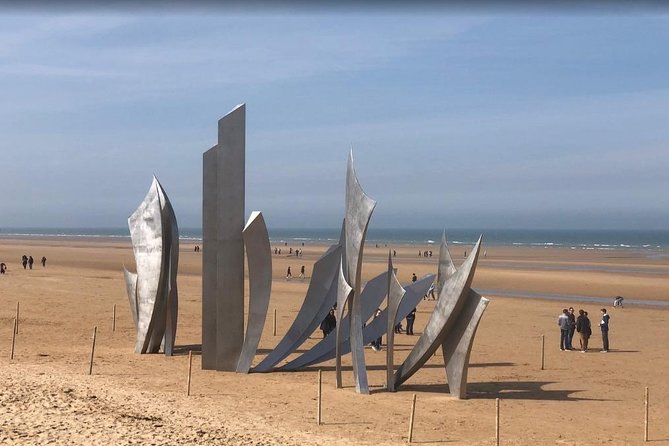
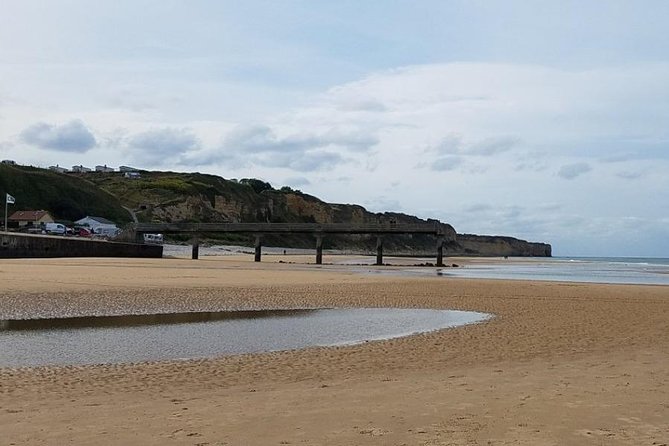
Omaha is the stop many people plan their Normandy trip around. Here, the US 1st Infantry and 29th Infantry Divisions, along with elements of the US Army Rangers, had a job that was both immediate and directional: open five exit points so the movement inland could begin.
When your guide explains the plan and then describes what went wrong, the name Bloody Omaha doesn’t feel like a slogan. It becomes a summary of why that shoreline turned into a tragedy and why the exit points mattered.
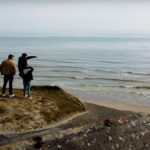
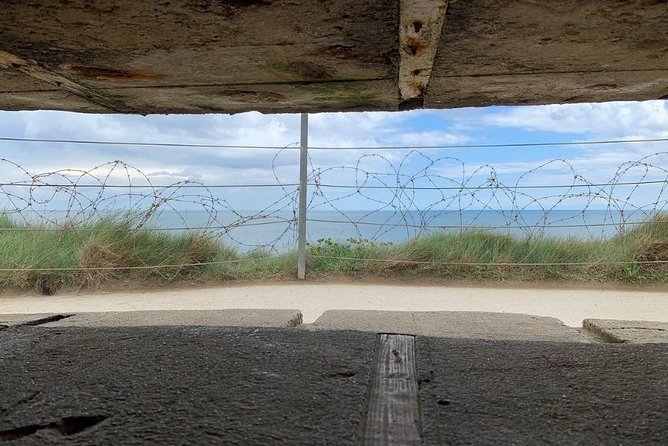
Time-wise, you’ll have about 30 minutes. A big factor in your experience is the tide. Depending on conditions, you may get the chance to walk on the sand. If the tide allows it, you’ll be standing where landing troops stood—then you’ll see how the high bluffs once looked down like a machine-gun sightline.
If you want the best odds of enjoying Omaha at beach level, plan footwear that works on wet sand and uneven ground. And if the tide doesn’t cooperate, you’ll still get the meaning from the view off the bluffs—just expect more standing and less walking on the shoreline.
The American Cemetery at Colleville-sur-Mer: 172 Acres to Pause
After the battles and guns, the tour turns toward remembrance. The Normandy American Cemetery at Colleville-sur-Mer covers 172 acres and is the final resting place for many thousands of service men and women.
You’ll get about 40 minutes, and the timing is built for emotional pacing. You’ll first have sufficient time to explore the visitor center, then you’ll take time to reflect in the cemetery. That order matters. It’s easier to process what you’re seeing once you understand the story in the visitor center, then step outside where the scale of the cemetery sinks in.
Keep your schedule flexible here. It’s not a photo-stop hour; it’s a quiet processing hour. If your group gets a bit rambly, follow your guide’s tone and slow down. You don’t need to race through.
British Normandy Memorial Near Ver-sur-Mer: Names and Charging Infantry
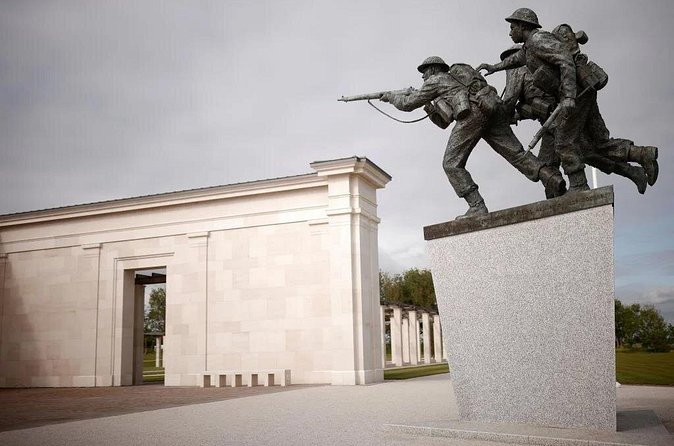
The day closes with the British side of remembrance at the British Normandy Memorial near Ver-sur-Mer, which overlooks Gold Beach.
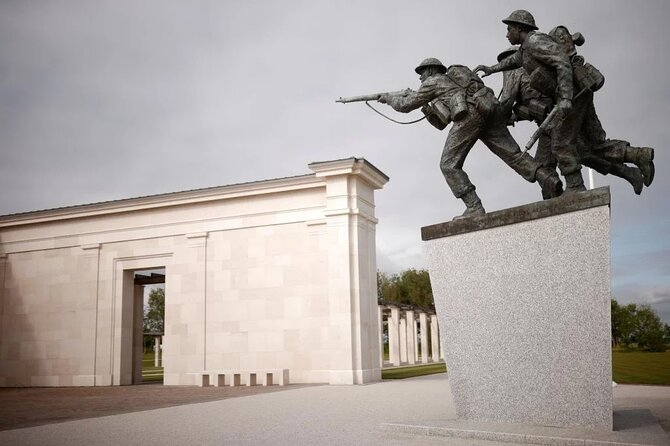
This stop anchors the human cost. The memorial includes the names of 22,442 soldiers who died on D-Day and during the Battle of Normandy. It also features striking sculpture details: nine-foot-tall figures of three charging infantrymen, created by sculptor David Williams-Ellis. The description notes each weighs over a ton, which you’ll feel once you see the figures in person.
You’ll have about 40 minutes. Even if you’re more emotionally moved by cemeteries than memorials, this one can hit hard because it’s all about names—an enormous list made physical.
If you like finishing a tour with context rather than “the last stop,” this is a strong final note. Looking back toward the coast can bring the day full circle.
What Makes the Guides Work: On-the-Ground Q&A (Not Just Facts)
The itinerary is packed, but the guide is the glue. People rate this tour highly because the guide answers questions at each location and points out details you wouldn’t catch from a map or a book.
In particular, reviews highlight guides including Rethro, Robin, and Naomi. I take that as a sign of consistent guiding style: explain the plan, show how the terrain mattered, then handle questions without rushing you out the door.
That matters for non-experts too. If you’re not a WWII student, you don’t need a lecture. You need the “what you’re seeing and why it mattered” translation. This tour is built for that.
Tour Logistics That Can Make or Break Your Day
A few practical things I’d keep in mind before you lock it in:
- Arrive early to the Bayeux departure point. The tour departs on schedule.
- If you’re late and the van has already left, you’ll need to take a cab at your own expense to catch up.
- Expect real weather. The tour runs in all conditions; bring a rain layer and wear shoes for damp ground.
- Lunch isn’t included, so decide how you’ll handle it ahead of time.
- Some stops are short. If you hate rushing, focus your attention on the guide’s explanations and use your time for the questions you actually care about.
Who This D-Day Tour Is Best For
This tour is a great fit if you want:
- A strong one-day overview of the Normandy landings without hopping between rental cars.
- Both British and American perspectives in the same route.
- A guide who can help you understand why the battlefield choices made sense at the time.
It’s also a nice option for mixed groups—people with different levels of WWII interest—because the guide’s on-site explanations can level the field quickly.
If you’re the type who prefers to linger alone and read every plaque for an hour, this may feel a bit tight. But if you’d rather see the major sites with strong context and good timing, it hits the sweet spot.
Should You Book This Bayeux D-Day Tour?
I’d book it if you want a guided Normandy day that connects engineering sites, beaches, and memorials into one coherent story. The route is efficient: Gold Beach for the British objectives, Arromanches for the Mulberry harbor logistics, gun battery stops that show the Atlantic Wall in a more complete way, Pointe du Hoc for the Ranger cliff assault, Omaha for the sand-and-bluffs reality, then two major remembrance stops.
I’d pass or adjust expectations if:
- You’re very timing-sensitive and don’t like strict departure rules.
- You’re hoping for a long museum day with lots of ticketed exhibits (museum entrance fees aren’t included and some stops are brief).
If you can handle an active day and you want the meaning on top of the scenery, this is a solid choice for a first-time Normandy visitor—especially if you’re flying in through Bayeux and want someone else to drive.
FAQ
How long is the tour and what time does it start?
It lasts about 8 hours and starts at 8:45 am from the Bayeux meeting point.
What does the tour cost, and is lunch included?
The price is $179.21 per person. Lunch is not included, so you’ll need to plan for a meal during your free time.
Which D-Day sites are included on this route?
You’ll visit key sites across both sectors, including Gold Beach, Arromanches (Mulberry harbor remains), Longues-sur-Mer, Pointe du Hoc, Omaha Beach, the American Cemetery at Colleville-sur-Mer, and the British Normandy Memorial.
Can I walk on Omaha Beach?
Yes, depending on the tide, you may have the opportunity to walk on the sand and see the beach from the soldiers perspective.
Are museum or entrance fees included?
Museum entrance fees are not included. The listed stops are marked as admission ticket free in the schedule, but plan on paying for any separate ticketed museum items if they come up.
How large is the group, and how do you travel between sites?
The tour has a maximum of 19 travelers, and you travel by air-conditioned minivan.
Is the tour offered in English, and do I get a ticket on my phone?
Yes. The tour is offered in English, and you receive a mobile ticket.
What happens if I arrive late to the meeting point?
The van leaves if you’re not there by the advertised boarding time. If you arrive late, you’ll need to take a cab at your own expense to try to catch up, and there are no refunds if you miss the service.
Does the tour run in bad weather?
Yes, it operates in all weather conditions. Bring rain gear and dress for the conditions you might face in Normandy.