REVIEW · BAYEUX
Normandy D-Day Beaches Private Canadian Sector from Caen
Book on GetYourGuide →Operated by trip my normandy · Bookable on GetYourGuide
The most moving part of this private Normandy tour is its close focus on the Canadian sector, where 14,000 Canadian soldiers landed or parachuted into France on D-Day. You will not simply pause for a photograph at Juno Beach. You will follow the route through German bunkers, cemeteries, resistance sites, and small villages where the battle continued long after the first landings.
I like two things right away. First, the tour connects the famous military story to individual regiments, including the Queen’s Own Rifles, La Chaudière, the Fort Garry Horse, the North Nova Scotia Highlanders, and the Sherbrooke Fusiliers. Second, your guide can add a personal French connection, including a family story linked to the Resistance. The main consideration is the price: $931 for up to seven people is good value for a full private day, but expensive for one or two people.
In This Review
- Key points to know before booking
- Why the Canadian sector deserves a full day
- Ardenne Abbey and the execution of 27 Canadians
- Regiment memorials on the road to Juno
- Hell’s Corner and the long fight inland
- Anguerny and the Canadian night position
- A cemetery stop with time for reflection
- Canada House, Hotel Graves, and the cost of the assault
- Juno Beach Centre and Canada’s wider war effort
- The Atlantic Wall in the Juno park
- Churchill, Montgomery, de Gaulle, and the return to France
- What the private van adds to the day
- Is $931 good value for up to seven?
- Who should book this Canadian D-Day tour?
- Final call: book it for the story behind Juno
- FAQ
- Where does the tour begin and end?
- How long does the experience last?
- How many people can join the private group?
- Is the tour offered in English?
- Are lunch and museum admission included?
- Is the tour suitable for children and wheelchair users?
Key points to know before booking
- Ardenne Abbey reveals a grim D-Day crime: The former abbey became a German command site, where 27 Canadian prisoners were executed.
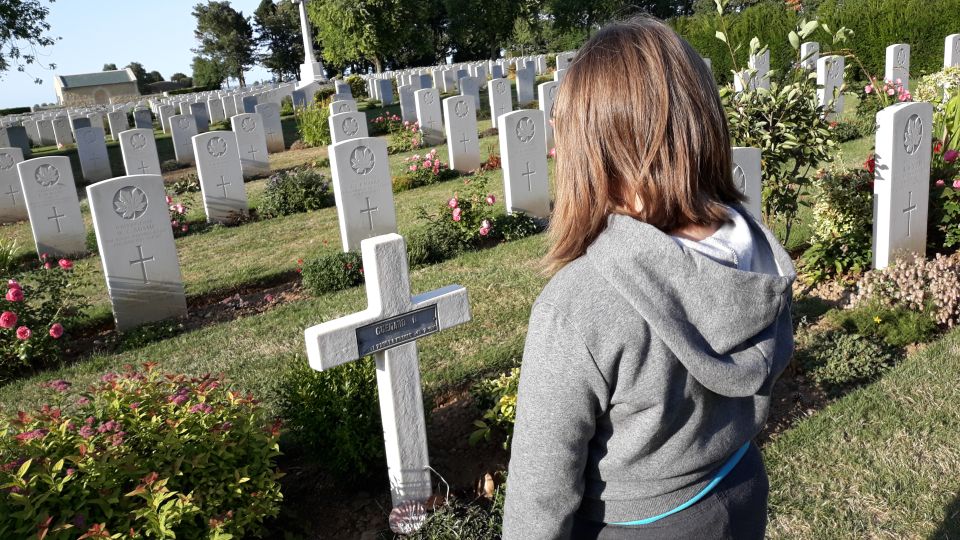
- The route follows Canada’s battle beyond the beach: You visit Hell’s Corner, Anguerny, memorials, defensive positions, and the cemetery where 2,049 Canadians are buried.
- Juno Beach includes more than sand: Expect Atlantic Wall remains, a Churchill AVRE tank, Cosy’s Pillbox, and the Juno Beach Centre.
- The guide makes the difference: Mathias has helped families trace a relative’s regiment, while Sarah brings academic study of the Canadian forces and maps and visual aids.
- It is a private eight-hour day from Caen: Pickup and drop-off are included, with a private group of up to seven and an audio system in the van.
- Plan for extra costs: Your lunch, food, drinks beyond the supplied water and coffee, and museum entrance fees are not included.
Why the Canadian sector deserves a full day
Many Normandy excursions race between the American beaches, the British sector, and the major museums. This tour takes a narrower route, and that is its strength. You spend the day with the Canadians, following their movements from the wider story of Dieppe and Operation Jubilee to the costly assault on Juno Beach.
That focus helps you understand how different parts of the Normandy operation fitted together. Your guide discusses naval, ground, and airborne forces, the artificial harbors, the Fortitude deception plan, the Atlantic Wall, French life under German occupation, and the Resistance.
You also hear about the people behind the military map. The experience is designed to pass the story from one generation to the next, making it a good choice for families with a Canadian connection. Mathias has worked with families trying to understand a relative’s regiment. Sarah has a master’s degree focus on the Canadian forces and uses maps and visual material to explain the fighting.
The tone is serious, as it should be. At the cemeteries and memorials, you will have time to pay your respects rather than being hurried through a list of stops.
You can also read our reviews of more private tours in Bayeux
Ardenne Abbey and the execution of 27 Canadians
Your day begins at Ardenne Abbey, a 12th-century religious site once occupied by monks until the French Revolution. Its later wartime story is far darker.
During the 20th century, farmer Jacques Vico controlled the buildings. Under German occupation, the abbey became a training site for the French Resistance. After D-Day, it was occupied by the 12th SS Panzer Division, often called the Hitlerjugend or Baby Division because many of its soldiers were very young.
The abbey is also the site of the execution of 27 Canadian soldiers. A memorial now marks the tragedy. This opening stop gives the day an important frame: D-Day was not a clean, quick victory, and the fighting involved prisoners, reprisals, fear, and moral choices.
I find this a stronger beginning than starting at the beach. Before you see the landing site, you understand the human cost and the danger faced by Canadian troops after they came ashore. The abbey is also a place where military history and French civilian history meet.
Regiment memorials on the road to Juno
The route toward Juno includes memorials to the North Nova Scotia Highlanders and the Sherbrooke Fusiliers Regiment. These stops are useful because they put names and unit identities onto the general phrase Canadian forces.
You will hear how individual regiments fit into the assault and the fighting that followed. That detail matters if someone in your family served with one of these units, but it also helps if your knowledge of the Canadian operation begins and ends with Juno Beach.
A private guide can adjust the pace here. You can ask about a particular regiment, compare the roles of infantry and armored units, or use maps to follow the advance. The supplied reviews point to this as a real strength, especially for people researching a family member.
Hell’s Corner and the long fight inland
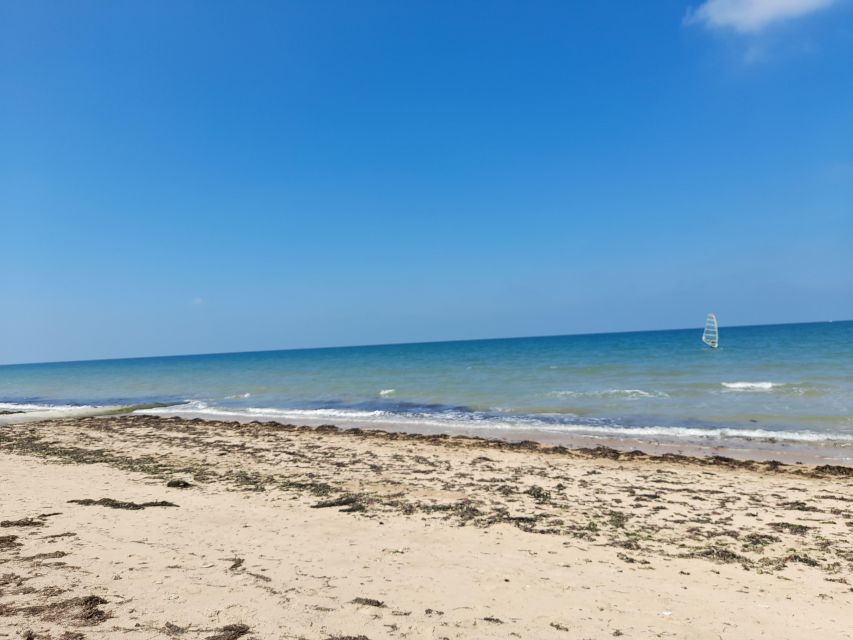
At Hell’s Corner, the story moves away from the first hours on the shore. Canadian forces faced repeated German attacks and bombardments for three weeks before the victory at Carpiquet airfield on July 4.
That date is important. The beach landings happened on June 6, but the campaign did not finish that afternoon. Stops such as Hell’s Corner show the strain of holding ground while German forces continued to counterattack.
The name has a blunt, memorable quality, but the value of the stop comes from the explanation around it. You will be able to connect the village roads and defensive positions to the wider struggle for Caen and the airfield. The guide’s maps and visual aids are especially useful here because the fighting can otherwise feel scattered when you look at it on the ground.
Anguerny and the Canadian night position
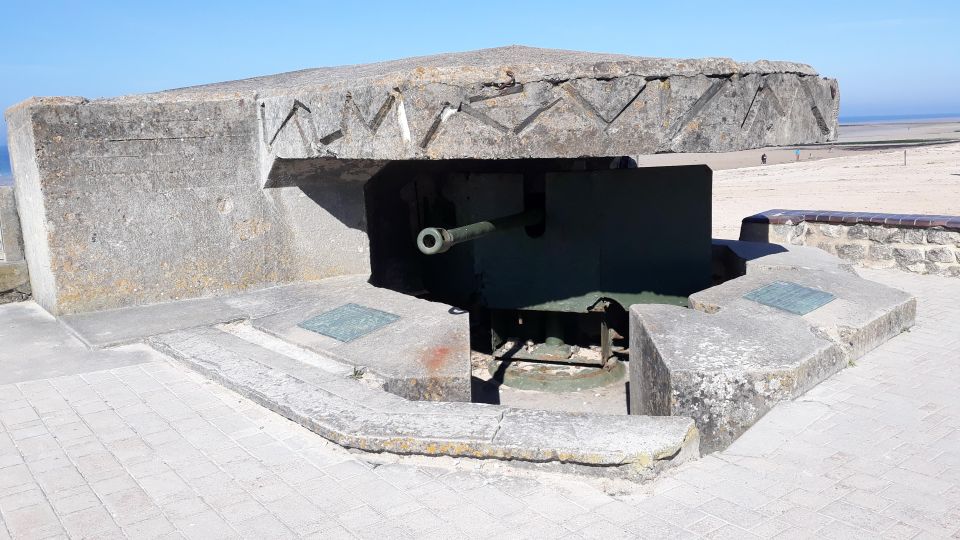
At Anguerny, also called the Elm Line, three Canadian regiments set up camp for the night: La Chaudière, the Queen’s Own Rifles, and the Fort Garry Horse.
This is a small but worthwhile stop. It shows what happened after the landing craft disappeared from view. Soldiers had to regroup, hold positions, and spend the night in uncertain conditions. The first day was not only a push forward. It was also a test of organization and endurance.
An inukshuk marks the site. Built in the Inuit tradition as a human-shaped stack of stones, it represents brotherhood, mutual respect, and friendship. That symbol adds a Canadian note without turning the stop into a simple patriotic display.
A cemetery stop with time for reflection
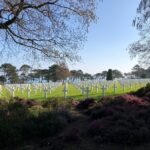
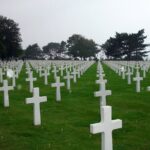
The tour includes a Canadian cemetery where 2,049 Canadian soldiers are buried. This is one of the day’s most solemn moments, and the private format helps.
You are not dealing with a large bus group moving on a fixed schedule. You can walk quietly, read names, and take the time your family needs. Sarah, in particular, is described as patient and respectful at war cemeteries, which matters when a relative’s name may be among the graves.
I would not treat this as just another sightseeing stop. Wear comfortable shoes and warm clothing, and expect a reflective pause rather than an entertaining part of the day. The cemetery gives scale to the military story you have been hearing since Ardenne Abbey.
Canada House, Hotel Graves, and the cost of the assault
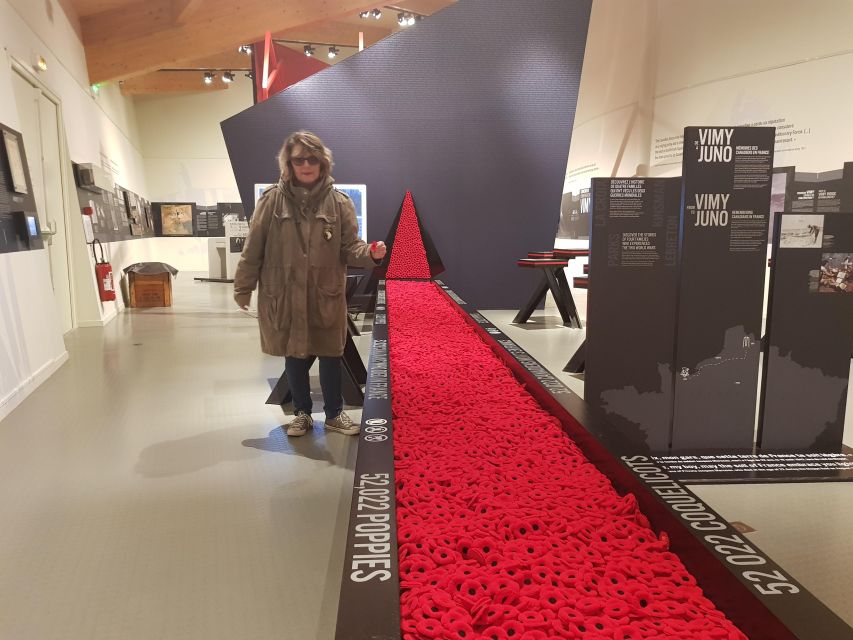
Before lunch, you gather at Canada House, where a memorial honors the Queen’s Own Rifles Regiment and the Fort Garry Horse Armoured Division. Both paid a heavy price during the assault.
Nearby, Hotel Graves served as the headquarters of Canadian and British war correspondents. That detail opens another window onto D-Day. The battle was being fought, recorded, and explained at the same time, while the public waited for news from Normandy.
These are not grand monuments in the way the famous beach memorials can be. Their value is in the specific stories. You get a better sense of which units were involved and how information about the campaign reached the outside world.
Lunch is not included. You should budget for your own meal and drinks, and it is sensible to confirm the timing with your guide at the start of the day. Coffee and water are supplied, but those do not replace lunch during an eight-hour outing.
Juno Beach Centre and Canada’s wider war effort
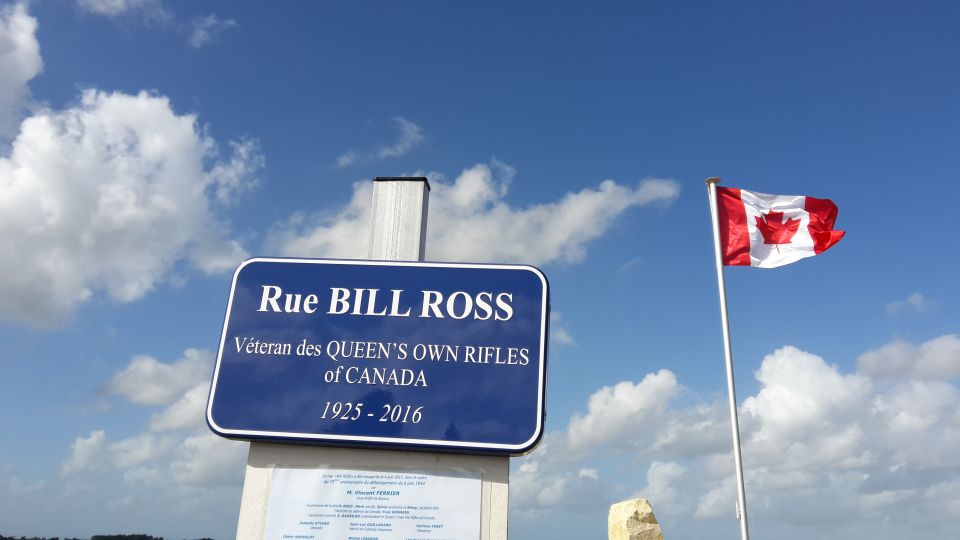
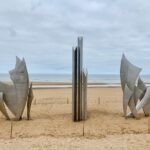
After lunch, you head to the Juno Beach Centre, where the Regina and Canadian Scottish regiments landed. The center does more than explain the assault itself.
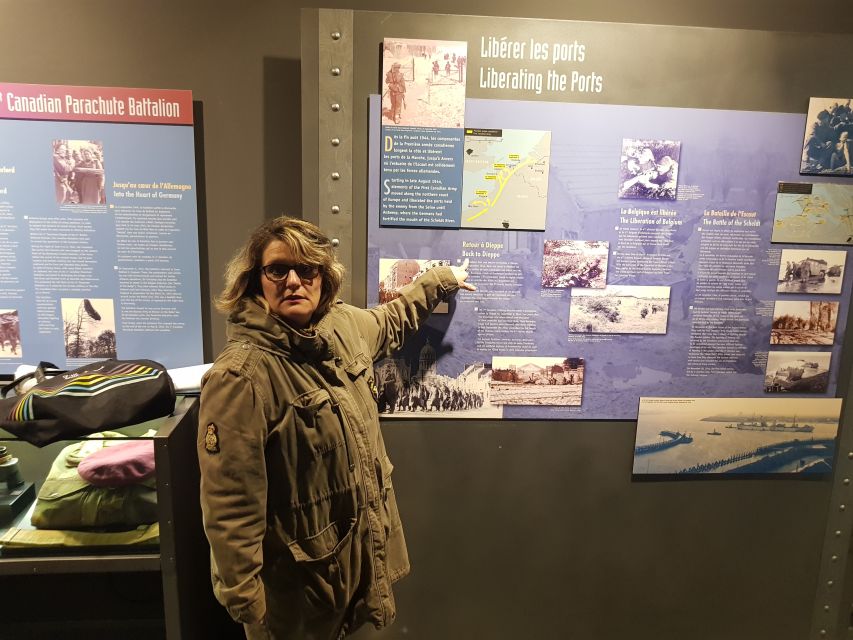
Its exhibits cover Canada’s early support for Britain, the civilian war effort, and the way the country helped fight Nazi Germany. This national story is an important counterweight to the battlefield stops. You see not only the men who landed in Normandy, but also the society that supplied, supported, and mourned them.
Museum entry fees are not included, so factor that into the final cost. The tour can still be worthwhile if you choose to concentrate on the outdoor defenses, but the center adds context that is difficult to get from bunkers alone.
If you are traveling with children, the subject matter requires care, but the tour is listed as child-friendly for children eight and older. One family experience with Mathias found that he handled children’s questions well. Children under eight are not accepted, and the material is too serious for a casual amusement-day approach.
The Atlantic Wall in the Juno park
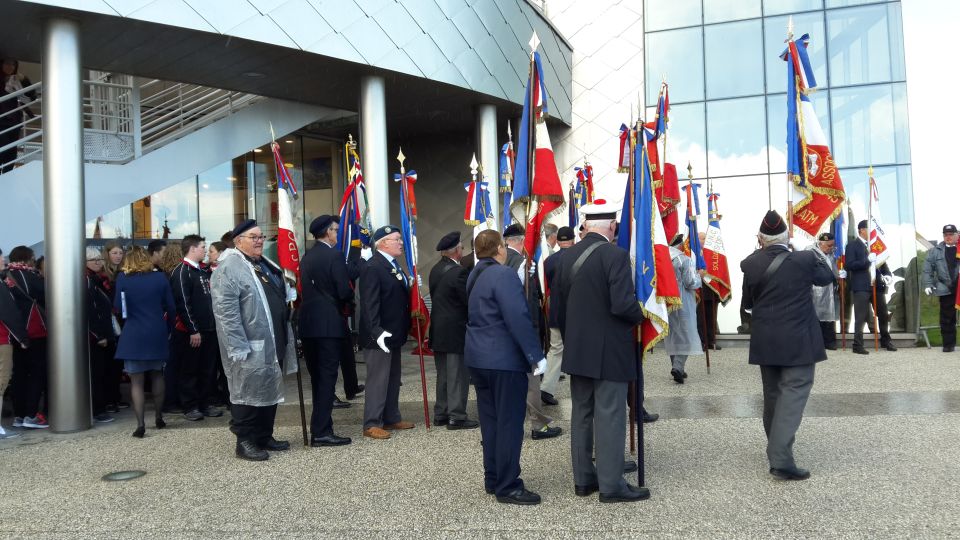
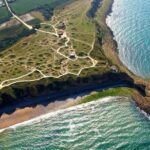
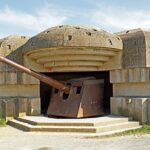
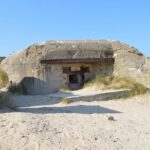
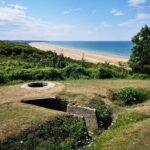
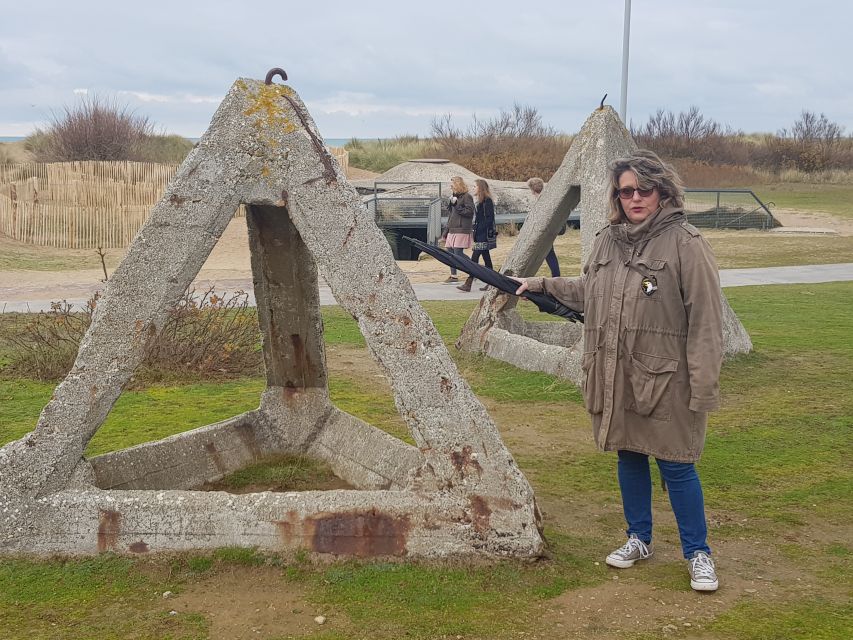
Outside the center, you will see remains of the Atlantic Wall, including strongpoints, a Tobruk position, and a command post. These concrete defenses explain what the Canadian troops faced before reaching open ground beyond the beach.
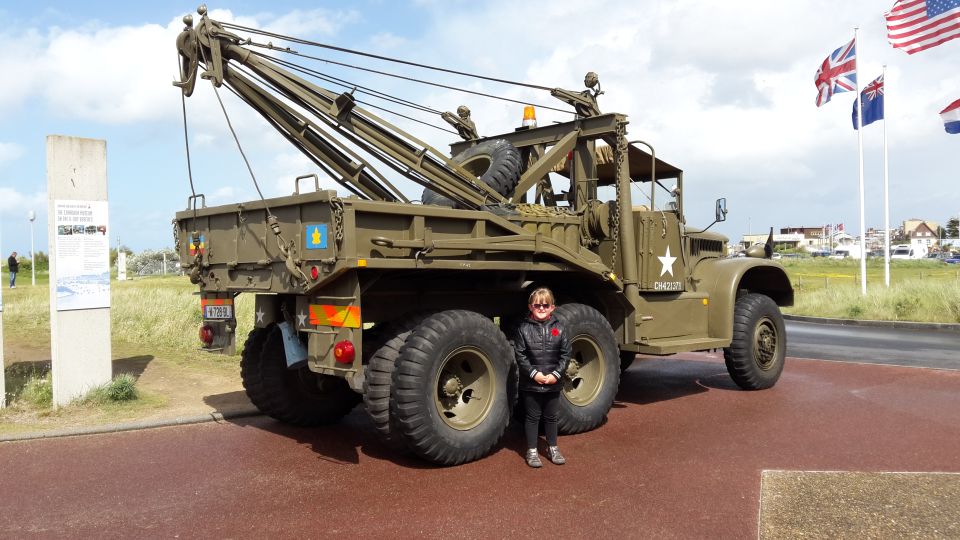
The Churchill AVRE tank is another useful object on the site. It was an Armoured Vehicle Royal Engineers tank fitted with a 290-millimeter gun. Seeing the machine beside the defenses helps you understand the specialized equipment needed to cross obstacles and attack fortified positions.
Cosy’s Pillbox is easy to identify because of its distinctive tilt. It was the scene of fierce fighting on June 6, 1944. Here, the story becomes physical. You can look at the angle of the concrete, the position of the gun emplacement, and the limited spaces in which soldiers had to move.
This is where the guide’s explanation earns its keep. A bunker is just a bunker until you know who defended it, who attacked it, and why it mattered at that point in the assault.
Churchill, Montgomery, de Gaulle, and the return to France
Juno also connects the Canadian landings to major political figures. The tour points out ground associated with Churchill, Montgomery, and Charles de Gaulle.
The sector is also linked to de Gaulle’s first steps back in France after his exile in England. A large silver Lorraine Cross, a symbol of the French Resistance, marks his return.
These names can make the story feel grand and distant. The better approach is to use them as a bridge between national leadership and the ordinary soldiers whose graves you have just visited. The tour keeps returning to that balance, moving from commanders and political symbols to regiment names and personal stories.
What the private van adds to the day
Pickup and drop-off in Caen are included, and the tour lasts eight hours. Your private group can include up to seven people, with a PA audio system in the van so you can hear the guide while moving between locations.
That setup matters in Normandy. The sites are spread across villages, beaches, cemeteries, and former defensive lines. You avoid the work of arranging separate transport, and your guide can use the drive to explain the next part of the story.
The van is described as spacious, clean, and comfortable. Water and coffee are included, and a free wheelchair is available. The operator also offers customized tours for disabled guests on request, so discuss your needs before booking rather than assuming every stop has the same access.
The tour is offered in English or French. Guides have included Mathias and Sarah, with the strongest praise aimed at their command of Canadian military history, patience with questions, visual aids, and respect at cemeteries.
Is $931 good value for up to seven?
At $931 per private group, the arithmetic changes with group size. Seven people pay about $133 each before museum admission and lunch. Four people pay about $233 each, while two people pay about $466 each.
For a full private day with hotel pickup, a dedicated guide, transport, and a tightly focused Canadian route, the price is reasonable for a larger family or group. It is harder to justify for a couple unless the Canadian connection is central to your trip or you place a high value on private guiding.
The comparison is not simply with a shared bus tour. You are paying for time, focus, and the ability to ask about a specific regiment or family member. If you only want to see the beach quickly, this is more tour than you need. If you want to understand what happened before, during, and after the landing, the value improves.
Free cancellation up to 24 hours in advance and reserve-now, pay-later booking make planning less risky. Still, remember the extra museum and meal costs.
Who should book this Canadian D-Day tour?
I would choose this experience for families with Canadian military connections, visitors staying in Caen, and anyone who wants one full day devoted to Juno and the Canadian advance.
It also suits people who prefer a guide-led day over a self-drive route. The stops are spread out, the wartime story is complex, and a good guide can prevent the visit from becoming a string of disconnected monuments.
You should be ready for a serious day. There are cemeteries, executions, heavy casualties, and stories of occupation and resistance. Comfortable shoes and warm clothes are essential, and the weather may change around the coast.
The tour is less suited to children under eight, visitors who want a light sightseeing outing, or solo visitors for whom the private-group cost is difficult to share.
Final call: book it for the story behind Juno
Book this tour if you want the Canadian experience in Normandy explained through units, places, and people, not just through a stop at Juno Beach. Ardenne Abbey, Hell’s Corner, Anguerny, the cemetery, Canada House, and the Atlantic Wall give the day a clear human and military shape.
I would especially recommend it if you are tracing a Canadian relative. Guides such as Mathias and Sarah can help connect a regiment’s name to the ground where its soldiers fought. For a larger group, the private price is sensible. For two people, it is a special-interest splurge, but one that offers far more attention than a quick shared excursion.
FAQ
Where does the tour begin and end?
Hotel pickup and drop-off are included in Caen.
How long does the experience last?
The tour lasts eight hours.
How many people can join the private group?
The price covers a private group of up to seven people.
Is the tour offered in English?
Yes. Live guiding is available in English and French.
Are lunch and museum admission included?
No. Participants pay for their own lunch, food, drinks, and museum entrance fees. Water and coffee are included.
Is the tour suitable for children and wheelchair users?
The tour is listed as child-friendly but is not suitable for children under eight. It is wheelchair accessible, with a free wheelchair available and customized tours for disabled guests on request.