REVIEW · BAYEUX
Group excursion to the landing beaches Utah and Omaha Beach
Book on Viator →Operated by Normandy Discovery Tours · Bookable on Viator
The most moving part of this Normandy day is the way it links famous battle sites with small, human stories. You move from Utah Beach and Pointe du Hoc to the church at Angoville-au-Plain, where two paratrooper doctors treated American and German soldiers and French civilians. The route gives you both the military picture and the personal cost.
I like the small group of up to eight, which gives a local guide room to explain details without shouting across a large coach. I also like the mix of places: Sainte-Mère-Église and its airborne story, the bomb craters at Pointe du Hoc, and the quiet rows at Colleville-sur-Mer.
The main consideration is the pace. Six stops in about seven hours means some visits are focused rather than leisurely, and this tour requires at least four participants before it is confirmed.
In This Review
- Key points to know before booking
- A full day across the American landing sector
- Utah Beach and the opening assault
- Sainte-Mère-Église and the airborne divisions
- Angoville-au-Plain and the church used as a hospital
- Pointe du Hoc, craters, cliffs, and German bunkers
- Omaha Beach and the weight of the name
- Colleville-sur-Mer and 9,388 American graves
- Why the small group changes the day
- Price, cancellation, and practical value
- Who will get the most from this Normandy tour?
- Should you book this D-Day excursion?
- FAQ
- Where does the tour start and finish?
- How long does the excursion last?
- How many people can join the tour?
- What places are included?
- Is the tour confirmed with any group size?
- Which airborne divisions are discussed?
- Is admission included at the stops?
- What is the cancellation policy?
Key points to know before booking
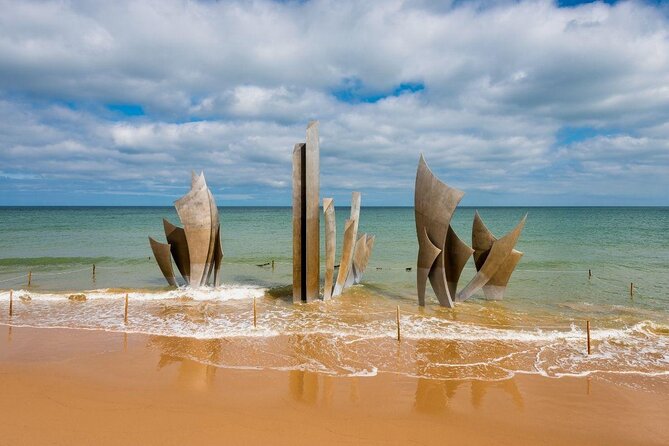
- A compact American-sector route: Utah Beach, Sainte-Mère-Église, Angoville-au-Plain, Pointe du Hoc, Omaha Beach, and Colleville-sur-Mer fit into one full day.
- A group capped at eight: The small format should make it easier to ask questions and hear the guide clearly.
- Local voices matter: Normandy-born guides such as Raphaëlle, Flavie, and Thomas bring family stories, civilian memories, and encounters with American veterans into the day.
- Strong airborne coverage: Sainte-Mère-Église receives two and a half hours, the longest stop, with attention to the 101st and 82nd Airborne divisions.
- Good value when the listed price applies: The stated price is $0.00, with admission listed as free at every stop, though you should confirm the final booking price.
- A serious, not casual, outing: The cemetery and the sites of heavy fighting call for time, attention, and respect.
A full day across the American landing sector
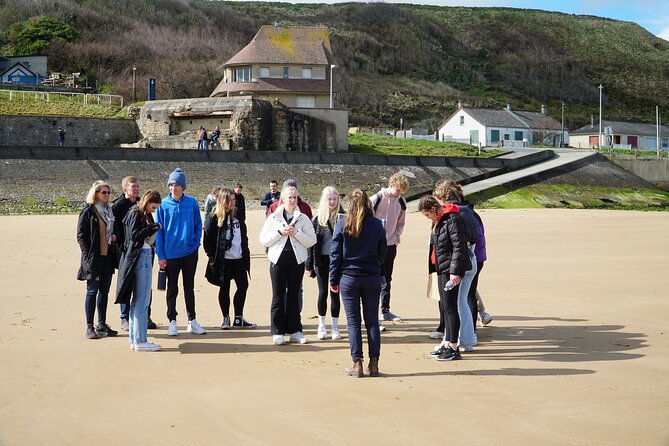
This is a history tour with a clear geographic thread. Starting in Bayeux, you head west into the American landing beaches sector and follow the events of June 6, 1944, from the airborne landings inland to the beach assaults and the fight for the German positions above the sea.
The day lasts about seven hours and returns to Place du Québec in Bayeux. Since the group is limited to eight people, the experience should feel closer to a guided field visit than a standard bus excursion. That matters in Normandy. Many sites are spread across quiet roads and small villages, and a good explanation helps you understand what happened beyond the memorials.
You will hear about German defenses, the Atlantic Wall, American divisions, Norman civilians, and the soldiers who fought here. The tour’s strongest feature is its range. It does not treat D-Day as one event that happened only on a beach. It shows the operation as a chain of airborne drops, naval landings, ranger attacks, village battles, medical aid, and long weeks of fighting.
The day is also emotionally demanding. Omaha Beach and the American cemetery can be difficult places, especially when the number of dead becomes more than a statistic. If you want a light sightseeing outing, this is not the right choice. If you want context and a guide who can connect the sites, it is a solid way to cover a lot in limited time.
You can also read our reviews of more tours and experiences in Bayeux.
Utah Beach and the opening assault
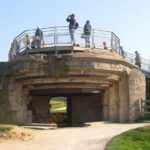
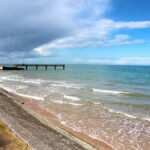
The day begins at Utah Beach, where you spend about an hour learning how the Atlantic Wall was built and how German forces prepared this stretch of coast. You also hear about June 6 and the American units that came ashore here.
One detail gives Utah Beach a more personal focus: General Theodore Roosevelt Jr. landed at this sector. The tour also points out monuments built from 1945 onward, including the memorial to the first Special Engineering Brigade. These markers help you see how the beach has been remembered over the decades, not just how it functioned as a military target.
Utah is useful as an opening stop because it introduces the basic problem faced by the invasion forces. The beach was not simply a strip of sand. It was part of a defended coast, supported by bunkers, guns, obstacles, and troops. A local guide can explain how these pieces fit together while you are standing in the place itself.
You should expect a focused visit rather than a long beach walk. One hour is enough for an explanation and a look at the principal memorial features, but it may feel short if you want to explore every display or spend time alone by the water.
Sainte-Mère-Église and the airborne divisions
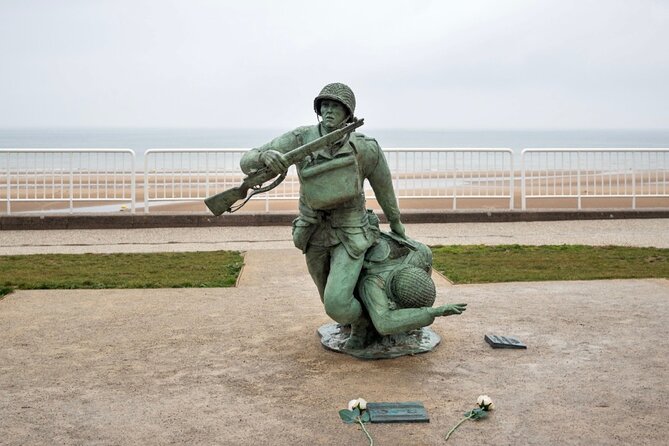
The longest stop is Sainte-Mère-Église and the surrounding paratrooper sector, with about two and a half hours. This gives the guide time to explain the 101st and 82nd Airborne divisions and the scattered airborne landings that shaped the first hours of the invasion.
Sainte-Mère-Église is especially familiar to anyone who has seen Band of Brothers. The connection is useful, but the tour does more than point to a television location. You learn how the airborne operation worked, why paratroopers were dropped inland, and how the town and nearby villages became important soon after the beach landings began.
The extra time here is one of the best choices in the schedule. Airborne operations can be confusing when explained only on a map. Roads, villages, churches, fields, and defensive positions make more sense when you can place them in the same setting. The guide’s anecdotes about local families and Norman civilians add a human layer to the military account.
This is also where the guide’s storytelling style matters most. Raphaëlle has been praised for clear explanations and personal anecdotes connected to Normandy and D-Day. Flavie and Thomas are also associated with the guiding team and bring strong knowledge of the events in the area. The exact guide may vary, but the experience is designed around local interpretation rather than a simple recorded commentary.
A possible drawback is that visitors who already know the airborne story may find some material familiar. Even so, the time in Sainte-Mère-Église helps anchor the rest of the day.
Angoville-au-Plain and the church used as a hospital
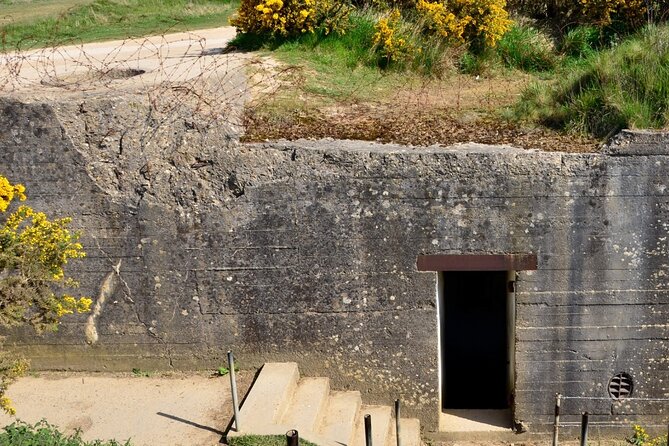
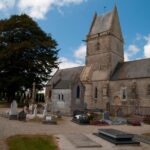
The stop at Angoville-au-Plain lasts about 20 minutes, but it may be one of the most memorable. In this small village, you visit a church where two paratrooper doctors treated American and German soldiers along with French civilians.
This story cuts through the usual battle maps and troop movements. A church became a place of medical care during a violent fight, and the doctors treated wounded people from opposing forces. That detail gives you a sharper sense of how civilians and soldiers shared the same buildings and villages during the invasion.
Twenty minutes is not enough for a long village visit, so you should see this as a concentrated historical stop. Its value comes from the story and the setting, not from a large collection of exhibits. It also breaks up the major battlefield sites with something smaller and more intimate.
For many people, this is the sort of place that makes a guided day worthwhile. You might pass through the village on your own and never understand what happened there. With a guide, the church becomes part of the wider story of the airborne sector.
Pointe du Hoc, craters, cliffs, and German bunkers
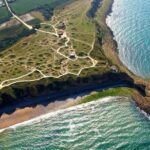
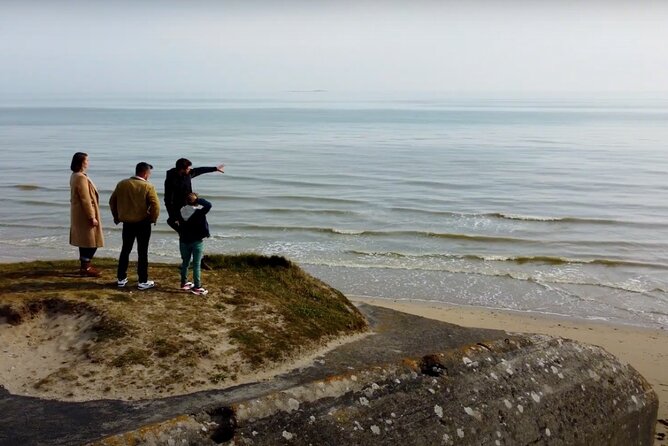
At Pointe du Hoc, you spend about an hour examining one of the most striking battle sites in Normandy. American Rangers were assigned to capture and destroy the German battery positioned above the cliffs. The attack required soldiers to climb the cliff face while under fire and then fight through the German defenses.
The ground here still shows the force of the bombardment. You walk among large bomb craters that remain visible across the site. They are not decorative features or reconstructed scenery. They help you grasp the scale of the attack and the rough conditions in which the Rangers operated.
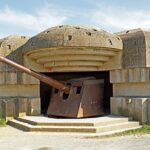
The guide also explains how the Germans used the bunkers and lived within the defensive position. That detail is important. Pointe du Hoc was not just a dramatic cliff assault. It was a working military site, built to control the coast and resist an invasion.
You should wear practical shoes and take care around uneven ground. The information supplied for the tour does not promise special mobility arrangements, and the cratered terrain may require care. Most people can participate, but the stop is more physically demanding than a paved memorial visit.
An hour gives you enough time to walk through the main area and hear the battle account. It may not satisfy someone who wants to inspect every bunker in detail, but it keeps the day moving toward Omaha Beach.
Omaha Beach and the weight of the name
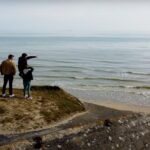
Omaha Beach is the most famous and perhaps the hardest stop for many people. The tour covers about an hour at the sector often called Bloody Omaha, where thousands of American soldiers were killed during the landing.
Films such as Saving Private Ryan have shaped the popular image of Omaha, but standing on the beach changes the scale of the story. The shore looks open and simple. The guide helps explain why the approach was so deadly and how the beach fitted into the German defense system.
The value here is not only military detail. Omaha asks you to think about the young men who landed under fire, the units that struggled forward, and the enormous cost of gaining a foothold. The guide’s stories about American veterans and Norman families can make this stop feel less like a film location and more like a place where real people endured an extraordinary day.
One hour is a reasonable amount of time for an overview, but it does not leave much room for a long solitary walk. The tour is built for coverage, so you will need to accept a more structured visit. If Omaha is your main reason for coming to Normandy, you may want a separate return visit, but this tour gives you a meaningful first look.
Colleville-sur-Mer and 9,388 American graves
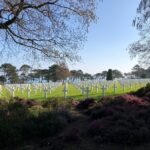
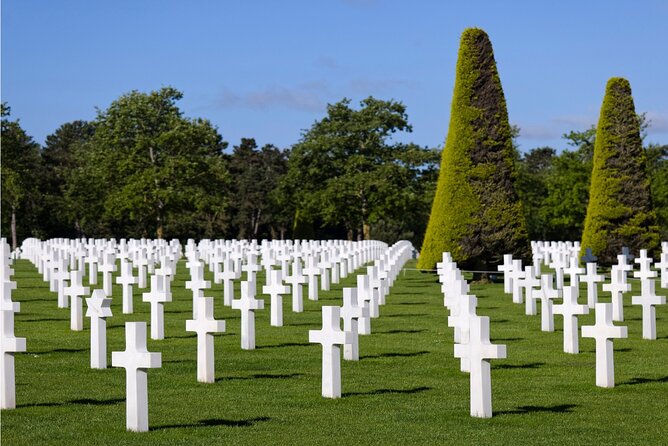
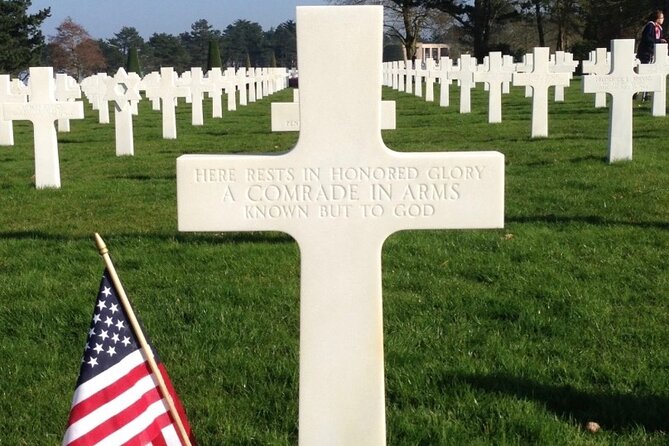
The final major stop is the American Cemetery at Colleville-sur-Mer, where 9,388 American soldiers killed during the Battle of Normandy are buried. You have about an hour here to walk among the graves, reflect, and learn about the people represented by the rows of white markers.
This is the right place to end the day. After beaches, cliffs, villages, and battlefield defenses, the cemetery brings the human cost into full view. The number is enormous, but the setting encourages you to slow down and consider individual lives rather than only military totals.
I would treat this hour as quiet time, even while listening to the guide. The cemetery is impressive in scale, but its power comes from restraint. You do not need a dramatic presentation to understand what it represents.
The timing is also practical. Placing the cemetery late in the day allows the earlier stops to provide context. By the time you reach Colleville-sur-Mer, you have seen several places connected to the fighting. The graves then carry the names and consequences of those operations.
Again, the visit is short enough that you may not see every part of the cemetery. The tour gives you an introduction and time for reflection, not an exhaustive study of every buried soldier.
Why the small group changes the day
A maximum of eight people is a major advantage for this route. Normandy’s D-Day sites cover a large area, and explanations can lose their force when delivered to a full coach. In a small van or similar vehicle, you should have a better chance of hearing the guide and asking about a detail that catches your attention.
The format also suits the local storytelling promised here. Family anecdotes, civilian experiences, and meetings with American veterans work better in a small circle than through a loudspeaker. Raphaëlle has been singled out for clear explanations and kindness, while Flavie and Thomas are connected with highly personal guiding around the Normandy countryside.
There are trade-offs. A small tour still follows a schedule, and one group’s questions can affect the time available at a stop. The experience also requires a minimum of four participants, so a booking is not guaranteed until that threshold is met.
The meeting point is Place du Québec in Bayeux, and the activity ends there. It is near public transportation, which makes the start and finish fairly simple if you are staying in town.
Price, cancellation, and practical value
The stated price is $0.00, and admission is listed as free at each stop. That is unusual for a guided full-day outing, so you should confirm the final price and inclusions when booking rather than assume there will be no charge.
If the listed price applies, the value is very strong. You receive roughly seven hours of transport, interpretation, and access to a carefully chosen group of American-sector sites. The small group is especially important because the guide is a central part of the experience, not just an escort between attractions.
Free cancellation is available up to 24 hours before the start time for a full refund. Cancellations or changes made within 24 hours are not refunded or accepted. If the minimum number of participants is not reached, the provider offers another date or experience, or a full refund.
Most people can take part, and the tour is near public transportation. The supplied details do not specify vehicle features, meal arrangements, or special accessibility services, so ask the provider if those points matter to you.
Who will get the most from this Normandy tour?
I would choose this day if you are staying in Bayeux and want a clear introduction to the American landing sector without arranging several separate visits. It suits first-time visitors, families interested in the Second World War, and anyone who prefers local stories over a purely museum-based visit.
It is also a good fit if you like films such as Band of Brothers or Saving Private Ryan, provided you want to move beyond the screen. Sainte-Mère-Église and Omaha Beach offer familiar reference points, while Angoville-au-Plain and the personal accounts add less familiar material.
You may want a different plan if you prefer slow travel, long walks, or several hours at one site. The schedule covers a lot of ground. It is efficient, but the price of that efficiency is limited free time at each stop.
Should you book this D-Day excursion?
Book it if you want a compact, personal introduction to Normandy’s American sector and value a guide who can connect military events with local families, civilians, and veterans. The small group, strong airborne focus, Pointe du Hoc walk, and final visit to Colleville-sur-Mer make the route well balanced.
Before paying, confirm the unusual $0.00 price and check whether the minimum of four participants has been met. Also consider your walking comfort at Pointe du Hoc and your priorities at Omaha Beach and the cemetery.
For a first day in Bayeux, this is a thoughtful choice. It covers the major names, but its best moments may come from the smaller places between them.
FAQ
Where does the tour start and finish?
It starts at Place du Québec, Pl. du Québec, 14400 Bayeux, France, and ends back at the same meeting point.
How long does the excursion last?
The full experience lasts approximately seven hours.
How many people can join the tour?
The group has a maximum of eight participants.
What places are included?
The tour visits Utah Beach, Sainte-Mère-Église, Angoville-au-Plain, Pointe du Hoc, Omaha Beach, and the American Cemetery at Colleville-sur-Mer.
Is the tour confirmed with any group size?
The tour requires a minimum of four participants to be confirmed.
Which airborne divisions are discussed?
The Sainte-Mère-Église portion covers the 101st and 82nd Airborne divisions.
Is admission included at the stops?
Admission is listed as free for each stop in the supplied tour details.
What is the cancellation policy?
You can cancel at least 24 hours before the start time for a full refund. Cancellations or changes made less than 24 hours before the experience are not refunded or accepted.