REVIEW · BAYEUX
Normandy D-Day Beaches Private Tour US sector from Bayeux
Book on GetYourGuide →Operated by trip my normandy · Bookable on GetYourGuide
Omaha Beach, Pointe du Hoc, and the American Cemetery give this day a serious purpose, but the tour adds details you cannot get from a quick stop and a few photographs. You follow the American advance through beaches, cliffs, hedgerows, German defenses, and villages linked to the fighting. The private bunker and the guide’s family story of the French Resistance make this more personal than a standard coach excursion.
I like the small-group format and the way the day connects the military plan with ordinary French life under occupation. I also like the range of sites, from the American Cemetery to Sainte-Mère-Église, rather than spending all eight hours at one beach. The main consideration is pace: this is a full eight-hour route, and lunch, walking on uneven ground, and several stops require decent stamina.
In This Review
- Key points to know before booking
- Why this US-sector tour works as a full day
- Omaha Beach and the American Cemetery
- Pointe du Hoc and the Ranger assault
- The Roosevelt Café and lunch on a bunker
- The private bunker and original artifacts
- Utah Beach, hedgerows, and the road to Sainte-Mère-Église
- The guide’s French Resistance connection
- What the $872 private price really buys
- Practical advice for a smoother day
- Who should book this Normandy day?
- FAQ
- How long does the Normandy D-Day Beaches Private Tour last?
- Where does pickup take place?
- Is this a private tour?
- Which languages are available?
- Is lunch included in the price?
- Which D-Day sites are visited?
- Is the tour wheelchair accessible?
- What should I bring?
Key points to know before booking
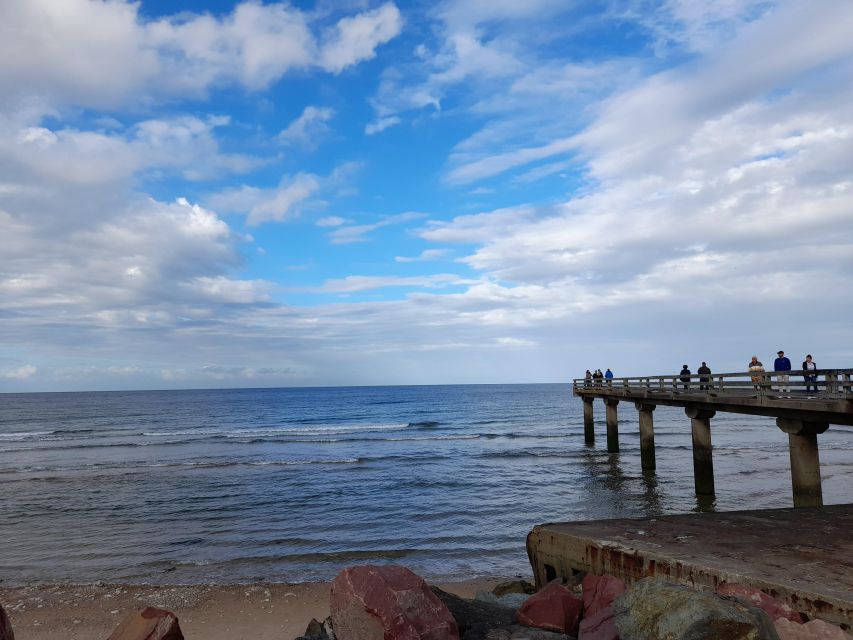
- Omaha Beach comes first, giving you a clear starting point for understanding the scale and danger of the landings.
- Pointe du Hoc still shows enormous bombardment craters, along with the cliffs climbed by 225 Army Rangers.
- A private bunker with original American and German artifacts adds an unusual stop not open to the general public.
- The Roosevelt Café sits on a bunker and serves as a meeting place for veterans, though lunch is at your own expense.
- Sainte-Mère-Église connects the battlefield to the famous paratrooper story of John Steele and the church tower.
- A private van for up to seven people makes it easier to ask questions and adjust the day for families or disabled visitors.
Why this US-sector tour works as a full day
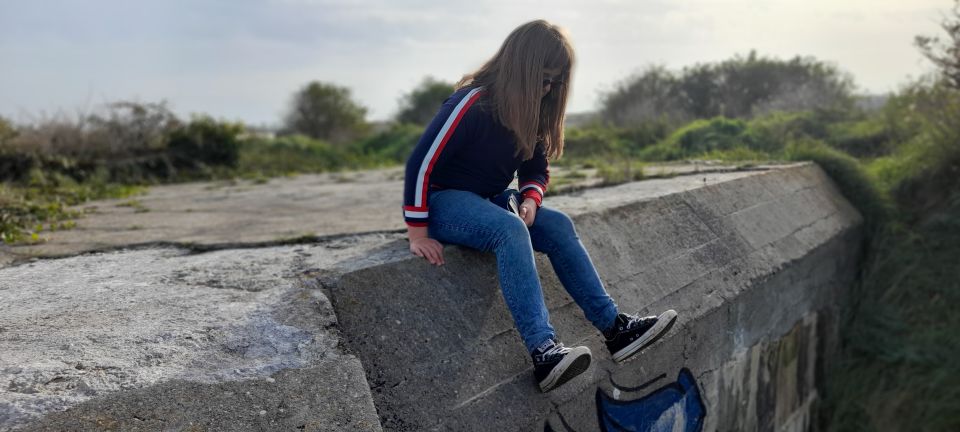
The Normandy D-Day story is spread across a wide area. Omaha Beach lies apart from Pointe du Hoc, Utah Beach, and Sainte-Mère-Église, so a good route matters. This tour uses an air-conditioned van and covers the major American sites in one day, with pickup and drop-off in Bayeux or Caen as advertised.
You are not simply ticking off beaches. The guide discusses the ground forces, naval support, and airborne units, then ties those subjects to the Atlantic Wall, artificial ports, German defenses, and the Fortitude decoy plan. You also hear about French life under German occupation and the Resistance. That wider frame helps you understand why the landings were not just a morning assault, but a carefully planned operation involving deception, engineering, ships, aircraft, and local networks.
The private format is useful here. With a group of up to seven, you can ask why a bunker was placed in a certain spot or how the cliffs affected the Rangers. A PA audio system in the van helps you hear the guide while driving, an important practical touch when the road noise or the size of the group might otherwise make explanations hard to follow.
There is no named guide provided for this experience, so you should expect a live English or French guide rather than a specific person. The strongest feature is the local angle: the guide shares his family’s story of the French Resistance. That does not replace military facts, but it gives the occupation a human scale.
You can also read our reviews of more private tours in Bayeux

Omaha Beach and the American Cemetery
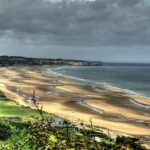
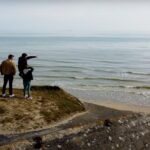
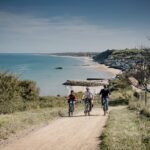
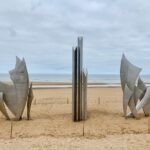
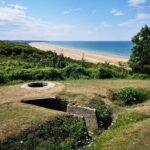
The first major stop is Omaha Beach, one of the most important places in the American sector. You get to look across the shore while the guide explains the difficulties faced by the troops arriving under fire. The physical setting matters. You can see the relationship between the beach, the higher ground, and the German defenses instead of studying the action only on a map.
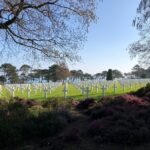
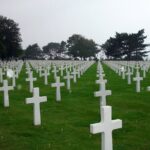
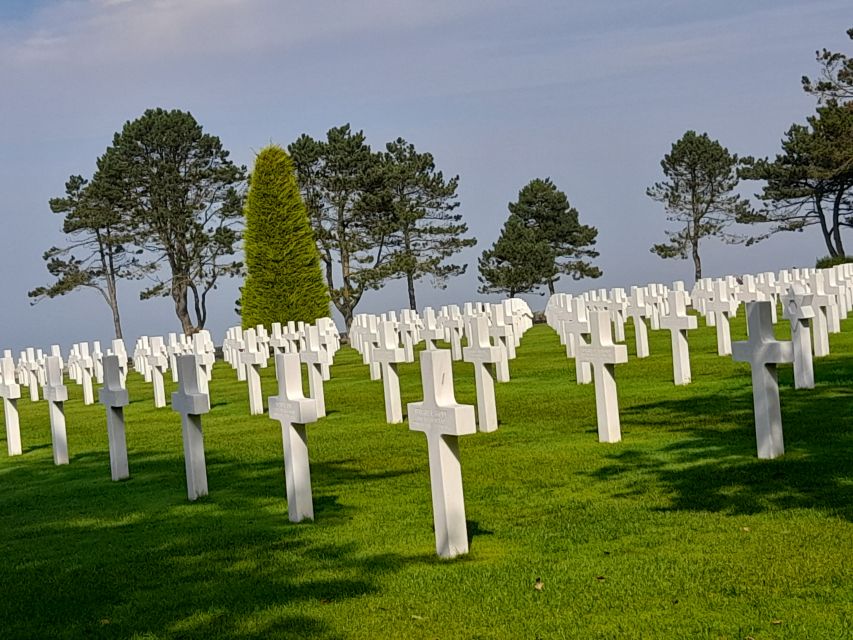
The visit then moves to the American Cemetery, where about 10,000 American soldiers are buried or marked as missing in action. This is a quiet place, and it deserves more than a rushed photograph from the van. Give yourself time to take in the scale of the rows and the number represented by the broad figure.
I like that the tour begins with both the battlefield and the cemetery. Omaha gives you the military setting; the cemetery gives you the human cost. The combination keeps the day from becoming a collection of fortifications and dates.
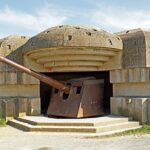
The program also includes the chance to visit a strongpoint that formed part of the Atlantic Wall. This helps explain the German defensive system. You may see how a position was built to control movement along the coast, and the guide can place that single strongpoint within the larger network of bunkers and batteries.
Wear shoes that can handle uneven ground. The tour is classed as moderate, and warm clothing is recommended. Normandy weather can change, and the beach and exposed sites may feel cooler than the village streets.
Pointe du Hoc and the Ranger assault
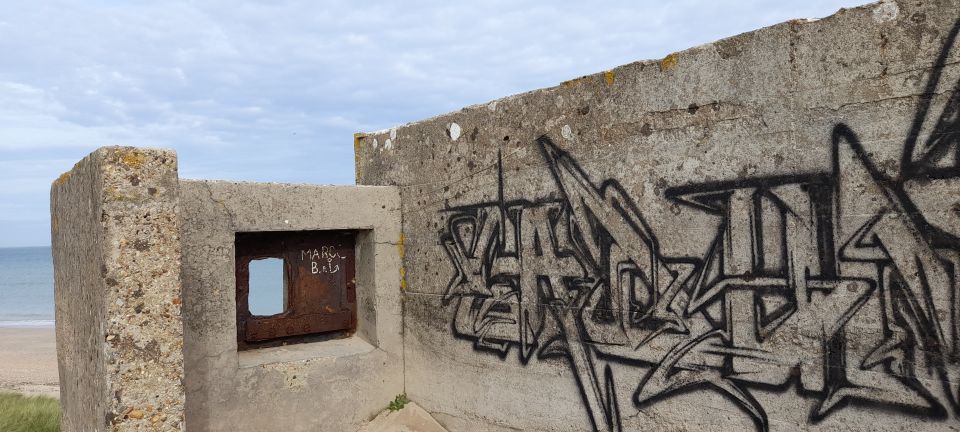
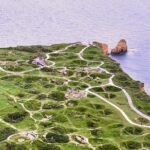
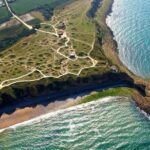
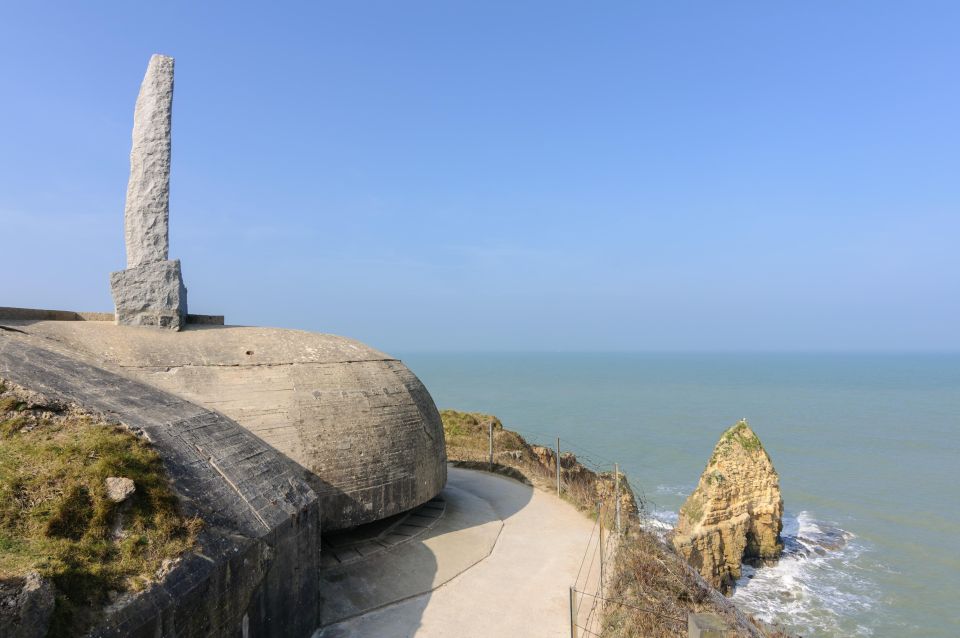
Pointe du Hoc is the day’s most dramatic military site. Naval and aerial bombardment left huge craters, and these remain visible. The ground itself shows the violence of the attack in a way that a museum model cannot.
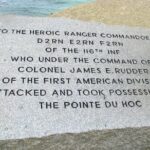
You also see the cliffs where 225 Rangers climbed roughly 100 feet. The height helps you grasp the physical challenge, though the real value comes from combining the view with the guide’s explanation of the German defenses. Pointe du Hoc was not just a scenic headland. It was a fortified position that had to be attacked because of its threat to the beaches below.
I find this stop especially useful for understanding why Allied commanders treated German batteries and strongpoints as serious obstacles. The craters, ruined defenses, and cliff edge bring the tactical problem into focus. The site also makes clear why comfortable shoes matter. Expect outdoor walking, exposed ground, and a place where the weather can affect your comfort.
The drawback is that Pointe du Hoc can feel stark and open. There is little shelter from rain or wind, so bring the warm clothing listed for the tour. If you are traveling with young children or anyone who tires quickly, tell the provider in advance. The route can be customized for families and disabled visitors on request.
The Roosevelt Café and lunch on a bunker
Lunch is not included, but the planned stop at the Roosevelt Café gives you a convenient place to eat. The café was built on a bunker and is now a meeting place for veterans. That detail makes it more than a generic restaurant break. You are eating in a building tied directly to the defensive system you have been studying.
Because lunch is at your own expense, budget separately for it. The exact menu and price are not provided, so do not treat the $872 tour cost as an all-inclusive fare. Water and coffee are included during the activity, but your meal is not.
This stop also provides a useful pause in a demanding day. Eight hours of beaches, cemeteries, bunkers, and village streets can be tiring. A proper lunch gives you time to sit, warm up, and talk through what you have seen before the route continues.
The private bunker and original artifacts
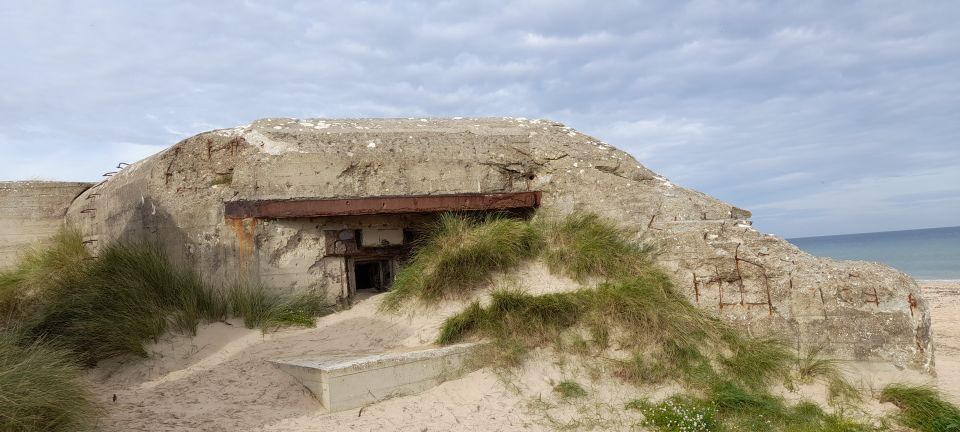
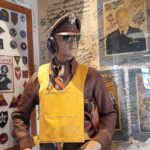
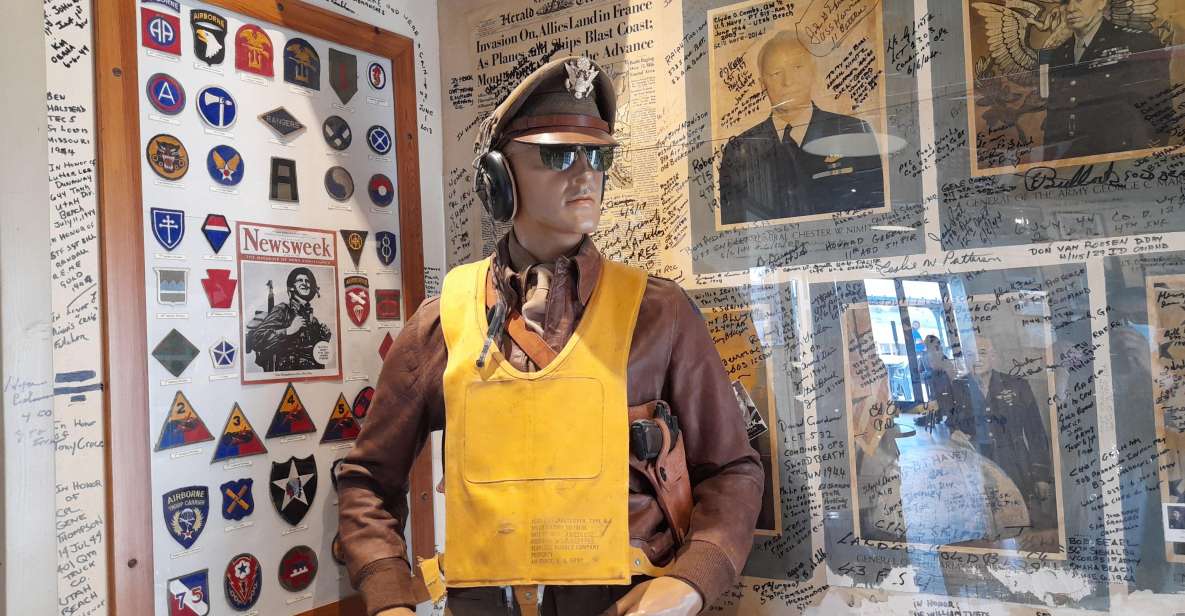
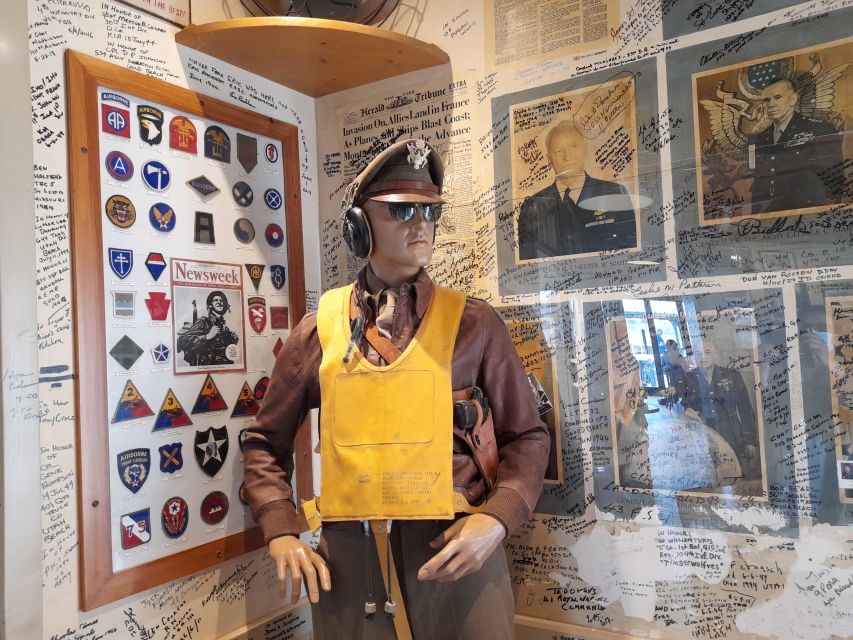
The private bunker is one of the most unusual parts of this experience. It is not open to the public, so access gives your group a view of a type of site many independent visitors cannot simply enter. The bunker contains original American and German artifacts.
That makes the stop valuable for two reasons. First, the structure itself shows the practical side of the Atlantic Wall. Second, the artifacts connect the building to the people who used it. A public museum can offer a larger collection, but a private bunker can feel more direct because the setting and objects remain together.
The available details do not specify the bunker’s exact location, size, or the individual artifacts on display. You should not expect a full museum visit with a published collection list. Instead, treat it as a focused, guide-led stop that adds texture to the larger story.
Utah Beach, hedgerows, and the road to Sainte-Mère-Église
The route continues from Utah Beach toward Sainte-Mère-Église, passing through the hedgerows. These enclosed lanes and fields shaped movement after the landings. The hedgerows were not just pretty country scenery. They created tight, difficult terrain for advancing troops and defending forces.
This part of the drive helps connect the beaches to the inland battle. You are seeing the kind of countryside through which troops had to move after leaving the coast. The van matters here because the sites are spread out, and a private guide can explain what you are passing rather than leaving the journey as dead time.
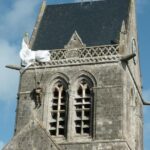
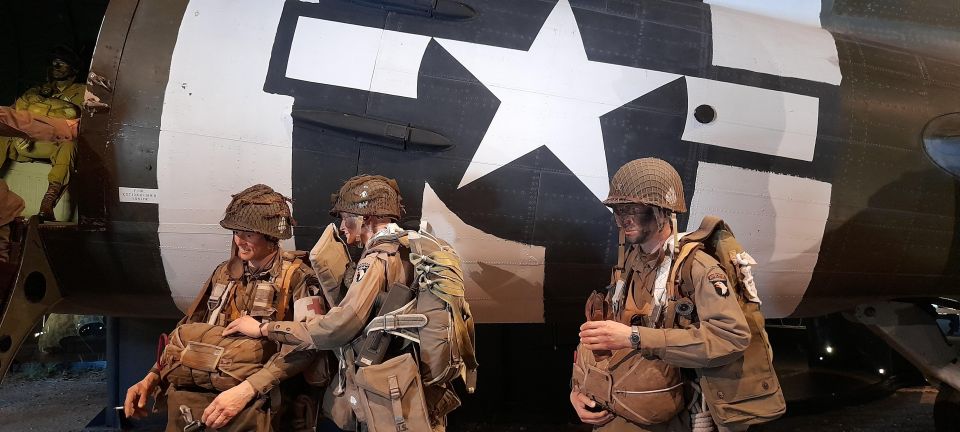
Sainte-Mère-Église was made famous by the film The Longest Day. The church tower is linked to John Steele of the 505th Parachute Infantry Regiment, who landed there during the airborne operation. The story is memorable, but the guide should place it within the wider airborne effort rather than letting one dramatic episode represent the entire campaign.
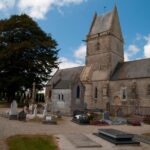
Inside the church, you can see two stained-glass windows made to commemorate the city’s liberation by the 82nd Airborne Division on June 6, 1944. This is a welcome change of mood after the beaches and bunkers. The windows show how remembrance became part of the town itself, not something confined to a cemetery or military monument.
The guide’s French Resistance connection
One of the tour’s more personal features is the guide’s family story of the French Resistance. You should listen for how this story fits with the broader explanation of occupation, intelligence, local support, and liberation.
The details of the family story are not provided in advance, so I would not book this expecting a particular named episode. Still, a family connection can help you think about the French population as active participants in a dangerous period, not merely a backdrop to the Allied campaign.
This is also where the tour can feel different from a purely military history outing. You hear about the Resistance alongside the Fortitude deception plan, the Atlantic Wall, and the airborne landings. Those subjects belong to different levels of the story, but together they show how the invasion depended on both large-scale planning and local action.
What the $872 private price really buys
The advertised rate is $872 per group of up to seven people. At the maximum group size, that works out to about $125 per person before lunch. For two people, the per-person price is much higher, but the private format remains the same.
You are paying for an eight-hour private vehicle, hotel pickup and drop-off, a live guide, entry fees for the listed sites, water, coffee, and access to the private bunker. You are also buying time efficiency. Reaching Omaha, Pointe du Hoc, Utah Beach, and Sainte-Mère-Église independently in one day would require careful planning and your own transport.
The price makes the most sense for a family or group of friends who can fill most of the seven available places. It is less compelling for a solo visitor or couple on a tight budget, especially since lunch is extra. A shared tour may cost less, but it will not offer the same ability to ask questions or adjust the pace.
The private group also helps if your party has special needs. The activity is wheelchair accessible, a free wheelchair is available, and the tour can be customized for families and disabled visitors on request. Ask about the exact route and walking demands before booking, since beaches, craters, and fortifications may not all offer the same level of access.
Practical advice for a smoother day
Wear comfortable shoes and bring warm clothing. The outdoor sites are the heart of the tour, and you will get more from them if you are not distracted by cold feet or poor weather protection.
Plan on a full day, not a relaxed half-day outing. The itinerary covers several major sites, village roads, and a lunch stop. If you want long, unhurried visits at every location, ask the provider how much time is planned at each stop before you confirm.
The van has air conditioning, and the PA system helps you follow the commentary while driving. Pickup is offered in Bayeux or Caen in the activity description, while the additional information specifically names Bayeux, so confirm your exact pickup point if you are staying in Caen.
English and French guiding are available. The tour includes entry fees for the sites listed in the program, but lunch remains separate. Free cancellation is available up to 24 hours before departure, and you can reserve now and pay later, which helps if your Normandy plans are still shifting.
Who should book this Normandy day?
I would choose this tour for a small family, a group of friends, or anyone who wants the US D-Day sector explained in one coherent day. It suits readers who want more than Omaha Beach alone, especially those interested in German defenses, airborne operations, the Resistance, and the way the battle moved inland.
It is also a good choice if you do not want to drive unfamiliar French roads or coordinate distant sites yourself. The private van removes much of that work, while the local guide provides context between stops.
I would hesitate if you want a slow, museum-heavy experience or prefer to spend an entire day at only one beach. The route is ambitious, lunch is not included, and the outdoor sites require suitable clothing and moderate mobility. For a first look at the American sector from Bayeux, though, the combination of major memorials, lesser-seen defenses, a private bunker, and Sainte-Mère-Église gives you a strong and personal day.
FAQ
How long does the Normandy D-Day Beaches Private Tour last?
The tour lasts eight hours, including transportation between the listed sites and return to your starting point.
Where does pickup take place?
Pickup and drop-off are offered from locations in Bayeux or Caen in the activity description. The additional information specifically lists pickup in Bayeux, so confirm the exact arrangement if you are staying in Caen.
Is this a private tour?
Yes. It is a private group experience for up to seven people.
Which languages are available?
The live guide is available in English or French.
Is lunch included in the price?
No. Lunch is not included. The itinerary includes a stop at the Roosevelt Café, where you can buy lunch.
Which D-Day sites are visited?
The route includes Omaha Beach, the American Cemetery, a strongpoint connected to the Atlantic Wall, Pointe du Hoc, Utah Beach, Sainte-Mère-Église, and a private bunker. The tour also passes through the hedgerows.
Is the tour wheelchair accessible?
Yes. The activity is listed as wheelchair accessible, and a free wheelchair is available. The route can be customized for families and disabled visitors on request.
What should I bring?
Bring comfortable shoes and warm clothing. Water and coffee are included, but you should bring money for lunch.