REVIEW · BAYEUX
Private vintage sidecar tour of the D-Day Landing Beaches
Book on Viator →Operated by RETRO TOUR NORMANDY · Bookable on Viator
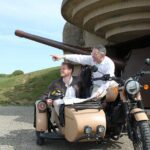
A sidecar turns history into motion. This private vintage ride from Bayeux mixes WWII storytelling with small-group access to iconic landing-zone stops, plus the practical comfort items you actually need—helmets, gloves, goggles, and rain gear. If you’re aiming for something more human than a bus loop, this is built for that.
I really like two things here. First, you get a driver-guides-you approach (with guides such as Philippe and Remi/Remy often credited for both humor and clear explanations). Second, the pacing is flexible: there are planned photo and break moments, and some stops can be adjusted based on time.
One thing to consider: the route can run into traffic and crowds, especially around big D-Day dates, and that can affect whether time allows every optional stop. Also, the ride is part of the experience, so if corners make you queasy, you’ll want to know that the sidecar is still a motorcycle experience.
In This Review
- Key highlights worth planning for
- Entering the vintage sidecar: how the experience really works
- The route makes sense: Bayeux to the beaches in a logical sequence
- Stop 1: Bayeux as the warm-up chapter
- Stop 2: Arromanches-les-Bains and the Mulberry harbor lesson
- Stop 3: Longues-sur-Mer and what Atlantic Wall “surviving” looks like
- Stop 4: Port-en-Bessin-Huppain and the fuel pipeline story (optional)
- Stop 5: Omaha Beach itself (also optional)
- Omaha Beach to the cemetery: timing can make or break it
- Bayeux again at the end: why the wrap-up is more than a ride back
- Who should book a sidecar D-Day day?
- Price and value: what $299.32 buys you here
- Practical tips so your day feels easy, not stressful
- Should you book this sidecar D-Day tour?
- FAQ
- Is this tour private?
- How long is the private sidecar tour?
- How much does it cost?
- Where is the pickup area?
- What languages are available?
- What’s included in the price?
- Is lunch included?
- Which stops are guaranteed?
- Can you always visit the Normandy American Cemetery?
- What age can kids participate?
- What happens if weather is bad?
- Cancellation: is it refundable?
Key highlights worth planning for

- Vintage sidecars with helmets, gloves, and goggles so you’re geared up instead of improvising.
- Rain gear included, and the tour is meant to run rain or shine when possible.
- Small-group feel (max six per booking), with room on each sidecar for one passenger behind the driver plus one in the sidecar.
- Stop-by-stop WWII context, from the Mulberry harbor at Arromanches to the Atlantic Wall battery at Longues-sur-Mer.
- Optional timing-based stops (Port-en-Bessin-Huppain and Omaha Beach may be skipped if the schedule tightens).
- A viewpoint-first approach near Omaha, plus a cliffside memorial at Normandy American Cemetery when the timing works.
Entering the vintage sidecar: how the experience really works
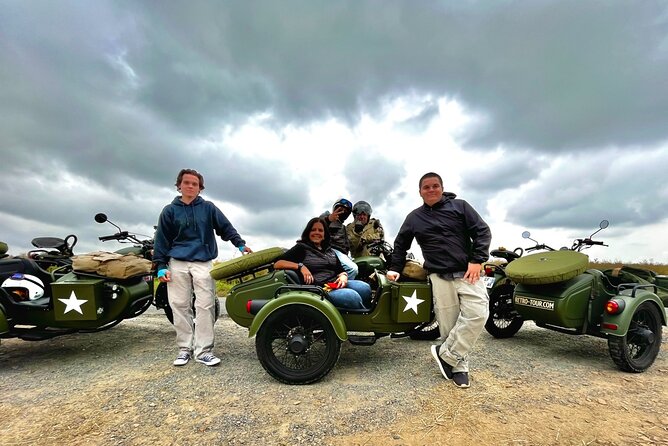
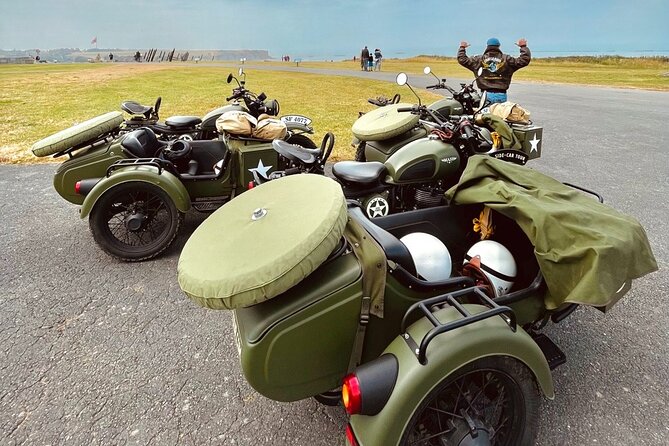
The whole day centers on one simple idea: you’re not just visiting places—you’re traveling between them at a speed that keeps the scenery and history connected. Your guide arrives with a vintage sidecar and helps you get set up with helmets, gloves, vintage goggles, and rain gear if the weather calls for it.
From the start, the tour feels personal. It’s private, meaning only your group rides, and the group size stays small (up to six per booking). You’re also not stuck with rigid “stay on this spot for exactly X minutes” energy. There are built-in breaks for photos, and your guide can shape the final flow as time and weather allow.
One smart detail: you can choose where you’re picked up within the Bayeux area (up to 5 km around Bayeux), or you can meet at the Bayeux Battle of Normandy Museum parking lot or the Bayeux bus station. That flexibility matters, especially if you’re staying close to the center one day and want an easier start the next.
And yes, it’s English-guided. That’s useful here because the value isn’t just the sights—it’s the way the events are explained as you pass key locations.
You can also read our reviews of more private tours in Bayeux

The route makes sense: Bayeux to the beaches in a logical sequence
This tour is built like a story with chapters. You start in Bayeux, then move through the Gold/June 6 area toward the Omaha side and the cemetery above it. Even if you already know the basics of D-Day, the order helps your brain connect what you’re seeing to why it mattered.
Stop 1: Bayeux as the warm-up chapter
You begin with Bayeux, where your Gentleman Sider meets you at your pickup point or the museum/bus station area. Before heading out, you gear up—helmet, gloves, and vintage goggles—then settle in.
This start is more than “getting from A to B.” It’s a practical warm-up. You get comfortable on the sidecar setup, and there are time breaks for photos as you leave town. You’ll also likely get your first round of context—what you’re about to see, and how the landing zones connect.
If Bayeux is new to you, it’s a good starting point because it’s right in Normandy’s history lane, without feeling like you’re only there for a single day’s battlefield checklist.
Stop 2: Arromanches-les-Bains and the Mulberry harbor lesson
Next comes Arromanches-les-Bains, tied directly to the Allies’ engineering problem: getting heavy equipment onto the beaches fast. After D-Day on June 6, 1944, the Allies established Mulberry B, a temporary artificial harbor meant to bypass the need to wait for deeper-water ports like Le Havre or Cherbourg.
Here’s what makes this stop valuable: Arromanches was centered in the Gold Beach landing area, yet it was spared the worst fighting on June 6. That mattered because the harbor needed the beach and communication routes to stay usable. British troops landed farther east (between Asnelles and Ver-sur-Mer) and liberated Arromanches by land later that evening. The harbor then went into operation on June 14.
In plain terms, this is where you see that D-Day wasn’t only about bravery. It was also logistics—floating parts of a plan into place while the war raged around them.
Stop 3: Longues-sur-Mer and what Atlantic Wall “surviving” looks like
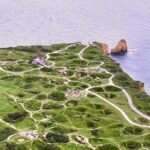
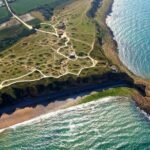
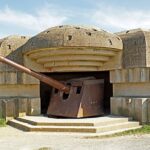
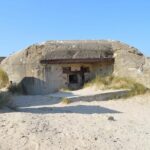
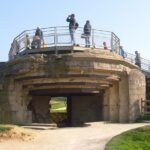
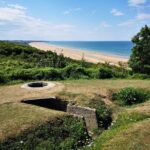
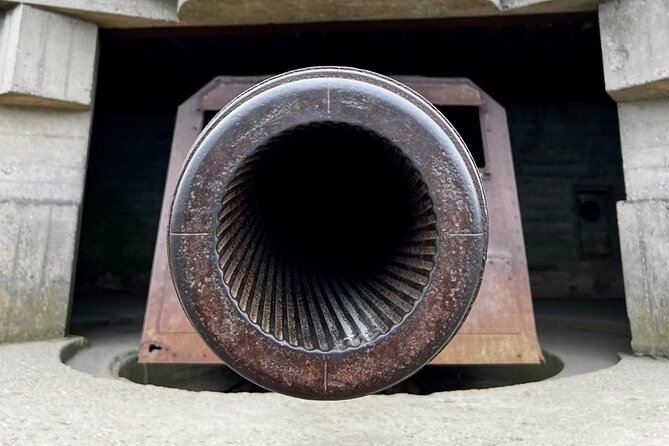
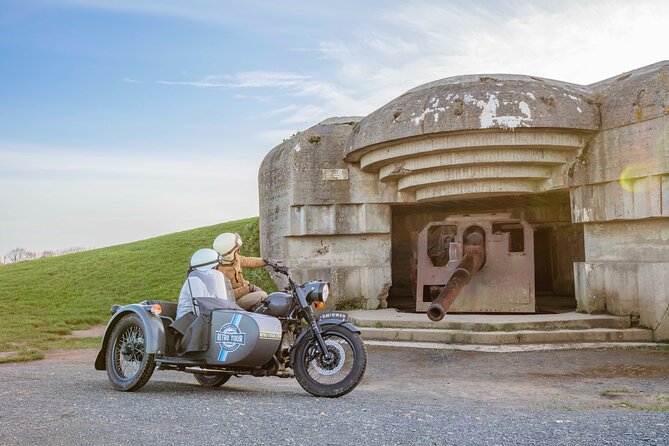
Then you hit Longues-sur-Mer, an Atlantic Wall artillery battery with four long-range 150 mm naval guns. Each was protected by reinforced concrete casemates, plus supporting installations used to operate and defend the guns.
Even though the battery sat in the Normandy landing zone (between Omaha and Gold), it didn’t fully engage on D-Day because it faced intense aerial and then naval bombardment. The site was captured the following day by British troops.
This stop is popular because it’s in very good preservation condition and is open to visitors. On a tour like this, that matters: it’s easier to picture how the defenses were laid out when you’re looking at something that still reads like a real installation, not a flattened memory.
Stop 4: Port-en-Bessin-Huppain and the fuel pipeline story (optional)
Port-en-Bessin-Huppain may be excluded if time runs tight, so I’d treat it as a “best case” stop rather than guaranteed. Still, it’s a compelling one.
Liberated on June 8, 1944 by the 47th Royal Marines Commando during Operation Overlord, Port-en-Bessin became a hub for a pipeline system—about 120 km—to supply Allied armies with fuel starting as early as June 16. Later, Operation PLUTO expanded the idea with underwater pipelines laid between the Isle of Wight and Querqueville near Cherbourg.
This stop helps you connect the battlefield dots to what kept the advance moving after the landings. Without fuel, armies get stuck. With fuel, momentum becomes possible.
Stop 5: Omaha Beach itself (also optional)
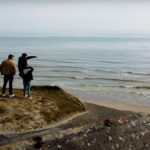
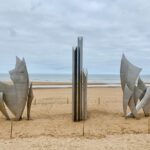
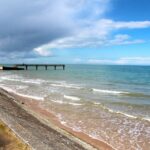
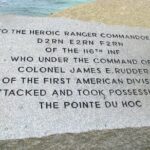
Omaha Beach may also be excluded if the guide feels there’s not enough time left. If you do get it, you’ll stand on the sands where thousands of American soldiers landed amid heavy fire and artillery barrages.
This is also where the tour’s storytelling pace matters. You’re not just walking the beach; you’re hearing moving accounts of what soldiers faced and why certain locations and memorials are placed where they are. Take a moment to honor memorials along the way—this is one of those places where the guided narrative works best when you slow down for a few seconds.
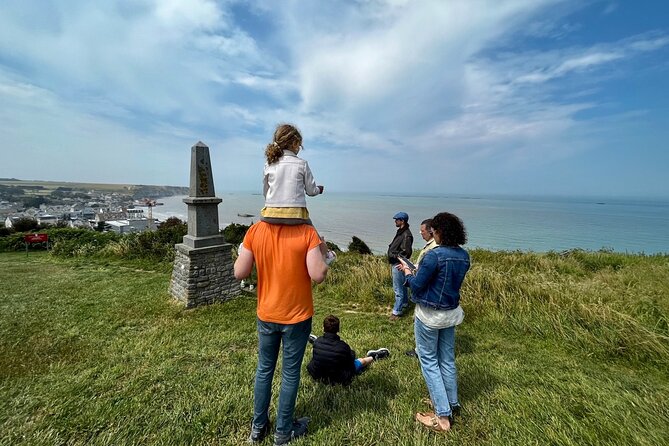
And based on how guides are described, you may also get vantage moments that feel different from the usual “view from the main road” approach—especially for seeing Omaha from a higher perspective.
Omaha Beach to the cemetery: timing can make or break it
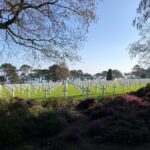
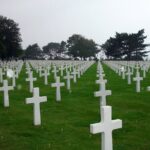
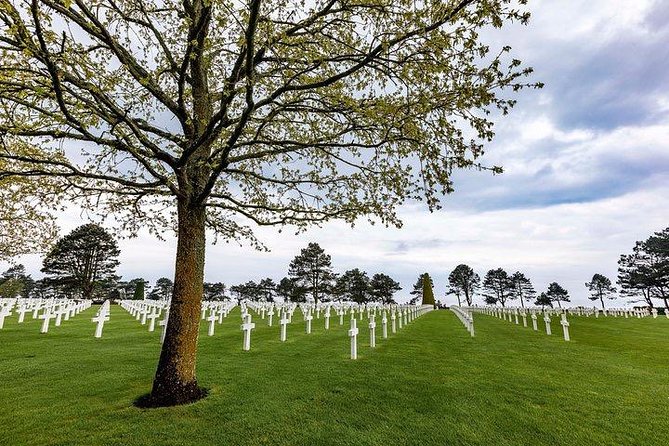
After the beach area, the tour heads toward the Normandy American Cemetery and Memorial, perched on a cliff overlooking Omaha Beach. This is one of the most emotionally direct stops on the route.
As you walk among the white marble crosses and Stars of David, the scale and order hit you. The guide shares stories about some of the individuals laid to rest here and adds context about how the sacrifices shaped the course of history.
Here’s the practical part you should plan around: during low season, the cemetery closes early. Any tour starting at 4:00 PM won’t be able to visit it. Also, beginning in 2026, a visit to the Omaha cemetery cannot be guaranteed.
That’s important for decision-making. If you’re traveling on a tight schedule, aim for a time that gives the guide cushion to reach the cemetery without cutting it off.
If you miss it, it won’t erase the tour—but if cemetery access matters to you, timing is the lever.
Bayeux again at the end: why the wrap-up is more than a ride back
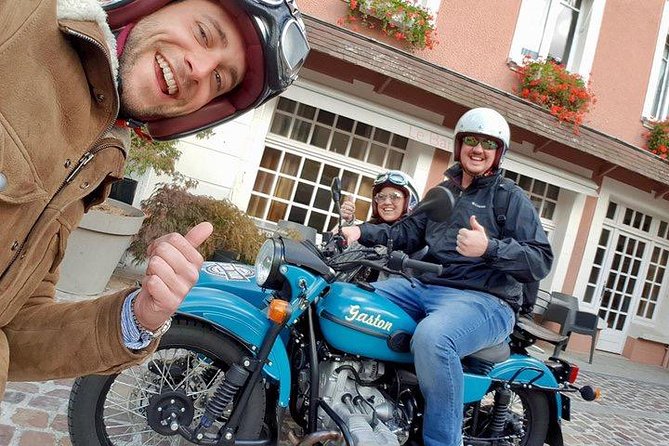
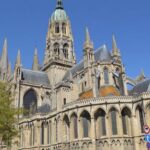
On the way back, you get one more Bayeux moment. The tour includes a short stop that spotlights Bayeux’s medieval charm, including its impressive 11th-century cathedral.
You’ll get a chance to admire half-timbered streets and the town’s everyday beauty as the ride ends. It’s a nice contrast to the heavy emotion of the beaches: you’re not going straight from memorials to a departure bus feeling. You transition back into normal human-scale life.
It also helps you keep Bayeux in your mind as more than a launch point. It’s a real place you can wander after the tour, if your schedule allows.
Who should book a sidecar D-Day day?
This tour fits best if you want history with motion and you don’t mind cold wind.
A few notes from the experience details and how it’s described:
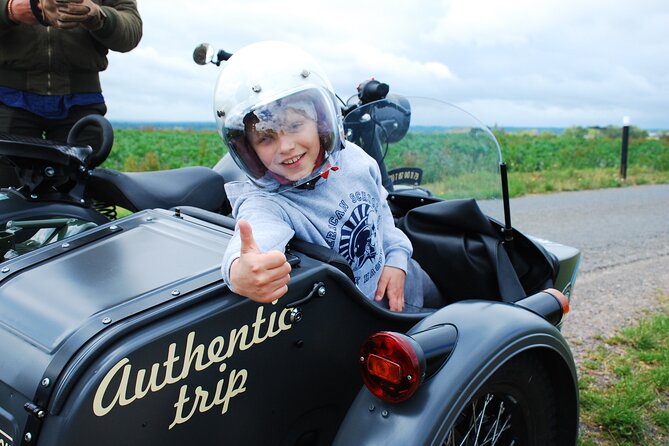
- Families can enjoy it, since it’s designed as an active experience and includes safety gear. The minimum age is 4 years old.
- It’s also a strong match for people who like small groups and don’t want to be one more face in a crowd.
- If you’re sensitive to speed on uneven roads or quick turns, know that the sidecar experience is still “real riding,” not a gentle chauffeur ride. One useful tip: keep your grip steady and wear proper layers.
- Service animals are allowed, which is good to know if you need that.
A sidecar isn’t for everyone. But if you’re the type who remembers a trip by how it felt—wind in your face, the sound of the engine, the guided stories hitting right at the right stop—this style works.
Price and value: what $299.32 buys you here
At $299.32 per person, you’re paying for more than transportation. You’re paying for three things that are hard to replicate with standard tours:
1) Private, small-group touring
Max six people per booking keeps the attention focused. That matters on D-Day sites where details and questions can change what you notice.
2) Guided context plus route flexibility
The tour includes anecdotes and historical explanations at each stop. And because some stops can be excluded if time is tight, your guide is aiming to protect the core experience instead of forcing every checkbox.
3) Safety and comfort gear included
Helmets, gloves, vintage goggles, and rain gear aren’t extras you have to buy. In Normandy, that’s not a minor line item—it’s comfort you’ll feel immediately.
If you compare this to a standard half-day group tour by van or bus, the value comes from the experience style: you get a tighter group, a more interactive ride, and a different way of seeing the coastline and viewpoints. You also avoid that “watching from behind glass” feeling that some vehicles create.
Practical tips so your day feels easy, not stressful
Plan like a rider, not like a museum visitor.
- Wear layers. Even in decent weather, the sidecar wind can turn cool fast. The gear provided helps, but your clothing still matters.
- Don’t dress only for comfort on land. You’ll be in motion, sitting, and exposed to air as you travel between stops.
- Bring patience for timing. Traffic and crowds can slow things down, especially around big D-Day anniversary periods. If the schedule tightens, Port-en-Bessin-Huppain and Omaha Beach are the first stops that may get cut.
- Expect loud surroundings. Vehicles can be noisy, and while you’ll hear your guide, you might find it easier to understand if you lean in and focus when explanations start.
- Use the photo breaks. The tour builds in moments for pictures and short breaks—take them. Normandy light changes quickly, and those few minutes can matter.
Also, keep an eye on the cemetery timing rules if you care about it. Low season closure and the 4:00 PM start limitation are real scheduling constraints.
Should you book this sidecar D-Day tour?
I think you should book if you want an experience that feels more alive than a standard route. The vintage sidecar format adds energy, the included safety gear makes the ride more comfortable, and the stop-by-stop storytelling approach turns the places into a connected narrative.
I’d pass or at least reconsider if you’re:
- very sensitive to road turns and wind,
- traveling with a hard, fixed schedule where you can’t risk optional stops being dropped, or
- counting on a guaranteed cemetery visit during periods when access isn’t assured.
If you’re flexible and you want value through a private, small-group ride with real context at each stop, this is an easy yes.
FAQ
Is this tour private?
Yes. It’s a private activity, and only your group participates.
How long is the private sidecar tour?
It runs about 3 hours 30 minutes (approx.).
How much does it cost?
It costs $299.32 per person.
Where is the pickup area?
Pickup is offered in Bayeux and the surrounding area, up to 5 km.
What languages are available?
The tour is offered in English.
What’s included in the price?
Helmets, gloves, vintage goggles, rain gear, a visit to the iconic sites, and anecdotes are included.
Is lunch included?
No, lunch is not included.
Which stops are guaranteed?
Bayeux, Arromanches-les-Bains, and Longues-sur-Mer are included. Port-en-Bessin-Huppain may be excluded if there isn’t enough time, and Omaha Beach may also be excluded if time is tight.
Can you always visit the Normandy American Cemetery?
Not always. During low season, it can close early, and any tour starting at 4:00 PM will not be able to visit. Also, beginning in 2026, a visit to the Omaha cemetery cannot be guaranteed.
What age can kids participate?
The minimum age to participate is 4 years old.
What happens if weather is bad?
This experience requires good weather. If it’s canceled due to poor weather, you’ll be offered a different date or a full refund.
Cancellation: is it refundable?
Yes. You can cancel up to 24 hours in advance for a full refund. If you cancel less than 24 hours before the experience starts, the amount paid won’t be refunded.