REVIEW · BAYEUX
Bayeux: Private Guided Walking Tour
Book on GetYourGuide →Operated by Travmonde OÜ · Bookable on GetYourGuide
Bayeux packs centuries of Normandy into a walkable town: Gallo-Roman beginnings, Viking echoes, medieval stonework, wartime memory, and Charles de Gaulle’s speeches all fit into one 90-minute outing. The town also survived the Second World War with much of its old architecture intact, making the streets themselves part of the story.
I like the private format, especially for a group that wants to ask questions or adjust the pace. I also like the mix of grand sights and small details, from the 900-year-old cathedral to the Aure River’s waterwheels and old houses. The main consideration is time: 90 minutes gives you a strong introduction, but not a slow visit inside every attraction.
In This Review
- Key points to know
- Why Bayeux works so well on foot
- Starting beside the famous Bayeux embroidery
- Reading Bayeux through its cathedral
- Along the Aure River and its waterwheels
- Charles de Gaulle and Bayeux’s wartime memory
- A quiet pause at Bayeux War Cemetery
- What a private guide adds
- Is $369 a fair price?
- Who should book this Bayeux walk?
- Final verdict: a strong private introduction
- FAQ
- Where does the Bayeux walking tour meet?
- How long does the tour last?
- Is the tour private?
- How many people can join?
- What language is the tour offered in?
- Is the museum entrance fee included?
- Does the tour include Bayeux Cathedral?
- Can the tour be adjusted?
- Can I cancel for a full refund?
Key points to know
- A private group of up to 15: Your guide is with your party only, so the walk can feel more personal than a large public tour.
- Bayeux Cathedral anchors the walk: Expect Norman-Romanesque and Gothic architecture with more than 900 years of history.
- The Aure River adds a quieter side: Old stone houses, waterwheels, and riverside views break up the historical storytelling.
- War memory is part of the route: Charles de Gaulle’s speeches and the Bayeux War Cemetery give the town a serious modern chapter.
- Guide Estelle receives special praise: Her knowledge of Bayeux was singled out in the available feedback.
- The $369 price is per group: For a full group of 15, the cost works out to about $25 per person, but a small party pays much more per person.
Why Bayeux works so well on foot
Bayeux is the sort of place where a walking tour makes practical sense. You are not being shuttled between distant sights. The town centre brings together medieval buildings, religious architecture, river views, and wartime stories within a compact area.
That compact setting also helps you understand how Bayeux developed. The town’s story reaches back to Gallo-Roman times, then moves through Viking influence, Norman power, religious building, and the events of the twentieth century. A guide can connect those periods instead of leaving you with a collection of attractive but unrelated streets.
I especially like the fact that the walk includes ordinary town scenery. Half-timber houses and old stone buildings may look charming at first glance, but a guide can explain how they fit into Bayeux’s past. The Aure River adds another layer, with waterwheels and views that show how the town once used its waterways.
The old centre is also useful for getting your bearings. If you are staying in Bayeux for a few days, this first walk can help you decide where to return for a museum visit, a meal, or a slower look at the cathedral.
You can also read our reviews of more walking tours in Bayeux


Starting beside the famous Bayeux embroidery
The meeting point is in front of the Musée de la Tapisserie de Bayeux at 13B Rue de Nesmond. This is a sensible starting place because the museum holds one of Normandy’s best-known historic objects, the famous embroidered account of the Norman Conquest.
The tour information does not include the museum entrance fee, so you should treat the exterior meeting point and the museum visit as separate parts of your day. That matters because 90 minutes is a short window. If you want to see the embroidery itself, plan that visit before or after the guided walk rather than assuming it is included.
Beginning here also gives your guide an easy way to set the scene. The Bayeux embroidery is closely tied to Norman identity and medieval power, while the surrounding town lets you see later layers of Bayeux in built form. You can move from a celebrated historic object to streets, churches, and riverbanks without needing transport.
Because the group meets outside the museum, arrive with enough time to locate 13B Rue de Nesmond. The address is specific, and meeting directly in front of the museum should be straightforward, but a few extra minutes will keep the 90-minute walk from starting in a rush.
Reading Bayeux through its cathedral
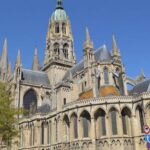
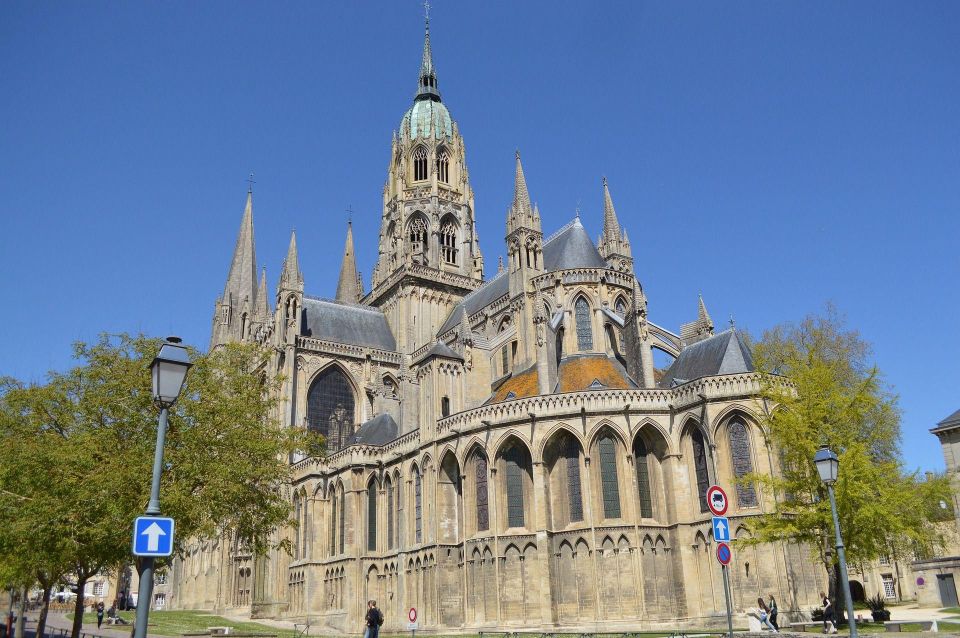
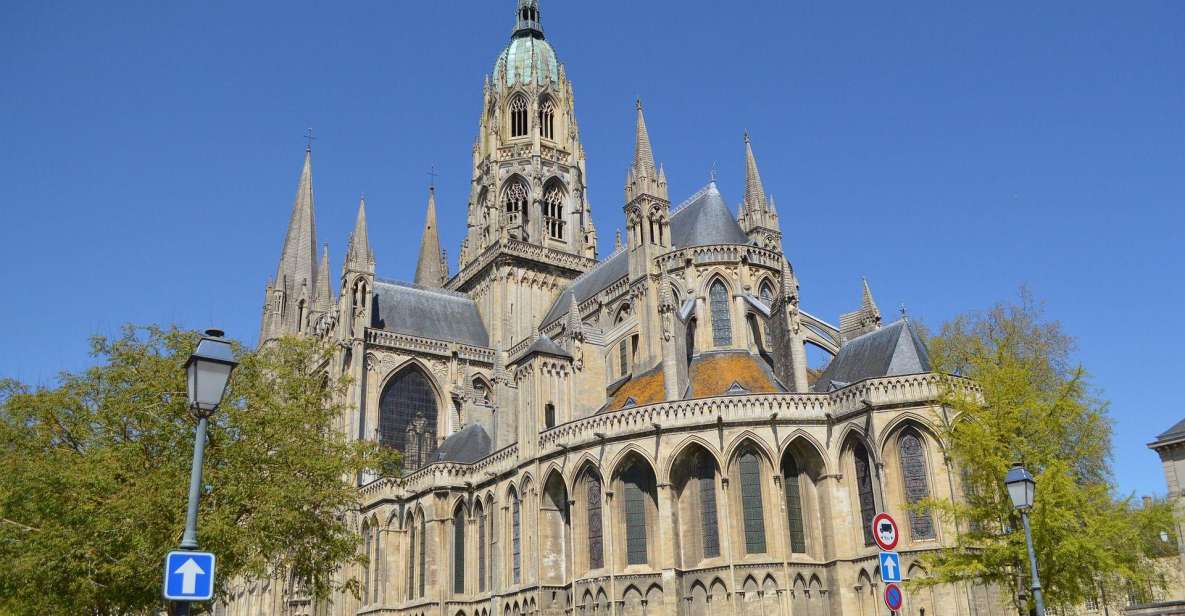
Bayeux Cathedral is the visual high point of the walk. More than 900 years old, it combines Norman-Romanesque and Gothic design, two styles that reflect different phases of medieval construction and change.
From the outside, you can expect a strong sense of scale and age. The cathedral is not just a stop for photographs. It helps explain why Bayeux mattered as a religious and political centre, and why the town developed such substantial architecture.
A private guide is useful here because large churches can be hard to read on your own. You may notice arches, towers, stonework, and changes in style, but a guide can point out what belongs to the Norman-Romanesque period and what reflects later Gothic work.
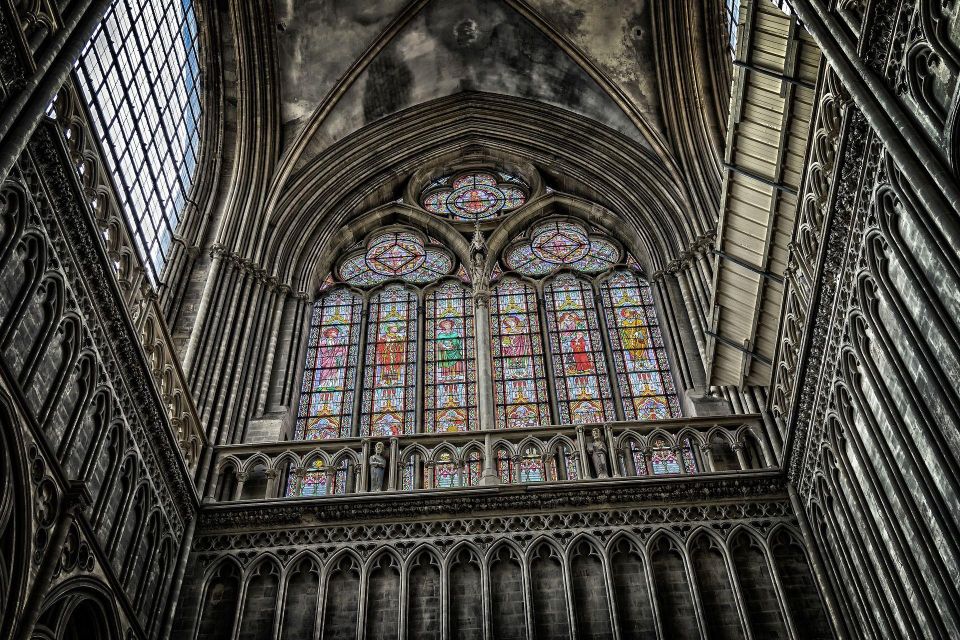
The practical limit is the length of the visit. The experience is a guided town walk, not a dedicated cathedral tour, and entrance fees are not included. If you want a detailed look at the interior, check with your guide about what can fit into the route. The supplied details confirm the cathedral as a major sight, but they do not promise a long indoor visit.
Along the Aure River and its waterwheels
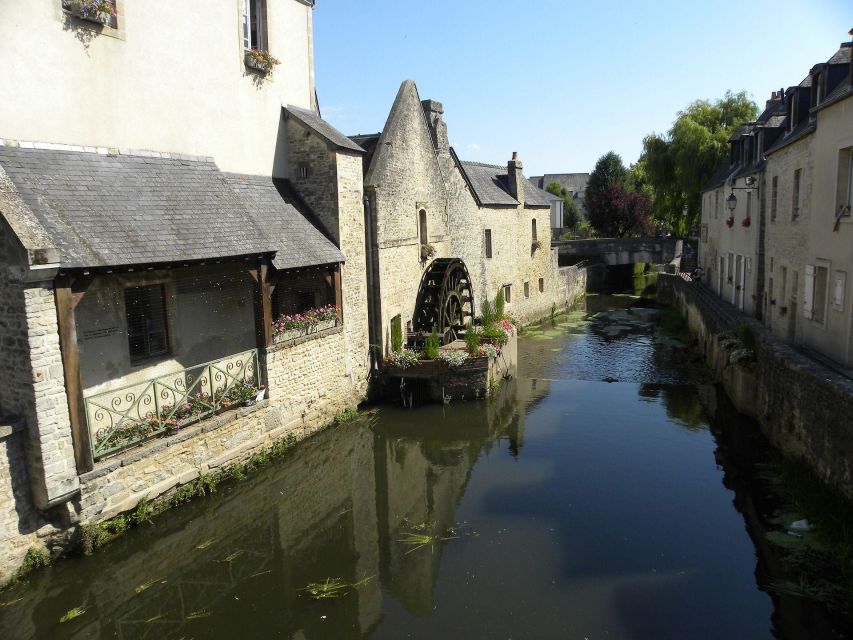
The walk also follows the Aure River through the town centre. This is where Bayeux becomes quieter and more intimate. You can see old stone houses, riverside views, and waterwheels that reflect the working side of the town.
I like this part because it keeps the tour from becoming a march between major monuments. The river gives you a chance to slow down and see how the town’s setting shaped daily life. Waterwheels are small details, but they make the past more concrete than a list of dates.
The riverside views also provide a change of pace after the cathedral. You may find this the most relaxed section of the walk, particularly if you enjoy architecture and photography. The information provided does not specify how long the group stays by the river, so the exact balance depends on the guide and your group’s interests.
This is one advantage of booking privately. If you are more interested in old houses and town design than military history, you can ask for more time here. If the war story matters most to you, the guide can keep moving toward those sites.
Charles de Gaulle and Bayeux’s wartime memory
Bayeux carries a major twentieth-century story as well. The tour includes Charles de Gaulle’s historic speeches, linking the town to the political and national aftermath of the Second World War.
That subject gives the walk a more serious edge. Bayeux is often associated with medieval Normandy and the famous embroidery, but its modern identity was also shaped by the war and its aftermath. Hearing about de Gaulle in the places connected with his speeches can help you see the town as part of France’s national story, not just as a medieval stop.
The town’s survival during the Second World War is another important part of the experience. Bayeux miraculously avoided the destruction that affected many other places in Normandy, leaving much of its architectural heritage in place. That makes the walk visually rewarding, but it also gives the preserved streets a clear historical weight.
The balance here is worth noting. A 90-minute walk can introduce the wartime chapter, but it cannot explain every event in Normandy. If your main goal is a full D-Day history experience, this tour works better as a Bayeux town introduction than as a substitute for a dedicated battlefield tour.
You can also read our reviews of more guided tours in Bayeux






A quiet pause at Bayeux War Cemetery
The Bayeux War Cemetery adds a reflective stop to the route. It is a place for quiet attention rather than quick sightseeing, and it gives the tour an emotional finish or serious midpoint, depending on the exact path your guide chooses.
The cemetery also broadens the meaning of Bayeux’s wartime survival. You see not only the preserved town, but also the human cost of the conflict. That contrast can be powerful: old houses and a historic cathedral on one side, rows of military graves and remembrance on the other.
Because the cemetery is a solemn place, this part may not suit anyone looking only for light sightseeing. I consider that a strength for most visitors, but it is still worth knowing before you book. The experience moves between beauty and loss, and the change in tone is deliberate.
The supplied details do not state how long the group spends at the cemetery or identify particular graves. You should expect reflection and context, not a detailed cemetery research visit.
What a private guide adds
The guide is with your group only, and the tour can be adjusted on the spot. That flexibility matters more than it might at first appear. In a town with a cathedral, river views, medieval buildings, a major museum, and wartime sites, different groups will naturally want different emphases.
You can ask for more explanation of the cathedral, spend extra time looking at architecture, or focus on Charles de Gaulle and the war. The guide can also help connect the sights so that the route feels like one story.
Estelle is the guide name attached to the available feedback, and she received especially strong praise for her command of Bayeux. One verified booking described her as a superb guide who knows everything about the town and said the group would gladly request her again. That is a useful detail if you value personal guiding, though guide assignment should be confirmed when booking.
The tour is offered in English. That makes the experience accessible to English-speaking visitors who want more than a self-guided walk, while the private format gives you room to ask questions without holding up strangers.
Is $369 a fair price?
The price is $369 for a group of up to 15, not per person. For a full group, that is about $25 per person for 90 minutes of private guiding. At that size, the price can be quite reasonable, especially for a family reunion, school group, or party of friends who would otherwise need several tickets on a public tour.
For two people, the calculation is different. You are paying roughly $184.50 each, before any entrance fees, so the private format becomes a premium choice. You are paying for exclusivity, flexibility, and direct access to the guide, not for included museum admission.
I would consider this best value for groups of four or more, especially if everyone shares an interest in Bayeux’s architecture and wartime story. Solo visitors and couples may prefer a less expensive public walk if one is available, unless privacy and customization are central to the decision.
The ability to reserve now and pay later also helps if your Normandy schedule is still changing. You can cancel for a full refund up to 24 hours in advance, which gives you some protection when weather, transport, or other plans shift.
Who should book this Bayeux walk?
I would recommend it to first-time visitors who want a clear introduction to the town without arranging transport. It also suits families and private groups that prefer to ask questions freely and adjust the pace.
History-minded visitors will appreciate the range of subjects: Gallo-Roman origins, Viking influence, medieval architecture, the Bayeux embroidery, de Gaulle, and the war cemetery. Architecture fans get half-timber houses, old stone buildings, the cathedral, and riverside views.
You should think twice if you want a long museum visit, a detailed D-Day excursion, or extensive time inside the cathedral. The tour is only 90 minutes, and entrance fees are not included. It gives you a well-shaped overview rather than a full day of close study.
Final verdict: a strong private introduction
Book this tour if you want Bayeux explained by a local English-speaking guide and you have a private group large enough to spread the cost. The best feature is the combination of major sights and smaller details: the cathedral and war cemetery matter, but so do the waterwheels, river, old houses, and preserved streets.
For a couple, the cost may feel steep. For a family or group of friends, it can be a practical way to get oriented and make better use of limited time. If Estelle is available, her strong feedback makes her worth requesting, and the private format gives you a useful chance to shape the walk around your interests.
FAQ
Where does the Bayeux walking tour meet?
The meeting point is in front of the Musée de la Tapisserie de Bayeux at 13B Rue de Nesmond, 14400 Bayeux, France.
How long does the tour last?
The guided walk lasts 90 minutes.
Is the tour private?
Yes. It is a private group experience, with a local guide accompanying only your group.
How many people can join?
The listed price covers a group of up to 15 people.
What language is the tour offered in?
The live tour guide service is offered in English.
Is the museum entrance fee included?
No. Entrance fees are not included in the tour price.
Does the tour include Bayeux Cathedral?
Bayeux Cathedral is one of the featured sights on the walk. The available details do not specify whether a full interior visit is included.
Can the tour be adjusted?
Yes. The experience allows possible customization with your local guide on the spot.
Can I cancel for a full refund?
Yes. You can cancel up to 24 hours in advance for a full refund.