REVIEW · BAYEUX
From Bayeux: D-Day American Beaches and US Airborne Day Tour
Book on GetYourGuide →Operated by HQ COMPANY TOUR · Bookable on GetYourGuide
Normandy hits hard when you follow the footsteps in order. This D-Day American Beaches and US Airborne day tour strings together the key places you care about, with maps and photos at each stop so the fighting makes sense. I especially like how the tour starts at Omaha Beach and walks you through the layout of the German defenses and what the first waves faced. One thing to consider: the day is not suitable for people with mobility impairments, and you’ll be on your feet for a full schedule, rain or shine.
My favorite part is the way the tour mixes major beaches with the stories people rarely fit into a quick photo stop. You’ll move from Omaha’s cemetery to Pointe du Hoc with Ranger Battalion details, then on to Sainte-Mère-Église and its Airborne Museum, and finally finish at Utah Beach and Angoville-au-Plain’s aid-station site. If you like World War II that’s explained clearly but without turning it into a lecture, you’re in the right place.
In This Review
- Key things that make this tour worth your time
- One Day in Normandy That Actually Connects the Dots
- Omaha Beach and the American Cemetery: Where the Day Becomes Real
- Pointe du Hoc: Rangers, Cliffs, and the Gun That Had to Disappear
- Sainte-Mère-Église: The Airborne Stop That Changes Your Perspective
- Utah Beach: Roosevelt Jr. at 6:30am and the Breakthrough Story
- Angoville-au-Plain: The Aid-Station Stop You’ll Remember Long After
- Transport, Time, and the $165 Value That Actually Adds Up
- Who Should Book This Tour (and Who Should Think Twice)
- Should You Book This Omaha-and-Airborne Day Tour?
- FAQ
- How long is the tour?
- What’s included in the price?
- Is lunch provided?
- How big is the group?
- What language is the tour in?
- Will the tour happen in bad weather?
- Where do I meet the group?
- What should I bring?
- Can I cancel for a refund?
Key things that make this tour worth your time
- Small group (up to 7) means questions don’t get lost in the crowd.
- English live guide plus headsets keeps the narration clear at every site.
- Omaha Beach is treated as a full story, not a drive-by snapshot.
- Pointe du Hoc gives context for why the Rangers mattered so much.
- The Airborne Museum in Sainte-Mère-Église is included, so you get more than street-level viewing.
- The itinerary covers multiple American sectors: infantry at Omaha and Utah, and airborne at Sainte-Mère-Église.
One Day in Normandy That Actually Connects the Dots

This tour is built for people who want the big D-Day sites, but also want them explained in the right sequence. You’re moving through the American story of Normandy, from the landing beaches to airborne operations and the follow-on battles. The pace is full—about 510 minutes (a long day)—but the structure helps you make sense of what happened and why it mattered.
You start with transport from Place de Québec and then you settle into the sites. The van time matters because it lets you regroup between emotionally heavy stops. And because the group is limited to 7, you spend more time listening and less time weaving around other tour groups.
If you’re choosing between a quick beach-hopping option and something more guided, this one leans guided. You’ll get narration, maps, and visual aids at the major points, so the terrain becomes understandable instead of just grim.
You can also read our reviews of more tours and experiences in Bayeux.
Omaha Beach and the American Cemetery: Where the Day Becomes Real
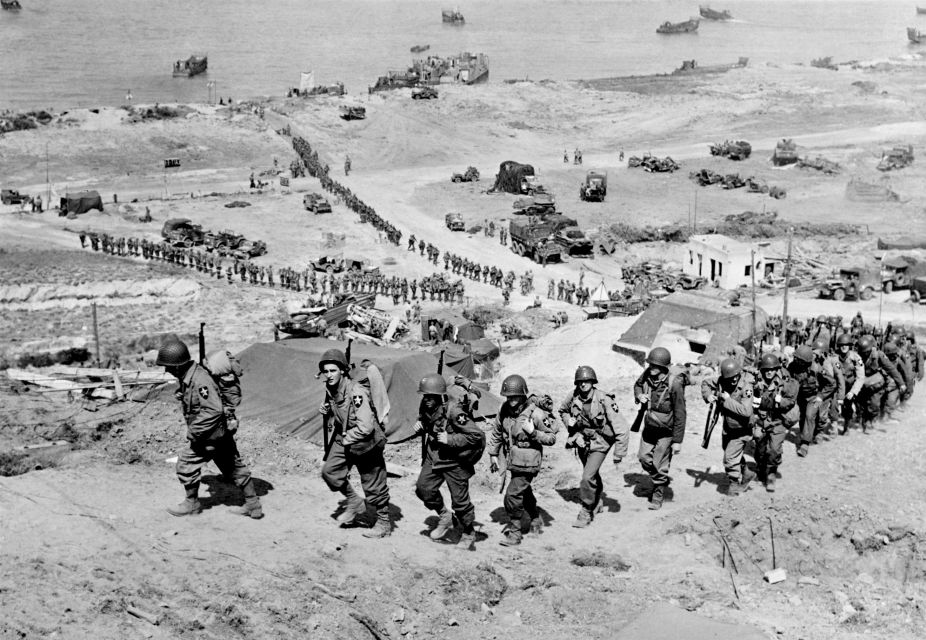
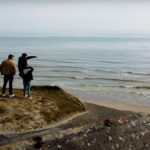
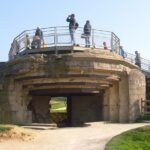
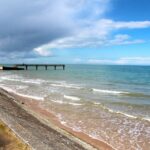
Omaha Beach is where the tour earns its name. You visit the landing zone for the 1st and 29th US infantry divisions, and your guide sets the scene using maps and pictures to explain what the beach looked like and how German defenses were arranged. The key value here is clarity: you’re not just staring at sand and seawall remains—you’re learning how the landing was supposed to work, and what went wrong in the first waves of assault.
Then you add the contrast that makes the day feel balanced, not just dramatic. You’ll see the Normandy American Cemetery behind Omaha, a sacred place resting more than 9,000 American servicemen and women. This stop is more than a photo opportunity; it’s where the story becomes personal. It also gives your emotions somewhere to go, which is important on a day packed with battle details.
A practical note: the cemetery visit includes guided time plus free time (about 1 hour). That free time matters. It lets you stand quietly, walk at your own pace, and actually absorb what you’re seeing instead of rushing through it.
Pointe du Hoc: Rangers, Cliffs, and the Gun That Had to Disappear
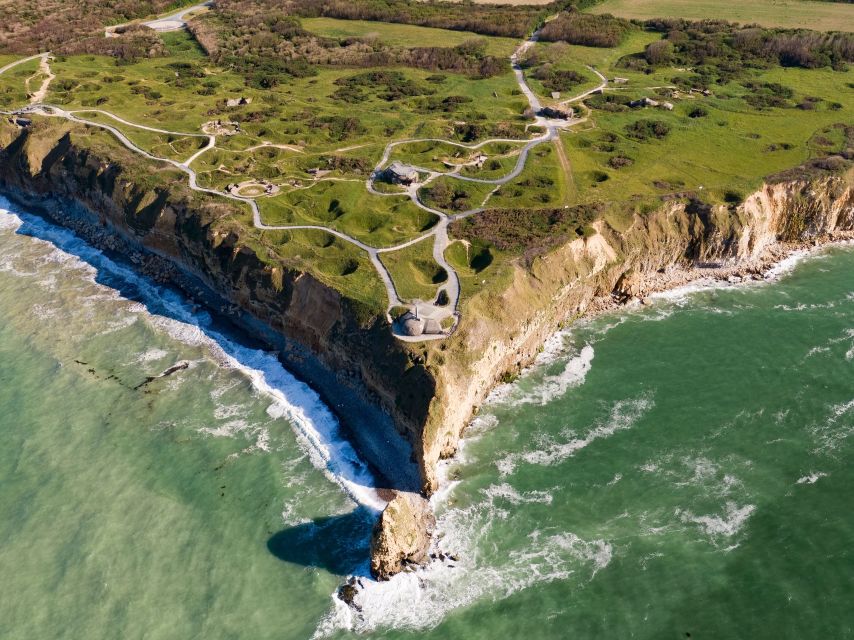
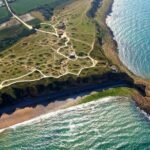
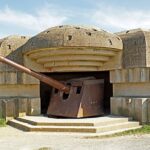
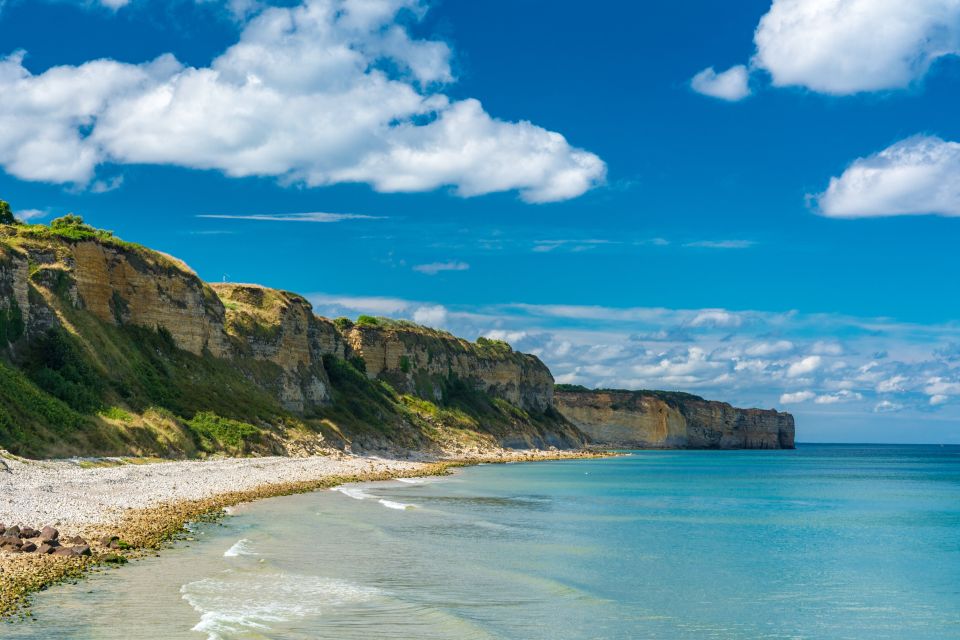
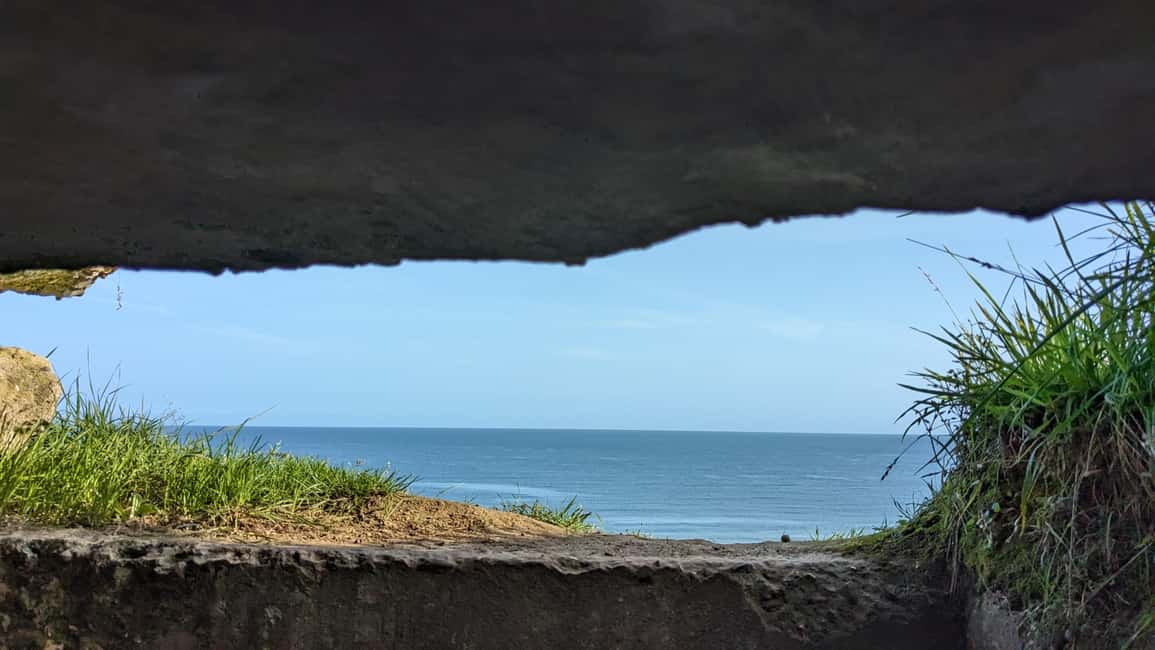
After Omaha, the tour shifts gears into a very specific kind of bravery at Pointe du Hoc. Your guide focuses on the unique battlefield there, walking you through bomb craters, bunkers, and dugouts so you can connect the terrain to the mission.
The heart of the explanation is the 2nd US Ranger Battalion led by Lieutenant Colonel James E. Rudder. You’ll hear how the Rangers scaled the cliffs to destroy a German gun battery that threatened the broader US landing operation. The value for you is cause-and-effect: the guide ties what you’re looking at now to what the Rangers were trying to prevent at the time.
This is also one of those stops where headsets really help. Pointe du Hoc is an open battlefield setting, and background noise can swallow normal speech. With the headsets, you can keep following the story without constantly stopping and restarting.
Time-wise, you get about 50 minutes here with a guided visit. That’s enough to see the battlefield features and still hear the full mission narrative rather than getting a quick overview.
Sainte-Mère-Église: The Airborne Stop That Changes Your Perspective
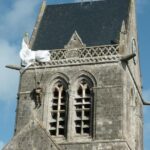
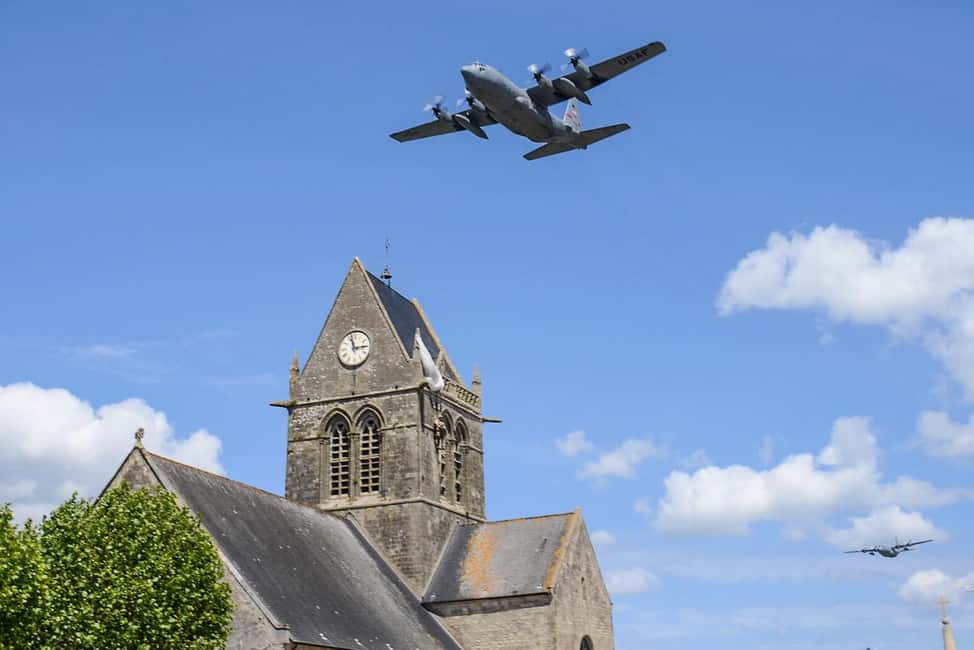
Sainte-Mère-Église isn’t just a pretty Normandy town stop—it’s a turning point in the story. The tour explains that it was the first town captured by American paratroopers. You’ll hear the famous detail about a paratrooper stuck up on the church tower during that night, and that kind of human detail makes the airborne operation feel less abstract.
You’ll also have time to eat lunch and browse during about 50 minutes of free time in Sainte-Mère-Église. Food and drinks aren’t included, so plan on budgeting for lunch here rather than expecting it to be covered. The shopping time is also practical: you’re in a place that’s used to D-Day visitors, so it’s easy to pick up essentials like rain gear, snacks, or small gifts without turning the day into extra logistics.
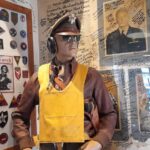
The standout piece at this stop is the Airborne Museum, which is included. The tour gives you time for the museum (about 1 hour, with free time). This is one of the best parts for readers who want more than battle geography. Museums slow you down, explain terms, and add context you might miss if you only spend time outside on beaches and cliffs.
It’s also where I’d expect guides to shine. In the past, guides like Bridget and Dillon have been praised for making complex World War II topics manageable, and this is the kind of stop where that skill matters.
Utah Beach: Roosevelt Jr. at 6:30am and the Breakthrough Story
Utah Beach rounds out the landing picture on the American side. Your guide explains how the 4th Infantry Division successfully breached German defenses. This helps you compare Omaha’s struggle with a different outcome at another sector.
A standout detail you’ll hear is about Brigadier General Theodore Roosevelt Jr., who led the first wave that landed at 6:30am. The tour notes he was eventually awarded the Medal of Honor, which gives weight to why his role gets called out. Again, the practical value is the framing: you’re not learning a single fact, you’re learning why that moment fit into the larger push.
You’ll spend about 40 minutes at Utah Beach with a guided visit. That duration is a sweet spot. It’s long enough to cover the main explanation and terrain cues, but short enough that you’re not exhausted before the day’s final emotional stop.
If you’re hoping for a “full day” that still avoids overload, Utah Beach is a good pressure valve after Pointe du Hoc and the airborne storytelling.

Angoville-au-Plain: The Aid-Station Stop You’ll Remember Long After
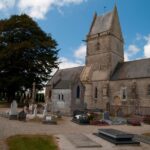
The tour ends with a quieter, more human kind of site at Angoville-au-Plain, specifically the church used as an aid-station. Your guide explains that two young medics treated about 80 wounded soldiers for two days. That information changes how you look at the battlefield for the rest of the day’s memory.
This is one of the most moving parts of the itinerary because it doesn’t focus on the mechanics of attack. Instead, it puts a spotlight on triage, endurance, and care under impossible conditions. You get about 20 minutes for the guided visit here, so it’s short—but it lands hard.
This also serves a practical purpose. After long stretches of beach and battlefield descriptions, a medical-station stop gives your brain and heart a break from “where to aim” and “how defenses worked.” It shifts the meaning of the day toward survival, compassion, and survival stories that don’t get enough space in standard summaries.
Transport, Time, and the $165 Value That Actually Adds Up
At $165 per person, this tour isn’t cheap in the abstract, but the value gets clearer once you match what’s included to what you’d otherwise pay. You’re getting:
- a licensed guide
- headsets for clear English narration
- entry tickets for the Airborne Museum in Sainte-Mère-Église
- a full route covering Omaha, Pointe du Hoc, Sainte-Mère-Église, Utah Beach, and Angoville-au-Plain
You’re also buying the small-group format (up to 7), which matters because it makes the explanations more interactive. People often say they want “not just bus tours,” and this is how that becomes real. You can ask questions without waiting for a megaphone crowd to move first.
The timing also helps. The day runs about 510 minutes, which is long enough to cover the important sites without cutting away essential context. And because it’s rain or shine, you’re not stuck with a half-day plan that cancels the most interesting parts.
For food, plan ahead: food and drinks aren’t included. Since there’s a lunch window in Sainte-Mère-Église, bring spending money or plan to eat there.
Who Should Book This Tour (and Who Should Think Twice)
This tour is best for you if you:
- want an American-focused D-Day route (Omaha, Utah, airborne, and related battlefield sites)
- like when the guide uses maps and pictures to explain what you’re seeing
- prefer a small group and headsets over shouting at landmarks
- can handle a full day of walking on historic terrain
It’s a poor fit if you have mobility challenges. The tour states it’s not suitable for people with mobility impairments, and battlefield and cemetery areas typically don’t play nicely with limited mobility.
If you’re going with kids, it could work depending on their interest and stamina, but you’ll be balancing emotionally intense subject matter with a very structured day. The guides are the kind who can keep things engaging, with examples like Sophie, Gwenn, Yannick, Mathew, and Gwenaël noted for storytelling and clear explanations.
Should You Book This Omaha-and-Airborne Day Tour?
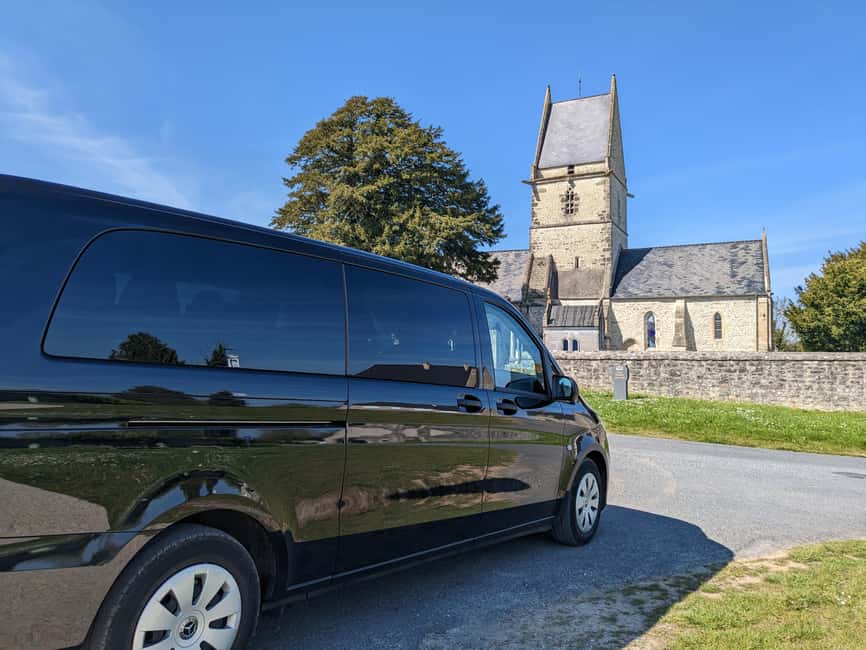
If your goal is to see the major American D-Day sites and understand them in a logical order, I’d say yes. The combination of Omaha’s battlefield explanation, Pointe du Hoc’s Ranger mission framing, Sainte-Mère-Église with its included Airborne Museum, and Utah Beach plus the medics’ aid-station story makes this tour feel like a complete narrative rather than a checklist.
Book it if you can handle a long day and you’re comfortable with rain or shine. Skip it if mobility is an issue, or if you’re hoping for a short, casual outing with minimal walking and minimal guidance.
FAQ
How long is the tour?
The tour runs for about 510 minutes, so plan on a full day.
What’s included in the price?
You get a licensed English-speaking guide, headsets, and entry tickets to the Airborne Museum in Sainte-Mère-Église.
Is lunch provided?
No. Food and drinks aren’t included. The schedule includes lunch and free time in Sainte-Mère-Église.
How big is the group?
It’s a small group limited to 7 participants.
What language is the tour in?
The live tour guide gives narration in English.
Will the tour happen in bad weather?
Yes. The tour takes place rain or shine.
Where do I meet the group?
Meet at Place de Québec and look for the vehicle with the HQ Company Tour sign at the back.
What should I bring?
Bring comfortable shoes and rain gear, since the day is outdoors and weather can change.
Can I cancel for a refund?
Yes. There’s free cancellation up to 24 hours in advance for a full refund, and you can also choose reserve now & pay later.