Paris has a hidden international power spot. In 90 minutes, you get a guided look at UNESCO headquarters in the heart of Paris, where missions and modern design share the same stage. It is the kind of tour that feels like getting behind the curtains—without needing museum ticket lines or extra effort.
Two things I really like: first, the way the guide connects UNESCO’s work to what you’re physically seeing, from huge conference spaces to the square with the symbolic Globe. Second, the tour doesn’t treat art like decoration; it points out major 19th/modern names like Calder, Picasso, and Giacometti in context, outside a typical museum route. One possible drawback: this is a focused internal visit, so you’ll need to plan your own way to the meeting area since transport isn’t included.
In This Review
- Key things to know
- Why UNESCO Headquarters Feels Like More Than a Building
- The 90-Minute Format: What You’ll Get (and What You Won’t)
- Step Inside UNESCO: Conference Rooms, Globe Square, and Modern Lines
- The Art Component: Calder, Picasso, and Giacometti With a Mission Lens
- Small Group Touring: Why 20 People Can Feel Like the Sweet Spot
- Language Choice and How to Prepare to Understand
- Getting There: Location in Paris and Practical Timing
- Value Check: Is $24.43 Worth It?
- Who Should Book Les Coulisses de UNESCO?
- Should You Book This UNESCO Headquarters Tour?
- FAQ
- How long is the UNESCO headquarters tour?
- What languages are available?
- Is admission included?
- Is transport to the meeting point included?
- How big is the group?
- Can I get a full refund if I cancel?
Key things to know
- UNESCO HQ, mapped for first-timers: conference rooms, event spaces, and the square with the Globe
- Modern design details: footbridges and concrete corridors you can actually picture afterward
- Art talks with a point: Calder, Picasso, and Giacometti connected to UNESCO’s themes
- Small group energy: limited to 20 travelers, so the guide can keep it interactive
- Mobile ticket convenience: you use it right from your phone
Why UNESCO Headquarters Feels Like More Than a Building
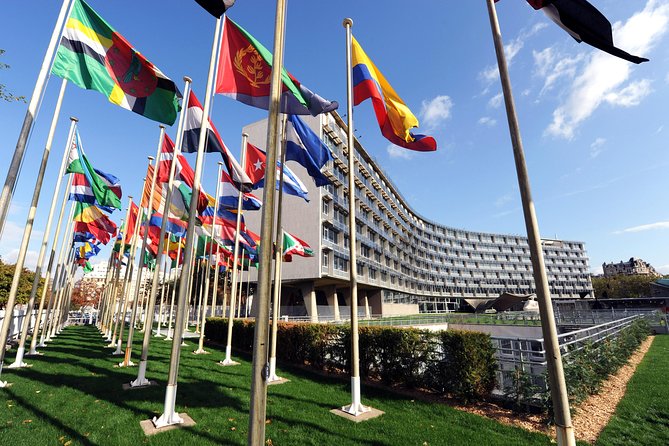
Most Paris tours chase facades and photo spots. This one takes a different angle: you’re touring the headquarters of UNESCO, the United Nations educational, scientific and cultural agency, and the visit is built around what UNESCO does and why those spaces matter.
What makes it work is the structure. Instead of only saying what the building looks like, the guide ties the mission to the rooms—so big ideas land in real places. You come away with a clearer sense of how international work happens in offices, meeting rooms, and event-ready halls.
You can also read our reviews of more tours and experiences in Paris.



The 90-Minute Format: What You’ll Get (and What You Won’t)
The tour runs about 1 hour 30 minutes, and it stays tightly focused on the UNESCO complex. Admission is included, so you’re not paying extra at the door or stitching together separate tickets.
In that time, you can expect a guided route through the main highlights rather than a long, slow wander. If you’re hoping for a full day of architecture study or a deep, room-by-room museum-style catalog, you might find the pace a bit brisk. But if you want something efficient and meaningful, this timing is a real advantage in a city where your day can vanish fast.
Step Inside UNESCO: Conference Rooms, Globe Square, and Modern Lines
Your visit begins with the UNESCO building itself, and the tour quickly shifts your perspective from sightseeing to understanding. You’ll hear about UNESCO’s missions and projects, then you’ll move through the spaces where international gatherings happen.
The highlights are practical and visual:
- Immense conference rooms designed for large, formal meetings
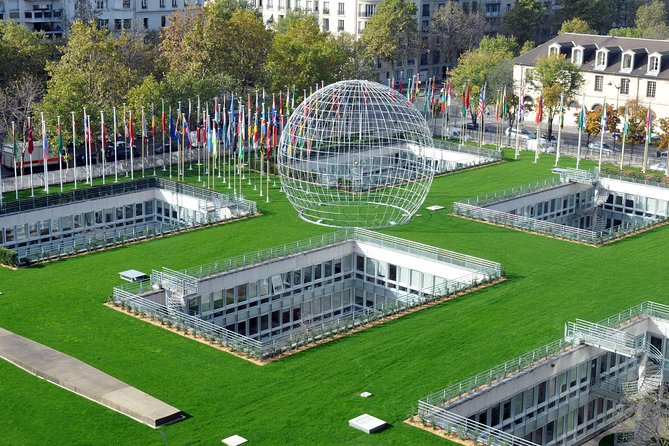
- The square with the famous symbolic Globe, a strong photo moment but also a chance to connect symbolism to UNESCO’s role
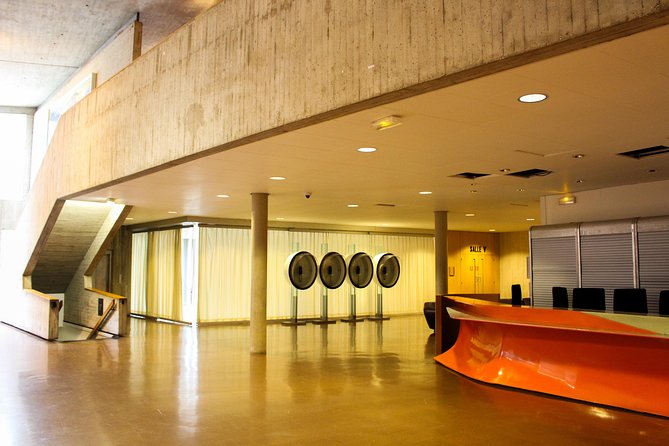
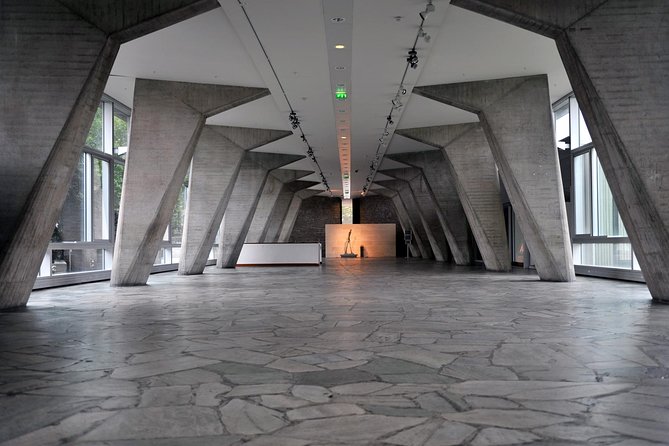
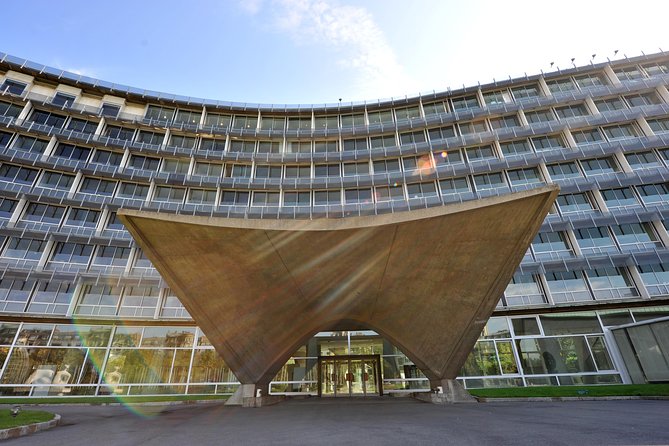
- Footbridges and concrete corridors that show off modern architecture in an indoor-urban way
One thing I’d watch for is how the building layout can affect your photos. There are lots of angles, but the tour is guided and timed, so keep your camera ready without constantly stopping the group. This is the kind of place where quick composition beats slow wandering.
Also, there’s a detail payoff in the “behind the scenes” feel. Even if you’ve seen UNESCO mentioned on documents before, standing in the spaces where people meet and speak gives it a different weight.
The Art Component: Calder, Picasso, and Giacometti With a Mission Lens
A lot of tours sprinkle art into the route. Here, the art is part of the teaching plan. As you move through the spaces, you’ll encounter works by major artists—named for you in the tour context—Calder, Picasso, and Giacometti—and the guide explains them in relation to UNESCO’s themes.
Why this matters: art is often treated as separate from policy or institutions. This approach flips that. You get to see contemporary (for its time) artistic voices presented outside a traditional museum storyline, tied to ideas like education, culture, and scientific exchange.
If you’re the kind of person who likes to connect the dots—between places, people, and meanings—you’ll probably enjoy this section a lot. It’s not just look-and-go. The guide’s commentary is aimed at helping you interpret what you’re seeing rather than memorizing names.
Small Group Touring: Why 20 People Can Feel Like the Sweet Spot
This experience caps at 20 travelers, which changes the vibe. In a smaller group, you’re more likely to hear every explanation clearly and get your questions answered without the guide rushing to catch up.
It also means the route stays manageable. UNESCO is a serious institution, so the tour feels controlled and respectful, not chaotic. You get time in key spots—like the Globe area and the bigger meeting spaces—without feeling like you’re being pushed through on a conveyor belt.
For solo travelers, a small group is also a comfort. You get a built-in pace and context, rather than trying to “figure it out” while everyone else has a guide leading the way.





Language Choice and How to Prepare to Understand
The tour is offered in English, and you may also see options like French available when booking. The best strategy is simple: pick the language you can follow easily, because the guide’s explanation is clearly the core of the experience.
If you’re working with limited French (or any second language), don’t panic. The tour is built around what you can see in front of you—rooms, architecture, and the art placements—so visuals help carry meaning even when vocabulary is imperfect.
Before you go, do one quick prep step: read a short blurb about UNESCO’s main mission areas (education, science, culture). You’ll catch more of the “why” behind the tour as you move from space to space.
Getting There: Location in Paris and Practical Timing
The meeting point is in 75007 Paris, and the activity ends back at the meeting point. The tour is described as being near public transportation, so you shouldn’t need a car or taxi plan.
Still, since transport isn’t included, your main job is choosing an arrival method that keeps you calm. Give yourself a little buffer—especially if you’re navigating metro connections—so you aren’t stressed at check-in time.
This timing also matters because the tour is only about 90 minutes. If you show up late, you risk missing the rhythm of the guided story that makes the visit worthwhile.
Value Check: Is $24.43 Worth It?
At about $24.43 per person, you’re paying for three things: a guided tour, admission to the UNESCO spaces, and a structured route that connects architecture and art to UNESCO’s mission.
Is it a bargain? For Paris, yes, especially because you’re not paying museum-level admission plus another guided layer. You’re essentially getting a professional interpretation of an important institution, in a short, efficient chunk of time.
Where value is slightly more “situational” is how you like to travel. If you enjoy institutions, design, and explanation—not just photos—this is strong value. If you prefer unguided roaming or want long time in one room, you might feel the price is for structure rather than length.
Who Should Book Les Coulisses de UNESCO?
I think this tour is a great fit if you:
- like architecture and want to understand what you’re looking at
- are curious about UNESCO’s real-world impact, not just its name
- enjoy guided storytelling that ties art to ideas
- want a compact activity that works well inside a busy Paris day
It also suits travelers who want something “different” from the usual Louvre/Notre-Dame track. You’ll still get strong visuals, but the focus is inside the institution, not outside on a postcard.
Should You Book This UNESCO Headquarters Tour?
Yes—if you want a smarter, more meaningful Paris visit for a reasonable price and a short time commitment. The tour’s biggest strength is the way the guide connects UNESCO’s missions to the rooms, the Globe square, and the artwork by major names like Calder, Picasso, and Giacometti.
Book it especially if you enjoy tours that explain rather than just point. Skip it if you’re looking for a long, slow self-guided wander or you hate guided groups. For everyone else, this is an efficient way to see UNESCO as more than a logo—by seeing how the institution actually uses its spaces.
FAQ
How long is the UNESCO headquarters tour?
It lasts about 1 hour 30 minutes.
What languages are available?
The tour is offered in English, and other language options may be available when you book.
Is admission included?
Yes. The admission ticket is included with the tour.
Is transport to the meeting point included?
No. Transport is not included.
How big is the group?
The tour/activity has a maximum of 20 travelers.
Can I get a full refund if I cancel?
Yes. Free cancellation is available up to 24 hours in advance for a full refund. If you cancel less than 24 hours before the start time, the amount paid is not refunded.