REVIEW · PARIS
Louvre Museum Skip-the-Line Guided Tour
Book on GetYourGuide →Operated by ExperienceFirst · Bookable on GetYourGuide
The Louvre is so large that seeing its famous works can feel like chasing signs through a grand maze. This two-hour guided tour gives you a clear route through the museum, with reserved-access entry and an English-speaking guide to explain why the Mona Lisa, Venus de Milo, and French Crown Jewels matter.
I like the way the tour focuses on major collections instead of leaving you to wander without a plan. I also like the option to upgrade to a group of no more than six people, which gives your guide more room to respond to your interests. Guide Flora has earned especially warm praise for her knowledge and friendly manner.
The main drawback is that two hours only scratches the surface of the Louvre. The tour also includes steps and may be difficult for anyone with limited mobility, while the activity is non-refundable and has received mixed feedback about cancellations.
In This Review
- Key points at a glance
- Why a guided Louvre visit can be worth it
- Meeting at the Louis XIV statue near the Pyramid
- Inside the Louvre: a two-hour route through major collections
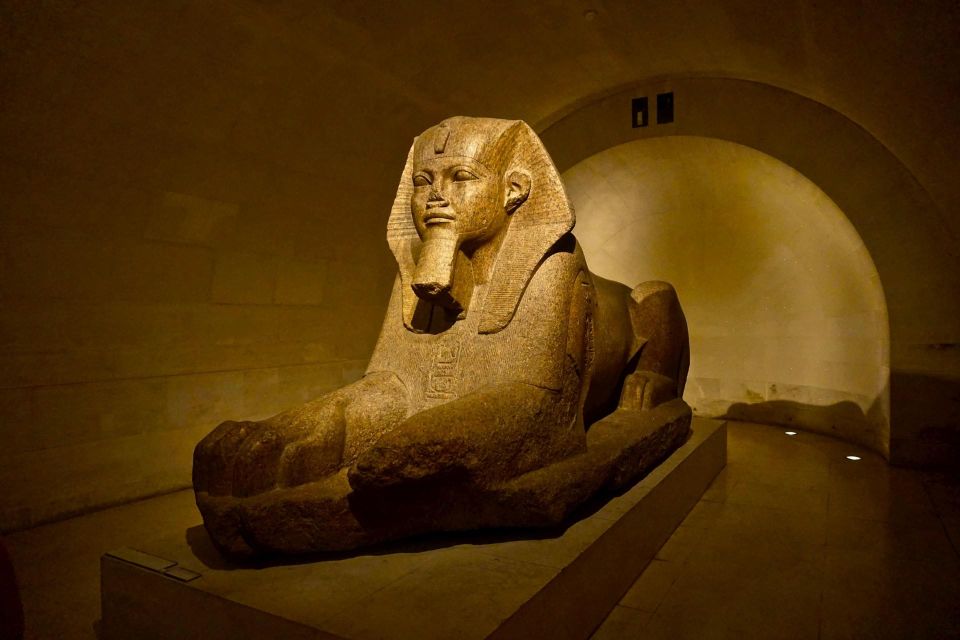
- Ancient Egypt and Greek antiquities
- Italian Renaissance and Michelangelo
- French Romanticism and the Apollo Gallery
- The Mona Lisa, Venus de Milo, and the reality of famous sights
- Regular group or no more than six people
- Adding the narrated Seine cruise
- What the $90 price really gets you
- Mobility, bags, and other practical limits
- Who should book this Louvre tour?
- Should you book it?
- FAQ
- How long does the Louvre guided tour last?
- Where does the tour begin?
- How do I find the guide?
- Which Metro station is closest?
- What language is the tour offered in?
- Does the tour include the Mona Lisa?
- Can I see the French Crown Jewels?
- Is the tour wheelchair accessible?
- Can I bring luggage?
- Is the Seine cruise included?
Key points at a glance
- A focused Louvre route: Cover Ancient Egypt, Greek antiquities, the Italian Renaissance, and French Romanticism in two hours.
- The famous works are built in: See the Mona Lisa, Venus de Milo, Michelangelo’s art, and the French Crown Jewels.
- Reserved-access entry: Use a separate entrance to save time, though this does not mean you will walk straight into every gallery.
- A small-group upgrade: Choose a more personal visit with no more than six people.
- A Seine cruise option: Add a narrated cruise that remains valid for one year from the tour date.
- A central meeting point: Find your guide with an orange ExperienceFirst sign near the Louis XIV statue by the Pyramid.
Why a guided Louvre visit can be worth it
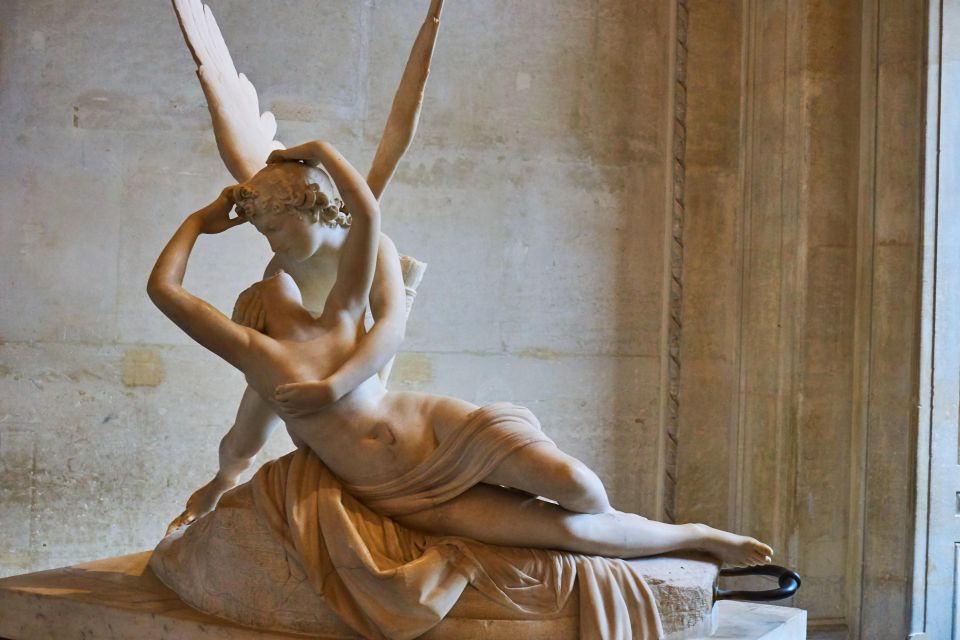
The Louvre is not simply a large museum. It is a former royal palace with thousands of rooms, galleries, stairways, and works spread across several wings. The museum displays about 35,000 works, so even a full day gives you only a selective look.
That makes a short guided visit useful. Instead of spending your first hour figuring out where to go, you follow a planned route through the museum’s major highlights. Your guide gives the art a story and a setting, helping you understand why a particular painting or sculpture became famous.
This is especially helpful if you have only a morning or afternoon in Paris. You will not see everything, but you should leave with a stronger sense of the Louvre and its best-known treasures.
The reserved-access entry is another practical advantage. You still need to meet the guide and pass through museum security procedures, but the separate entrance is designed to reduce time spent in the regular admission line. At a museum this popular, that can make a real difference.
You can also read our reviews of more guided tours in Paris



Meeting at the Louis XIV statue near the Pyramid
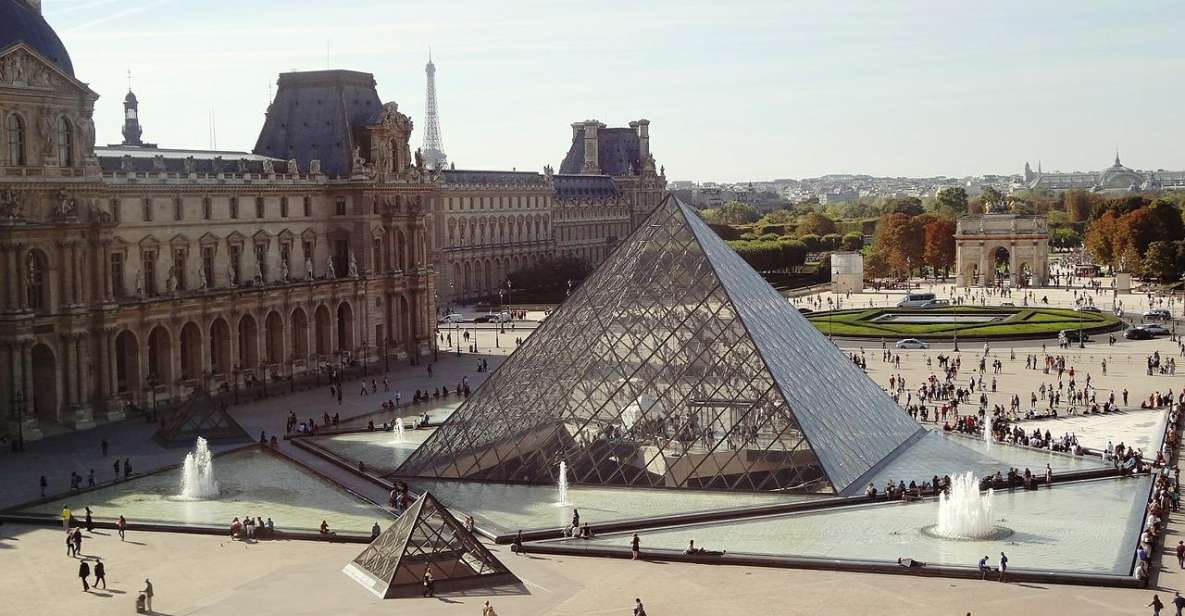
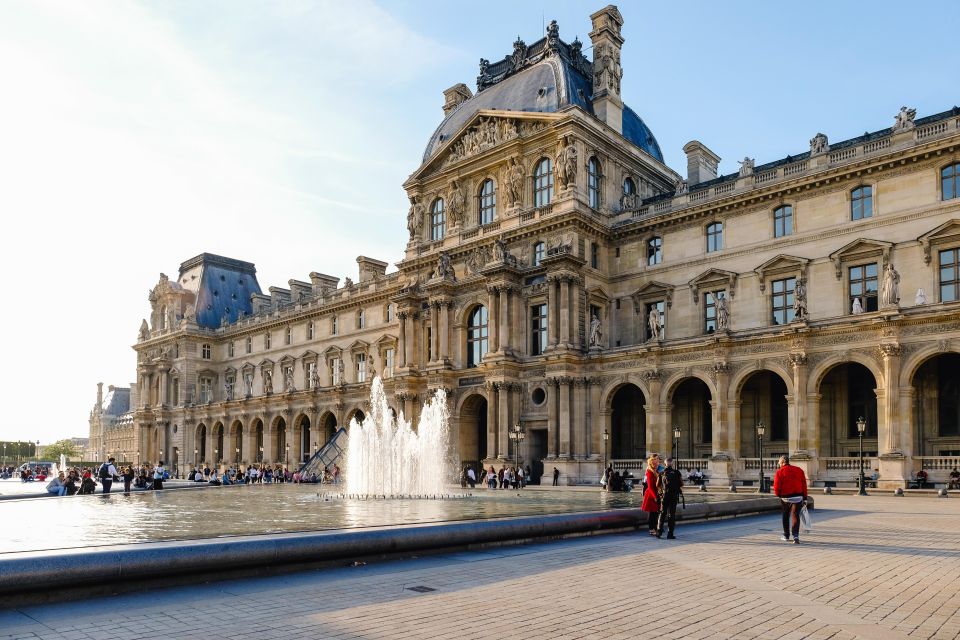
The tour begins at the statue of Louis XIV on horseback in front of the Louvre Pyramid. The nearest address is 10 Place du Carrousel, while the stated meeting location is 8 Place du Carrousel.
Look for an orange sign marked ExperienceFirst. The closest Metro station is Palais Royal Musée du Louvre on Lines 1 and 7, about a five-minute walk from the meeting point. You can also use the coordinates 48.861127, 2.334871 in Google Maps if the Louvre’s courtyards feel confusing.
Give yourself time to find the statue. The Louvre area has several open spaces, entrances, and monuments, and arriving at the last minute can create needless stress. You need to bring a passport or identity card, and large bags or luggage are not allowed.
The tour ends back at the Louvre meeting point. That is convenient if you want to continue exploring the museum on your own, though you should check the exact end time before planning a tight restaurant reservation or another timed activity.
Inside the Louvre: a two-hour route through major collections
The visit lasts about two hours. Your guide leads you through selected sections of Ancient Egypt, Greek antiquities, the Italian Renaissance, and French Romanticism.
That range is one of the tour’s strengths. You are not seeing only one famous painting. You get a quick look at the broad sweep of the museum, from ancient sculpture and royal artifacts to European painting.
The pace will likely be brisk. Two hours is enough for an organized introduction, not enough for slow examination of every room. If you enjoy lingering in front of one painting for twenty minutes, a self-guided visit may suit you better. If you want a clear first visit with the biggest names included, this format makes sense.
Your guide also helps with the museum’s scale. Instead of trying to remember every room number, you can focus on the works in front of you and the stories attached to them.
Ancient Egypt and Greek antiquities
The Ancient Egypt and Greek antiquities sections add useful context to the better-known Renaissance and French works. These galleries show how much older the Louvre’s collection is than the paintings most people come to see.
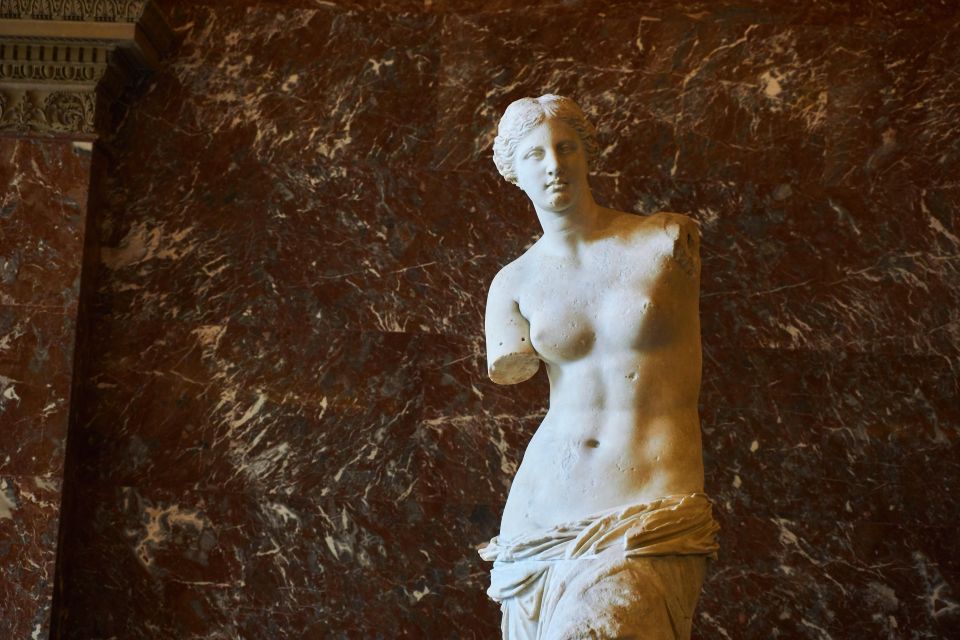
The Greek antiquities are particularly important to the tour because they include the Venus de Milo, one of the museum’s signature sculptures. Your guide can point out the work’s place in the collection and help you look beyond its fame.
A guided explanation is valuable here because sculpture can seem straightforward at first glance. Details of pose, missing arms, material, and presentation affect how you understand the work. The tour gives you a reason to stop and look instead of simply taking a photograph and moving on.
Italian Renaissance and Michelangelo
The Italian Renaissance section brings the tour to some of the Louvre’s most celebrated European art. Michelangelo is included, along with other major works from the period.
This part of the visit helps connect technique with history. Rather than treating the Renaissance as a list of famous names, your guide explains the ideas and artistic changes behind the works. You get a more useful introduction than a quick glance at labels can provide.
The guide’s role matters most in rooms like these. A strong explanation can help you notice composition, gesture, symbolism, and the choices that made a work important. Guide Flora has been praised for being warm and full of information, qualities that are especially useful when the museum is crowded and your attention is pulled in several directions.
You can also read our reviews of more museum experiences in Paris




French Romanticism and the Apollo Gallery
French Romanticism adds a national chapter to the visit. The tour also includes the Apollo Gallery, where the French Crown Jewels are displayed.
The Crown Jewels provide a change of pace from paintings and sculpture. Their presence also reminds you that the Louvre was tied to France’s monarchy and state power long before it became a public museum.
The Apollo Gallery is one of the tour’s distinctive stops. Many short Louvre visits concentrate only on the Mona Lisa and Venus de Milo. Including the Crown Jewels gives you another way to understand the building and its former royal role.
The Mona Lisa, Venus de Milo, and the reality of famous sights
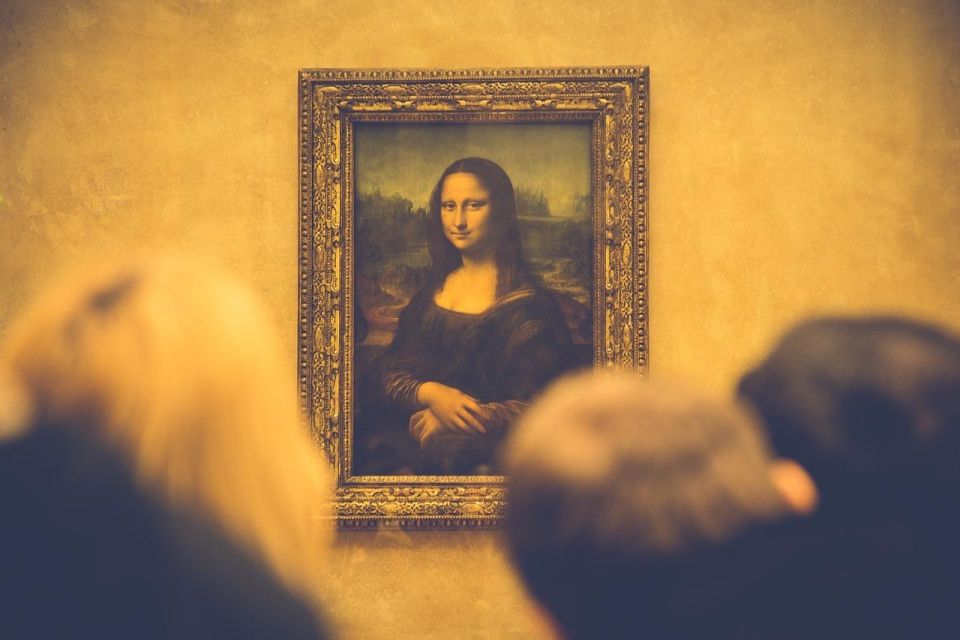
The Mona Lisa is the stop most people expect. The tour gives special attention to Leonardo da Vinci’s painting, along with the Venus de Milo and other major works.
Keep your expectations sensible. The tour does not promise a private viewing or an empty room. The Mona Lisa is one of the museum’s busiest attractions, and your viewing time may feel brief compared with the anticipation leading up to it.
A guide helps by giving you context before or around the visit. You can learn what to look for and why the painting became such a cultural symbol, rather than treating the stop as a quick photograph. The same applies to the Venus de Milo. Its fame is immediate, but a few clear points about the sculpture make the experience more rewarding.
The tour also includes work by Michelangelo and other important artists. That broader selection keeps the visit from becoming a checklist of only two famous objects.
Regular group or no more than six people
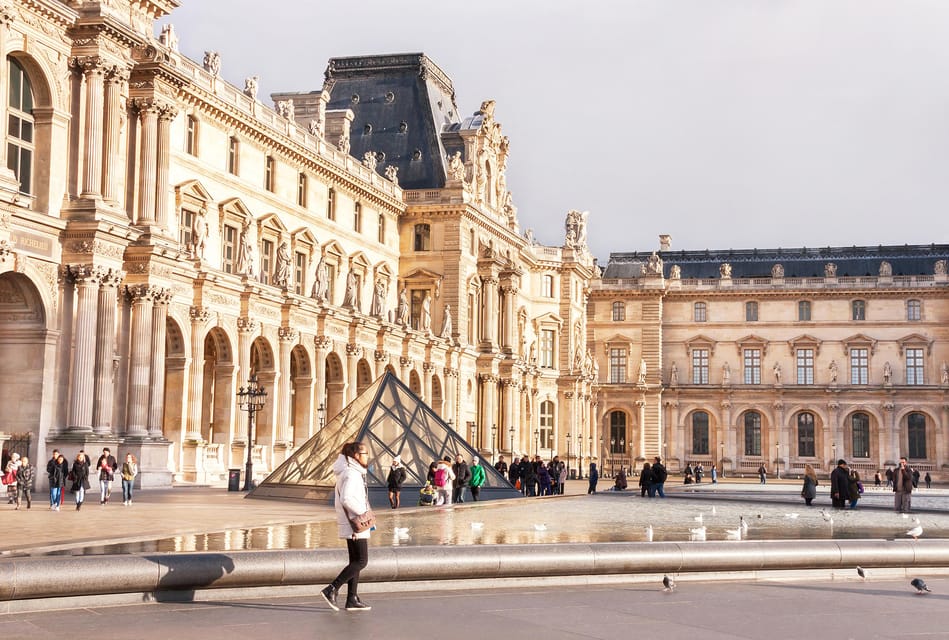
The standard tour is the practical choice for most visitors who want a planned introduction at the listed price of $90 per person. It gives you a live English-speaking guide, reserved-access entry, and a route through several major parts of the museum.
The small-group upgrade limits the group to six people. That matters at the Louvre because large groups can be harder to hear and harder to keep together in crowded galleries. With fewer people, you have a better chance to ask questions and tell the guide what interests you.
The small-group option is best for art lovers, repeat visitors, or families who want a visit shaped around particular periods. It may also suit anyone who dislikes the feel of a large organized group.
The regular tour remains perfectly reasonable if your main goal is orientation and the major sights. The key question is how much personal attention you want to buy.
Adding the narrated Seine cruise
You can add a narrated cruise on the Seine. The cruise is valid for one year from the tour date, which gives you useful flexibility instead of forcing you to fit it into the same afternoon.
That option works well if you want to pair an indoor museum visit with views of Paris from the water. The tour itself ends at the Louvre, so you will need to plan the cruise separately around your day.
The cruise is not part of the basic tour unless you select the upgrade. If you already have river plans, paying extra may not add much value. If you have not arranged a Seine outing, the long validity period makes the add-on easier to use.
What the $90 price really gets you
At $90 per person, this is not the cheapest way to enter the Louvre. You are paying for more than admission, though. The price includes reserved-access entry, a live English-speaking guide, an audio guide in English, and a planned two-hour route through major collections.
I see the value mainly in the time saved and the orientation provided. If you are visiting Paris for a short stay, avoiding a long regular line can protect a large part of your day. The guide also reduces the chance that you will spend your limited museum time lost between wings.
The value is weaker for visitors who already know the Louvre well or want several hours of independent viewing. In that case, the fixed two-hour route may feel restrictive.
Food and drinks are not included, but that is not a serious issue for a two-hour museum visit. Plan a café stop before or after the tour rather than expecting refreshments during the activity.
Mobility, bags, and other practical limits
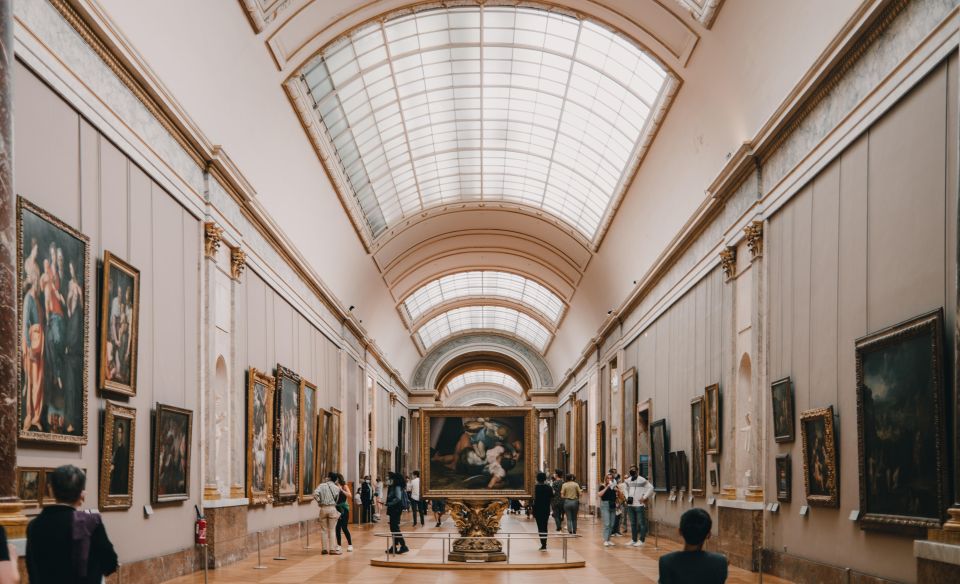
This tour includes several sections with steps. It is not wheelchair accessible and is not suitable for people with mobility impairments.
Elevators and escalators can also be closed for repairs. Their availability is unpredictable, so do not assume that every change in level will be easy. If stairs are a concern, this is an important reason to choose another Louvre option or confirm your needs before booking.
Leave luggage and large bags behind. Bring a passport or identity card, and remember that the activity is non-refundable. The cancellation issue deserves attention too: one booking resulted in the tour being canceled, leaving the person unable to visit the museum. That does not tell you how often cancellations occur, but it is a reason to avoid building an unchangeable Paris schedule around this one activity.
The tour is offered in English. An English audio guide is included as well, although the live guide is the main source of explanation.
Who should book this Louvre tour?

I would choose this tour if you are visiting the Louvre for the first time, have about two hours, and want someone else to handle the route. It is also a good fit if the museum’s size feels intimidating or if seeing the Mona Lisa and Venus de Milo is a priority.
The small-group upgrade makes more sense for people who want questions answered or have a particular interest in Ancient Egypt, Greek art, the Renaissance, or French painting. The Seine cruise add-on suits anyone who wants a flexible river activity later in the year.
I would hesitate if you need step-free access, want an unhurried museum day, or cannot accept the non-refundable terms. I would also allow extra time around the meeting point and avoid scheduling a critical connection immediately after the tour.
Should you book it?
Book this experience if your priority is a short, organized introduction to the Louvre with the major masterpieces included. The guide, reserved-access entry, and clear route offer real help in a museum that can easily consume a full day without giving you a sense of direction.
Choose the small-group version if personal attention matters to you. Choose the cruise upgrade only if you still need a Seine outing. If you prefer to wander slowly, have mobility limitations, or want maximum protection against schedule changes, consider a more flexible museum plan instead.
FAQ
How long does the Louvre guided tour last?
The guided museum visit lasts two hours. Starting times vary, so check availability when booking.
Where does the tour begin?
It begins at the Louis XIV statue on horseback near the Louvre Pyramid. The nearest address is 10 Place du Carrousel.
How do I find the guide?
Look for an orange sign marked ExperienceFirst. The meeting point coordinates are 48.861127, 2.334871.
Which Metro station is closest?
Palais Royal Musée du Louvre is the closest station. It is served by Metro Lines 1 and 7 and is about a five-minute walk from the meeting point.
What language is the tour offered in?
The live tour guide speaks English. An English audio guide is also included.
Does the tour include the Mona Lisa?
Yes. The route gives special attention to the Mona Lisa, along with the Venus de Milo, Michelangelo’s work, and other major pieces.
Can I see the French Crown Jewels?
Yes. The tour includes the French Crown Jewels in the Apollo Gallery.
Is the tour wheelchair accessible?
No. The tour includes several sections with steps and is not suitable for wheelchair users or people with mobility impairments.
Can I bring luggage?
No. Luggage and large bags are not allowed.
Is the Seine cruise included?
The cruise is an optional upgrade. If added, it is valid for one year from the tour date.