REVIEW · PARIS
Insider Louvre: from a Royal Palace to a museum
Book on Viator →Operated by Interkultur Paris · Bookable on Viator
The Louvre is far more than a gallery of famous paintings. This private tour takes you beneath the polished museum floors to the 12th century foundations and hidden dungeon, then leads you through royal apartments, crown jewels, and major works such as the Mona Lisa and Venus de Milo. It gives the building itself a proper role in the story.
I like the small maximum of six people, which should make it easier to ask questions and stay close to your guide. I also like that admission is included and that the guide handles the route from the Place du Carrousel meeting point through the museum and back again. The main consideration is the price, $173.64 per person, which is a serious outlay for a roughly three-hour visit.
In This Review
- Key points to know
- Why the Louvre’s building matters as much as its art
- Meeting at Place du Carrousel at 2:00 pm
- Beneath the museum: foundations and the dungeon
- From fortress to royal palace
- The Mona Lisa without losing the wider story
- Venus de Milo and the museum’s major works
- What a private group of six changes
- Is $173.64 a fair price?
- Timing, tickets, and cancellation
- Who will get the most from this Louvre visit?
- Should you book this Louvre tour?
- FAQ
- Where does the Louvre tour begin?
- What time does the tour start?
- How long does the experience last?
- Where does the tour end?
- Is the Louvre entrance ticket included?
- What can I see during the tour?
- How many people can join the tour?
- Can I cancel for a full refund?
Key points to know
- The Louvre’s medieval past is included: See 12th century foundations and a dungeon beneath the modern museum.
- The royal palace comes before the art museum: Royal apartments and French crown jewels add context beyond the paintings.
- The famous highlights are covered: The visit includes the Mona Lisa and Venus de Milo.
- The group is capped at six: This offers a more personal format than a large museum walk.
- Guides named Ivan and Thierry have led this experience: Ivan is praised for fitting the major Louvre sights into one afternoon, while Thierry helped a guest during a difficult ticket period.
- The tour starts at 2:00 pm: It lasts about 2 hours 45 minutes, with the endpoint back at Place du Carrousel.
Why the Louvre’s building matters as much as its art
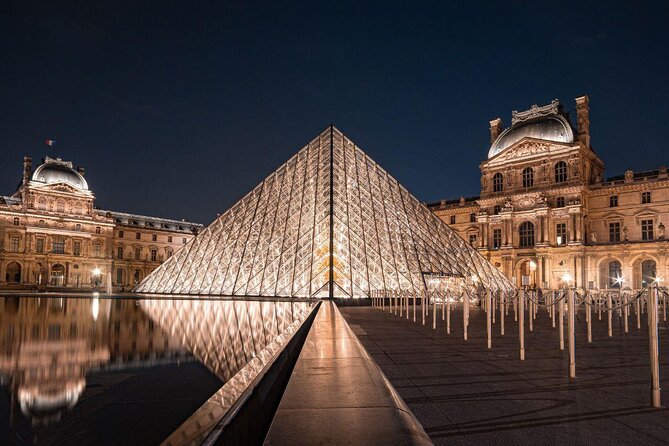
Many Louvre visits become a race from one famous painting to the next. You see the Mona Lisa, take a few pictures, find the Venus de Milo, and leave with little sense of the enormous building around you.
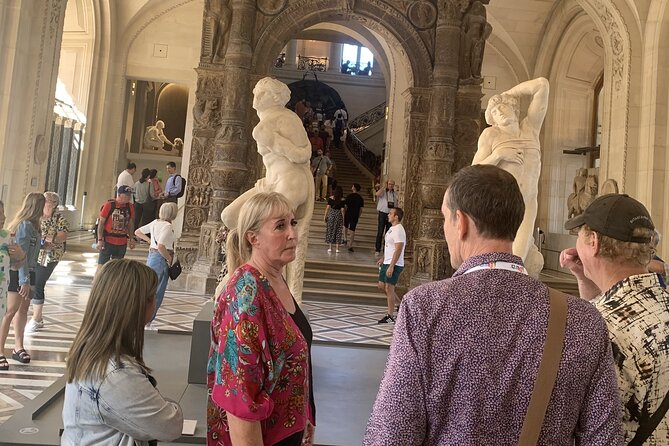
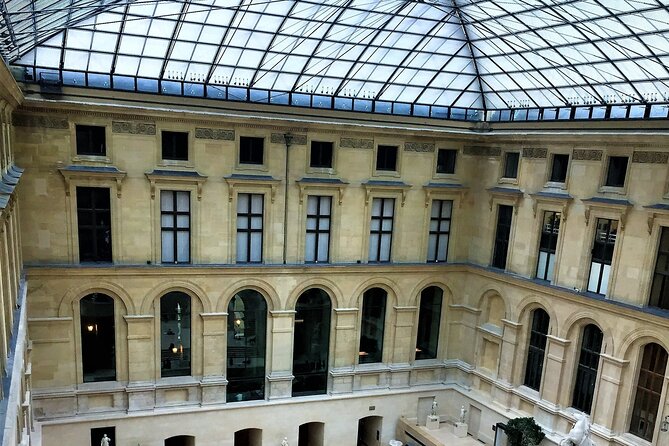
This tour takes a different route through the museum’s story. The Louvre began as a medieval fortress in the 12th century, later became a royal palace, and eventually turned into one of the world’s great museums. The architecture is not just decoration. It is the record of those changing roles.
That focus makes this a good choice if you want more than an art checklist. You can connect the underground remains to the palace rooms above, then see how royal collecting helped shape the museum’s later collections.
The tour is private, but the group can include up to six people. That is a useful middle ground. You get a guide focused on a small party without paying for a one-person tour. Still, the word private does not mean it is necessarily a solo visit. If your group is smaller than six, other participants may be included within that limit.
You can also read our reviews of more museum experiences in Paris



Meeting at Place du Carrousel at 2:00 pm
Your meeting point is Place du Carrousel, at the Louvre, 75001 Paris. The guide meets you outside and accompanies you through the museum for the full visit.
That simple arrangement matters in a place as large as the Louvre. You do not need to work out the first gallery, entrance route, or general direction on your own. The tour ends back at the same meeting point, which gives you a clear place to regroup after the museum visit.
The 2:00 pm start time may suit a day when you want a relaxed morning elsewhere in Paris. It also gives you time for lunch before entering. On the other hand, you should plan your day around the fixed start. A late arrival could be awkward when the guide is leading a small group through a vast museum.
The activity is described as lasting about 2 hours 45 minutes, while the museum portion is also listed as three hours. Treat it as an approximately three-hour commitment. You will want enough time before the start to reach Place du Carrousel without rushing.
Beneath the museum: foundations and the dungeon
The most unusual part of the route is the section beneath the present-day museum. Here you can see remains of the original 12th century Louvre, including the old foundations and a dungeon.
This gives you something that a standard highlights visit may leave out. Instead of seeing only the finished palace and museum, you get a look at the defensive building that came first. The dungeon helps make the Louvre’s early role more concrete. It was not originally designed as a grand home for royal art collections.
The underground material is especially useful for visitors who enjoy buildings, archaeology, and Parisian history. It also breaks up the usual gallery rhythm. After bright rooms and famous canvases, a lower, older section can help you understand how much the site changed over time.
There is one practical limit. The supplied details do not promise how long the group spends in each area, so the underground section may be one part of a wide-ranging route rather than a long archaeological tour. If the foundations are your main reason for booking, ask the provider how much time the guide normally gives that section.
From fortress to royal palace
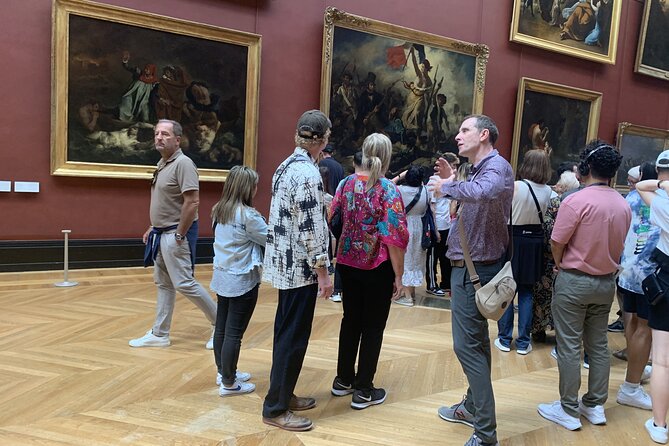
The next chapter is the Louvre as a royal residence. The tour includes royal apartments, which shift the focus from military defense to court life and ceremony.
These rooms help explain why the Louvre became such an important place before it became a public museum. You can look at the scale and design of the palace while keeping in mind that it was built for monarchs, court functions, and royal display.
The French crown jewels add another layer. They are not simply valuable objects placed in glass cases. They show how rulers used clothing, jewels, and ceremonial objects to project power. For you, that means the tour is not limited to paintings. It also covers the objects and rooms that made the Louvre a center of royal identity.
This is where the private guide can add value. A label may tell you what a room or jewel is, but a guide can connect it to the larger sequence: fortress, palace, royal collection, and museum. With a group limit of six, you should have a reasonable chance to ask about details that catch your eye.
The Mona Lisa without losing the wider story
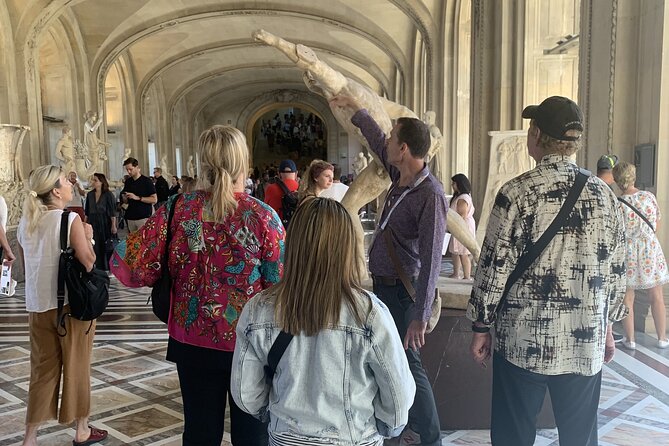
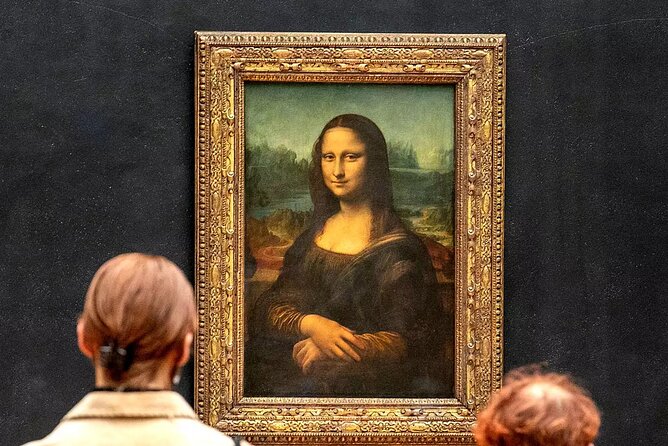
The Mona Lisa is one of the tour’s stated highlights, and for many people it will be the moment they most want to see. A guide can help you reach the painting as part of a planned route rather than leaving you to search through the Louvre’s enormous galleries.
You should keep your expectations measured. The tour cannot make the museum or the painting less popular, and it cannot guarantee a quiet viewing area. The value here is knowing where the major work fits into the visit and having someone who can point out other important sights along the way.
The strongest part of the experience is likely to be the balance. You see one of the world’s best-known paintings, but the tour also makes room for parts of the Louvre that are less familiar. That keeps the Mona Lisa from becoming the whole story.
The available feedback gives Ivan particular credit for showing the significant Louvre highlights in one afternoon. That is useful information for anyone with limited time in Paris. A large museum can easily swallow an entire day, so a guide who keeps the route moving may help you see more without wandering in circles.





Venus de Milo and the museum’s major works
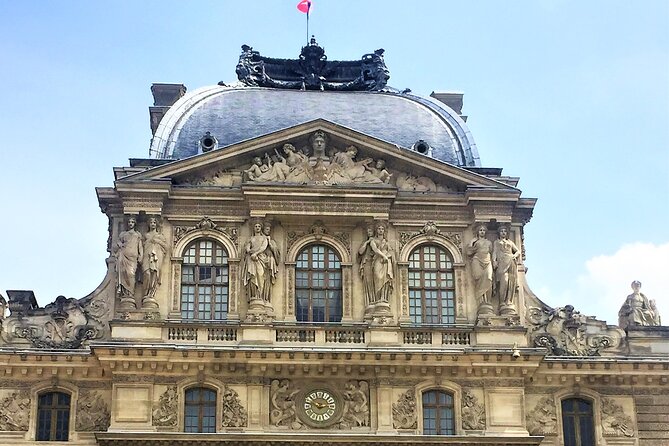
The Venus de Milo is another named highlight. Like the Mona Lisa, it is one of the Louvre’s signature sights and a natural stop on a first visit.
Seeing both works in the same guided route gives you a broad sample of the museum’s collections. You move from Renaissance painting to ancient sculpture, then to royal rooms, jewels, and medieval remains. That range is the point. The tour is designed to show the Louvre as a place with several identities, not simply a room holding famous art.
The exact order of the stops is not provided, and museum routes can change. The guide accompanies you from outside through the museum, but you should not expect a minute-by-minute schedule. A flexible route can be useful in a building this large, though it means you may want to confirm any single must-see work before the tour begins.
What a private group of six changes
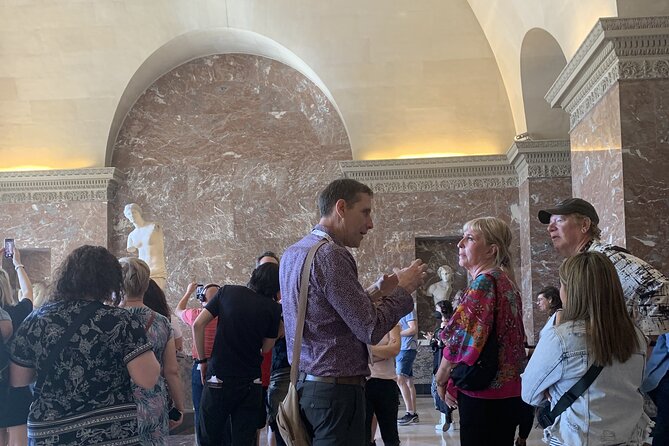
A maximum of six is one of the clearest advantages here. In a small group, you can usually hear the guide more easily and ask a question without interrupting a lecture aimed at dozens of people.
It also gives the guide room to notice what interests you. If you care more about architecture than painting, you can ask for extra context about the foundations, palace rooms, or royal design. If your priority is the major artworks, you can make that clear at the start.
The format does not mean every minute will be tailored only to you. The tour has a defined set of highlights, and the Louvre’s crowds and layout place limits on any guide. Still, six people is much more manageable than a standard large group.
The provider, Interkultur Paris, has named Ivan and Thierry among the guides associated with the experience. Ivan is praised for covering the main Louvre sights in one afternoon. Thierry is described as attentive before the visit and kept in daily contact with a guest during an unusually busy period when obtaining tickets was difficult. That attention may matter if your booking falls during a high-demand time.
Is $173.64 a fair price?
At $173.64 per person, this is not a budget Louvre visit. You are paying for the entrance ticket, a private guided format, and a route that combines art, architecture, and history.
The price makes the most sense for a first visit when you have limited time and want a guide to shape the day. It can also be worthwhile for couples, families, or small groups who value personal attention and do not want to join a much larger walk.
The value is less clear if you enjoy exploring museums alone. You may prefer to buy admission and spend several hours following your own interests. This tour also may not suit someone who wants a slow, detailed study of only one department. Its strength is range, not an extended examination of a single collection.
Group discounts are listed as a feature, but the available details do not state the discount amount or the number of people required. Check the current price for your party before booking. Since the tour is often booked 39 days in advance, planning ahead is sensible, especially for a popular museum date.
Timing, tickets, and cancellation
Admission is included, so you are not expected to arrange a separate Louvre ticket for the guided visit. A mobile ticket is available, which is convenient when you want the booking details on your phone.
Confirmation is sent within 48 hours of booking, subject to availability. That wording matters. Your request is not fully settled until confirmation arrives, so avoid building a tight chain of nonrefundable plans around it before you receive that message.
The tour offers free cancellation up to 24 hours before the local start time for a full refund. Changes made less than 24 hours before the start are not accepted, and late cancellations are not refunded.
The activity requires a minimum number of participants. If the provider cancels because that minimum is not reached, you are offered another date or experience, or a full refund. Most people can participate, and the meeting point is near public transportation, but the supplied information does not give a detailed accessibility description.
Who will get the most from this Louvre visit?
I would point this tour toward a first-time Louvre visitor who wants structure without joining a large group. The mix of underground foundations, royal apartments, crown jewels, and famous art gives you a useful first picture of the museum.
It also suits anyone who likes the story of a place as much as its objects. The Louvre’s transformation from fortress to palace to museum is the central thread, and the guide is there to connect the physical rooms to that change.
Families and small groups may appreciate the capped size and the roughly three-hour format. It is long enough to cover major ground but shorter than an all-day museum session. That can help if you have other Paris plans later.
I would hesitate if you want a very slow art lesson, a specialist tour of one collection, or the cheapest possible entry. The route covers many subjects, so each section receives only part of the visit. You should also confirm the current meeting instructions and booking status before setting out.
Should you book this Louvre tour?
Book it if you want the Louvre explained as a building, a royal residence, and a museum, not just a list of famous artworks. The small group, included admission, and named highlights make the cost easier to justify for a first visit or a short Paris stay.
Skip it if you prefer complete freedom or plan to spend a full day studying the galleries on your own. For the right visitor, the best feature is the route itself: medieval foundations below, royal rooms and jewels in the middle, and iconic art along the way.
FAQ
Where does the Louvre tour begin?
The tour begins at Place du Carrousel, Pl. du Carrousel, 75001 Paris, France.
What time does the tour start?
The scheduled start time is 2:00 pm.
How long does the experience last?
The tour lasts approximately 2 hours 45 minutes. The museum portion is also described as three hours, so plan on roughly a three-hour visit.
Where does the tour end?
The activity ends back at the meeting point at Place du Carrousel.
Is the Louvre entrance ticket included?
Yes. The tour includes the admission ticket and a guide.
What can I see during the tour?
The experience includes the Louvre’s 12th century foundations, a hidden dungeon, royal apartments, French crown jewels, the Mona Lisa, and the Venus de Milo.
How many people can join the tour?
The group has a maximum of six travelers.
Can I cancel for a full refund?
Yes. You can cancel at least 24 hours before the local start time for a full refund. Cancellations or changes made less than 24 hours before the start are not accepted for a refund.