REVIEW · BAYEUX
Full-Day Canadian Battlefields & sites Normandy Tour from Bayeux
Book on Viator →Operated by Normandy Sightseeing Tour · Bookable on Viator
Canadians fought hard on June 1944’s west edge. This full-day tour from Bayeux focuses on the Canadian role in the summer of D-Day—Juno Beach, the Juno Beach Centre, the Canadian cemetery, and the fight lines around Caen—explained by guides like Emmanuel and Remy in plain, human terms.
What I really like is how you get both the shoreline story and the aftermath: the attack at Juno and the cost reflected in the exhibits and graves. I also like the small-group feel (up to 8 people), which helps you ask questions and get your bearings without feeling rushed.
One thing to plan for: it’s a long day, and the minivan can feel tight when full, with AC that doesn’t always reach everyone equally. If you’re sensitive to emotions, this is the kind of tour that lands hard—especially at the cemetery and memorial sites.
In This Review
- Juno Beach First: A Canadian Focus You Won’t Get by Accident
- Price and Logistics: What You Get for $161.32
- Getting On the Road From Bayeux (and Why It Matters)
- Stop 1: Juno Beach and the Shoreline of the First Wave
- Stop 2: Juno Beach Centre for the Names Behind the Numbers
- Stop 3: Beny-sur-Mer Canadian War Cemetery (Where the Day Gets Quiet)
- Stop 4: Authie for a Quick Reset in the French Countryside
- Stop 5: Abbey d’Ardenne and the 9th Brigade Advance
- Stop 6: Carpiquet and the Fight for the Airfield Area
- Stop 7: Hill 67 Canadian Memorial South of Caen
- How the Guide Makes the Difference (Emanuel, Remy, Laurent/Wally)
- Getting the Most From a Weather-Heavy, Emotion-Heavy Day
- Lunch Not Included: Plan for a Real Break
- Who This Tour Is For (and Who Should Pick Another Day)
- Should You Book It? My Take on the Best Use of Your Time
- FAQ
- How long is the full-day Canadian battlefields tour from Bayeux?
- Where do I meet the tour?
- Is hotel pickup included?
- Is the tour offered in English?
- What’s included in the ticket price?
- Is lunch included?
- What stops are part of the day?
- How big is the group?
- Is there a mobile ticket?
- Can I cancel for a full refund?
Juno Beach First: A Canadian Focus You Won’t Get by Accident
This is a Normandy day with a clear mission: understand what Canadians did, where they landed, what they suffered, and how the fight moved after the initial landings. If your Normandy memory is mostly movies and general D-Day talk, you’ll leave with a more specific map in your head—one that follows Canadian units and the terrain west of Caen.
The best part is that the tour doesn’t treat the beach as a postcard. You’re shown how Canada’s landing at Juno fit into the broader Allied push—and why German counterattacks mattered. Canadians were involved in holding positions west of Caen and helping halt counter-attacks by the German 12th SS Panzer division, a detail that gives the day more weight than a basic “facts and photos” stop.
Price and Logistics: What You Get for $161.32
At about $161.32 per person, the value is mostly in the bundle: transport in an air-conditioned minivan, a professional driver/guide, fuel surcharge, and hotel pickup and drop-off if you’re staying in Bayeux. You also get admission to the Juno Beach Centre, which is one of the most meaningful stops on the route.
Lunch isn’t included, so you’ll want to plan for that break on your own (or bring simple snacks if that helps your day pace). And because you start at 8:30 am and return around 6 pm, you should treat this like a full-day commitment, not a quick add-on.
One practical note from the experiences people shared: the vehicle has AC, but comfort can vary by seat, and you may not be able to open windows—so dress for the weather and expect some time in wind and cold near the Channel.
A few more Bayeux tours and experiences worth a look
Getting On the Road From Bayeux (and Why It Matters)
Your day starts with a meeting point in Bayeux—either the Bayeux train station at Place de Quebec, or your Bayeux hotel if pickup is offered. Then you’re in a small, comfortable minivan with a driver and guide, heading west toward the coast.
The small group size (maximum 8 travelers) is more than a nice-to-have. It makes it easier to hear explanations, to ask unit or family questions, and to hear the reasoning behind the stops—like why the route moves from the beaches to cemetery ground to the advance toward places such as Abbey d’Ardenne and Carpiquet.
You’ll also get time to step out at key sites, including short pauses at places like Authie—enough time to take in the setting and reset your brain before the next heavy stop.
Stop 1: Juno Beach and the Shoreline of the First Wave
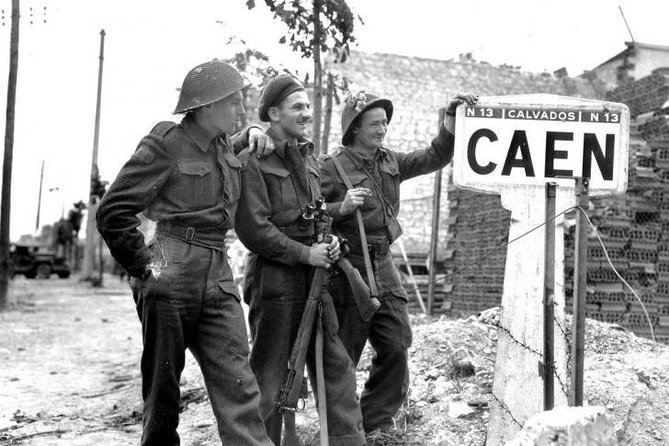
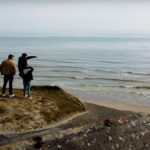
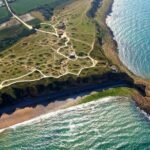
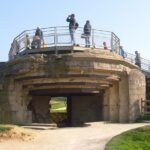
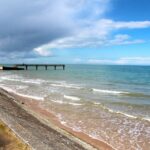
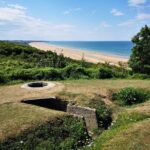
Juno Beach is where the Canadian story starts on the ground, not in a lecture hall. You’ll spend about 30 minutes at the beach area, and the focus is on the moment Canadian assault troops first stormed ashore under intense pressure from German strongholds.
What’s useful here is how the guide frames the coastline. Juno isn’t just one point—it’s a stretch of sand from St. Aubin-sur-Mer to Graye-sur-Mer, where the 3rd Infantry Division landed. Knowing that helps you picture the battle as something spread out and messy, not a single dramatic scene.
This is also where you’ll start understanding why casualties were so high. The Canadians at Juno suffered the second-highest number of casualties among the major landing beaches, while Omaha had the most. Even if you’ve heard the big names before, this perspective makes the day more grounded.
Stop 2: Juno Beach Centre for the Names Behind the Numbers
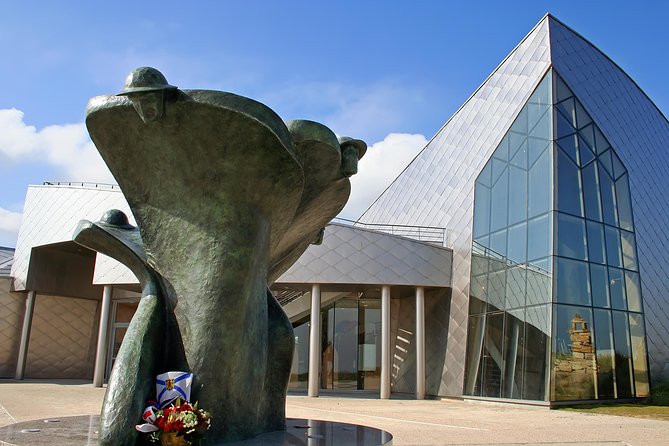
Next comes the Juno Beach Centre with about 1 hour on site. Admission is included, and this is one of the best places on the route to slow down.
The museum centers on the 45,000 Canadians who lost their lives in the war, including 359 on D-Day and about 5,500 during the Battle for Normandy. That breakdown matters because it stops you from thinking of D-Day as a single day and then moving on. Normandy was two months of fighting, and the numbers reflect that steady grind.
You’ll see Canadian stories told through photos, archives, first-hand accounts, and artifacts. In practical terms, it’s a structure that helps your brain organize what you’re seeing elsewhere: shore, cemetery, and memorial terrain. And because the Centre’s exhibits connect to the physical remains of the battle, you’re not just reading—you’re standing near the same kind of landscape that shaped those choices.
If you can, use the space to do two things: read a few accounts carefully, and then step back and re-scan the room. The first pass gives you the facts; the second pass helps you notice what keeps repeating—fear, duty, small tactical moves, and the huge human cost.
Stop 3: Beny-sur-Mer Canadian War Cemetery (Where the Day Gets Quiet)
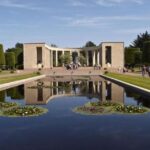
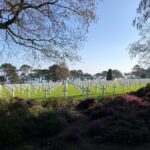
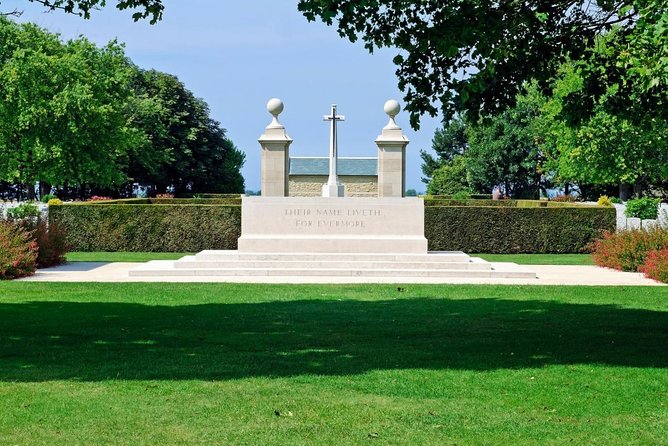
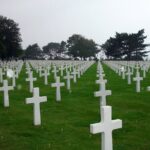
After the museum, the tour moves to Beny-sur-Mer Canadian War Cemetery for about 1 hour. Admission is included here too, and this stop is the emotional core of the tour.
A cemetery doesn’t need a long speech. What you need is time to walk slowly, look closely, and let the place do its work. The guide helps connect what you’ve learned—the landings and the battles—to the reality of who ended up here.
This is one of the stops that makes the tour feel profoundly worth it, even if you’re already familiar with Normandy history. The ground-level details of the graves turn large events into individual lives. Bring a respectful pace with you. If the day feels heavy, don’t fight it—just keep walking and take breaks when you need them.

Stop 4: Authie for a Quick Reset in the French Countryside
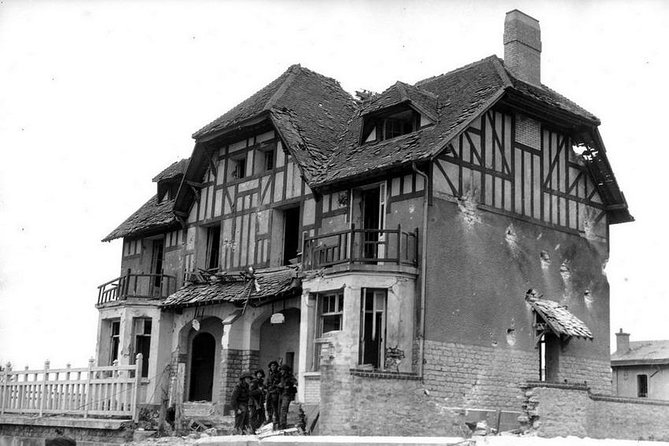
You’ll also stop in Authie for about 30 minutes. Admission isn’t required here, and the point is less about a museum and more about setting the scene.
These countryside pauses matter because they help you picture how fighting and movement happened beyond the beaches. Normandy wasn’t just sand and smoke—it was hedgerows, roads, villages, and farmland. Even a short stop here can make later stops like Abbey d’Ardenne feel more real, because you’re already thinking in “terrain” instead of “tour map.”
Use this moment to stand somewhere with a clear view and listen to the guide’s explanation. These are often the moments when the battle becomes geography, not just chronology.
Stop 5: Abbey d’Ardenne and the 9th Brigade Advance
Next is Abbey d’Ardenne for about 1 hour, where you track the route of the 9th Brigade advance on June 7. This stop turns the story from landing into pursuit and fighting through the days that followed.
The key value here is the cause-and-effect: you learn how the initial landings opened the door, and how the Allied push tried to keep that door from shutting again. The guide connects that to the capture plans and the way terrain slowed or accelerated movement.
This is also a good place to ask questions if you like to understand battle logic rather than just “what happened.” Guides often explain the difference between what looks close on a map and what was hard in reality—especially in a landscape like Normandy.
Stop 6: Carpiquet and the Fight for the Airfield Area

After Abbey d’Ardenne, you visit Carpiquet for about 1 hour. This stop ties into the push connected with the capture of the Carpiquet area (including the airfield context that came up in the tour story).
If you’ve ever wondered why control of places mattered beyond the beachhead, this part of the day helps answer it. Airfield-linked objectives affected logistics, reinforcement, and the ability to keep pressure on the enemy.
Carpiquet is one of those stops where your guide’s pacing makes a big difference. Take time to look around first, then listen for how the battle lines shifted. When you let your eyes and your ears work together, it clicks faster.
Stop 7: Hill 67 Canadian Memorial South of Caen
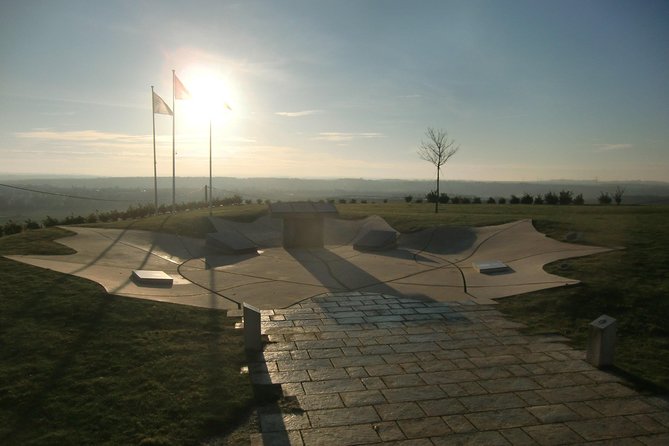
You’ll finish with Hill 67 Canadian Memorial, about 30 minutes. This is where the day narrows into a specific, brutal place in the fight just south of Caen.
Hill 67 is remembered because it became a symbol of the kind of stubborn fighting that characterized the Battle for Normandy. You’ll get monuments and memorial context, with the guide helping you connect it back to the wider Canadian role—holding lines, enduring counterattacks, and continuing forward despite losses.
This is also where the tour’s design shines: you started with the beach, moved through the museum and cemetery, tracked the advance, and then landed on a memorial that summarizes what the fighting meant in real terms.
How the Guide Makes the Difference (Emanuel, Remy, Laurent/Wally)
The tour’s biggest “value multiplier” is the guide style. Multiple guides in the experience history—people such as Emanuel, Remy, Laurent (Wally), Bice, and Jeremy—are described as passionate and detailed, with the ability to connect big events to specific units and the ground you’re standing on.
That shows up in how they pace the stops. Instead of treating the day like a checklist, the better guides help you understand why Canadians were where they were, and why certain places matter. In at least one story shared, a guide helped connect a guest’s family story to what they could see on the route, including locating a gravestone.
One practical caution: on a long day, audio matters. There was at least one instance where a microphone issue made the narration harder to follow. If that kind of thing worries you, sit closer to the front of the minivan so you’re more likely to hear clearly.
Getting the Most From a Weather-Heavy, Emotion-Heavy Day
This tour is outside at the coast and on memorial ground, so weather matters. If you visit in winter, remember the wind off the Channel can cut fast, and you’ll want warm layers even if the rest of the day feels manageable.
Comfort tips that actually help:
- Wear shoes you can walk in for real time on uneven ground.
- Bring a light layer plus a warm one if you’re traveling in cooler months.
- Plan to take a deep breath at the cemetery. This is not the stop to rush.
Also, because the schedule is full, try not to schedule anything tight after the return. You’ll be mentally tired, even if you’re physically fine.
Lunch Not Included: Plan for a Real Break
Lunch isn’t included, so you’ll need to either find a spot near where you are (with the guide’s timing cues) or bring something small to tide you over. The tour packs in several key stops, and the museum + cemetery portions benefit from having energy and patience.
If you’re traveling with kids or anyone who gets overwhelmed quickly, a planned snack break can make the difference between a stressful afternoon and a smooth one.
Who This Tour Is For (and Who Should Pick Another Day)
This tour fits best if you want a Canadian-focused Normandy day without driving yourself. If you care about specifics—units, routes, beaches, and memorial names—this works because the stops build on each other.
It’s also a strong choice for Canadians who want their history connected to the actual battlefield landscape. Guides often tailor explanations to where people come from in Canada, and the day naturally supports personal context.
If you’re also chasing WWI sites like Vimy Ridge, this is not the day for it. One experience noted that Vimy needs a separate trip; the theme here is very firmly Normandy in 1944.
If you dislike emotional settings, the cemetery and memorial stops may feel too intense. In that case, you might prefer a lighter beach-and-overview style tour instead.
Should You Book It? My Take on the Best Use of Your Time
I’d book this tour if you want Normandy with a clear spine: Juno Beach → Juno Beach Centre → Canadian War Cemetery → advance sites → Hill 67. The schedule is tight, but the logic works, and the included museum time helps you understand what you’re seeing rather than just passing through.
I’d think twice only if you’re uncomfortable with long, moving stops or you struggle with audio in small vehicles. Otherwise, for Canadians or D-Day history fans who want depth without the stress of navigation, this is a very strong use of a day in Bayeux.
If you’re ready to trade a little spontaneity for structure—and you want to leave with a sharper sense of Canadian sacrifice—this is the tour that delivers.
FAQ
How long is the full-day Canadian battlefields tour from Bayeux?
It runs for about 8 hours (approx.), starting at 8:30 am and returning to Bayeux around 6 pm.
Where do I meet the tour?
You meet at Bayeux train station (Place de Quebec) or at your Bayeux hotel if pickup is offered.
Is hotel pickup included?
Yes, hotel pickup and drop-off are included from Bayeux only.
Is the tour offered in English?
Yes, it’s offered in English.
What’s included in the ticket price?
You get transport in an air-conditioned minivan, a driver/guide, fuel surcharge, and admission to the Juno Beach Centre.
Is lunch included?
No, lunch is not included.
What stops are part of the day?
You’ll visit Juno Beach, the Juno Beach Centre, Beny-sur-Mer Canadian War Cemetery, Abbey d’Ardenne, Carpiquet, and Hill 67 Canadian Memorial, plus a stop in Authie.
How big is the group?
The tour has a maximum of 8 travelers.
Is there a mobile ticket?
Yes, mobile tickets are offered.
Can I cancel for a full refund?
You can cancel up to 6 days in advance of the experience for a full refund.