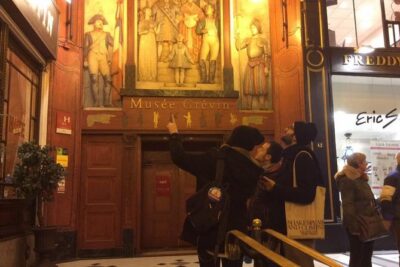
The best idea here is simple: turn the Louvre into a family treasure hunt instead of a long march from one famous painting to the next. You and your children solve clues, answer riddles, and work as a small detective team while learning why works such as the Mona Lisa and Venus de Milo matter.
I like the private format, since your group of up to six can move at a family pace. I also like the clear learning goal: you are not just collecting famous sights, you are picking up art skills you can use in other museums. The main drawback is the added museum admission cost for adults, plus the fixed weekday afternoon schedule.
In This Review
- Key points
- Why a Louvre Treasure Hunt Works for Families
- Meeting at 2S Place du Carrousel
- Inside the Louvre: Art as a Series of Clues
- The Mona Lisa and Venus de Milo
- Stories of Kings and Earlier Civilizations
- The Guide Makes or Breaks the Experience
- Is $452.74 Good Value for Six People?
- Physical Demands and Family Fit
- Practical Details Before You Book
- Who Should Choose This Louvre Tour?
- FAQ
- How long does the Louvre family tour last?
- Where does the tour begin and end?
- How many people can join the private tour?
- Is museum admission included?
- Which languages are available?
- What is included in the experience?
- Should You Book the Louvre for Families?
Key points
- Three hours inside the Louvre: Enough time for a focused family route without trying to see the entire museum.
- A private group of up to six: Your family works together rather than joining a large public group.
- Riddles tied to major artworks: The Mona Lisa, Venus de Milo, and other important pieces become clues in an active lesson.
- A guide who connects with children: Ceci, also referred to as Cecilia, is specifically associated with warm, engaging family visits.
- English, Spanish, and Italian options: The experience is listed in English, with guided tour options also noted in Spanish and Italian.
- Extra admission cost: Adults pay a €22 museum entrance ticket, while certain younger visitors may enter free with the required proof.
Why a Louvre Treasure Hunt Works for Families

The Louvre can be a hard museum for children. It is enormous, the famous rooms can feel crowded, and a young child may not care about standing in front of a painting simply because it appears in a guidebook. This tour changes the basic question from What are we looking at? to What clue can we solve here?
That small change matters. A riddle gives children a reason to look closely. They may notice a gesture, a symbol, a pose, or a detail in the background that they would otherwise miss. You get a more active visit, while the guide supplies the art context that keeps the game from becoming a simple scavenger hunt.
The route focuses on selected works that mark major steps in art history. You should not expect a full survey of every Louvre collection. Instead, the three hours use a manageable set of important pieces, with stories about the art and the royal dynasties connected with the museum.
I like this approach for families with children who need a job to do. The activity also gives parents a useful takeaway: how to ask better questions about art. What is the figure doing? What clues show power or wealth? Why might the artist have arranged the scene this way? Those questions can help you make future museum visits less passive.
You can also read our reviews of more tours and experiences in Paris.



Meeting at 2S Place du Carrousel
The tour begins at 2S Pl. du Carrousel, 75001 Paris, and ends back at the meeting point. The location is near public transportation, which makes it practical for reaching the Louvre from elsewhere in central Paris.
The listed operating period runs from April 1, 2021, through November 26, 2026, with tours scheduled Monday through Friday from 2:30 p.m. to 5:30 p.m. That timing gives you a clear plan, but it also limits flexibility. If your family has a morning train, a late lunch, or a full day of sightseeing planned, this afternoon slot may not fit easily.
Plan to arrive with enough time to find the meeting point and settle children before the activity begins. The exact meeting instructions should be checked in your booking confirmation, which is issued at the time of booking.
The tour lasts about three hours. That is a useful middle ground for families. A one-hour introduction can feel rushed, while a full-day museum visit can test even a keen young art lover. Three hours lets the guide build a story, stop for puzzles, and move through several major works without asking you to conquer the entire Louvre.
Inside the Louvre: Art as a Series of Clues
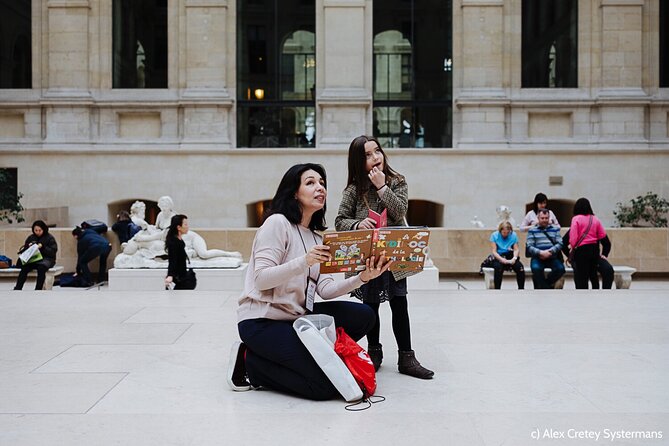
Once inside, the guide turns the museum visit into an expedition through different civilizations and periods. You and your children are asked to observe, discuss, and decode rather than simply listen to a lecture.
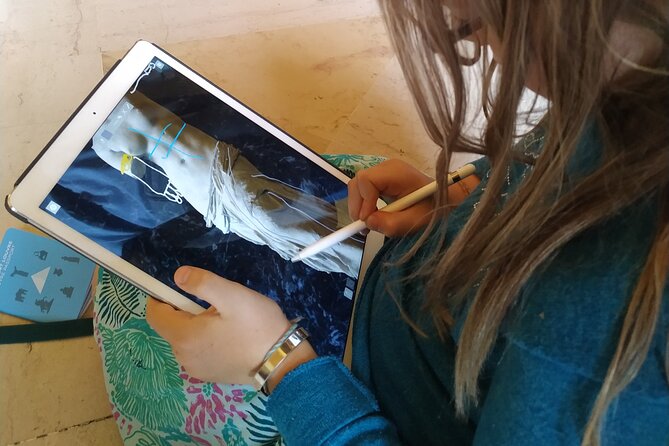
The activity booklet gives the children something concrete to hold onto. The supplied audio transmission is also included, which may help the family hear the guide clearly in a large museum setting. These tools are especially useful when attention starts to wander, since the children have both a written activity and an unfolding task.
The central method is teamwork. Your family works together as a group of detectives, looking for clues in the artworks and answering puzzles. That format can suit siblings of different ages because one child may spot a visual detail while another enjoys the wordplay or story.
The guide also explains ideas about art in plain terms. You might learn how an artwork reflects its time, how artists communicate status or emotion, and why certain works became milestones in art history. The value is not just in remembering a few famous names. It is in learning how to look.
The Mona Lisa and Venus de Milo
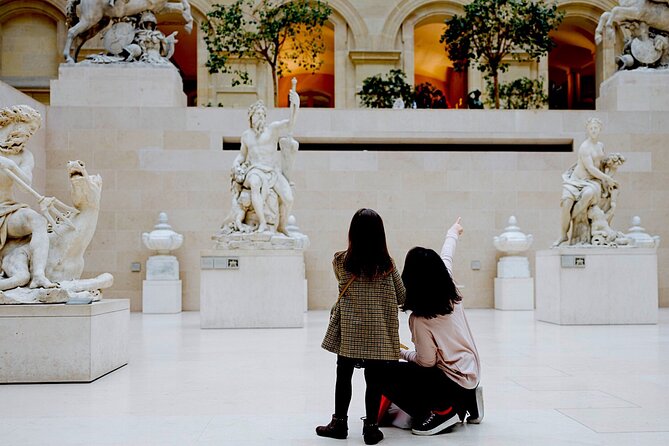
The Mona Lisa and Venus de Milo are among the named highlights, so you can expect these major works to play an important part in the route. They are also two very different kinds of museum experience.
The Mona Lisa is famous far beyond the Louvre. Seeing it can be exciting, but the room and the attention around the painting can make it difficult to study quietly. A family-focused guide gives you a better reason to look at the work beyond its fame. The children can search for visual details and consider how the painting creates its effect.
The Venus de Milo offers a different lesson. It gives the guide a chance to discuss sculpture, the human figure, and how an artwork can remain powerful even when parts are missing. A puzzle-based approach can help children ask why the statue looks as it does instead of treating it as a silent object in a crowded gallery.
These stops are likely to be popular with the whole family because children recognize the names and parents get the classic Louvre experience. The tradeoff is that the most famous rooms may not provide much calm or personal space. The point of the tour is not solitude. It is to make the important works meaningful despite the museum’s scale and busy areas.
Stories of Kings and Earlier Civilizations
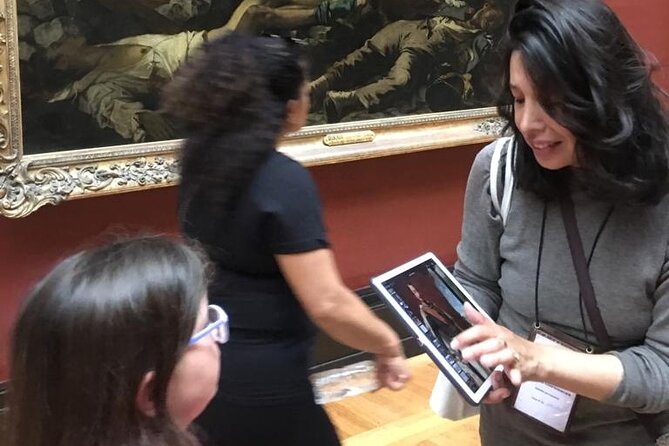
The tour also connects the artworks to the Louvre itself. The museum is not only a container for paintings and sculpture. Its collections bring together objects from different civilizations, and the building has a long connection with French royal dynasties.
Stories about the kings who inhabited the Louvre give children a simple way to understand how the palace and museum relate to one another. Instead of treating the building as a series of grand rooms, the guide can frame it as a place where power, art, and collecting came together over time.
The experience is designed to travel back through different periods and cultures. Since the tour selects works for their importance in the development of art, you should expect a broad introduction rather than specialist detail about one collection.
That broad scope is useful for a first Louvre visit. Your family gets a clear sense of how art changes across time and place. The limitation is that anyone hoping for a detailed look at Egyptian, Greek, Roman, or French collections will likely need a separate visit. Three hours is enough for a thoughtful route, not enough for every department.





The Guide Makes or Breaks the Experience
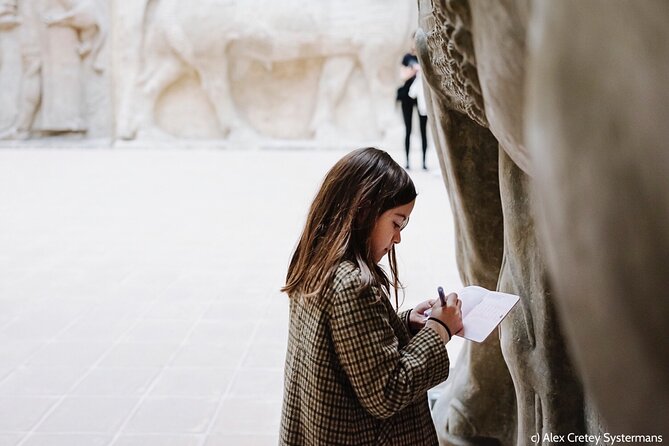
A family tour depends heavily on the person leading it. The available comments identify Ceci, also called Cecilia, as the guide who made the visit engaging for children and adults. Her approach is described as lively, educational, and particularly effective at keeping the youngest child involved.
That detail is important. Family tours are not simply adult tours with easier language. The guide must know when to ask a question, when to tell a story, and when to let children solve something on their own. The strongest feature here appears to be that balance between learning and play.
The Italian feedback also points to the guide’s ability to involve the entire family, especially the youngest child. If you are booking with a small child who may not last through a standard art lecture, that is a meaningful advantage.
Guide availability can change, so I would not assume Ceci or Cecilia will personally lead every departure. The names are useful when you check your booking details, particularly if a specific guide is important to you. The listed language options include English, Spanish, and Italian, while the main experience information is presented in English. Confirm the language you need when booking.
Is $452.74 Good Value for Six People?
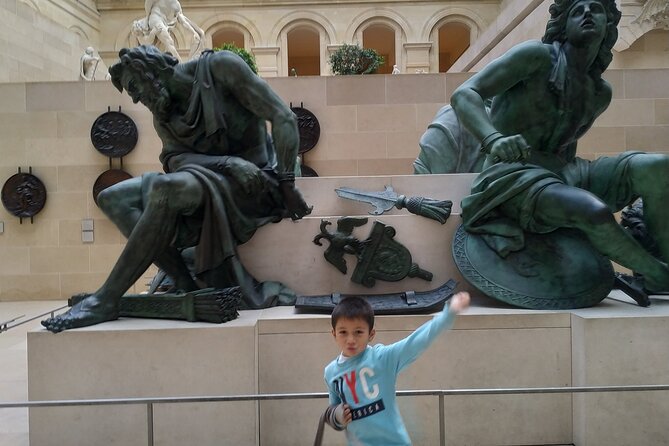
The listed price is $452.74 per group of up to six, not per person. For a full family group, that works out to about $75 per person if six people attend. For two adults and two children, the effective per-person cost is higher, so the value depends on how much your family benefits from a private guide and structured activities.
You also need to add the €22 museum entrance ticket for adults. Admission is free for visitors under 18 and for EEA residents under 26, provided they show valid identification and proof of residency. That exemption can lower the total for eligible families, but it does not apply automatically to every young visitor.
I see the price as easier to justify for a family that wants help using the Louvre well. You are paying for a private three-hour format, a family activity booklet, audio transmission, a guide, and a planned route through major works. You are not paying only for entry or a quick introduction.
The value is weaker if your children already enjoy wandering through museums independently, or if you only want to see the Mona Lisa and leave. In that case, a private three-hour activity may be more structure and expense than you need.
For a group of five or six, the fixed group price makes more sense. A smaller family should compare the total with other private Louvre options and consider whether the treasure hunt format is likely to keep the children involved.
Physical Demands and Family Fit
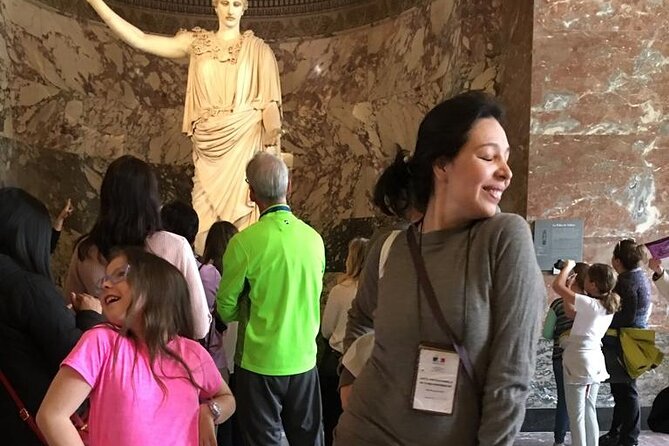
The experience calls for a moderate level of physical fitness. The Louvre is a large museum, and even a carefully planned route means walking and standing. Young children may need breaks, and parents should consider how their children handle three hours in a major museum.
The treasure hunt helps with attention, but it does not remove the physical demands of the building. This is best for families who can manage a sustained afternoon outing and who are willing to take part in the questions rather than leaving all the work to the guide.
I would choose this for families with children who like puzzles, stories, and shared tasks. It is also a good match when one parent wants art and another worries that the museum will be too dull for the children.
The format may be less suitable for a family that wants a quiet, slow study of a small number of paintings. It may also be less comfortable for anyone who needs a highly customized pace, since the available details do not promise a specific accessibility plan or route.
Practical Details Before You Book
You receive confirmation at booking, and the activity uses a mobile ticket. Keep the phone charged and make sure the confirmation is easy to access before you leave for the Louvre.
The activity is private, so only your own group participates. That is a major comfort for families. You can discuss an answer without worrying about holding up strangers, and the guide can focus on the children in your group.
The experience is listed as non-refundable and cannot be changed for any reason. That rule deserves attention before you pay. Paris plans can shift because of weather, fatigue, delayed trains, or a child who wakes up in a bad mood, so book only when your schedule is firm.
The tour is offered Monday through Friday in the stated 2:30 p.m. to 5:30 p.m. window. It is not presented as a flexible morning or weekend activity. Build your day around that fixed time rather than assuming another departure will be available.
Who Should Choose This Louvre Tour?
I would recommend it most strongly to a family of up to six that wants a guided first look at the Louvre and knows the children will respond to a game. The private setting, selected masterpieces, and teamwork format make the museum less intimidating and give everyone a role.
It is also a good choice for parents who want to learn how to talk about art with their children. The guide does not only point out famous objects. The tour aims to teach general art concepts, which can help you continue the conversation at other museums.
I would pause before booking if your family has only a short window in Paris, needs a weekend tour, or wants a low-cost museum visit. The fixed afternoon schedule, extra adult admission, and no-change cancellation rule all matter.
The perfect family Louvre visit is not about seeing everything. It is about leaving with a few clear memories and the confidence to look at art together. This tour is built for that goal.
FAQ
How long does the Louvre family tour last?
The activity lasts approximately three hours, from 2:30 p.m. to 5:30 p.m. on the listed Monday through Friday schedule.
Where does the tour begin and end?
The tour starts at 2S Pl. du Carrousel, 75001 Paris, France, and ends back at the meeting point.
How many people can join the private tour?
The price covers one private group of up to six people. Only your group participates in the activity.
Is museum admission included?
No. Adult museum admission costs €22. Admission is free for visitors under 18 and EEA residents under 26 when they present valid identification and proof of residency.
Which languages are available?
The experience is offered in English, and guided tour options are also listed in Spanish and Italian. Confirm your preferred language when booking.
What is included in the experience?
The tour includes audio transmission and a booklet of activities. Museum admission is not included.
Should You Book the Louvre for Families?
Book this experience if you want a private, three-hour Louvre visit that gives children something active to do. The riddles, booklet, famous artworks, and family teamwork create a clear structure, while the guide adds stories about art, civilizations, and the Louvre’s royal past.
The strongest reason to choose it is the child-friendly teaching style associated with Ceci or Cecilia. The main reasons to hesitate are the $452.74 group price, the extra €22 adult admission, the weekday afternoon schedule, and the strict no-refund policy.
For a family of four to six with a firm Paris schedule, this can be a smart way to make a huge museum manageable. For a smaller group seeking the cheapest possible visit, or for adults who want a specialist art lecture, another Louvre plan may serve you better.