REVIEW · PARIS
Paris: Small Group Moulin Rouge &Sacré Cœur Montmartre Tour
Book on Viator →Operated by Danis Tour · Bookable on Viator
Two hours, one unforgettable hill. This small-group Montmartre tour strings together Paris’s most cinematic corners, from the shadow of Moulin Rouge to the sweeping views at Sacré-Cœur, with guides who bring the stories to life. I love the intimate pace with a group capped at 15, and I love the payoff of standing up on Sacré-Cœur after moving through classic Montmartre streets. The main consideration is that you’ll be doing a lot of uphill walking and stairs, and the Moulin Rouge admission/show isn’t included.
You start at 5 Pl. Blanche (easy to reach by public transport), then finish around 35 Rue du Chevalier de la Barre, so plan on returning to your hotel afterward. You’ll get a mobile ticket and English guiding for about two hours, with quick stops where you can actually look around instead of just being herded past.
In This Review
- Key highlights to know before you go
- How this 2-hour Montmartre walk fits into your Paris plan
- Starting at 5 Pl. Blanche: where the tour begins
- Moulin Rouge first: getting the cabaret context without buying show tickets
- Café des Deux Moulins and Le Moulin de la Galette: the Amélie and art-festival vibe
- Place des Abbesses and the Saint Denis story: not just pretty churches
- Le Mur des Je t’aime: the Wall of Love without the awkward crowd rush
- Le Bateau-Lavoir and the early 1900s art scene
- La Maison de Dalida and the Dalida statue: music that still echoes
- La Maison Rose, the Montmartre vineyard, and La Bonne Franquette
- Sacré-Cœur at the top: the view that earns the climb
- Guides make the difference: Selda, Alice, Danyel and others
- Price and value: is $59.28 worth it?
- Pace, walking, and who should take this tour
- Should you book the Paris Small Group Moulin Rouge & Sacré-Cœur Montmartre Tour?
- FAQ
- How long is the Paris Small Group Moulin Rouge & Sacré-Cœur Montmartre Tour?
- What is included, and what is not included?
- What group size should I expect?
- Is the tour offered in English?
- Where does the tour start and where does it end?
- Can I get a refund if my plans change?
Key highlights to know before you go
- Max 15 people: small enough to hear your guide and move at a human pace.
- Public-transport friendly start: 5 Pl. Blanche makes it simple to plug into your day.
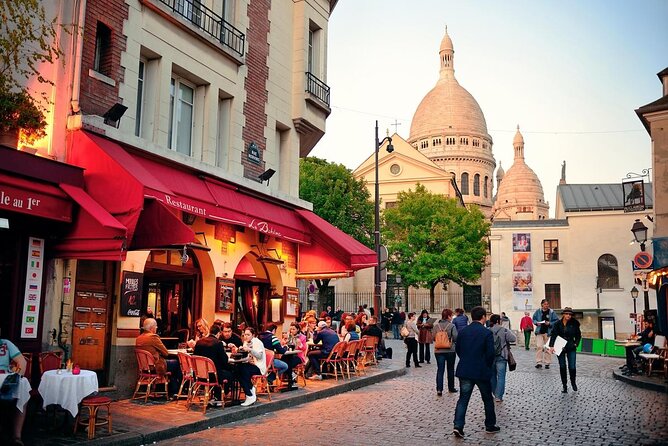
- Amélie filming locations: Café des Deux Moulins and the nearby art-studio vibe of Montmartre.
- Love Wall photo stop: the Wall of Love is quick, romantic, and built for pictures.
- Dalida stops: both her former home area and a statue/bust stop that locals still recognize.
- Sacré-Cœur viewpoints: the hilltop views are the moment that makes the walk feel worth it.
How this 2-hour Montmartre walk fits into your Paris plan
This isn’t a day-long slog. It’s about 2 hours, which makes it a smart pick when you want Montmartre without giving up your whole morning or afternoon. The format is a walking route with short, focused stops—most are around 5–15 minutes—so you’re seeing a lot while still having time to pause and take photos.
If you’re doing the big Paris landmarks on one day and want a totally different vibe the next, this works well. You get the “village within the city” feeling up on Montmartre, plus a clear route that helps you navigate the streets efficiently.
The tradeoff is distance and elevation. Expect uphill sections and stairs, especially as you work your way toward Sacré-Cœur. If your legs tire easily, think about whether you want a walking tour at all—or bring the right shoes and plan slower breaks.
You can also read our reviews of more tours and experiences in Paris.



Starting at 5 Pl. Blanche: where the tour begins
Your tour kicks off at 5 Pl. Blanche in the 9th arrondissement, a spot that’s described as easy to reach by public transport. This matters because you don’t want your “Montmartre experience” to start with a long trek just to find the group.
You’ll also want to note the ending point. The tour finishes at 35 Rue du Chevalier de la Barre in the 18th arrondissement. That’s not the same as the starting address, so you should build in time to get yourself back to where you’re staying.
Also, since this is an English-guided experience with a mobile ticket, you can show up prepared. You won’t be relying on willpower to figure out where to meet once you’re already there.
Moulin Rouge first: getting the cabaret context without buying show tickets
The route begins at Moulin Rouge, one of the most famous cabarets on earth. You’ll get a short stop (about 10 minutes) and learn how it became such a world icon—more context than you’d get from just looking at the façade from the sidewalk.
Here’s the key practical point: the Moulin Rouge admission ticket and show are not included. That doesn’t make the stop pointless, though. Even without entering, this is the kind of landmark where stories give you a lens for what you’re seeing: the reputation, the era, and why people still associate it with spectacle.
If you do want to see a show, you can treat this tour as the warm-up. You’ll walk in with better context and know what to look for.
Café des Deux Moulins and Le Moulin de la Galette: the Amélie and art-festival vibe
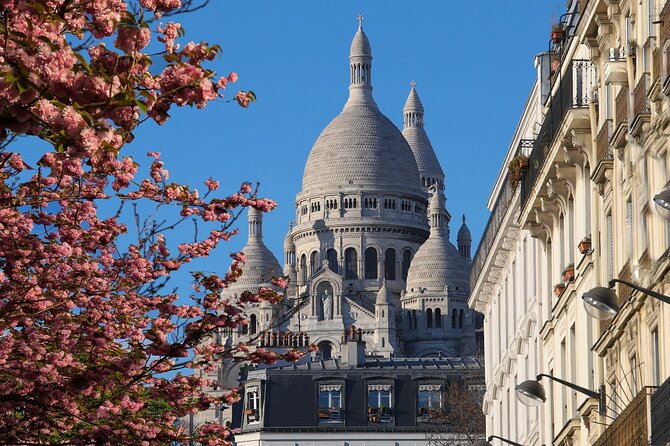
Next comes Café des Deux Moulins. This is where the comedy Amélie was filmed, including the spot tied to where the character worked. The stop is brief (around 5 minutes), but that’s exactly right for a filming-location stop: you want time to look, take a couple photos, and absorb the setting.
From there you’ll see Le Moulin de la Galette, a historic windmill that has been immortalized in paintings. The appeal here isn’t just the photo. It’s the sense that Montmartre used to be a different kind of place—one tied to artists, studios, and a carefree past that still echoes in the neighborhood streets.
Both of these stops are listed as quick and with free admission for what’s being visited from the street. So you get the payoff without extra ticket costs.
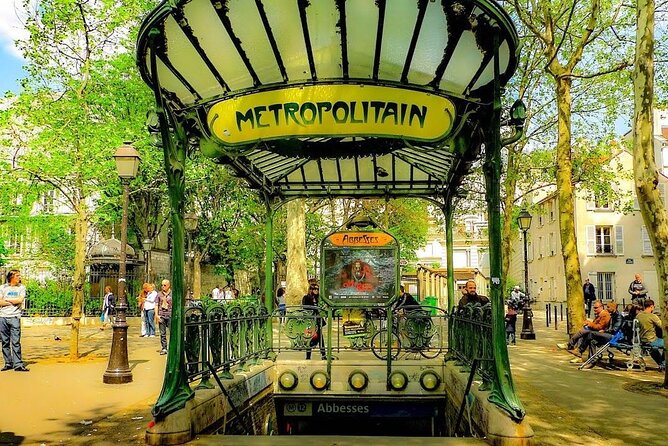
Place des Abbesses and the Saint Denis story: not just pretty churches
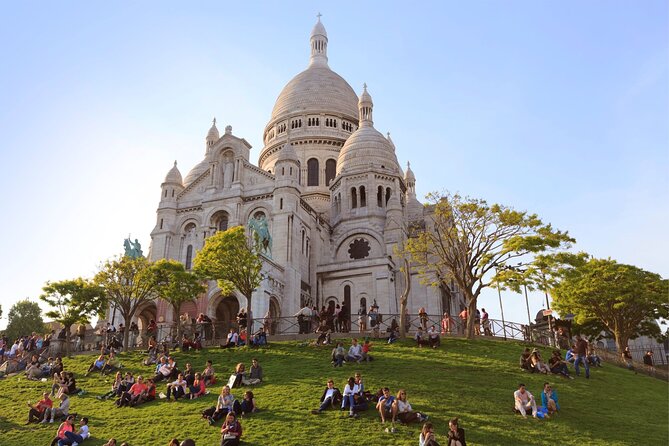
At Place des Abbesses, you’ll hear history tied to Saint Denis—Paris’s first bishop—and the dramatic martyrdom connected to his story. You’ll also hear about the Red Abbess, a reference that helps you understand how Montmartre’s religious history can feel different from the rest of the city.
This is the kind of stop that works best when you’re with a guide. From street level, you might see buildings and statues. With the right narration, they become a map of ideas: who mattered, what stories survived, and why the area still carries meaning.
Because this is a free stop and you only spend about 10 minutes, it’s also a nice reset. If you’re warmed up by the earlier art and film stops, this church-related history brings variety without turning your day into a museum marathon.





Le Mur des Je t’aime: the Wall of Love without the awkward crowd rush
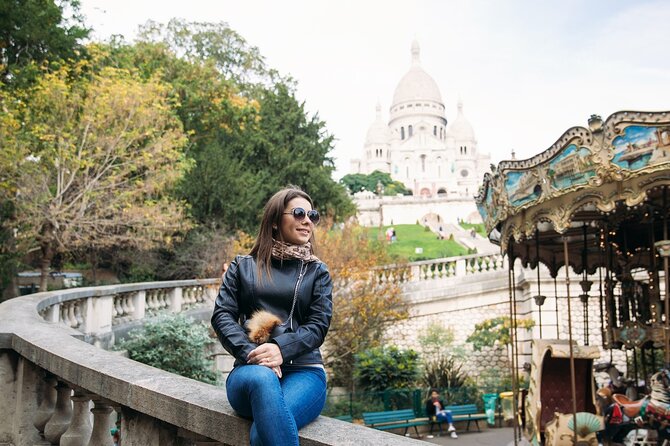
The Wall of Love (Le Mur des Je t’aime) is next, with about 10 minutes on the spot. It’s an artistic landmark where I love how the message repeats in many languages, turning a simple phrase into something universal.
Practical advice: this stop is built for pictures. If you’re traveling as a couple or with friends, plan a few photo angles and then step back so other people can pass. In busy areas, crowd flow matters, and it helps you keep your photos stress-free.
If you want a romantic break in the middle of the walk, this is it. It also works for families because the landmark is clear and easy to understand fast.
Le Bateau-Lavoir and the early 1900s art scene
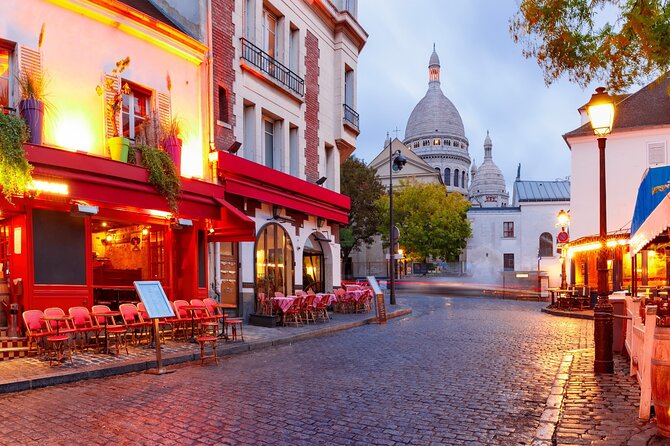
Then you’ll head to Le Bateau-Lavoir, described as an artists’ residence tied to early 20th-century figures like Pablo Picasso and Amedeo Modigliani. This is one of those Montmartre stops where the walls don’t look “important” until a guide gives you the timeline and explains why the place mattered.
You’ll spend about 15 minutes here, which is long enough to look around and let the stories land. If you like art history but don’t want lectures, this is a good middle ground: you get names and context, but the pace stays walkable.
This is also a nice place to catch your breath if you’ve been climbing. It’s a pause in the route that doesn’t feel like downtime.
La Maison de Dalida and the Dalida statue: music that still echoes
From the art-school stories, you’ll transition to Dalida. The tour includes La Maison de Dalida, where you’ll learn about her life and her impact on French culture. You’ll then see a Dalida statue—a bust-style tribute tied to her lasting influence in the neighborhood.
These stops are free and quick (about 10 minutes each). That length makes sense: you get the connection between the person and the place without turning the tour into a deep-dive museum detour.
Why I like this pairing with the earlier art stops: Montmartre isn’t only about painters and poets. It’s also about performers, pop culture, and the French music tradition. Dalida gives you a different angle on the same hilltop creativity.
La Maison Rose, the Montmartre vineyard, and La Bonne Franquette
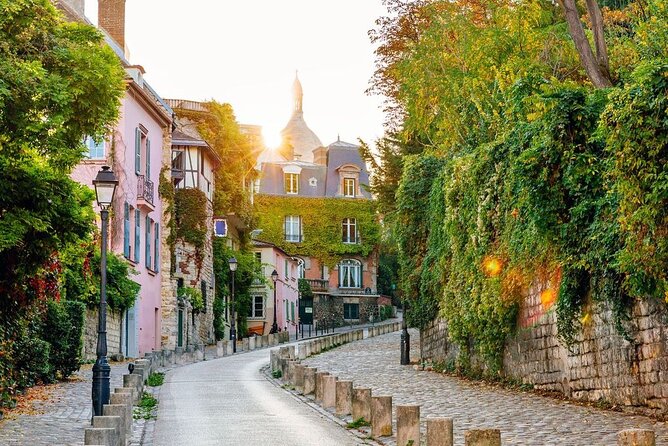
One of the fun parts of Montmartre is how the neighborhood offers visual surprises around every bend. You’ll see La Maison Rose, a classic pink house that photographers love. The stop is about 10 minutes and works best if you step aside for photos so you don’t block the walkway.
After that, you’ll get a rare local twist: Vigne du Clos Montmartre, a working Montmartre vineyard where local wine is produced. The stop is short (about 5 minutes), but it’s a great reminder that this area isn’t frozen in time. It still has real agricultural ties.
Finally, you’ll visit La Bonne Franquette, a historic café where famous artists once gathered. This is another free stop with about 10 minutes, and it’s less about monuments and more about atmosphere. If you want the neighborhood to feel human, this is where it starts to click.
If you plan to eat or drink, you might want to do it right after the tour when you have more time. During the tour, you’ll likely be focused on the route and stops.
Sacré-Cœur at the top: the view that earns the climb
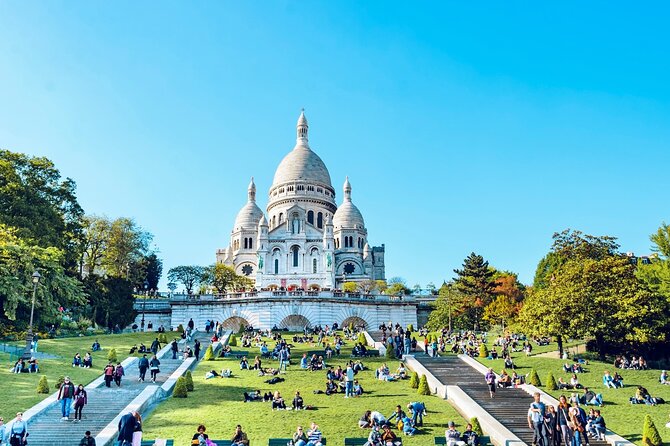
The last major stop is Basilique du Sacré-Cœur de Montmartre, with about 15 minutes. You’ll admire the architecture and then get panoramic views of Paris from the hilltop location.
This is the moment that makes the whole walk feel like more than just sightseeing. From below, you get angles of Montmartre. From Sacré-Cœur, the city opens up in a way that feels like a reward.
Practical tip: there can be lots of stairs involved in reaching key viewpoints, and one past guide route has people talk about the “300 stair challenge” to reach the dome area. If you’re up for it, it’s worth it for the perspective, but don’t force it if you’re tired.
Also, because this is a major landmark, expect crowds. Stay close to your guide so you don’t lose the narrative threads as people flow around you.
Guides make the difference: Selda, Alice, Danyel and others
A big reason this tour scores so high is the human factor. Guides like Selda are described as warm, funny, and able to keep a family group engaged even in cold weather. Others—like Alice—are praised for being easy to follow and for the pacing they set during the walk.
You may also encounter Danyl or Daniel/Danyel, with feedback that they handled crowds well and helped people get great photos at the right moments. That matters because Montmartre can be windy, narrow, and crowded. A guide who knows how to position the group improves the experience more than you’d think.
Because this is small-group touring (max 15), you’re not just a face in a crowd. The guide can read the mood, slow down when you need it, and share stories that connect each stop so the day feels like one route, not 12 random photos.
Price and value: is $59.28 worth it?
At $59.28 per person for about two hours, the value depends on what you want: structure and context, not just landmarks. The tour includes a guide, and it uses a mobile ticket, which reduces friction once you’re in the area.
What’s not included is important: the Moulin Rouge show and Moulin Rouge ticket are not part of the price. If you hoped to see a cabaret performance during this tour, you’ll need to book that separately. On the plus side, most of the other sites are free stops, so your additional costs stay limited.
Where I think the money makes sense is the way the stops are connected—film locations, art history, music culture, and a proper hilltop finale. If you tried to DIY this route without a guide, you’d still see the sights, but you’d likely miss the “why” behind them.
This tour is also a good deal when you want an organized route without spending a full day. Two hours is enough to feel like you accomplished something, especially if you’re busy juggling other Paris highlights.
Pace, walking, and who should take this tour
This tour is best for people who can handle a steady walking pace with uphill sections. Even if each stop is short, you’re still moving between them, and the terrain rises toward Sacré-Cœur.
It also suits you if you like stories while you walk. Many of the stops are recognizable from photos, but the guide’s job is to translate the setting into history, art, or culture you can actually remember.
If you’re visiting with kids, the small-group size helps keep attention from drifting. If you’re an adult who likes art but doesn’t want museum-style timing, you’ll likely enjoy the mix of street-level landmarks plus context.
If you have limited mobility or you know stairs are an issue, think carefully. This isn’t described as a slow, mostly flat stroll. You’ll be better off choosing a tour that reduces elevation and stair time.
Should you book the Paris Small Group Moulin Rouge & Sacré-Cœur Montmartre Tour?
I’d book it if you want a tight Montmartre route that covers Moulin Rouge, Amélie filming spots, classic artist imagery, Dalida-related stops, and a strong Sacré-Cœur finish—all with guide support and a small group size.
Skip it (or at least reconsider) if you’re expecting the Moulin Rouge show or ticket to be included, or if you don’t want to deal with uphill walking and stairs. Also remember the tour ends at a different address than it starts, so plan your onward travel.
If you’re the type who likes to come home with more than photos—names, connections, and a clearer sense of why Montmartre became Montmartre—this is a solid use of two hours in Paris.
FAQ
How long is the Paris Small Group Moulin Rouge & Sacré-Cœur Montmartre Tour?
It runs for approximately 2 hours.
What is included, and what is not included?
The tour includes a guide. Tips are not included, and Moulin Rouge show admission/tickets are not included.
What group size should I expect?
The maximum group size is 15 travelers.
Is the tour offered in English?
Yes, it is offered in English.
Where does the tour start and where does it end?
It starts at 5 Pl. Blanche, 75009 Paris, France and ends at 35 Rue du Chevalier de la Barre, 75018 Paris, France.
Can I get a refund if my plans change?
You can cancel up to 24 hours in advance for a full refund. If you cancel less than 24 hours before the start time, the amount paid is not refunded.