REVIEW · COLMAR
Colmar Tour: 2-Hour Walking Tour in Spanish with a Local Guide
Book on GetYourGuide →Operated by Free Tour Europe · Bookable on GetYourGuide
Colmar reads like a storybook, and this Spanish walk helps you actually understand it. I love that it focuses on the city’s key medieval landmarks at a human pace, and I also like that you get real local context in Spanish, not just points on a map. One thing to keep in mind: you’ll be moving for two hours, so it’s best if you’re comfortable doing a steady walking tour with no detours for long breaks.
You’ll start in the heart of old Colmar, then work through the lanes toward canals, craft quarters, and trade buildings. I especially liked how the guide connects places like Little Venice and the tanners’ area to daily life, so the town feels coherent instead of random. The only possible drawback is tour-group expectations can vary, so double-check what you’re paying for and what group size feels like on the day.
In This Review
- Key highlights to know before you go
- Why this 2-hour Spanish walk is such a good fit for Colmar
- Meeting at Rue des Têtes: a simple start that helps you relax
- Maison Pfister and the Old Town lanes: how to read medieval buildings
- Covered Market of Colmar: a quick pause that adds texture
- St. Martin’s Church exterior: why Gothic details are worth your time
- La Petite Venise: the canals that make Colmar feel unreal (in a good way)
- Tanners’ Quarter: where craft and work shaped the town
- Old Customs House and Casa Hansis: trade-era icons you can recognize
- The little extras that make the tour worth repeating
- Pace, rules, and what to wear so the walk feels easy
- Price and value: is $22 a smart deal for what you get?
- Who this Colmar Spanish tour suits best
- Should you book this Colmar tour?
- FAQ
- FAQ
- Where does the Colmar tour in Spanish start?
- How long is the walking tour?
- What are the main stops you’ll see?
- Is the tour inside buildings or mostly outside?
- What’s included besides the guide?
- Is audio recording allowed?
Key highlights to know before you go

- Spanish narration that actually guides your route, not just background facts
- Little Venice on foot, with time to slow down and look closely at the canals
- Outside views only for major sights like St. Martin and the Old Customs House
- Tanners’ Quarter and trade-era buildings that explain how Colmar worked in the Middle Ages
- A typical Alsatian sweet tasting, plus a city map and recommendations to keep exploring afterward
- Guides with strong Spanish communication, including people who’ve praised guides like Maite and Alejo
Why this 2-hour Spanish walk is such a good fit for Colmar

Colmar is small, but it can still feel confusing the first time you show up. Streets curve. Buildings look similar. And it’s easy to take photos while missing what makes each place different. This tour fixes that problem. You walk in a logical flow through the town center, and your guide gives you the thread that ties it all together.
I like that the tour is just long enough to cover the “big icons” without turning into a marathon. Two hours is also perfect for Colmar’s rhythm: enough time to see the main medieval sights, but not so much time that you’re exhausted before lunch or your next stop.
The Spanish language aspect matters, too. If you speak Spanish (or are learning), you’ll get a bonus: you’re practicing with real geography and real stories, instead of only street signs and menus. People have praised guides like Maite and Alejo for keeping things lively and understandable.
Just be aware: you’re outdoors and moving. If you’re hoping for lots of indoor time or a super-slow sightseeing style, this may feel a bit brisk. It’s a walking tour, not a sit-down museum visit.
You can also read our reviews of more walking tours in Colmar


Meeting at Rue des Têtes: a simple start that helps you relax

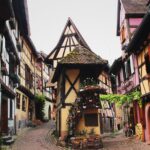
The tour starts in front of the Maison des têtes, also called the House of Heads, on Rue des Têtes. This is a smart starting point because it’s right in the historic core, where the buildings already show off the style Colmar is famous for.
Plan to arrive early. The guide is waiting about 10 minutes before the start time, holding an umbrella with the Colmar Walking Tours logo. That small detail saves stress. You won’t be wandering around trying to match a description in the middle of a busy square.
If you’re the type who likes to get oriented before the walking begins, you’ll appreciate starting here. You’re immediately surrounded by those half-timbered facades and medieval street lines, so the tour makes sense from the first minute.
Maison Pfister and the Old Town lanes: how to read medieval buildings

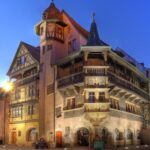
After you meet, you’ll head to Maison Pfister for a short guided look (about 15 minutes). This stop is a great example of what you’re getting with the guide: you’re not just seeing a pretty facade—you’re learning what to notice.
From here, you move through Vieux Colmar (old Colmar), where the atmosphere turns from “pretty town” into “historical place with a pattern.” The cobbled streets and timbered houses can blur together if you’re sightseeing alone. A local guide helps you spot the differences—what styles suggest, what the layout implies, and why certain buildings matter more than others.
I like that the guide keeps your eyes busy. You’ll be encouraged to look at corners, fronts, and the way streets funnel you toward the next sight. That turns the walk into something more satisfying than moving from one photo spot to another.
Covered Market of Colmar: a quick pause that adds texture
You also visit the Covered Market of Colmar, with a short guided stop (about 15 minutes). This is one of those places that’s useful because it’s practical, not just scenic. Markets explain how a town lives, not just how it looked.
Even if you don’t plan to buy anything, you’ll get a sense of the daily pulse of the area. It’s a good reset point during the tour, too. Two hours in Colmar can feel fast, and this small break gives you a chance to catch your breath, look around, and get your bearings again.
St. Martin’s Church exterior: why Gothic details are worth your time
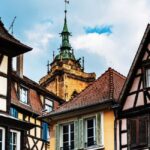
St. Martin’s Church is one of Colmar’s best-known landmarks, and this tour includes an outside look. You’ll see it as you move through the old center, with the guide pointing out what makes it special.
You might be used to churches that feel similar: big walls, tall towers, stained glass. Here, the guide helps you focus on the architectural details that make this church a standout Gothic example in Colmar. Since you’re viewing it from outside, the emphasis is on how the building shapes the street and how the facade reflects the city’s importance.
If you like architecture, you’ll enjoy this part. If you’re more into stories, you’ll still get value because you learn how key religious sites fit into medieval life and community identity.
You can also read our reviews of more guided tours in Colmar


La Petite Venise: the canals that make Colmar feel unreal (in a good way)
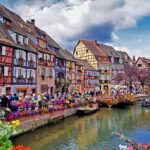
Then comes one of the easiest parts of the tour to love: La Petite Venise, also known as Little Venice. You’ll spend time here with the guide (about 15 minutes), moving through the area’s most photogenic canal views.
This neighborhood is famous for a reason. Colorful buildings line the water. The street-to-water relationship is what makes the place feel theatrical. And because you’re here on foot, you can actually see the angles that make the scene work, not just a single viewpoint.
I like that your guide doesn’t treat it as only scenery. You’ll get stories about life in the city in older times, plus guidance on where to look for the most picturesque corners. Even if you’ve seen photos online, the details make more sense once you’re standing there.
Quick tip: bring your eyes, not just your camera. The magic is in how the wooden houses, canals, and street curves line up.
Tanners’ Quarter: where craft and work shaped the town

After the canal scenery, you head into the Tanners’ Quarter. This area is tied to Colmar’s traditional textile industry and the city’s artisan past. The vibe feels historic and lived-in at the same time, mostly because the buildings and street pattern still carry that older craft atmosphere.
This is a part of Colmar that many people skip because it’s not as instantly famous as Little Venice. That’s exactly why it matters. When you learn what tanners’ houses and workshops represent, Colmar starts to feel like a working city from the Middle Ages, not only a decorative one.
I found this stop useful because it changes the emotional tone of the walk. The tour goes from postcard-cute to “this is how people earned a living,” which makes the full experience more complete.
Old Customs House and Casa Hansis: trade-era icons you can recognize

The tour also covers the Old Customs House, a historic building dating back to the 15th century. You’ll see it from outside, and your guide explains how commercial transactions used to happen there—one of the reasons the building is such an icon.
This stop adds an important layer. Colmar didn’t just become famous for scenery. It became important because of trade. The guide’s framing helps you connect the dots between medieval commerce and the impressive architecture you’re walking past.
You’ll also hear about Le Casa Hansis during the route. That matters because it keeps the “icon list” from feeling random. You learn that the big features of Colmar tie back to real functions: trade, craft, and city identity.
If you like history but hate long lectures, you’re in the right place. This is story-shaped history, tied to the streets in front of you.
The little extras that make the tour worth repeating
This tour includes a tasting of a typical Alsatian sweet. It’s a small thing, but it’s the kind of small thing that makes your walk feel more like a local experience and less like a checklist. The taste acts like a memory hook for the places you just learned about.
You also get a city map and recommendations for places to visit. That’s practical value. Colmar is compact, so you can keep momentum after the tour ends. The guide’s suggestions help you choose what to do next without wasting time scanning everything blindly.
Also, the tour is Spanish-language. If you don’t speak Spanish, you’ll want to consider whether you’ll follow enough to enjoy the details. If Spanish is your strength, you’ll likely get more out of every stop.
Pace, rules, and what to wear so the walk feels easy
You’re signed up for a 2-hour walking tour. That means timing matters. You’ll cover multiple central sights—Maison Pfister, old town lanes, the covered market area, then you reach the canals and the craft/trade buildings.
Bring comfortable shoes. The ground is cobbled, and your legs will notice if you’re in stiff or slippery footwear. Weather matters in this region of France, too. If it’s rainy, expect wet cobbles and plan accordingly.
A couple of practical rules are in place: bikes aren’t allowed, and audio recording isn’t allowed. That’s normal for many guided walking experiences and it keeps the group focused on the guide’s explanations and the shared route.
Price and value: is $22 a smart deal for what you get?
At about $22 per person for a 2-hour guided walk in Spanish, this is priced like an efficient, focused sightseeing experience. The value isn’t only the guide. It’s the combination: multiple key landmarks, historical and cultural explanations tied to each stop, plus a typical Alsatian sweet tasting and a city map.
If you’re the kind of traveler who normally reads guidebooks and still feels unsure where to focus, this tour can save you time. You spend your energy walking the right route while learning what you should notice.
One caveat from past experiences: a customer raised concern about how pricing matched expectations on group setup. I can’t tell you how it works on every day, but if you’re budget-sensitive, I’d look closely at the booking total and double-check what the tour includes for your exact reservation.
Who this Colmar Spanish tour suits best
This tour is especially good for you if:
- You want a guided route through Colmar’s core without planning it yourself
- You’d rather learn via stories than by reading alone
- You’re comfortable walking for around two hours
- You speak Spanish (or want Spanish immersion with real context)
- You like seeing famous landmarks while also getting the work-and-trade side of the city
It’s less ideal if you want long indoor visits or slow wandering with lots of downtime. This is structured sightseeing, and it moves.
Should you book this Colmar tour?
I’d book it if you want a smart first look at Colmar that turns into a deeper, more coherent day. Starting at Maison des têtes, then moving through old town, the covered market, Little Venice, the tanners’ area, and the Old Customs House gives you a full picture: beauty, craft, and commerce, all on foot.
Skip it only if you know you’ll struggle with steady walking or if you don’t expect to follow the Spanish narration. If Spanish is part of your trip style, this is a strong way to practice and still see the major highlights in a way that actually makes sense.
FAQ
FAQ
Where does the Colmar tour in Spanish start?
It starts in front of the Maison des têtes (House of Heads) on Rue des Têtes. The guide waits there with an umbrella with the Colmar Walking Tours logo about 10 minutes before the start.
How long is the walking tour?
The tour lasts 2 hours.
What are the main stops you’ll see?
You’ll explore the old center and see highlights like Maison Pfister, the Church of St. Martin (outside), Little Venice, the Tanners’ Quarter, and the Old Customs House (outside).
Is the tour inside buildings or mostly outside?
Based on what’s included, you’ll check key sights such as St. Martin’s Church and the Old Customs House from the outside, while walking through the historic neighborhoods.
What’s included besides the guide?
The tour includes a tasting of a typical Alsatian sweet, plus a city map and recommendations for places to visit.
Is audio recording allowed?
No—audio recording isn’t allowed, and bikes aren’t allowed either.