REVIEW · COLMAR
Colmar 2H Walking Tour to explore the Highlights of the city
Book on GetYourGuide →Operated by UTG EXPERIENCE · Bookable on GetYourGuide
Colmar’s stone jokes land best on foot. This 2-hour highlights walk is built around the city’s architecture—Renaissance murals, medieval façades, and the stories that explain why Colmar looks the way it does. You won’t be rushing through museums or long lines; you’ll be learning the visual language of Alsace city blocks, one corner at a time.
I especially loved two stops: the 106 sculpted heads on Maison des Têtes and the dramatic wrap-around Renaissance murals at Maison Pfister. A fair heads-up though: everything is explored from the exterior, so if you were hoping to go inside for interiors or museum time, this tour may feel a bit limiting.
In This Review
- Key things you’ll notice on this Colmar highlights walk
- Starting at Place des Unterlinden: your Colmar anchor point
- Maison des Têtes: 106 sculpted heads and the comedy of civic pride
- Maison Pfister’s Renaissance murals and turrets: where style changes show up
- Koïfhus (Old Customs House): the trade engine behind the beauty
- La Petite Venise and the Fairy-Tale Old Town: cobblestones, canals, and pastel charm
- Why the exterior-only format still feels worth it
- Price and value: is $34 for 2 hours a fair deal?
- What the guide experience feels like in real life
- Who this walking tour suits best (and who might prefer another option)
- Should you book this Colmar Highlights 2-hour tour?
- FAQ
- How long is the Colmar highlights walking tour?
- Where does the tour meet?
- What’s included in the price?
- Are we allowed inside the buildings or museums?
- What languages are available for the guide?
- What do I need to bring?
- Is there free cancellation or a flexible booking option?
Key things you’ll notice on this Colmar highlights walk

- Maison des Têtes’ 106 heads: grotesque and playful expressions with civic meaning behind them
- Maison Pfister’s Renaissance makeover: turrets and murals that show Alsace’s architectural shift over time
- Koïfhus (Old Customs House): Gothic-to-Renaissance details tied to Colmar’s trade power
- La Petite Venise feel: cobblestones and “storybook” canals around the old town core
- A real local guide: stories and practical tips that make the buildings easier to remember
Starting at Place des Unterlinden: your Colmar anchor point

The tour begins at the forecourt of Place des Unterlinden, right in front of the Unterlinden Museum entrance. This is a smart meeting spot because it puts you at the center of the old-town grid, where you can walk without feeling like you’re hopping between far-flung attractions.
Once you’re checked in (they ask you to arrive 15 minutes early), the guide sets the tone quickly: you’re going to read Colmar like a book of stone and timber. That matters because Colmar’s charms don’t come only from pretty façades; they come from the odd mixes—medieval structure plus later Renaissance style.
You can also read our reviews of more walking tours in Colmar



Maison des Têtes: 106 sculpted heads and the comedy of civic pride

Maison des Têtes is the kind of place you notice from a distance, then keep staring at once you’re close. The façade is covered with 106 sculpted heads, each with its own expression—grotesque, funny, and oddly human. This is not random decoration. The guide’s job is to show how merchant class energy and civic pride made it onto the street for everyone to see.
One reason I like this stop on a highlights walk is how interactive it feels without needing special tools. Even if you’re not a dedicated art historian, you can pick out faces, compare expressions, and connect what you see to what the town was doing economically and socially in the past.
Timing here is also well-judged. You’ll spend around 30 minutes at Maison des Têtes, which is enough to zoom in visually and still keep the tour flowing. If you only get one “wow” façade on this short schedule, this is usually the one.
Maison Pfister’s Renaissance murals and turrets: where style changes show up

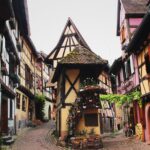
Next you move to Maison Pfister, another façade that feels like it’s been kept in performance-ready condition. What makes it stand out is the combination: Renaissance murals, turrets, and that clear blend of medieval foundations with later Renaissance details. In other words, it’s a physical snapshot of how the city evolved, not just a single style frozen in time.
The murals are meant to be seen from the street, and that’s exactly why this tour works. You don’t need an interior ticket to understand why people remember this building. The wrap-around approach makes the art feel like it’s designed for the pedestrian, not the museum visitor with a slow schedule.
If you’re a photographer, you’ll appreciate that you’re not stuck inside with strict rules. You can adjust your position, test angles, and capture details on your own pace. And because the focus is architecture, the guide helps you slow down at the right moments—where the eye should go first, what details connect, and how to read the “why” behind the look.
The tour gives about another 30 minutes here, which again is a comfortable length. Long enough to appreciate the composition, short enough not to drain your energy for the rest of the walk.
Koïfhus (Old Customs House): the trade engine behind the beauty
After Pfister, you’ll encounter Koïfhus, the town’s Old Customs House—Colmar’s historical and economic core. This stop is important because it grounds the prettiness in something practical: trade. Colmar’s rise on the Alsace wine and textile trade routes shaped its civic buildings, not just its merchants’ wallets.
What I like about Koïfhus on an architecture-focused walk is the way it teaches you to spot transitions. You’ll notice Gothic arches paired with Renaissance railings, a mix that tells a timeline story right on the façade. The guide’s role is to connect those design choices to what the city needed as it grew and prospered.
Even though you’re viewing from the outside only, you still get that “how the city worked” context. Without it, the old town can feel like a postcard. With it, you understand why the postcard exists.
La Petite Venise and the Fairy-Tale Old Town: cobblestones, canals, and pastel charm
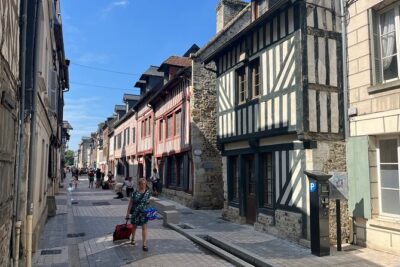
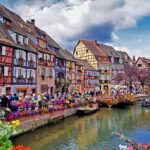
Then comes the atmosphere shift to La Petite Venise, the postcard-famous part of Colmar that makes people lean in and start taking photos. This section feels like the old town’s softer side: cobblestone streets, canal views, and pastel-toned timbered buildings that look right out of an Alsatian storybook.
You’ll spend about one hour here, which gives you enough time to enjoy the walk without treating it like a sprint. The guide also helps you keep your bearings so you’re not just snapping shots—you’re learning which corners matter and why. The stories behind medieval shop signs and structural quirks are the kind of details you’d miss if you were just roaming.
This is also the part of the tour where you’ll likely feel the “local rhythm” most. One of the best pieces of feedback from guests is that the guide doesn’t stop at architecture—if you ask, you can get advice on where it’s good to eat and drink Alsatian-style. In a place like Colmar, that kind of guidance can turn a great walk into a solid day plan.
You can also read our reviews of more city tours in Colmar


Why the exterior-only format still feels worth it
This tour is designed around exterior viewing. You won’t go inside buildings or spend time in museums; every major highlight is explored from the street. At first, that might sound like a compromise, but for Colmar, it’s often the right trade.
Colmar’s architecture tells its story on façades—murals, turrets, heads, arches, and sign details. You get the full “read the building” experience without the time cost of ticket lines and interior transitions. If you’re working with a short window (and you want highlights without overcommitting), exterior-focused touring can be the smarter use of time.
The key is to bring the right mindset. Come ready to look up, stop often, and treat small details as part of the main event. If you’re expecting museum collections, you may feel you’re only getting part of the picture. If you’re excited by the buildings themselves, you’ll likely feel satisfied.
Price and value: is $34 for 2 hours a fair deal?
At $34 per person for a 2-hour walking tour, the value depends on what you want from Colmar. You’re paying for an architectural/cultural guide plus a curated route that hits big façades fast.
For $34, you’re not buying entries or transport. But you are buying something many travelers underestimate: the ability to understand what you’re seeing. Without interpretation, Maison des Têtes and Maison Pfister can still be pretty. With interpretation, they become meaningful landmarks tied to Colmar’s civic identity and architectural evolution.
If you’re the type who loves asking questions and taking notes mentally—why a design changed, what a symbol implies, what trade did to a city—this price makes sense. If you’re purely there for casual strolling and you don’t need explanations, you might prefer self-guided wandering. The difference is that the guide’s stories help you see patterns quickly rather than guessing.
What the guide experience feels like in real life
The tour runs with a live guide in French or English. And while guides can vary, the positive feedback you’re most likely to care about is consistent: guides who can answer questions clearly and keep the tone light make the architecture feel easier, not heavier.
One highlighted example is a guide named Maverick, described as friendly and amusing, and praised for answering questions thoroughly. There’s also mention of practical recommendations—where to find good Alsatian food and drinks—so the tour can feed directly into your next stop.
That said, I’d treat the one-off “no one at the rendezvous” complaint as a reminder to be punctual and visibly confident at check-in. Arrive 15 minutes early at the Place des Unterlinden forecourt, in front of the Unterlinden Museum entrance, so you’re not testing luck.
Who this walking tour suits best (and who might prefer another option)
This tour is a strong match if you want an efficient way to understand Colmar’s architecture and history without spending half a day on museums. It’s also ideal for photographers and anyone who likes to zoom in on details like façades, sign placement, and stylistic blends.
It’s especially good for:
- People who want a guided old town rather than wandering with zero context
- First-timers who need orientation plus standout photo stops
- Architecture enthusiasts who enjoy exterior details and design transitions
It may be less ideal if:
- You strongly want to go inside buildings and see museum-level interiors during the tour window
- You only want a casual walk with no explanation component
Should you book this Colmar Highlights 2-hour tour?
I’d book it if your goal is simple: see the iconic façades and understand what they mean, fast. Maison des Têtes, Maison Pfister, Koïfhus, and La Petite Venise are all the kinds of sights that reward attention, and a good guide turns that attention into a clear storyline.
I’d skip or replace it if you’re expecting interior access or a museum-focused day. And if you’re sensitive to meeting-point timing, be the early arriver—this tour’s whole rhythm depends on starting on time.
If you do book, bring comfortable shoes and your camera, then plan to spend a few extra minutes lingering after each stop. The best photos often come when you’re not rushed.
FAQ
How long is the Colmar highlights walking tour?
The tour lasts 2 hours.
Where does the tour meet?
You meet at the forecourt of Place des Unterlinden, in front of the Unterlinden Museum entrance.
What’s included in the price?
The tour includes an architectural/cultural guide. You do not get transportation, and there are no building interiors or museum visits included.
Are we allowed inside the buildings or museums?
No. The highlights are explored from the exterior only, so there are no entry tickets included for interiors or museums.
What languages are available for the guide?
The tour has a live guide in French and English.
What do I need to bring?
Bring comfortable shoes and a camera.
Is there free cancellation or a flexible booking option?
Yes. You can cancel up to 24 hours in advance for a full refund, and you can reserve now & pay later.