REVIEW · COLMAR
Self-Guided and Interactive City Tour – Colmar
Book on Viator →Operated by Hopla Guide · Bookable on Viator
Your phone turns Colmar into a game. This self-guided Hopla Guide stroll uses an app to guide you from landmark to landmark in about 2 hours 30 minutes, with English commentary and mobile-ticket entry. Expect short stops, quick questions, and little moments that make the half-timbered streets feel more personal than a normal walk.
Two things I really like: the flexibility. You can pause the app to duck into a museum or church when something catches your eye, then continue when you’re ready. And I love the format of surprises and mini-challenges—the tour is built like a scavenger hunt, with small rewards that help kids (and restless adults) stay engaged.
One consideration: you’re steering the experience yourself. If you prefer a traditional live guide who never asks you to look at a phone, this may feel like work at first—especially if you’re also trying to juggle photos and reading directions. Also, like any city walk, it can run longer in practice if you stop for snacks, pictures, or optional interiors.
In This Review
- Key highlights to look forward to
- Why this Hopla Guide Colmar route is a smart way to see the old town
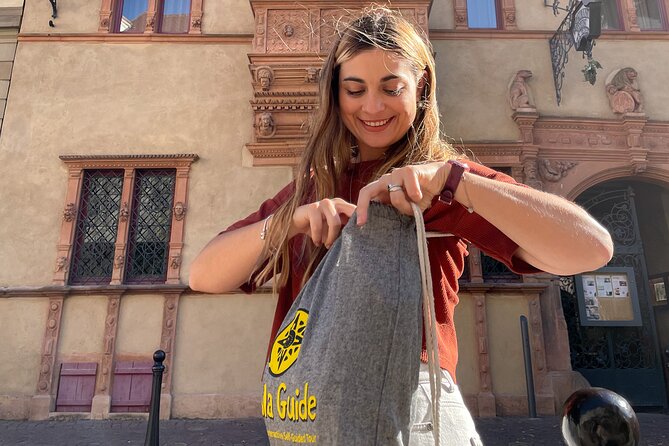
- Getting started: the Tourist Office bag, the app, and the easy flow
- Stops 1–7: where the tour turns facades into clues
- Stop 1: Office de Tourisme de Colmar et sa region
- Stop 2: Rue des Têtes (Hansi area)
- Stop 3: Place des Dominicains (Dominican church + an Alsace surprise)
- Stop 4: Place de l’École (small half-timbered house)
- Stop 5: Rue Berthe Molly (Voltaire lived here)
- Stop 6: House of Heads
- Stop 7: Zum Kragen
- Stops 8–13: Pfister House, churches, and Bartholdi links
- Stop 8: Maison Pfister (interactive architecture moment)
- Stop 9: Rue des Marchands (Auguste Bartholdi museum option)
- Stop 10: Rue de l’Église (an unexpected character)
- Stop 11: Eglise St-Martin (Saint-Nicolas portal + game)
- Stop 12: Place de l’Ancienne Douane (secret passage + wine legend)
- Stop 13: Grand Rue de Colmar (half-timbered street walk)
- Stops 14–21: spooky legends, the river quays, and finishing in Parc du Champs de Mars
- Stop 14: Rue des Augustins (ghost legend)
- Stop 15: Manneken Pis (a Brussels-style cousin)
- Stop 16: Square de la Montagne Verte (church secret + surprise)
- Stop 17: Little Venice (photogenic district + local surprise)
- Stop 18: Rue Turenne (find the face)
- Stop 19: Marché Couvert + Lauch river walk
- Stop 20: Parc du Champs de Mars (deliberate missing stops + themed finale)
- Stop 21: Place des 6 Montagnes Noires (half-timbered color code + Bartholdi artwork)
- The surprises and quizzes: why they feel worth it (not gimmicky)
- Practical pacing tips so you don’t feel rushed
- Price and value: $78.10 per group can be a bargain
- Who should book this and who might prefer something else
- Should you book the Hopla Guide interactive Colmar tour?
- FAQ
- FAQ
- How long is the Colmar Hopla Guide self-guided city tour?
- Is this tour offered in English?
- How much does it cost and how big is the group?
- Where do I start and where does it end?
- Do I need to download anything or show a ticket?
- Can I pause the app to visit museums or churches?
- Are there any paid entrances on the route?
- Is audio available, or is it only text?
- Is free cancellation possible?
Key highlights to look forward to
- A private group experience (up to 6), so you’re not sharing attention with strangers
- Hopla Guide bag pickup at the Tourist Office when it’s open
- Quiz-style “observation challenges” at major facades and churches
- Surprises baked into the route, including moments tied to Alsatian food and local trivia
- Optional paid entrances only when you choose them (like the 2€ museum/church moments)
- Audio support on your phone (English), plus text you can read alongside it
Why this Hopla Guide Colmar route is a smart way to see the old town
Colmar is the kind of place that looks great from every angle, so a flexible plan helps. This tour is priced at $78.10 per group (up to 6), which can be good value if you travel as a small group or family. Even if you’re only two people, it often feels cheaper than paying for separate paid attractions or a full guided tour day, since you’re getting a structured route plus interactive content.
The “private tour/activity” part matters. You’re not squeezed into a large pack. You can move at your pace, linger at a doorway, or step away briefly without worrying about holding a schedule for others. It also helps that each stop is short—about five minutes—so you’re not committing to long museum time blocks you might not want.
Best of all, the tour is designed for real walking. You’re moving through the historic core, hitting the postcard-worthy facades and church fronts, but you’re not just staring. You’re asked to notice details, answer questions, and complete little tasks. That turns Colmar from a pretty background into a place you actually learn while you wander.
You can also read our reviews of more guided tours in Colmar



Getting started: the Tourist Office bag, the app, and the easy flow
You begin at the Office de Tourisme de Colmar et sa region, at Place des Unterlinden (with end point at Place Rapp). During opening hours, you pick up your Hopla Guide bag whenever it works for you. The office hours run Monday to Saturday from 9:00 AM to 6:00 PM.
The tour uses a mobile ticket, and once you book you get confirmation at the time of reservation. In practical terms, that means you can plan around the day’s walking time instead of rushing to meet a strict exact minute.
Once you’re on the move, you’ll rely on the app for the next instructions. You can also use it like a real guide: stop when you want, then resume. One review specifically praised how clear the voice is and how easy it is to understand, with an option to read as well. Another review mentioned audio being well built, and the provider later confirmed audio was added for Colmar. If you’re a “listen while walking” person, that’s a big plus.
If you prefer zero-phone tourism, this is the wrong style. But if you like light structure—like a scavenger hunt with explanations—you’ll find the app does the heavy lifting.
Stops 1–7: where the tour turns facades into clues
The first part of the route sets the tone: quick moments, clear “go look here” instructions, and optional add-ons for people who want more.
Stop 1: Office de Tourisme de Colmar et sa region
This is your anchor point. Pick up the Hopla Guide bag and start the tour when you like during opening hours. It’s a low-stress beginning, and it matters because Colmar is easiest when you get your bearings early.
Stop 2: Rue des Têtes (Hansi area)
You’re directed toward the area in front of the Hansi museum, tied to the history of one of the most famous Alsatian painters in France. If you want to go inside, you can pause the app, visit, then continue.
Practical tip: don’t feel pressured to enter every place. The tour works even if you treat the museum as optional.
You can also read our reviews of more city tours in Colmar
Stop 3: Place des Dominicains (Dominican church + an Alsace surprise)
Here you pass the Place des Dominicains and learn about the Dominican church. You can also visit and admire the altarpiece of the Virgin with Rose Bushes by Martin Schongauer. The optional entrance fee is 2€.
The tour also includes a surprise connected with Alsatian gastronomy. This is one of those “only on this tour” moments: you’re not just learning architecture—you’re prompted toward local food culture in a playful way.
Stop 4: Place de l’École (small half-timbered house)
This stop is about a specific architectural detail: the smallest half-timbered house in Colmar. It’s short, but it helps you train your eye for the local look.
Stop 5: Rue Berthe Molly (Voltaire lived here)
Rue Berthe Molly brings in a famous name: Voltaire. Even if you don’t consider yourself a history person, these “who lived here” bits make the streets feel less like scenery.
Stop 6: House of Heads
This is one of Colmar’s most famous facades, and the tour turns it into a game. You stand in awe, then answer questions and complete observation challenges. The best part of this kind of stop: you don’t have to be an expert to get it. The app tells you what to notice.
Stop 7: Zum Kragen
You discover the house Zum Kragen and the idea of a bearded figure watching you. It’s the kind of character-driven detail that makes the old town feel theatrical without getting cheesy.
Stops 8–13: Pfister House, churches, and Bartholdi links
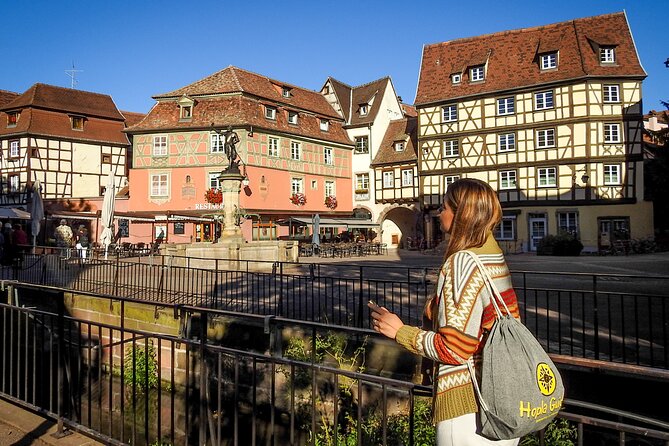
This section leans more into big facades, churches, and the sculptor thread that runs through Colmar’s identity.
Stop 8: Maison Pfister (interactive architecture moment)
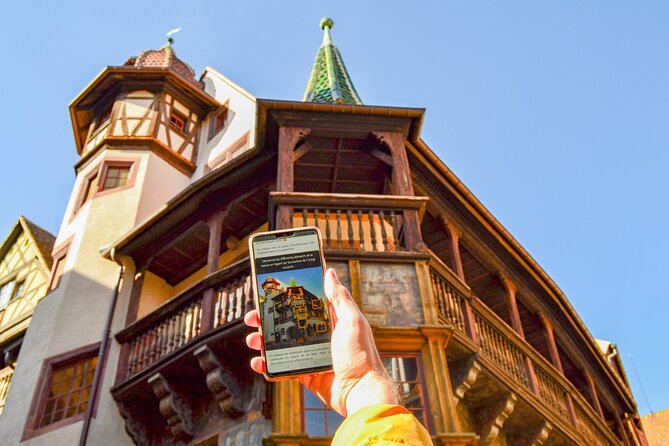
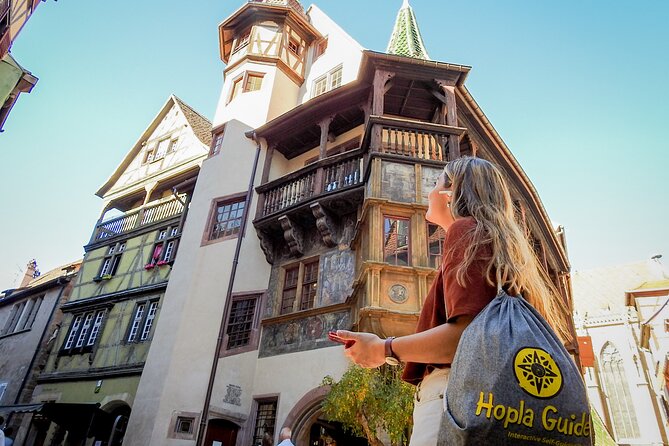
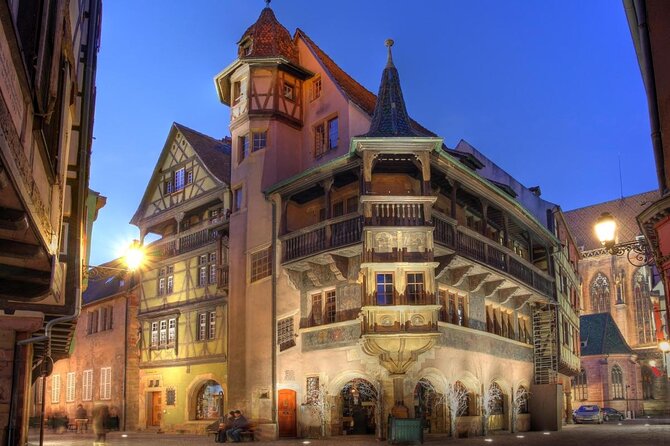
The Pfister House is one of those must-see buildings where you could spend ten minutes just staring. The tour adds an interactive image to help you understand the architecture. There’s also a special surprise you take out of your backpack. That “reward timing” is a smart touch—your brain stays engaged because you know something is coming.
Stop 9: Rue des Marchands (Auguste Bartholdi museum option)
You pass the museum connected to Auguste Bartholdi, the sculptor behind the Statue of Liberty. If you want, you can pause for a visit, then return to the walk.
Even if you skip the museum interior, you still get the story thread. That’s useful because it keeps Bartholdi from feeling like a random name you heard once.
Stop 10: Rue de l’Église (an unexpected character)
This stop is quick and character-led. It’s built to make you look up and pay attention instead of just walking through.
Stop 11: Eglise St-Martin (Saint-Nicolas portal + game)
At Eglise St-Martin, you get to admire the collegiate church and the famous Saint-Nicolas portal. Again, the app adds an interactive observation game so you’re not just reading a sign.
Stop 12: Place de l’Ancienne Douane (secret passage + wine legend)
This part is fun because you pass through a secret passage to reach Place de l’Ancienne Douane. You learn about the Koïfhus, plus the character of Lazarus of Schwendi and his love for wine.
If you like “small legend + big building” storytelling, this stop is a payoff.
Stop 13: Grand Rue de Colmar (half-timbered street walk)
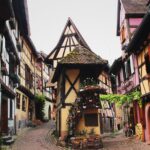
You end this segment with the picturesque Grand Rue, where you see half-timbered houses. It’s a visual break after church-and-story stops—use it to reset and take photos without rushing.
Stops 14–21: spooky legends, the river quays, and finishing in Parc du Champs de Mars
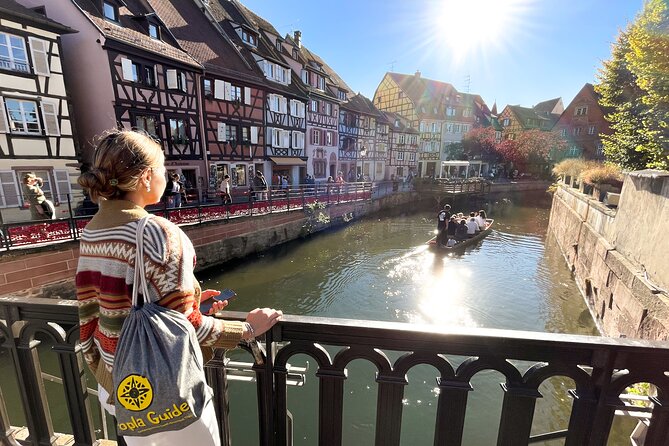
The final segment mixes charming streets with water views and a themed ending.
Stop 14: Rue des Augustins (ghost legend)
A legend says there’s a ghost on this street. It’s another character-based stop, and it keeps the walk from feeling like a checklist.
Stop 15: Manneken Pis (a Brussels-style cousin)
Yes, there’s a little brother to the Brussels cherub here. It’s a short stop, but it’s the kind of playful detail that makes Colmar feel fun even on days when you’re tired of grand monuments.
Stop 16: Square de la Montagne Verte (church secret + surprise)
You sit on a bench in this pretty square and learn a little secret about the church of Saint-Mathieu, with another iconic surprise. Bench breaks matter on walking tours. They keep the day comfortable and give you a moment to catch your breath.
Stop 17: Little Venice (photogenic district + local surprise)
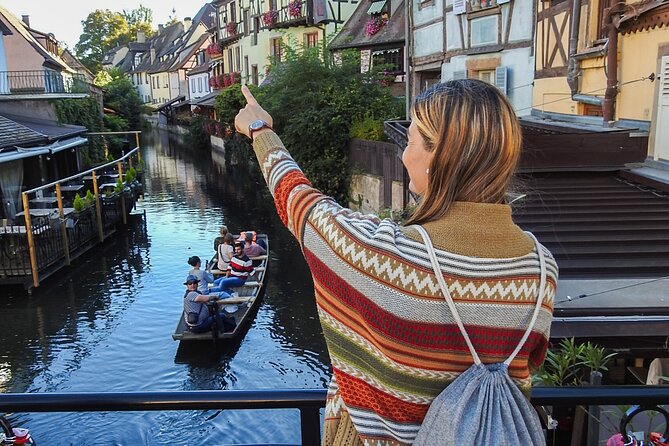
Little Venice is where you slow down for photos. The tour also calls this out as a time for a local surprise, which helps you transition from “street clues” to “river scenery.”
Stop 18: Rue Turenne (find the face)
You’re asked to find the face of a city hero. This is one of those micro-challenges that makes you look at doorways and carvings you’d normally walk past.
Stop 19: Marché Couvert + Lauch river walk
You walk along the banks of the Lauch river, discover the quays by the Poissonnerie, and pass the Covered Market of Colmar. This is your practical “market and river” zone, so it’s a good time to decide if you want a snack or a coffee before you finish.
Stop 20: Parc du Champs de Mars (deliberate missing stops + themed finale)
The tour intentionally omits several stops so you’ll experience the last section with a bit of surprise. It ends in Parc du Champs de Mars, where you meet the characters Armand Bruat and Jean Rapp.
This kind of ending works well because you’re not rushed into the final ten minutes. The park gives you space to close the loop and feel like you completed something, not just passed through.
Stop 21: Place des 6 Montagnes Noires (half-timbered color code + Bartholdi artwork)
At the final stop, you learn the color code of Alsatian half-timbered houses and see an artwork by Bartholdi. It’s a neat way to end with both local craft and a link back to the sculptor theme.
The surprises and quizzes: why they feel worth it (not gimmicky)
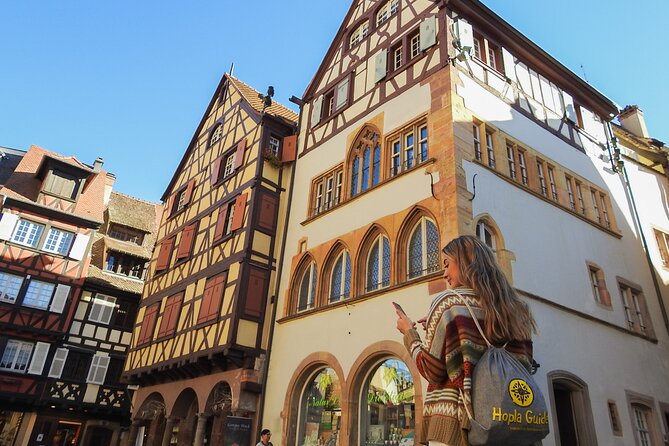
This tour’s magic is that it uses interaction in small doses. Each stop is short, so you’re never stuck with an activity that drains the fun out of sightseeing.
The surprises are timed throughout the route, and reviews mention gifts that you open at just the right moment, plus little character details like a man adorning an archway hiding a secret, and even a support pillar used to measure whether officials are getting too fat. Those examples tell you how the tour thinks: playful, visual, and tied to local observation.
If you’re traveling with kids, the “next gift is coming soon” effect is real. One family-style review emphasized how the pace and rewards kept a young child excited and moving through the city without turning it into a long negotiation session. Even for adults, it can break the monotony of a typical walking tour.
And because the app includes clear voice (and the option to read), you don’t have to constantly guess what you’re supposed to do next.
Practical pacing tips so you don’t feel rushed
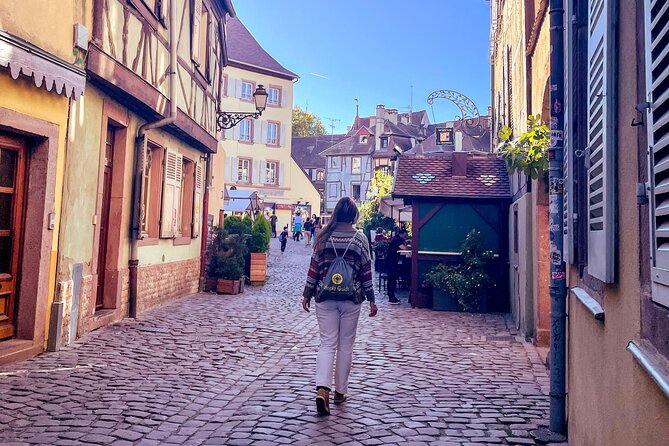
The tour says about 2 hours 30 minutes, but in real life your total time will depend on how often you stop to take photos and whether you step inside optional places. One review noted it can take longer with pictures and eating.
My advice: treat each stop as a “moment,” not a full visit. If you want a museum or church interior, pause the app and enjoy it. If you don’t, just keep moving and trust that the tour still works as a complete experience.
Also, plan your comfort. You’ll be walking a lot through the old town streets. If you’re coming from the train area, it’s easy enough to get to, and the route is near public transportation—but comfortable shoes make the day better.
Finally, give yourself one calm buffer. If you run behind, it’s tempting to skip things. Instead, move at steady speed and let the app lead you.
Price and value: $78.10 per group can be a bargain
At $78.10 per group up to 6, this tour can be a strong value compared with paying per person for a traditional guided experience. Here’s the math you can use: if you have four people, it’s about $19.50 per person; at six people, it’s about $13 per person.
You’re also not paying for a “dead time” like a long bus ride. You’re paying for route planning, storytelling, and interaction. And because it’s private for your group, you aren’t splitting attention across lots of people.
If you’re a solo traveler, it may still feel fair, but it usually shines most when you’re traveling with at least one other person, or you’re a family with kids who enjoy the challenge format.
Who should book this and who might prefer something else
You’ll probably love this if:
- You like walking with structure but not tight schedules
- You’re okay using your phone for directions and questions
- You want a route through Colmar that mixes architecture, legends, and light “games”
- You’re traveling with kids and need an activity that holds attention
You might want a different option if:
- You hate relying on an app while walking
- You want a fully live guide who speaks continuously and handles the logistics for you
- You’re only interested in museum interiors and don’t want optional stops
One more note: Colmar can be affected by street-level work, so if you hit construction while you’re walking, just expect detours and take it as part of the city feel.
Should you book the Hopla Guide interactive Colmar tour?
If you want the easiest path to seeing Colmar’s highlights while keeping things playful and flexible, I’d book this. The mix of short stops, observation games, and surprise moments makes it more memorable than a standard self-guided stroll, and the group pricing helps you control costs.
I’d skip it only if you’re strongly against using your phone or if you want a classic guided tour format with no self-navigation. Otherwise, this is a smart way to get the big sights and the small details, without feeling trapped in someone else’s pace.
FAQ
FAQ
How long is the Colmar Hopla Guide self-guided city tour?
It’s listed as about 2 hours 30 minutes.
Is this tour offered in English?
Yes, it’s offered in English.
How much does it cost and how big is the group?
It costs $78.10 per group, for up to 6 people.
Where do I start and where does it end?
You start at the Tourist Office of Colmar (Pl. des Unterlinden, 68000 Colmar) and end at Place Rapp (68000 Colmar).
Do I need to download anything or show a ticket?
You’ll use a mobile ticket. You also pick up a Hopla Guide bag from the Tourist Office during opening hours.
Can I pause the app to visit museums or churches?
Yes. Several stops note that you can pause the application to visit places, then continue the route afterward.
Are there any paid entrances on the route?
Some optional visits mention an entrance fee, such as 2€ for the Martin Schongauer altarpiece in the Dominican church area.
Is audio available, or is it only text?
Audio is available in Colmar as well as Strasbourg, and the app can also include text you can read.
Is free cancellation possible?
Free cancellation is available up to 24 hours before the experience start time for a full refund.