REVIEW · COLMAR
Colmar: Private Guided Walking Tour of the City Center
Book on GetYourGuide →Operated by TOUR FRANCE EXPERIENCE · Bookable on GetYourGuide
Colmar reads like a picture book. On this 2-hour private walk, I like how you slow down to see Petite Venise half-timbered houses and the Collégiale Saint-Martin with its colorful tile roof. One possible drawback: at $235 per person, the cost can feel high if you’re comparing with other nearby Alsace cities.
You’ll get a private guided tour led by a licensed local guide, and it runs rain or shine, so you’re not stuck waiting for good weather. Since it’s designed for conversation as much as sightseeing, you may leave with more understanding than you’d get from a quick self-walk—just remember entrances and any transport tickets are not included.
In This Review
- Key points before you go
- Starting in Vieux Colmar: where the walk begins
- Petite Venise: the half-timbered district you’ll want photos for
- Tanneurs district: white façades and big-house Colmar
- Collégiale Saint-Martin: Gothic details plus a memorable roof
- Middle Ages to the 18th century: seeing the timeline in real streets
- Adolf House and Maison des Têtes: architecture with names attached
- Bourgeois houses: what to notice when the photos stop
- Your private guide: conversation that actually adds context
- Group size and pacing: how a 2-hour tour really feels
- Price and value: is $235 per person worth it?
- Who this Colmar walk fits best
- Before you go: small details that prevent big hassles
- Should you book this Colmar private guided walking tour?
- FAQ
- How long is the Colmar private guided walking tour?
- What is the starting location of the tour?
- Where should I meet the guide?
- What’s included in the price?
- What is not included?
- Does the tour run in rain?
- What languages are available for the live guide?
- Is this tour private?
- Is there wheelchair accessibility?
- What is the cancellation policy?
Key points before you go

- Petite Venise: half-timbered streets that instantly explain Colmar’s medieval style
- Collégiale Saint-Martin: Gothic architecture plus that striking colorful tile roof
- Tanneurs district: large homes and white façades that change the vibe in a hurry
- Old Colmar architecture timeline: Middle Ages through the 18th century in one compact route
- Named highlights: Adolf House and Maison des Têtes show up on the route for a reason
- Private guide, many languages: pick English (or Italian, Spanish, Japanese, Portuguese, German, French)
Starting in Vieux Colmar: where the walk begins

The tour starts at 17 Rue des Unterlinden in Colmar’s old center area. You’ll meet your guide at the end of Place des Unterlinden, right where it meets rue des Unterlinden, with a signboard showing your name—handy if you’ve ever arrived and immediately looked for a matching hat.
This is a 2-hour walking tour through the historic city center. That matters, because it means you’re not doing a speed-run across Colmar. Instead, your guide can take time with the parts that make Colmar special: construction details, street layout, and the way different eras sit side by side.
Practical note: bring a form of ID (passport or ID card) and wear comfortable shoes. You’ll be moving at walking pace, and older streets can be uneven.
You can also read our reviews of more walking tours in Colmar



Petite Venise: the half-timbered district you’ll want photos for

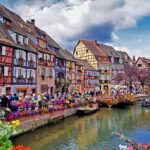
You’ll spend time in Petite Venise, one of Colmar’s most recognizable districts. It’s the kind of place where buildings look “storybook,” but the best part is learning what you’re actually looking at. The half-timbered look isn’t just decoration; it’s tied to how towns built and organized themselves across centuries.
As you walk through Petite Venise, your guide helps connect the visual details to everyday life in earlier eras. You’ll likely notice how narrow streets, closely spaced houses, and the overall feel of the district make the area feel protected and intimate—exactly the mood medieval towns aimed for. If you only visit on your own, you can still enjoy it, but with a guide you’re more likely to notice patterns: where styles shift, what changes from one block to the next, and how architecture signals status or function.
Drawback to consider: it’s a famous photo spot, and it can be busy depending on the time of day. A private guide won’t remove crowds, but it can help you time what you look at and what questions you ask so you don’t just snap and move on.
Tanneurs district: white façades and big-house Colmar

Next comes Tanneurs, another district that changes the atmosphere fast. If Petite Venise gives you charming old streets, Tanneurs pushes you toward impressive domestic architecture—especially the large houses with white façades.
This part of the walk is a good reminder that Colmar’s history isn’t only churches and grand monuments. Homes also tell the story. As you move through Tanneurs, your guide can point out how architecture reflects wealth and craftsmanship. You’ll start to see how the city developed beyond its earliest medieval core, with buildings showing different styles and priorities as the town matured.
What I like about this stop: it keeps the tour balanced. You get both the “pretty district” appeal and the explanation of what those façades meant. It also helps you avoid the common trap of only loving the first postcard you see. By the time you’re in Tanneurs, your eye starts to read the city more like a document.
Collégiale Saint-Martin: Gothic details plus a memorable roof

The Collégiale Saint-Martin is the star sight for a reason. The tour spotlights its Gothic architecture and—yes—that distinctive colorful tile roof. Even if Gothic churches aren’t your usual focus, it’s hard to miss the way this building sits in the city and how much personality the roof adds.
A guided visit here helps you look past the obvious silhouette. You’re more likely to understand the parts of Gothic architecture that create that sense of vertical reach and rhythm. And because the roof is so visually strong, it becomes a kind of landmark: you can use it to orient yourself as you continue wandering the center.
What to watch for (with a guide): how the church’s style contrasts with the surrounding streets. Colmar’s city center includes eras from the Middle Ages into later centuries, and Saint-Martin becomes the anchor point that makes that mix feel intentional rather than accidental.
Possible drawback: since the tour is only 2 hours total, you may not spend long inside. Entrance details aren’t included in the tour price, so if you specifically want to go inside and linger, plan for extra time and possible ticket costs.
Middle Ages to the 18th century: seeing the timeline in real streets
One reason this walk feels more valuable than a basic highlight tour is that it connects architecture to time. The route is built around the preserved city center where styles stretch from the Middle Ages to the 18th century.
Your guide’s job here is simple but important: help you interpret what you see. Instead of treating Colmar like a collection of pretty scenes, you start reading it like a timeline. You might notice how construction and street planning give clues about how the town worked back then—how space was used, how neighborhoods formed, and how later eras left their marks without erasing the earlier ones.
This is also where a private guide pays off. When you can ask questions at each stop, the city becomes clearer fast. You’ll likely come away knowing what’s worth looking at on your own later—because your guide will have already taught you what patterns to notice.
You can also read our reviews of more guided tours in Colmar



Adolf House and Maison des Têtes: architecture with names attached
Two named buildings show up on this route: the Adolf House and the Maison des Têtes.
- The Adolf House is described as the oldest house in Colmar. That means it’s a shortcut to deeper context. Instead of guessing how old a building feels, you get a fact that frames the experience. Even from the outside, the age helps you understand why earlier construction styles look the way they do.
- The Maison des Têtes is a Renaissance building from the 17th century. Renaissance details can be easier to spot when you know the period, and your guide can help you connect the façade’s character to the era’s tastes.
I like tours that include named stops like these because they keep your walk from becoming vague. You’re not just wandering—you’re building a mental map of Colmar’s turning points.
A small consideration: entrances aren’t included, so if you want to go inside these buildings or into specific areas, you’ll need to plan for that separately.
Bourgeois houses: what to notice when the photos stop

Colmar isn’t only medieval charm. Your route also includes the extravagant bourgeois houses scattered throughout town. This is a big part of why the city feels layered rather than frozen in time.
So what should you look for here? Your guide will point you toward details that make bourgeois homes feel confident and expressive. The main value is learning how to spot meaning in façade design: how a house communicates status, how craftsmanship shows up visually, and how later wealth shaped the streetscape.
Even if you’re not an architecture nerd, these stops help you slow down. You’ll start to see that some houses are impressive not because they’re huge, but because of what’s emphasized—proportions, façades, and decorative choices that reflect a period’s ambitions.
Your private guide: conversation that actually adds context

The tour is led by an expert local guide, and the experience is structured for a private group. That matters because you’re not stuck waiting your turn to ask a question. You can also steer attention toward what you care about, whether that’s church architecture, neighborhood contrasts, or the way medieval towns organized daily life.
The guide’s languages include Italian, Spanish, Japanese, Portuguese, German, English, and French. If you want to ask follow-up questions in a language you’re comfortable with, that’s a real quality-of-life factor.
What I take from this format: the best moments tend to happen between the big sights. That’s where guides can explain the small transitions—why one district feels different from another, or what a particular building suggests about the era that built it.
Group size and pacing: how a 2-hour tour really feels

At 2 hours, you’re getting a focused “best-of” route without feeling like you’re dragging your feet for half a day. The downside of any short tour is trade-offs: you’ll see a lot, but you won’t linger for long at every single curbside detail.
That said, for Colmar’s compact center, 2 hours is a smart sweet spot. You can get the main districts—Petite Venise and Tanneurs—plus the church and standout buildings like the Adolf House and Maison des Têtes. It’s enough time to understand the logic of the tour and still have energy left for independent strolling afterward.
Rain or shine: the tour happens anyway. If you come in at a busy time, ask your guide to help you prioritize what matters most, so you don’t end up chasing photos in bad light.
Price and value: is $235 per person worth it?
Let’s talk money. The price is $235 per person for a private walking tour. That’s not a bargain price, and one reason is simple: you’re paying for a licensed guide dedicated to your group for the full 2 hours.
So when does it feel like good value?
- When you care about getting context, not just sightseeing
- When you want a private pace with fewer distractions
- When languages matter and you want explanations in English (or another supported language)
- When you plan to rely on your guide’s tips so your remaining time in Colmar is easier
When might it feel less worth it?
If you’re price-comparing across nearby Alsace towns or thinking you could do the same highlights on your own with a map. Colmar is visually stunning, so self-guided time can be rewarding—especially if you already enjoy wandering.
My take: this is a good buy if you want to come away feeling like you understood Colmar, not just visited it. If your priority is maximum sights per euro, you may want to compare with non-private options.
Who this Colmar walk fits best
This tour makes particular sense if you:
- Want a guided story of Colmar’s preserved center, from medieval feel to later eras
- Appreciate architecture and details like Gothic design and Renaissance façades
- Prefer asking questions rather than following a phone app
- Visit with family members who’d enjoy a slower, explanation-heavy format
- Want a private experience with a guide speaking English (or another listed language)
It may be less ideal if you:
- Want lots of museum-style interior time (entrance tickets aren’t included)
- Are on a strict budget and can’t justify a private rate
Before you go: small details that prevent big hassles
A few quick points so you don’t lose time:
- Bring passport or ID and comfortable shoes.
- The tour runs rain or shine.
- If you use a wheelchair, this tour can accommodate you as long as you inform the operator in advance.
- Plan for the fact that entrance and transportation tickets are not included, and there’s no mention of food stops.
Should you book this Colmar private guided walking tour?
If you’re aiming to understand Colmar rather than just photograph it, I’d lean yes. Petite Venise and Tanneurs give you strong visual variety, and the Collégiale Saint-Martin plus named buildings like the Adolf House and Maison des Têtes turn the walk into a real itinerary with meaning.
Book it if you value a private guide and want help noticing details you might otherwise miss. Skip it or rethink it if your main goal is saving money and you’re happy building your own route through the center.
Either way, you’ll be walking through a city center that rewards slow attention—and with the right guide, that attention becomes useful.
FAQ
How long is the Colmar private guided walking tour?
It lasts 2 hours.
What is the starting location of the tour?
The tour starts at 17 Rue des Unterlinden.
Where should I meet the guide?
Your guide waits at the end of Place des Unterlinden at the intersection with rue des Unterlinden, holding a signboard with your name.
What’s included in the price?
A private licensed tour guide is included.
What is not included?
Entrance and transportation tickets, plus food and beverages, are not included.
Does the tour run in rain?
Yes, it occurs rain or shine.
What languages are available for the live guide?
Italian, Spanish, Japanese, Portuguese, German, English, and French.
Is this tour private?
Yes, it’s a private group.
Is there wheelchair accessibility?
Wheelchair users can be accommodated as long as you inform the operator in advance.
What is the cancellation policy?
You can cancel up to 24 hours in advance for a full refund.