REVIEW · COLMAR
Taste Alsace: Tasting of our Alsace wines – No cellar tour
Book on Viator →Operated by Domaine François Schwach · Bookable on Viator
The most interesting part of this 45-minute tasting is its compact tour through Alsace wine styles. You begin with a fine-bubbled Crémant, move through Pinot Blanc and Riesling, taste wines from the estate’s Ribeauvillé fracture field, then finish with a sweet Gewurztraminer. I like the clear progression and the chance to compare several grape varieties without giving up half a day.
I also like the private format and the warm welcome associated with Julita, who has handled last-minute bookings and guided visitors in English. The main consideration is simple: this is a tasting only. If you want to see barrels, production rooms, or underground storage, this is not the right pick because a cellar tour is not included.
In This Review
- Key points at a glance
- A short Alsace tasting near Colmar
- The opening glass: Crémant Bulles de Fête
- Pinot Blanc, Riesling, and the grape variety comparison
- Estate wines from the Ribeauvillé fracture field
- The sweet finish: Gewurztraminer Cuvée Particulière
- Why the private format matters
- What the price gives you for $11.91
- Timing, meeting point, and practical planning
- Who will enjoy this tasting most
- What to know before you book
- Should you book Domaine François Schwach?
- FAQ
- Where does the wine tasting take place?
- How long does the activity last?
- Is a cellar tour included?
- What wines are included?
- Is sparkling wine included?
- Is the final wine sweet?
- Is the activity available in English?
- Is this a private activity?
- What are the listed opening hours?
- Can I cancel or change the booking?
Key points at a glance
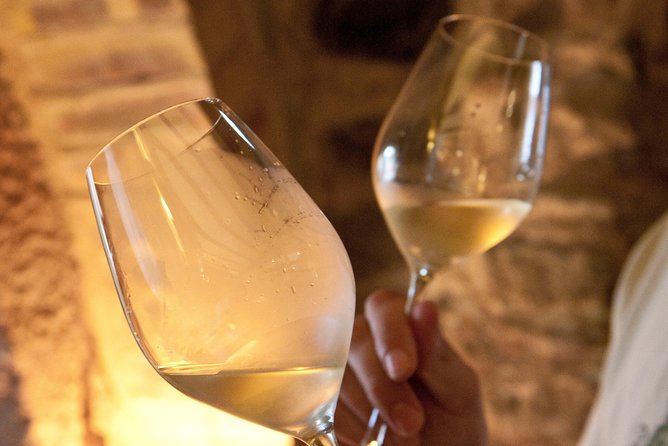
- Four-part tasting: Start with Crémant Bulles de Fête, continue with Pinot Blanc or Riesling, sample estate wines, and finish with sweet Gewurztraminer.
- No cellar tour: The visit centers on commented wine tasting, not wine-making facilities or underground rooms.
- Private group setting: Only your group takes part, making the pace more personal than a large public tasting.
- Ribeauvillé geology: The estate’s top-vine wines come from a fracture field described as an exceptional geological mosaic.
- English offered: The activity is available in English, with Julita named in the visitor feedback as a welcoming host.
- Low price, short visit: At $11.91 per person for about 45 minutes, this works well as a focused stop near Colmar.
A short Alsace tasting near Colmar
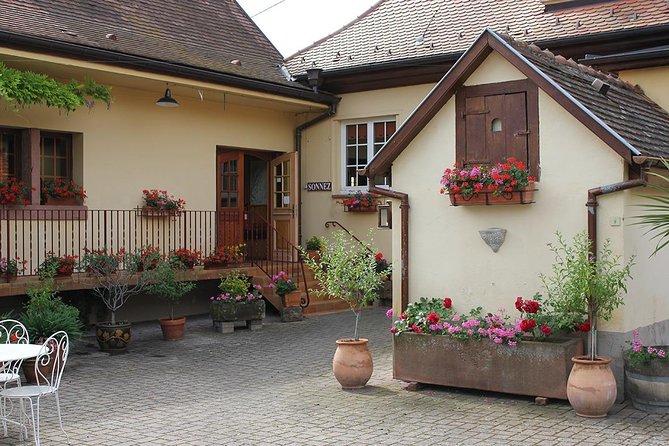
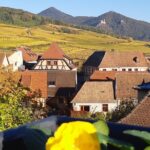
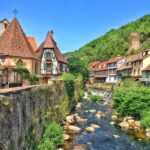
Domaine François Schwach is in Hunawihr, at 28 Route de Ribeauvillé, a short-distance option for anyone planning time around Colmar and the Ribeauvillé area. The setting gives you a chance to taste local wines at the estate rather than simply ordering a glass in town.
You should plan on about 45 minutes. That is enough time for a guided tasting, but not enough for a long vineyard walk, a meal, or a full look at wine production. I see the brief length as a plus if you are fitting several villages or sights into one day.
The format is private. Only your group participates, so you are not joining a large room where the host must rush through a fixed speech. That also means the tasting can feel more direct. You can focus on the wines in front of you and ask about the varieties that interest you most.
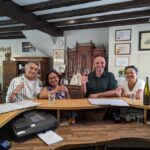
The activity is offered in English. Julita is specifically named in the visitor feedback, and her welcome receives strong praise. One party was accommodated even after making a last-minute booking, though I would not treat that as a guarantee. Booking ahead remains the sensible plan.
You can also read our reviews of more food & drink experiences in Colmar
The opening glass: Crémant Bulles de Fête
The tasting begins with Crémant Bulles de Fête, described as an extra-brut sparkling wine with fine bubbles and no added sulfites. This is a useful opening because Crémant gives you a taste of Alsace beyond its better-known still whites.
Extra-brut means the wine is made in a notably dry style. If you prefer sweet wines, this first glass may seem sharp or lean. If you like crisp sparkling wine, it sets a clean starting point before the still wines arrive.
The fine bubbles are part of the point here. You are not simply tasting four versions of the same white wine. The sequence moves from sparkling and dry to more aromatic and eventually sweet, giving the session a sense of beginning, middle, and end.
I would pay attention to how the bubbles change your first impression of Alsace wine. Crémant can work as an aperitif, but at this tasting it also acts as a marker. The later wines will feel different because you began with something lively and extra-brut.
Pinot Blanc, Riesling, and the grape variety comparison
After the sparkling wine, the tasting moves to the Aromatheque range, with Pinot Blanc or Riesling offered, along with other grape varieties. The exact pour may vary, so you should expect a selection rather than a fixed promise that every bottle will be served.
This is one of the most useful parts for anyone still learning Alsace wines. Pinot Blanc and Riesling give you two different ways to understand the region’s white-wine tradition. Tasting them side by side, or as part of a wider selection, helps you notice how grape choice affects aroma, body, and finish.
The tasting is commented, so you are not left to guess what is in the glass. The supplied details do not provide a full script or technical explanation for each wine, but the format is meant to guide you through the wines as you drink them. Ask about the grape varieties that catch your attention.
The mention of other grape varieties matters. You are not limited to one signature bottle or a single house style. That makes this a good introduction if you want a broad first look at the estate’s production, though the short duration means the comparison will remain focused rather than exhaustive.
Estate wines from the Ribeauvillé fracture field
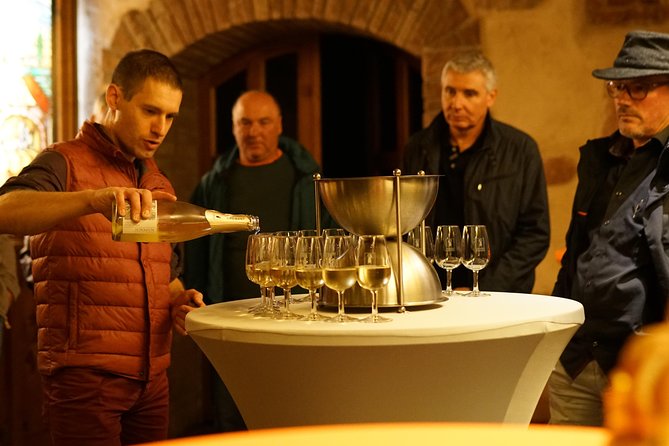
The next part, called Land of Expressions, features wines from the estate’s best vines. These vines are located on the Ribeauvillé fracture field, described as an exceptional geological mosaic.
That phrase has practical value for your tasting. Soil and underlying rock are part of the story a winery tells about its wines, and this section gives the estate a sense of place beyond a list of grape names. You can ask how the site affects the wines and compare the bottles with the earlier Aromatheque selection.
Do not expect a geology lesson with maps and a long field visit. The activity is a tasting, and the available details only promise a commented presentation of the wines. Still, this can be the most distinctive section for anyone who wants to understand why two wines made from related grapes may taste different.
I like that the tasting includes wines from the estate’s strongest sites rather than stopping with an entry-level pour. That can make the price more worthwhile, especially if you are deciding what to buy. At the same time, high-site wines may be more serious or structured than the easier first glasses, so they are best approached with an open mind rather than a fixed expectation.
The sweet finish: Gewurztraminer Cuvée Particulière
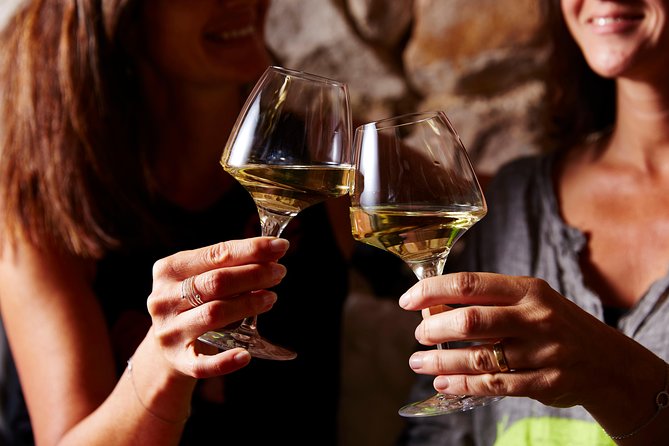
The final pour is Gewurztraminer Cuvée Particulière, a sweet wine presented as a real nectar. This gives the tasting a clear finish and lets you see a different side of Alsace wine.
Gewurztraminer is known for its aromatic character, and the sweet style can feel very different from the dry Crémant, Pinot Blanc, or Riesling that come earlier. Even if you normally avoid sweet wine, tasting it at the end can help you understand how the region handles aromatic grapes and dessert-style bottles.
The order makes sense. A sweet wine at the start could make the drier wines seem austere afterward. Served last, it acts as a dessert in liquid form and leaves you with the most obvious contrast of the session.
The description does not specify the residual sugar level, serving size, or food pairing. I would therefore treat the Cuvée Particulière as a tasting sample, not assume it replaces a full dessert course, and ask the host for details if you are considering a bottle.
You can also read our reviews of more wine tours in Colmar

Why the private format matters
A private activity means only your group participates. That is a meaningful feature in a short tasting because the host does not have to divide attention among a roomful of unrelated parties.
You can ask about the wine you like, request clarification in English, or spend a little more time on a grape variety that is new to you. The information provided does not promise a custom tasting menu, so do not assume every request can be accommodated. The private format does give you a better chance for direct conversation.
The warm welcome is another strong point. Julita is named as the host in the visitor feedback, and the tone of the comments is especially positive about her kindness and effort. One visit was accepted with little notice, which suggests a flexible attitude, but advance confirmation is still wise.
This is not a formal class. You will not receive a stated lesson plan, detailed vineyard walk, or production demonstration. Think of it as a relaxed, guided introduction with enough explanation to make the tasting more meaningful.
What the price gives you for $11.91
At $11.91 per person, the value is strong if you want a short tasting and several alcoholic pours in a private setting. The price includes a warm welcome and alcoholic beverages, with a sequence that covers sparkling, dry, estate, and sweet styles.
The calculation looks different if you were hoping for a full winery visit. Since there is no cellar tour, the price does not buy access to production spaces or a behind-the-scenes look at how the wine is made. You are paying for the tasting and the host’s commentary.
I would compare it with the cost of ordering several Alsace wines by the glass in Colmar. Here, you can sample a wider range in one sitting and learn which bottles suit you before buying. The tasting also gives you a chance to purchase wines directly if something appeals to you.
The short duration improves the value for a busy day. You can fit it between other plans instead of building an entire afternoon around it. On the other hand, if you measure value by time spent at a winery, 45 minutes may feel brief.
Timing, meeting point, and practical planning
The meeting point is Domaine François Schwach at 28 Route de Ribeauvillé, 68150 Hunawihr, France. The activity ends back at that same point, so you do not need to arrange a separate return meeting place.
The stated opening schedule lists Monday from 9:00 a.m. to noon and 2:00 p.m. to 3:30 p.m., for the operating period shown as January 23, 2020 through February 7, 2027. Because the hours are limited and split into morning and afternoon blocks, check the available time before you make plans around it.
The split schedule is useful if you want a morning tasting or a short afternoon stop. It is less convenient if your day is built around a different arrival time. The supplied information lists Monday hours only, so do not assume that the same schedule applies on other days.
A mobile ticket is provided, and confirmation arrives at booking. Service animals are allowed, and most people can participate. Those details make the visit straightforward for many people, but they do not provide information about transport, parking, steps, seating, or restroom facilities.
Who will enjoy this tasting most
I would recommend this for you if you want a short introduction to Alsace wine rather than a long winery program. It fits first-time visitors who want to compare several styles and people who already know they like sparkling, dry white, or sweet wines and want to discover another estate.
It is also a good match for couples or small private groups. The private format and the warm welcome associated with Julita make the visit feel more personal than a standard public tasting.
Wine buyers may find the session especially useful. You can taste before purchasing, compare the Aromatheque wines with bottles from the estate’s best vines, and finish with a sweet Gewurztraminer. The tasting does not state that purchases are required or included, so buying remains your choice.
I would choose another activity if your main goal is to inspect a cellar, see wine-making equipment, walk through vineyards, or spend several hours at the estate. None of those features is promised here. This is about the contents of the glass and the conversation around it.
What to know before you book
The tasting is non-refundable and cannot be changed for any reason. If your plans are uncertain, this matters more than the low price. Confirm your schedule before booking, especially since the opening hours shown are limited.
The activity is offered in English, which helps if you do not speak French. The source information does not state that other languages are offered, so English is the option you can count on from the published details.
The menu wording uses starter, main, and dessert labels, but this is a wine tasting, not a meal. You should expect alcoholic beverages and commentary, not food courses. The Crémant, Aromatheque selection, Land of Expressions wines, and Gewurztraminer form the tasting sequence.
I would also keep your expectations realistic about the length. Forty-five minutes can deliver a well-planned introduction, but it leaves little room for a lengthy question session or an extended look around the property.
Should you book Domaine François Schwach?
Book this tasting if you want a well-priced, private wine stop near Colmar with a clear range of Alsace styles. The Crémant, Pinot Blanc or Riesling, estate wines from the Ribeauvillé fracture field, and sweet Gewurztraminer create a useful progression in only 45 minutes.
Skip it if a cellar tour is essential. The strongest reason to choose this experience is the tasting itself, supported by a warm welcome and a personal format. At $11.91 per person, it is an easy choice for a focused introduction, provided the Monday hours and strict cancellation terms fit your plans.
FAQ
Where does the wine tasting take place?
It takes place at Domaine François Schwach, 28 Route de Ribeauvillé, 68150 Hunawihr, France.
How long does the activity last?
The tasting lasts approximately 45 minutes.
Is a cellar tour included?
No. The activity specifically excludes a cellar tour.
What wines are included?
The tasting includes Crémant Bulles de Fête, an Aromatheque Pinot Blanc or Riesling, other grape varieties, wines from the estate’s best vines in the Ribeauvillé fracture field, and Gewurztraminer Cuvée Particulière.
Is sparkling wine included?
Yes. The tasting begins with Crémant Bulles de Fête, an extra-brut sparkling wine with fine bubbles and no added sulfites.
Is the final wine sweet?
Yes. The Gewurztraminer Cuvée Particulière is described as a sweet wine.
Is the activity available in English?
Yes. English is listed as an available language.
Is this a private activity?
Yes. Only your group participates.
What are the listed opening hours?
The listed hours are Monday from 9:00 a.m. to noon and 2:00 p.m. to 3:30 p.m.
Can I cancel or change the booking?
No. The activity is non-refundable and cannot be changed for any reason.