REVIEW · PARIS
Champagne & Terroir Treasures: Viator’s Terroir Gourmet Delight
Book on Viator →Operated by Dilettantes · Bookable on Viator
The best part of this Paris experience is the setting: you taste champagne in a 17th-century cellar in Saint-Germain, not at a noisy bar or a distant vineyard. Three champagnes arrive with Comté cheese and ham, while the host explains how grapes, blending, and terroir shape the final drink. I especially like the intimate maximum of 12 people and the chance to buy a bottle afterward.
I also like the thoughtful food pairing and the generous total pour of 240 ml. The main caution is that the teaching may depend on the guide and language match. One session led by Julie earned warm praise for clear explanations and friendly answers, while another had limited English and little instruction.
In This Review
- Key points at a glance
- A champagne lesson in Saint-Germain
- Three champagnes, not just one sample
- Why the cheese and ham matter
- A small group with room for questions
- Prepare your senses before entering
- What the 90-minute flow feels like
- Who will get the most from this tasting
- Is $86.82 a fair price?
- Booking details worth knowing
- Should you book Champagne and Terroir Treasures?
- FAQ
- Where does the champagne tasting take place?
- How long does the experience last?
- How many champagnes will I taste?
- What food is included?
- Is transportation included?
- Is the experience suitable for children?
- How many people can join the tasting?
- Do I need to avoid perfume?
- Can I buy champagne after the tasting?
- Can I cancel or change my booking?
Key points at a glance
- Three 80 ml champagne pours: Compare three distinct champagnes rather than sampling just one house style.
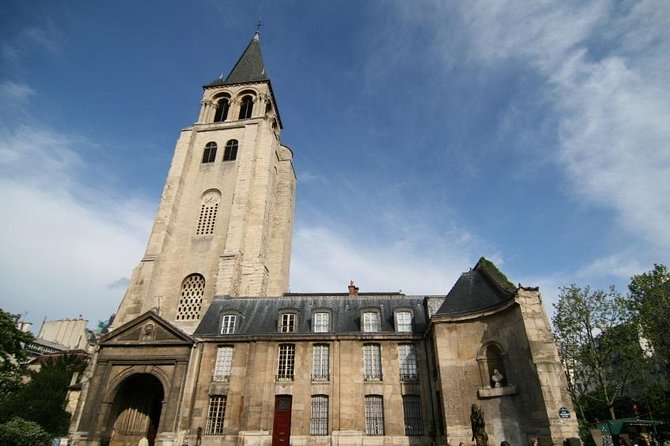
- 17th-century cellar: Taste in a historic Saint-Germain setting at the Dilettantes boutique cellar.
- Comté and ham pairing: The included plate adds salt, fat, and texture to the sparkling wine.
- Small group format: The experience allows up to 12 people, with some sessions possibly much smaller.
- Useful tasting preparation: Skip perfume, lipstick, gum, coffee, soft drinks, and brushing your teeth right before arrival.
- Easy souvenir option: You can purchase champagne to take home or arrange delivery after the tasting.
A champagne lesson in Saint-Germain
This experience takes place at 22 Rue de Savoie in Paris’s Saint-Germain area. You are not being sent out to the Champagne region, so the value lies in bringing a focused taste of that region into central Paris.
The venue is a boutique cellar with roots reaching back to the 17th century. That detail matters. Champagne can feel abstract when you only see a bottle on a restaurant list, but a cellar setting gives the tasting a sense of place. You sit with the bottles, food, and conversation in a space made for wine rather than rushing through a standard aperitif.
The activity lasts about 90 minutes. You should arrive 10 minutes early, which means planning for a total commitment of roughly 100 minutes from arrival to departure. The meeting point is also the end point, and transportation is not included.
Saint-Germain is a practical location for a tasting. It is near public transportation, though you will need to make your own way there. Since the activity ends where it starts, you can plan a meal, walk, or other Paris stop afterward without arranging a transfer.
You can also read our reviews of more wine tours in Paris


Three champagnes, not just one sample
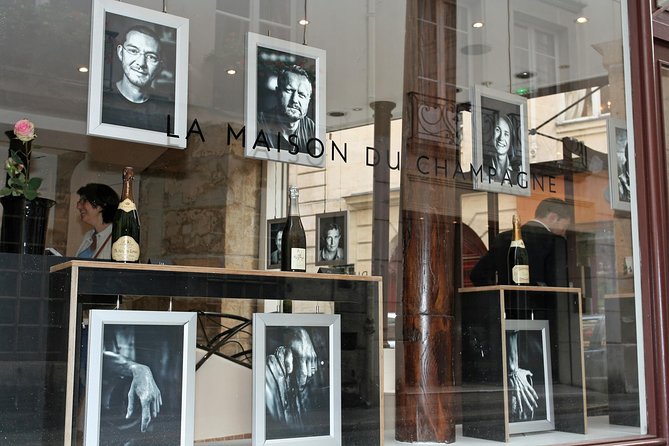
The heart of the session is a comparison of three distinct champagnes. Each pour is 80 ml, giving you 240 ml in total. That is enough to compare the wines without turning the event into a long drinking session.
The point is not simply to identify which glass you like best. You are introduced to the factors that shape champagne, including the grapes used, the blend, and terroir. These ideas give you a better way to read a champagne label and understand why two bottles from the same broad region can taste different.
Terroir is especially useful as a tasting concept. It refers to the combination of place and growing conditions that influence the grapes. In this session, the subject is treated as part of the explanation for why champagne tastes the way it does, alongside grape choice and blending. You get a chance to connect the explanation to three wines in the glass.
The three pours are small enough that you can focus on smell, flavor, acidity, and texture. This is also why the preparation rules are unusually strict. Strong smells and flavors can get in the way of tasting, particularly when the wines are served side by side.
The quality of the lesson is one area to consider carefully. A session led by Julie was praised for its clear answers and useful information about both Champagne as a region and champagne as a drink. Another session had a leader who struggled to communicate in English, leaving the educational side thin. If your main goal is wine instruction, guide quality and language ability may shape your experience more than the cellar itself.
Why the cheese and ham matter
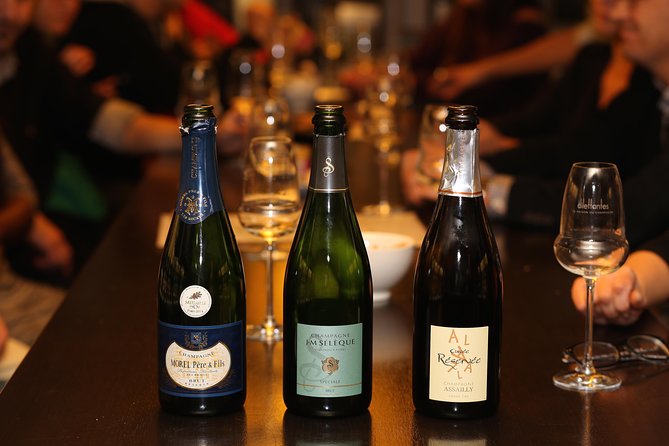
The included food is a plate of Comté cheese and ham. The description identifies the ham as pata negra, and the cheese as matured Comté. This is a modest pairing, not a full lunch, but it gives the tasting more balance than three glasses alone.
Comté brings a firm, savory bite to the table. Ham adds salt and richness. Those flavors can change how you notice the champagne, especially when you taste a pour first and then try it with food. That simple comparison is part of what makes a pairing worthwhile.
Bring realistic expectations. The food is a snack plate, not a large French meal. One account praised the cheese, bread, and meat, while another suggested that a more specifically French selection would have suited the tasting better. The ingredients sound substantial enough to keep the session comfortable, but you should eat beforehand if you need a full meal.
The pairing also helps explain the price. You are not paying only for 240 ml of wine. The fee covers three pours, food, a guided session, and access to a historic cellar in central Paris. At $86.82 per person, it is a special-occasion activity rather than a casual drink. The value is strongest if you care about learning and setting, not if you only want the cheapest way to taste champagne.
A small group with room for questions
The maximum group size is 12 people. That is small enough for a more personal tasting, at least compared with a large bus group or a crowded wine bar.
A group of 12 can still feel social, but the format should leave some opportunity to ask about grapes, blends, and terroir. One especially strong session ended up with only a couple, which made the experience feel private and suited a Valentine’s Day outing. You should not assume every departure will be that intimate, but the low group limit gives the activity a better chance of staying relaxed.
The small format is also helpful if you are new to champagne. You can ask basic questions without feeling that the session is designed only for wine experts. At the same time, the educational content may not be equally strong every time. If you need a detailed technical seminar, this may feel light. If you want a friendly introduction with food and three wines, it is a better fit.
Language is another practical point. The available feedback includes an English-language concern and a request for Spanish. The experience information does not promise a Spanish-language session. Ask the operator about language before booking if instruction in a particular language is essential to you.
Prepare your senses before entering
The operator gives unusually direct advice about what not to do before the tasting. Follow it, especially if you want to notice the differences between the three champagnes.
Avoid perfume and aftershave. Smell is part of wine tasting, and a strong fragrance can affect everyone in the room. The operator reserves the right to refuse entry if your scent disrupts the group, with no refund.
You are also asked not to wear lipstick, chew gum, drink coffee or soft drinks, or brush your teeth immediately before the session. Strong flavors and fresh toothpaste can make the champagne seem unusually bitter or acidic. These rules may feel fussy, but they are tied to the purpose of the activity rather than being random restrictions.
Arrive 10 minutes before the scheduled start. That gives you time to find 22 Rue de Savoie and settle in without interrupting the opening explanation. A mobile ticket is provided, so you can keep the booking on your phone.
The minimum age is 18. Most people can participate, and the experience is near public transportation. No transportation to or from the cellar is included, so allow extra time if you are crossing Paris before the appointment.




What the 90-minute flow feels like
The session begins at the Dilettantes cellar in Saint-Germain. The historic room is an important part of the appeal, and the setting gives the tasting a more distinct identity than a generic restaurant table.
You then work through three champagne pours. The amount is controlled at 80 ml per glass, so the focus stays on comparison and discussion. You can consider how each wine smells, how dry or acidic it feels, and how its character changes with the Comté and ham.
The guide explains the building blocks of champagne: grape varieties, blending, and terroir. The best version of this experience is conversational. Julie’s session, for example, was praised for answering questions and explaining both the region and the drink in a friendly way.
The session finishes back at the meeting point. If one of the bottles appeals to you, you can buy champagne to take home or arrange delivery. That option is useful if you find a style you would not easily identify from a supermarket shelf, though the available details do not specify bottle prices or delivery charges.
Because the session lasts only 90 minutes, do not expect a long regional course or a winery visit. You are getting a compact Paris tasting with a clear subject. The short length works well before dinner, an evening walk, or another appointment.
Who will get the most from this tasting
I would recommend this for adults who want a gentle introduction to champagne and prefer a central Paris activity. You get a historic cellar, three different pours, a small food pairing, and a chance to ask questions in a group of no more than 12.
It suits couples particularly well. The cellar setting and small plate make it a natural choice for a date or special occasion, and one session was especially successful as a Valentine’s Day outing.
It also works for friends who want a shared tasting without committing to a full wine course. The 240 ml total pour is enough for comparison while remaining manageable before dinner.
I would be more cautious if you are booking mainly for advanced wine education. The subject matter is good, but the teaching can vary. One experience offered little champagne-making education because of communication problems, so this is not the safest choice for someone expecting a rigorous master class.
I would also think twice if your group cannot follow the available language comfortably. Spanish is not listed as a guaranteed language, and the English quality may differ by guide. Ask before paying if that point will affect your enjoyment.
Is $86.82 a fair price?
At $86.82 per person, this is not a budget tasting. You receive three small glasses, not three full glasses, plus a plate of Comté and ham. The price makes more sense when you count the cellar setting, the central location, the guided explanation, and the opportunity to buy a bottle afterward.
The value depends on your priorities. If you are looking for a cheap way to drink champagne, a bar may cost less. If you want a planned experience with a clear theme and food pairing, the price is easier to justify.
I like that the activity does not pad the schedule with transportation or unrelated stops. Your money goes toward the tasting itself. The tradeoff is that you must reach the cellar independently, and the booking is non-refundable and cannot be changed for any reason.
The rating is 4.2 from five reviews, which suggests a generally positive but not flawless record. The most consistent strengths are the tasty champagne, attractive cellar, food, and friendly small-group atmosphere. The weak point is educational consistency. Keep that balance in mind when deciding.
Booking details worth knowing
Confirmation is sent within 48 hours of booking, subject to availability. The experience is mobile-ticket based, and the meeting point is 22 Rue de Savoie, 75006 Paris.
The activity ends at that same address. You are responsible for getting there and returning to your next stop. Public transportation is nearby, but exact route details are not provided, so check your journey before leaving.
The booking is for adults aged 18 and older. Most people can participate, but the supplied information does not give further details about specific accessibility arrangements.
The strict scent and flavor rules deserve special attention. Perfume or aftershave can lead to refused entry if the smell affects the group, and there is no refund in that case. Plan for the tasting rather than treating it as a quick stop you can join after coffee and toothpaste.
Should you book Champagne and Terroir Treasures?
Book it if you want a compact champagne lesson in a historic Paris cellar, with three wines, Comté, ham, and a small-group setting. It is especially appealing for couples, food lovers, and first-time champagne tasters who value atmosphere as much as technical detail.
Skip it if you need guaranteed expert instruction, a Spanish-language guide, a full meal, or flexible cancellation. The best sessions can be warm and informative, but the available experience shows that the guide makes a real difference.
For most people, the deciding question is simple: do you want to understand what is in your glass, or do you only want a drink? If you want the first, and the $86.82 price fits your Paris budget, this is a sensible way to spend 90 minutes. Arrive early, leave the perfume at the hotel, and treat the food as a pairing rather than dinner.
FAQ
Where does the champagne tasting take place?
It takes place at a boutique cellar at 22 Rue de Savoie, 75006 Paris, in the Saint-Germain area.
How long does the experience last?
The tasting lasts approximately 1 hour and 30 minutes. You should arrive 10 minutes before the scheduled start.
How many champagnes will I taste?
You will taste three distinct champagnes. Each serving is 80 ml.
What food is included?
The experience includes a plate of Comté cheese and ham. The ham is also described as pata negra.
Is transportation included?
No. Transportation to and from the attraction is not included. The meeting point is also the end point, and it is near public transportation.
Is the experience suitable for children?
No. The minimum age is 18.
How many people can join the tasting?
The activity has a maximum of 12 participants.
Do I need to avoid perfume?
Yes. You are strongly advised not to wear perfume or aftershave. Entry may be refused if your scent disturbs the group, and there is no refund in that situation.
Can I buy champagne after the tasting?
Yes. You can purchase a bottle or bottles to take home, or arrange delivery.
Can I cancel or change my booking?
No. The experience is non-refundable and cannot be changed for any reason.