REVIEW · LA CIOTAT
Rope Climbing Adventure and Hiking in La Ciotat
Book on Viator →Operated by Guillaume Mottet · Bookable on Viator
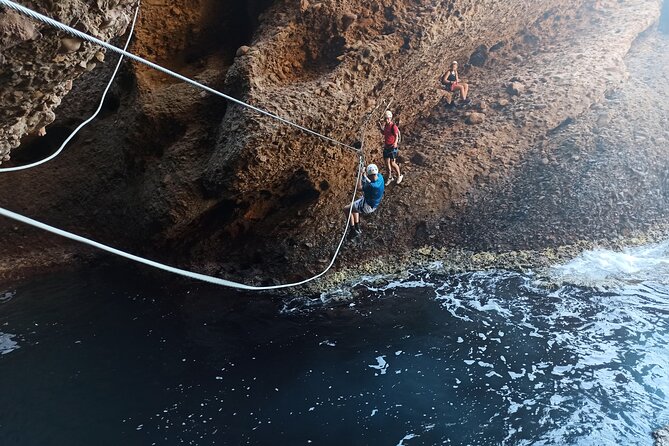
The most striking part of this La Ciotat outing is the chance to move along the coast by rope, not just walk above it. You’ll reach cliffside viewpoints where waves crash against the rock, then continue toward the heart of the creeks, places that ordinary footpaths do not reach. I especially like the sea-level sense of adventure and the fact that the climbing gear is supplied. You do not need previous climbing skills to take part.
I also like the family-friendly balance. The route offers far more climbing than a normal hike, according to the guide feedback, but it is still designed for people without special climbing knowledge. The main consideration is simple: this is not a gentle coastal stroll. You should be ready for rope work, an intermediate route, and possibly an abseil into a gorge above the sea.
In This Review
- Key points to know before you book
- What this La Ciotat adventure really is
- Meeting the guide at the Sémaphore
- Starting on foot, then switching to rope work
- Reaching the cliffs above the Mediterranean
- Entering the creeks by rope
- Why the climbing matters more than the hiking
- The guide’s role and the family question
- What to bring and what the price covers
- Timing, transport, and cancellation rules
- Who should book this coastal route?
- Should you book the La Ciotat climbing adventure?
- FAQ
- Where does the rope climbing adventure begin?
- What time does the activity start?
- How long does the experience last?
- Where does the activity finish?
- Is climbing equipment included?
- Do I need previous climbing knowledge?
- Is the activity offered in English?
- What happens if the weather is poor?
Key points to know before you book
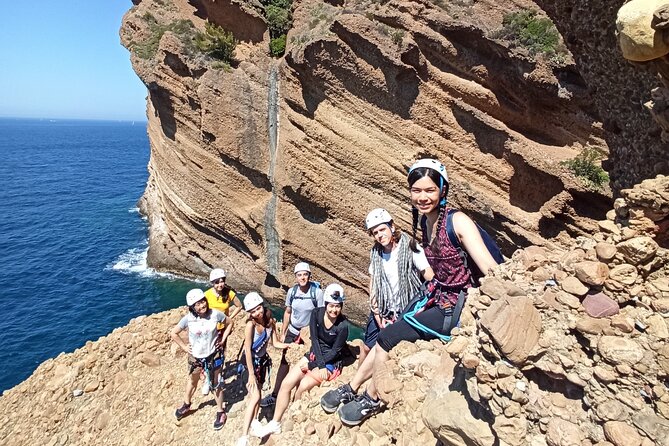
- Rope work is the heart of the route: Expect a real climbing experience, not only a walk with a few easy scrambles.
- The sea views are a major reward: You’ll look down at waves breaking against the cliffs and move through the coastal creeks.
- Beginners are welcome: No particular climbing knowledge is required, and climbing equipment is provided.
- The route leans toward climbing: One family found it far more climbing than hiking, which is useful if you want an active outing.
- The start is fixed and early: Meet at 9:30 am at 398 Chem. du Sémaphore in La Ciotat.
- Weather matters: Poor conditions can lead to a different date or a full refund.
What this La Ciotat adventure really is
This experience sits between classic hiking and climbing. That description is important because it sets the right expectation. You are not signing up for a long mountain walk, and you are not required to arrive as a trained climber. Instead, you use rope techniques with a guide to reach coastal sections that are harder to access on foot.
The route takes you toward the creeks around La Ciotat. In this part of the Mediterranean coast, the drama comes from the meeting of steep rock and open water. Your reward is not a museum, a village square, or a long list of historical stops. It is the physical setting itself: cliffs, sea, rock walls, and the sound of waves below.
A three-hour duration gives the outing enough time to feel like a proper activity without taking up your entire day. You can fit it into a morning and still have time later for La Ciotat or another stop along the coast. The 9:30 am start also gives the day a clear shape, though you will need to plan around that meeting time.
You can also read our reviews of more tours and experiences in La Ciotat.
Meeting the guide at the Sémaphore
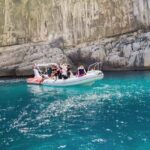
The outing begins at 9:30 am at 398 Chem. du Sémaphore, 13600 La Ciotat, France. It ends back at the same meeting point, which makes the logistics easier than an adventure that finishes at a distant trailhead.
Guillaume Mottet is the experience provider. The guide feedback also names Guillaume and Laurent, both praised for their patient, friendly approach. That matters here. Rope activities can feel awkward at first, especially if you have never handled climbing equipment. A calm guide who explains each movement clearly can make the difference between feeling tense and enjoying the route.
The activity is offered in English and has a maximum of 24 people. That is a fairly large possible group for a technical coastal activity, so group size may affect how much individual attention you receive. The available information does not promise a small private outing. If close one-on-one instruction is important to you, it is sensible to ask about the group size on your date before booking.
The meeting point is near public transportation. That is useful if you are staying in or near La Ciotat and do not want to arrange a private vehicle. The supplied details do not specify the exact bus, train, or walking connection, so you should check your route to the meeting point before the morning of the activity.
Starting on foot, then switching to rope work
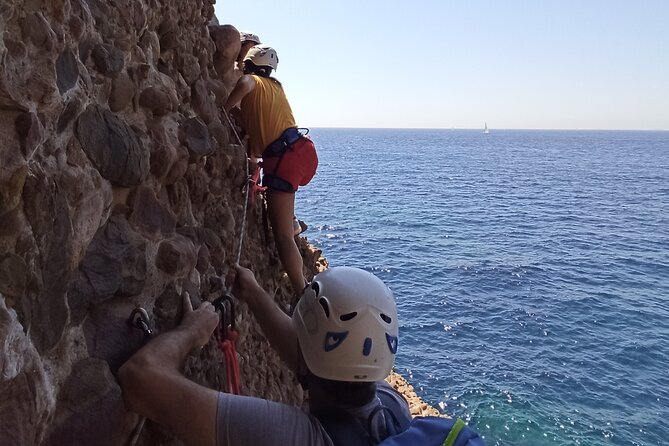
The early part of the outing follows the hiking side of the experience. You make your way toward the coastal creeks, with the guide setting the pace and introducing the route. This gives you time to get comfortable before the more technical sections begin.
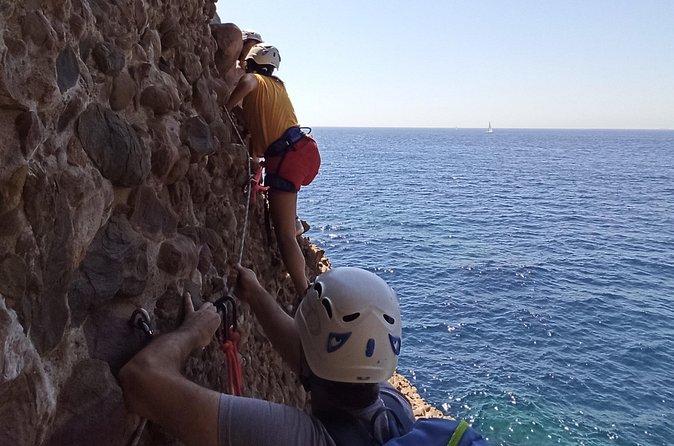
The useful distinction is that hiking is only part of the plan. The route is designed to bring you into areas where few people venture, using rope techniques to pass sections that would not feel like an ordinary walking trail. That creates a stronger sense of progress than a standard viewpoint hike. You are not only looking at the cliffs from above. You are working your way through them.
Your guide provides the climbing gear. The supplied information does not list each item, so do not assume that every personal item is included. What is clear is that the equipment needed for the climbing activity is provided, making the experience easier for a first-time participant.
Beginners can join without particular climbing knowledge. Still, beginner-friendly does not mean effortless. You need to listen to instructions, follow the guide’s movements, and be comfortable using ropes on uneven coastal rock. If you prefer a slow, level walk, this is the wrong choice. If you want to try climbing without committing to a full technical course, the format makes good sense.
Reaching the cliffs above the Mediterranean
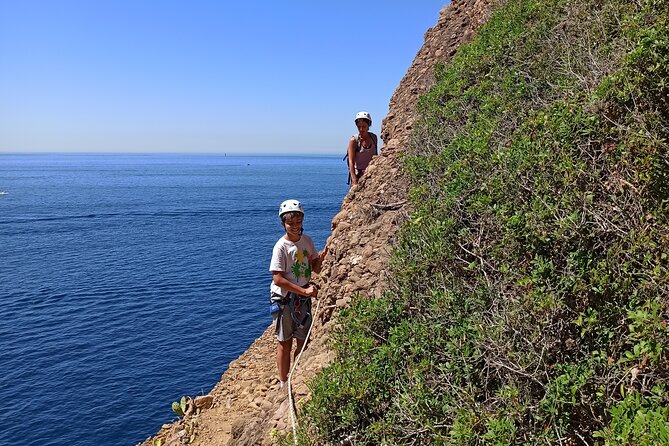
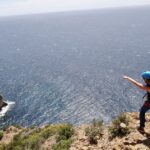
The coastal views are one of the strongest reasons to choose this experience. At points along the route, you can stand on a cliff and watch waves break against the rock below. The height gives you a broad view of the Mediterranean, while the route itself keeps you close to the rough textures and steep edges of the coast.
This is where the outing differs from a standard scenic walk. On a normal path, you might stop at a lookout, take a photo, and continue. Here, the view arrives alongside a physical challenge. You may be concentrating on your footing or rope technique one moment, then looking out across the water the next.
The setting also makes weather important. Good conditions are required for the activity, not just preferred for comfort. Wind, rain, or poor visibility can affect the safety of the route. If the provider cancels because of bad weather, you will be offered another date or a full refund. That policy protects you, but it also means you should keep some flexibility in your schedule.
Entering the creeks by rope
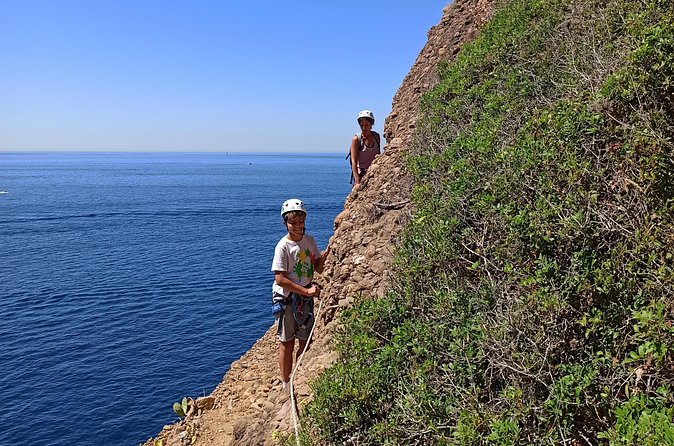
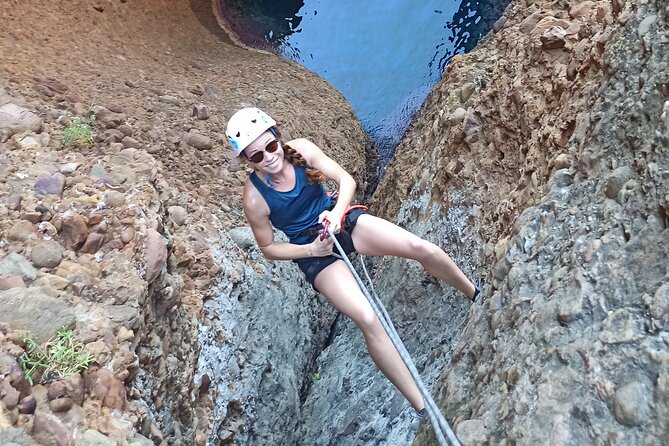
The most distinctive part comes as the route reaches the heart of the coastal creeks. Rope techniques let you move beyond the easiest walking sections and into rocky areas that are less accessible. The guide controls the technical side, while you follow instructions and manage your own movement.
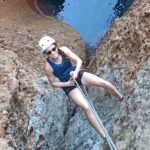
One detailed description of the route includes an exciting abseil into a gorge over the sea. That is a useful clue about the experience’s character. You should be prepared for a descent using a rope, not simply a short handline beside a path. The precise order and length of each technical section are not specified, so the abseil may depend on the route and conditions on your date.
This section is likely to be the highlight if you enjoy a clear sense of exposure and movement. It is also the part that deserves the most honest thought before booking. A person who dislikes heights, rope descents, or standing near cliff edges may not enjoy it, even with a patient guide.
The route has been described as not too easy, not too hard for a family with older children and teenagers. That is encouraging, but it does not make the activity suitable for every age or ability. The official details say most people can participate, yet they do not set out a specific minimum age or describe mobility requirements. If you are booking for a child, ask the provider directly before paying.


Why the climbing matters more than the hiking
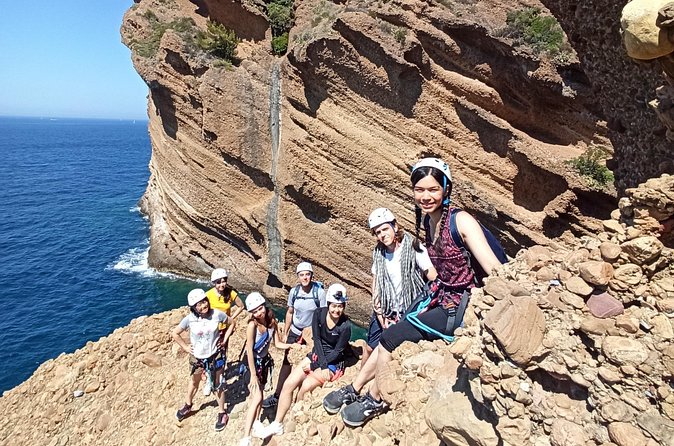
Many coastal excursions use the word climbing loosely. This one should be understood more literally. The route has been described as far more climbing than hiking, which makes it a strong choice for someone who wants hands-on activity rather than a scenic walk with occasional steps.
That balance is also the main decision point. You might book it expecting to spend most of the three hours walking beside the coast, only to find that the rope sections are the central feature. Read the description as an adventure course with hiking between technical sections, not as a hike with a small climbing add-on.
For a first climbing experience, this format has several advantages. You do not need to buy equipment, you do not need a long training program, and the outing lasts only about three hours. The guide leads you into a dramatic setting while keeping the activity within a manageable half-day commitment.
You still need a basic willingness to take part. The guide can explain technique and safety, but you must be prepared to follow directions and take an active role. This is not a ride where the scenery comes to you.
The guide’s role and the family question
A good guide is especially important on a route that combines exposed views, ropes, and changing rock surfaces. Guillaume Mottet is the named provider, and the available guide names include Guillaume and Laurent. Their praise centers on patience and friendliness, two qualities that are particularly helpful for beginners.
I would consider this a good option for a family with older children or teenagers who enjoy active outings. The route gives them a clear challenge and memorable views without requiring previous climbing experience. The family feedback specifically points to older children and teens treating it as a vacation highlight.
The wording matters, though. Older children and teenagers are not the same as very young children, and no age limit is supplied. You should not assume that every child can join. Ask about age, height, equipment fit, and the level of exposure if those details affect your decision.
It also suits adults who want a short introduction to rope work. You can test your interest in climbing without arranging a full-day lesson. If you already climb regularly, the route may feel more like a scenic outing than serious technical training, since the focus is on access, views, and a guided coastal experience.
What to bring and what the price covers
The cost is $66.51 per person. For a three-hour guided activity with climbing gear included, that can be fair value, especially if you would otherwise need to rent equipment or arrange instruction separately. You are paying for access to a route that is not simply a public walking path, along with the guide’s supervision and technical setup.
The price does not include snacks or bottled water. Bring your own water and something small to eat if you need it. The supplied information does not specify clothing or footwear, so you should ask the provider what is recommended for the conditions rather than guessing.
The value depends on what you want from the morning. If you want a quiet, inexpensive walk, there are simpler options. If you want rope techniques, an abseil may be part of the route, and a close look at the cliffs and creeks, the price is easier to justify.
A maximum of 24 people is listed. That cap prevents the group from becoming unlimited in size, but it does not guarantee a small group. The practical value of the price may feel higher if your departure has fewer participants and lower if you spend much of the time waiting for others.
Timing, transport, and cancellation rules
The start time is 9:30 am, and the activity lasts approximately three hours. Plan to arrive with enough time to locate the meeting point at the Sémaphore rather than cutting it close. Since the exact route depends on a coastal climbing setup, a late arrival could be more disruptive than it would be for an ordinary walking tour.
The meeting point is near public transportation, and the activity returns there at the end. That makes it easier to combine with a stay in La Ciotat, though you should confirm your own connection because no specific transit line is provided.
You receive confirmation when booking. Free cancellation is available if you cancel at least 24 hours before the local start time. Cancellations or changes inside that 24-hour window are not refunded or accepted. The activity also needs a minimum number of participants. If that minimum is not reached, you can choose another date or experience, or receive a full refund.
Who should book this coastal route?
I would choose this outing if you want three things at once: dramatic sea views, a short time commitment, and genuine rope work. It is especially appealing for beginners who want to try climbing in a natural setting instead of an indoor wall.
It is a good match for families with older children or teenagers, active couples, and friends who want something more memorable than a standard walk. The friendly, patient guiding style described for Guillaume and Laurent is another reason beginners may feel comfortable trying it.
I would think twice if you want a relaxed morning, dislike heights, or expect a mostly level hike. The experience is intermediate in feel even though no previous climbing knowledge is required. You should also plan around the weather and bring your own water, since neither snacks nor bottled water is included.
Should you book the La Ciotat climbing adventure?
Book it if you want to see La Ciotat from the cliff edge and from inside its coastal creeks, with ropes turning a scenic walk into a real adventure. The combination is unusual, the three-hour length is practical, and the supplied gear keeps the first step simple.
Skip it if your ideal coast outing involves an easy path, long pauses, or no exposure. For everyone else, especially families with older children and first-time climbers, this is a strong way to trade a passive viewpoint for an active morning above the Mediterranean.
FAQ
Where does the rope climbing adventure begin?
It begins at 398 Chem. du Sémaphore, 13600 La Ciotat, France.
What time does the activity start?
The scheduled start time is 9:30 am.
How long does the experience last?
The activity lasts approximately three hours.
Where does the activity finish?
It finishes back at the meeting point.
Is climbing equipment included?
Yes. Climbing gear is included in the experience.
Do I need previous climbing knowledge?
No particular climbing knowledge is required. The route is designed to be affordable and accessible for beginners.
Is the activity offered in English?
Yes. The experience is offered in English.
What happens if the weather is poor?
If poor weather causes the activity to be canceled, you will be offered a different date or a full refund.