REVIEW · PARIS
Paris: Le Marais & Montmartre Jewish History Walking Tour
Book on GetYourGuide →Operated by Walks In Europe · Bookable on GetYourGuide
Jewish Paris hits different when you walk it, street by street. This Le Marais and Montmartre tour threads big history through real corners of the city, from medieval community life to Montmartre’s artistic rise. I like that it’s small-group paced, so your guide can answer questions without turning it into a lecture.
My favorite part is the mix of landmarks you can spot fast and stories that explain why they matter. You get the striking exterior of Agoudas Hakehilos (Hector Guimard’s Art Nouveau work) and a finish at Sacré-Cœur with wide views that make the whole day feel like it has a point. One drawback to plan for: this is a lot of outdoor walking and it does not include indoor visits to synagogues or paid monument entry.
In This Review
- Key moments you’ll remember from Le Marais to Montmartre
- Why Le Marais and Montmartre Tell One Jewish Paris Story
- Small-group format and the real value of an $80, 210-minute walk
- Where you meet in Paris and how to start on time
- Le Marais opening stretch: getting the neighborhood story fast
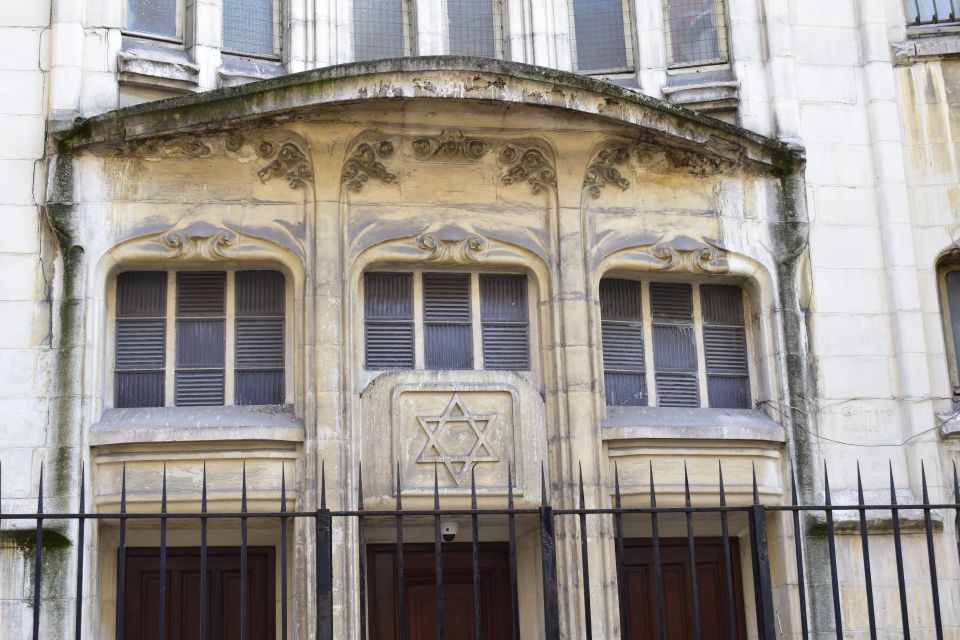
- Agoudas Hakehilos and Hector Guimard’s Art Nouveau synagogue exterior
- Mémorial de la Shoah: a solemn stop with context
- From Hôtel de Ville area to Montmartre by public transport
- Montmartre’s Jewish creative circles: why these streets feel different
- Rue Ravignan, Le Bateau-Lavoir, and the Montmartre art-world map
- Sacré-Cœur panoramic views and the walk’s final reflection
- Who this tour is best for (and who should skip it)
- Quick practical tips before you book
- Should you book this Jewish Paris walking tour?
- FAQ
- How long is the Le Marais & Montmartre Jewish History Walking Tour?
- What language is the tour guide?
- How big is the group?
- Is public transportation included?
- Do we go inside synagogues during the tour?
- Are we entering monuments or historical sites with tickets?
- Is Sacré-Cœur included, and do we go inside?
- Is the tour suitable for wheelchair users or people with mobility impairments?
- Where do we meet the guide?
- What happens if I arrive late or want to join after it starts?
Key moments you’ll remember from Le Marais to Montmartre

- Agoudas Hakehilos exterior by Hector Guimard: you’ll appreciate the Art Nouveau design from the sidewalk.
- Le Marais Jewish landmarks and neighborhood atmosphere: everyday street life plus turning points across centuries.
- Mémorial de la Shoah stop: a solemn moment handled with care and context from outside the site.
- Public transport transfer to Montmartre: a timed break that keeps the pace sane.
- Montmartre’s Rue and studio stops: you’ll connect Jewish creative energy to specific streets.
- Sacré-Cœur panoramic wrap-up: views plus reflection at the end of the walk.
Why Le Marais and Montmartre Tell One Jewish Paris Story
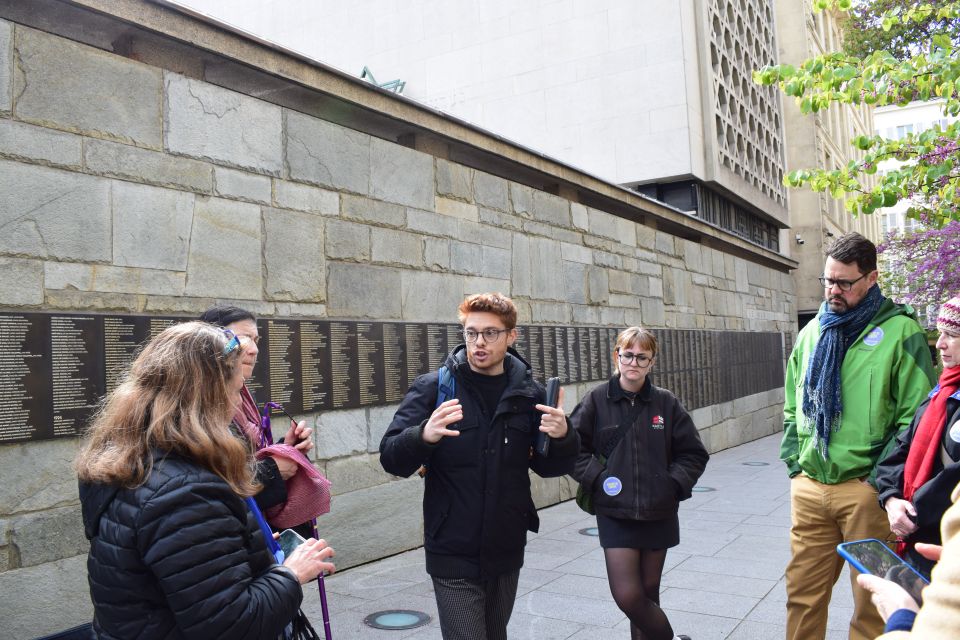
Paris doesn’t give you one storyline. It gives you layers. This walk is designed around two areas that shaped Jewish life in very different ways: Le Marais for community roots and institutions, then Montmartre for art, writing, and the modern cultural mix.
In the Marais, you’re moving through a neighborhood where you can still feel echoes of old Jewish Paris, even as the area has changed over time. In Montmartre, the mood shifts. The streets are noisier, more artistic, and more about ideas than institutions.
That contrast is the whole point of the tour. You’ll finish the day seeing the Jewish story in Paris as something that evolved with the city itself.
You can also read our reviews of more walking tours in Paris



Small-group format and the real value of an $80, 210-minute walk
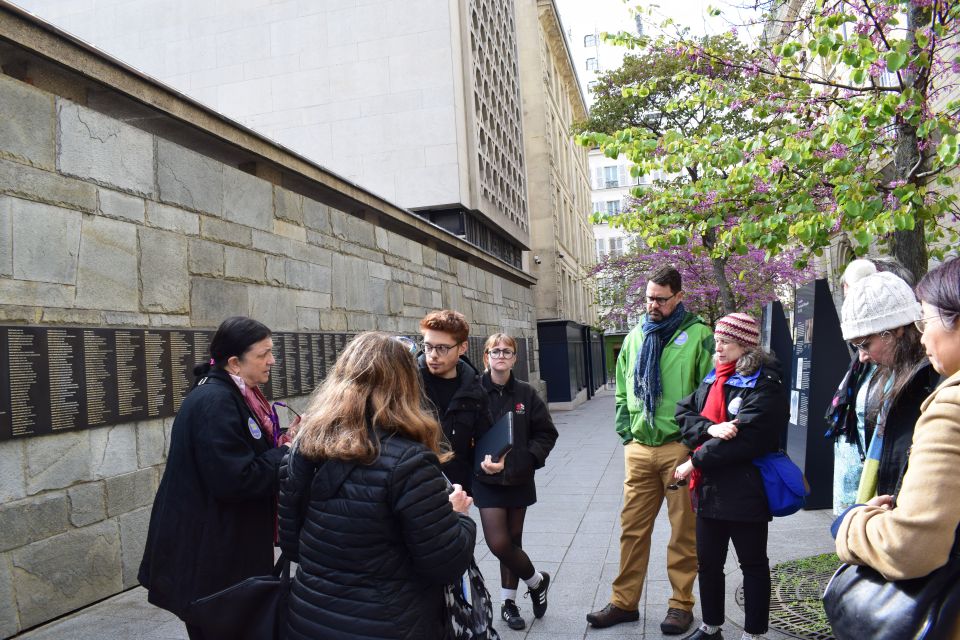
At $80 per person for about 210 minutes, the value comes from concentration. You’re not buying a “grab a few photos” pass. You’re buying a guided path across two neighborhoods with a live English-speaking guide.
You also get a practical assist: public transport tickets are included for the transfer between Marais and Montmartre. That matters because it keeps the day from turning into an endless stroll or a stressful sprint.
One more value point: the tour is built for small groups (up to 9 persons). That’s not just comfort. It means you can ask follow-up questions, and your guide can set the pace for the group without leaving latecomers behind.
Finally, the tour focuses on what you can see without paid entry. No indoor synagogue visits and no monument entry tickets are included, so you’re not paying extra for permissions that you may not need anyway. You’re paying for interpretation and connections.
Where you meet in Paris and how to start on time
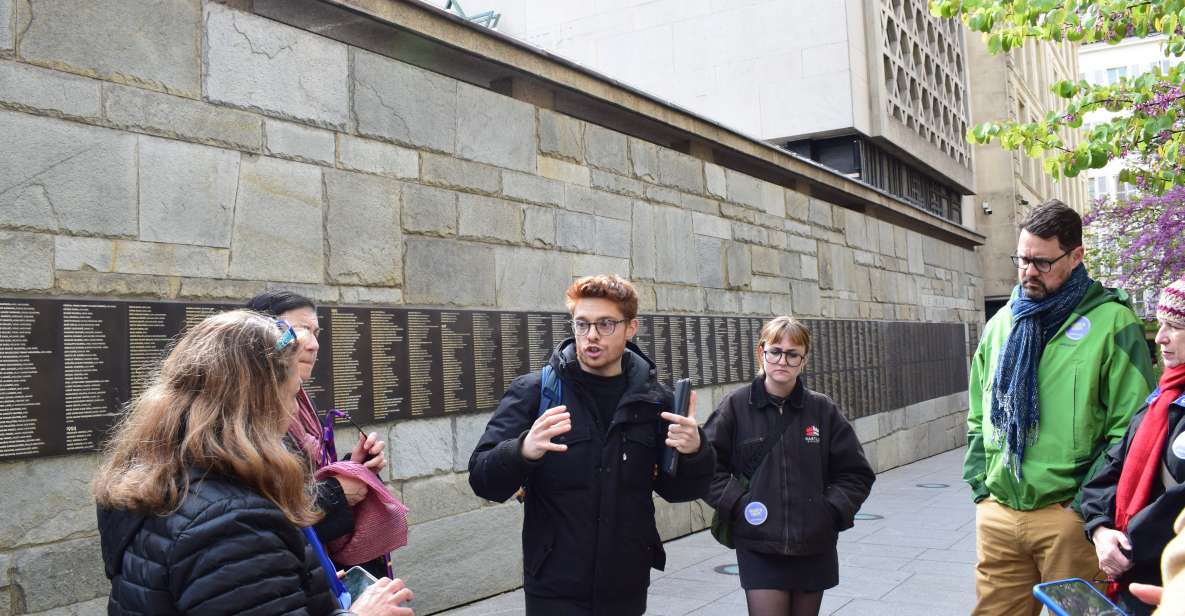
Your meeting point can vary depending on the option you book, with starting locations including BHV Marais (L’Elephant du Nil is one option) and other nearby Marais points. The key practical rule: arrive 15 minutes early so the group doesn’t lose time regrouping.
And once the tour starts, you can’t hop on mid-walk. This is normal for small-group experiences, but it’s especially important here because the route switches neighborhoods and includes a public transport segment.
Tip for a smooth start: stand out clearly and be ready to move. Some guides use different meeting cues, so don’t wait until the last second to locate your guide. If it’s raining (Paris, of course), plan your jacket and shoes so you can keep walking without sliding around like you’re auditioning for an action movie.
Le Marais opening stretch: getting the neighborhood story fast
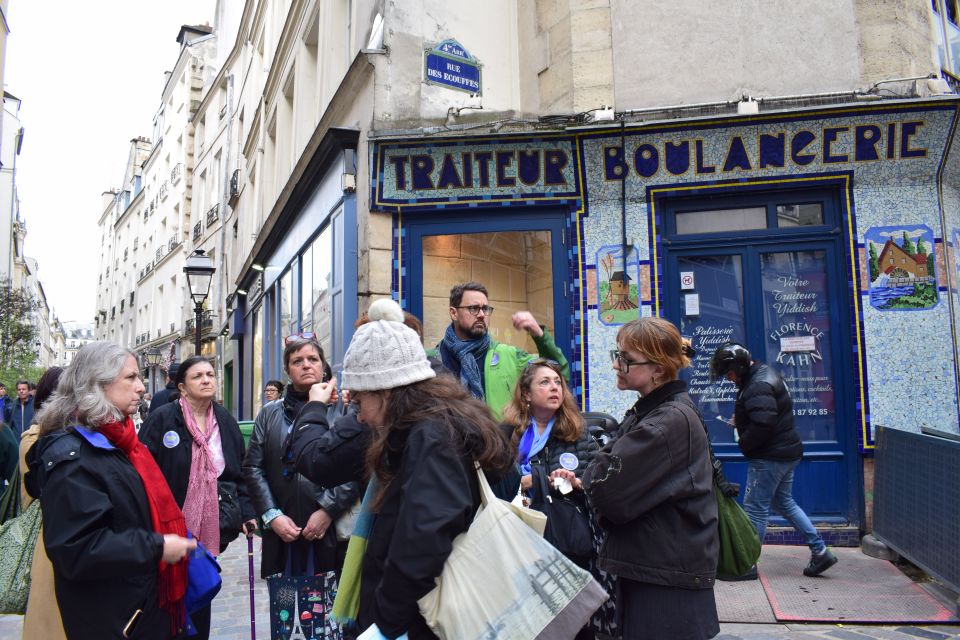
The day begins in Le Marais, and you’ll head out right away with your guide. Expect a mix of landmark points and “here’s what used to happen around this corner” storytelling—how Jewish neighborhoods formed, how trade and community life worked, and how identity stayed visible in everyday street patterns.
Several guides associated with this tour are praised for clear, calm handling of sensitive history. For example, names that come up include Benjamin, Benoit, and Pierre-Louis—people who are repeatedly noted for balancing empathy with facts. That’s important here, because the tour touches topics that aren’t light.
Also, the Marais section is long enough to feel like you’re actually learning the district, not just passing through it. You’ll walk through the kind of streets where you can understand why people chose to live there, trade there, and build community there.
If you’re the type who likes asking questions, this is the part to do it. Your guide can shape the rest of the day based on what you care about most.
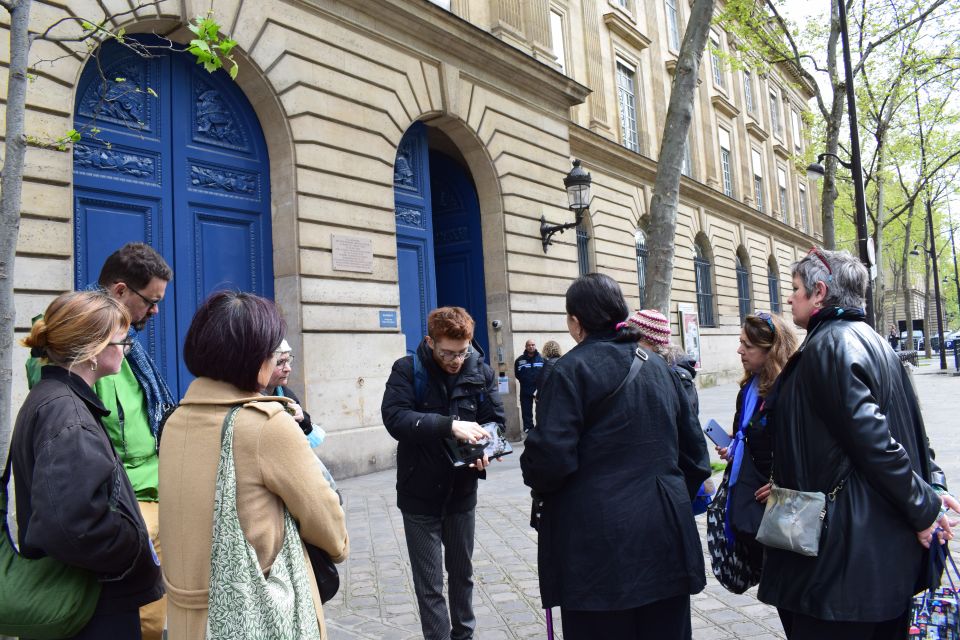
Agoudas Hakehilos and Hector Guimard’s Art Nouveau synagogue exterior
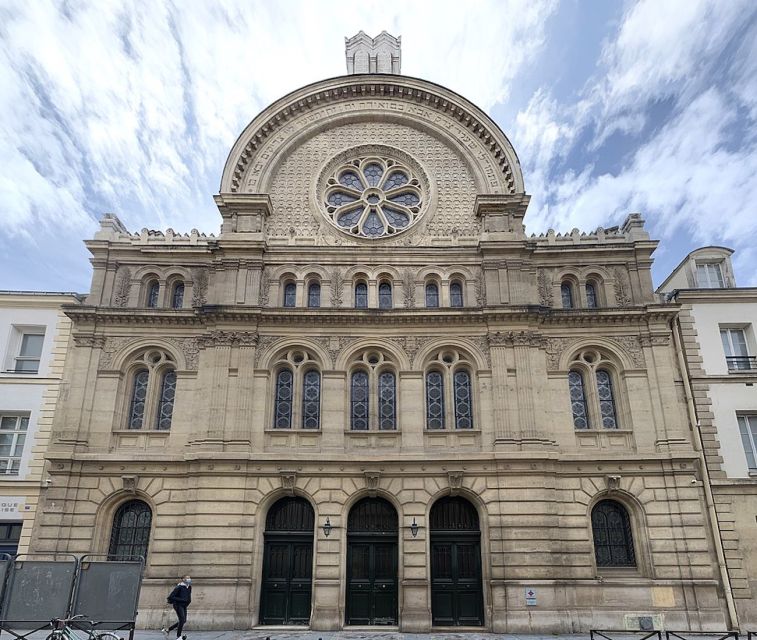
One of the standout sights is the exterior of Agoudas Hakehilos Synagogue, credited to Hector Guimard, a name most people associate with Art Nouveau style.
Because this tour does not include indoor synagogue entry, the focus is on what you can see from outside: the architecture, the design choices, and the way a community’s presence can be read in public space.
Seeing a synagogue through Guimard’s lens adds an extra layer. It’s not only history; it’s also about how art and identity can share the same walls—literally and stylistically.
Practical angle: look slowly. Stop for a second. Art Nouveau detail rewards your attention more than you’d expect on a fast walking tour.
You can also read our reviews of more historical tours in Paris






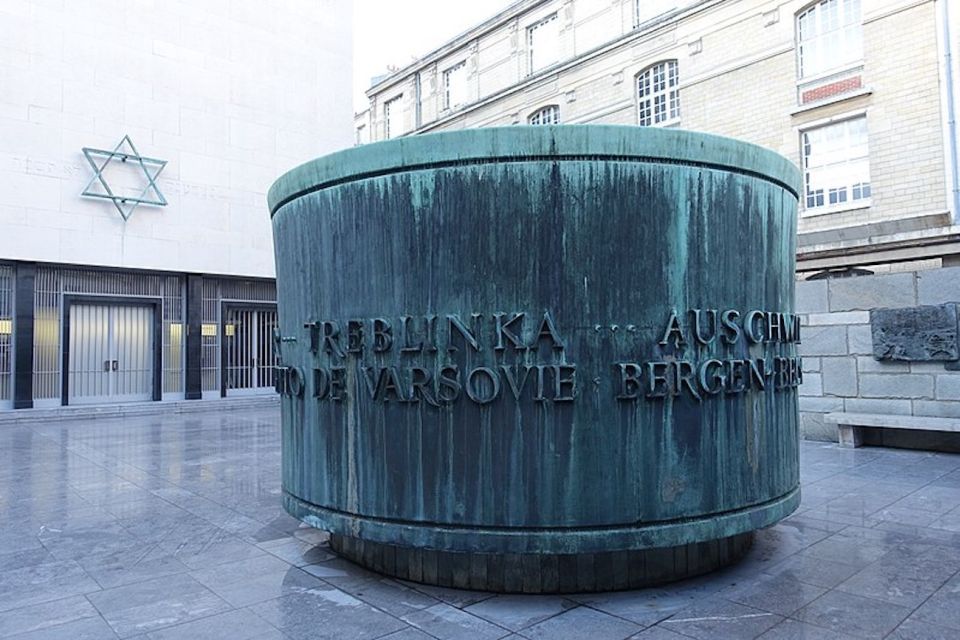
Mémorial de la Shoah: a solemn stop with context
Halfway through the Marais segment, you’ll reach the Holocaust Memorial (Mémorial de la Shoah) area. The tour framing here is straightforward: the stop is designed as a moment of remembrance tied to history and impact.
The experience is described as an exterior visit that still aims to explain historical significance. In other words, you’re not being pushed through paid exhibits here. You’re learning what you’re looking at and why it’s placed in Paris.
This is also where the guide’s tone matters. In multiple guide notes, travelers mention that the guides handle difficult topics with appropriate sensitivity. That’s a good sign you’ll get context without turning it into spectacle.
If you want the memorial to land with full weight, don’t rush. Give yourself a few quiet seconds before you start asking questions.
From Hôtel de Ville area to Montmartre by public transport
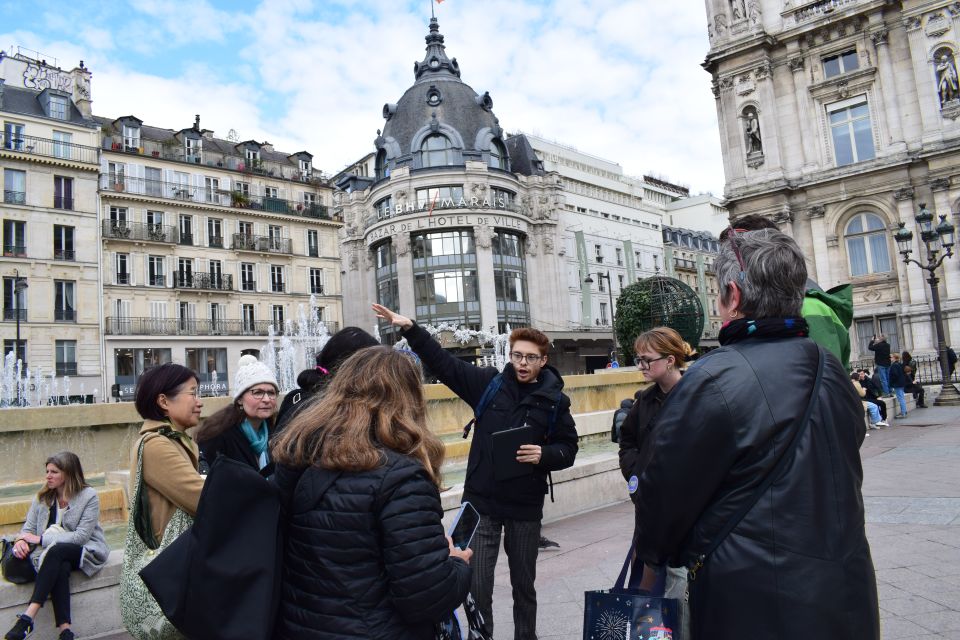
After wrapping up the Marais portion near Hôtel de Ville, the tour shifts neighborhoods using public transport (about 30 minutes, with tickets included). I love this setup because it prevents the day from turning into pure endurance walking.
You’re also getting a mental reset. The city changes. The vibe changes. And you’re ready to meet Montmartre with fresh energy instead of arriving frazzled.
Keep your pace steady during the move. Metro stations add stairs, crowds, and standing time. If you’re already tired at the end of Marais, this transit segment is where you’ll feel it first—so pace yourself earlier in the Marais walk.
Montmartre’s Jewish creative circles: why these streets feel different
When you reach Montmartre, the tour leans into bohemian Paris—cafés, studios, and the creative mix that helped shape modern culture. The focus is not only on who lived here, but also on how Jewish voices contributed to Montmartre’s cultural heartbeat.
You’ll be walking through iconic streets while connecting stories of creativity, ambition, and resilience. The guide’s job is to help you “read” Montmartre like a living timeline—late 19th and early 20th centuries, when artists and writers turned neighborhoods into ideas.
Several guides connected with this tour are noted for a storytelling style that keeps energy up even when the subject matter is heavy. Names that come up include Achille/Achilles and Lucien, both described as passionate and able to keep groups engaged.
If your time in Paris is limited, this is a smart way to avoid only seeing Montmartre as postcards. You’ll understand it as a place where communities overlapped and influenced art.
Rue Ravignan, Le Bateau-Lavoir, and the Montmartre art-world map
In Montmartre, you’ll hit specific spots that anchor the creative narrative:
- 7 Rue Ravignan
- Le Bateau-Lavoir
- A pass by Musée de Montmartre
- 16 Rue du Mont-Cenis
The key value here is interpretation. You’re not just walking past addresses. You’re connecting those streets to the idea that art-world life and Jewish life could intersect in very practical, day-to-day ways: studios, work rhythms, and cultural conversation.
Because the tour doesn’t promise museum entry, it’s more like a guided street map than a ticketed museum visit. That’s good if you’d rather spend your time walking and understanding than standing in lines.
When you see Le Bateau-Lavoir, pause and look around. Even if you’re not stepping inside (and you shouldn’t expect indoor entry), the location helps you imagine how an area became a magnet for creators.
Sacré-Cœur panoramic views and the walk’s final reflection
The day ends at Sacré-Cœur Basilica, where you’ll get sweeping panoramic views over Paris. This is where the tour’s emotional math balances out. You’ve spent hours in memory and history; now you’re seeing the city from high ground.
Then the tour finishes around Square Louise-Michel with a final reflection on Jewish Paris. That ending matters. It gives you a sense of closure, not just a “we walked here, thanks for coming.”
Practical reminder: Sacré-Cœur area can mean more walking uphill and more uneven surfaces. Wear shoes that work on cobblestones and stairs. If rain starts again, the last part can feel slick, so keep your footing calm.
Who this tour is best for (and who should skip it)
You’ll enjoy this tour most if you:
- Want history that’s tied to actual street corners, not only dates
- Care about both Le Marais institutions and Montmartre creative culture
- Prefer a small-group pace with time for questions
- Are comfortable with a serious memorial stop as part of a guided walk
Skip it (or consider another format) if you:
- Need wheelchair-friendly or mobility-adapted routes, since it’s not suitable for mobility impairments
- Want lots of indoor monument time, because indoor synagogue visits and monument entry aren’t included
- Expect a slow stroll with minimal stairs and transfers, since this is a 3.5-hour walking experience with a metro segment
Quick practical tips before you book
- Bring a rain layer. On this kind of walk, rain is part of the schedule, not a reason to quit.
- Expect you’ll be mostly outside and looking at architecture and streets, not touring interiors.
- If you care about photos, plan your stops. You’ll want a couple of moments at Agoudas Hakehilos exterior and for the Sacré-Cœur views.
- The tour is in English, and the guide sets the tone. If you want to ask questions about sensitive topics, this tour is structured to handle that respectfully.
Should you book this Jewish Paris walking tour?
If your goal is to understand Jewish Paris in a way that feels real—through streets, architecture, and a guided chain of meaning—this tour is a strong choice. The small-group size, the careful movement from Le Marais to Montmartre, and the inclusion of transport make it efficient for a 3.5-hour window.
Book it if you value stories that connect the past to what you can still see today, and if you’re okay with a serious memorial moment as part of the route. You’ll leave with a clearer picture of how Jewish life in Paris changed over centuries.
Don’t book it if you need wheelchair access or you’re specifically looking for indoor synagogue or museum entries. In that case, you’d be better off pairing Paris Jewish history with a different kind of visit.
FAQ
How long is the Le Marais & Montmartre Jewish History Walking Tour?
The tour lasts about 210 minutes.
What language is the tour guide?
The tour is guided in English with a live local guide.
How big is the group?
It’s a small-group experience, with more interactive format designed for groups of up to 9 persons.
Is public transportation included?
Yes. Public transport tickets are included for the transfer to Montmartre.
Do we go inside synagogues during the tour?
No. The tour does not include indoor visits to the synagogues.
Are we entering monuments or historical sites with tickets?
No. Entry to monuments and historical sites is not included.
Is Sacré-Cœur included, and do we go inside?
Sacré-Cœur Basilica is included for sightseeing. The tour does not list paid entry, so expect the visit to focus on viewing rather than an included entry ticket.
Is the tour suitable for wheelchair users or people with mobility impairments?
No. It is not suitable for people with mobility impairments or wheelchair users.
Where do we meet the guide?
The meeting point may vary depending on the option booked. Starting locations include BHV Marais and L’Elephant du Nil.
What happens if I arrive late or want to join after it starts?
You must arrive 15 minutes before the start. Joining after the tour has commenced is not possible.