REVIEW · PARIS
Paris Top Sights Half Day Walking Tour with a Fun Guide
Book on Viator →Operated by Top Sights Tours · Bookable on Viator
Iconic Paris, packed into one half day walk. You’ll start in Montmartre, work your way past major landmarks, and finish near central Paris icons like Notre-Dame, all while a guide points out what matters and how to move through the city. This is a tight 4–5 hour plan built for efficiency without feeling like a sprint.
What I like most is the small group size (max 15), which makes it easier to hear the guide and ask practical questions as you go. I also really appreciate the “how to see Paris” angle: guides focus on the stories behind the places and the nuts-and-bolts of getting around, with examples of leaders like Olivia Kool, Chiara, Adva, and Rami bringing both humor and clear route tips.
One drawback to consider: this is mostly an outside-seeing tour. You do go inside Sacré-Cœur, but you do not go inside big-ticket stops like the Louvre or the Eiffel Tower, so if you’re dreaming of lengthy interiors, you’ll need separate tickets.
In This Review
- Key things to know before you go
- Price and what’s actually included
- Morning vs afternoon: how to choose the right time
- Start at Anvers and settle into Montmartre’s stories
- Place du Tertre, artists’ lanes, and a short reset
- Hôtel de Ville, Arc de Triomphe, and the Paris power lines
- Louvre area without the ticket stress: outside viewing done well
- Eiffel Tower from outside, plus Moulin Rouge atmosphere
- Latin Quarter, Tuileries gardens, and Champs-Élysées orientation
- Seine river views and ending on Île de la Cité
- Group size, pacing, and how to get the most photos
- Who this tour is best for
- Should you book this Paris Top Sights half-day tour?
- FAQ
- How long is the Paris Top Sights half-day walking tour?
- How many people are in the group?
- Is the tour in English?
- What’s included in the tour price?
- What isn’t included?
- Do we go inside Notre-Dame?
- Where does the tour start and end?
- Is the tour appropriate for most travelers?
- Can I cancel for a full refund?
- Is mobile ticketing used?
Key things to know before you go
- Small group of up to 15 means more interaction and less time stuck behind other people
- Sacre-Cœur inside visit plus lots of high-impact outside views across central Paris
- Metro orientation is part of the experience, not an afterthought
- Tons of famous sights in 4–5 hours, including Arc de Triomphe, the Louvre area, and Eiffel Tower from outside
- A practical Montmartre break in the area of Café des Deux Moulins helps you reset mid-walk
- End point at the Louvre area makes it easy to keep exploring afterward
Price and what’s actually included
The tour price is $76.28 per person, and for a half-day in Paris that’s in the fair-to-good value range—especially because you get an experienced guide and a structured route through heavyweight landmarks. Where the math changes is transportation.
This tour requires a Metro setup. The instructions call for an Easy Pass card topped up with a Mobilis ticket for Zones 1–5 (listed as €12.00 per person). The description also mentions a Navigo pass on the day, but the key takeaway for you is simple: plan on paying for your Metro ticket/card so you’re not standing there while everyone else moves on.
What you do get included is the guiding and the walking city tour, plus admiration of major landmarks like the Louvre or Eiffel Tower from the outside. You should also assume that only the Sacré-Cœur stop includes an admission ticket (and it’s listed as free). Everything else is presented as street-level and photo-level viewing.
You can also read our reviews of more walking tours in Paris



Morning vs afternoon: how to choose the right time
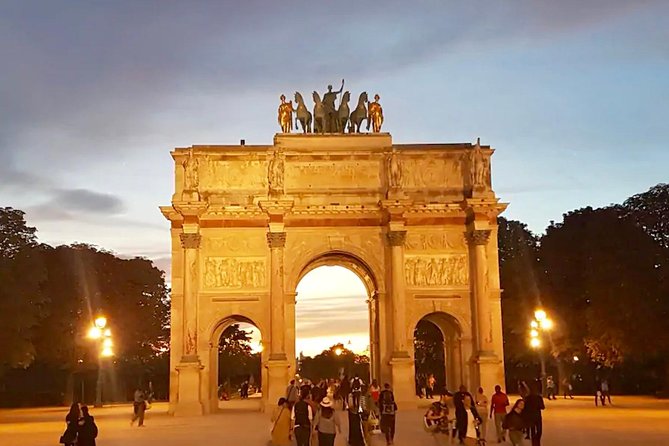
You can pick either a morning or an afternoon tour, which matters more than it sounds. In Paris, the light changes fast, and the crowds can be wildly different depending on your time slot.
If you’re a first-timer and want momentum for the rest of your trip, I’d lean morning. You’ll finish the tour near the Louvre and can then hit nearby neighborhoods while you still remember how the streets and Metro stops connect. If you’re already booked on museums later, afternoon can be a smart warm-up that sets you up for where to return.
Either way, go in expecting a steady walking rhythm. Even with breaks, this is designed to cover a lot of ground in a short window, so wear shoes you trust.
Start at Anvers and settle into Montmartre’s stories

Meeting happens at 72 Blvd Marguerite de Rochechouart, and the guidance is to start at the kiosk opposite Metro Anvers on Line 2. That’s a useful detail because it’s not always obvious where the group is gathering, and guides start on time.
Once you’re together, you begin with Montmartre—one of Paris’s most photogenic zones and also one of the easiest places to get your bearings because the views are dramatic and the streets feel different from the flat, grand-boulevard parts of the city.
The first big moment is Basilique du Sacré-Cœur. You’ll hear the history and stories tied to the basilica, and you’ll go inside. That inside visit is the one “real entrance” highlight that’s built into the plan, and it’s a great way to understand why Montmartre has been such a magnet for artists and dreamers for more than a century.
Place du Tertre, artists’ lanes, and a short reset

After Sacré-Cœur, the route continues deeper into Montmartre with time to walk and listen—especially around the area of Place du Tertre. This is where you’ll get a strong sense of the neighborhood’s character, and it’s also where you’ll naturally slow down for photos.
There’s also time set aside for sightseeing and photos around Montmartre’s viewpoints. In the itinerary you’ll see mention of spots like Le Trocadéro and its esplanade (a classic place to photograph Paris from across the river). Even if the schedule is tight, these are the kinds of viewpoints that make the whole “Paris from street level” approach click.
One of the underrated perks is the short break around Café des Deux Moulins (Rue Lepic area). In practice, it’s a chance to warm up, use the facilities, and grab a snack without feeling like you lost half your day. On a cold or rainy day, that kind of built-in pause can make the difference between enjoying the walk and just surviving it.
Hôtel de Ville, Arc de Triomphe, and the Paris power lines
Next up, the tour shifts from hilltop charm into “Paris official” territory with a stop by the Hôtel de Ville. Even if you’re not the type to love government buildings, this is a good place to learn how Paris’s history shaped the city’s layout and identity.
From there you head toward the Arc de Triomphe. You’ll get the stories behind it and plenty of time to look and take photos, but you’re not doing a long climb or deep interior experience here. That’s not a flaw—it’s the design. This tour spends limited time in high-demand places and uses the rest of the session to string together the biggest sights into one coherent route.
The payoff is that after the Arc, the rest of the day feels connected rather than random. You start noticing how the big monuments “talk” to each other through major streets and sight lines.
You can also read our reviews of more guided tours in Paris






Louvre area without the ticket stress: outside viewing done well
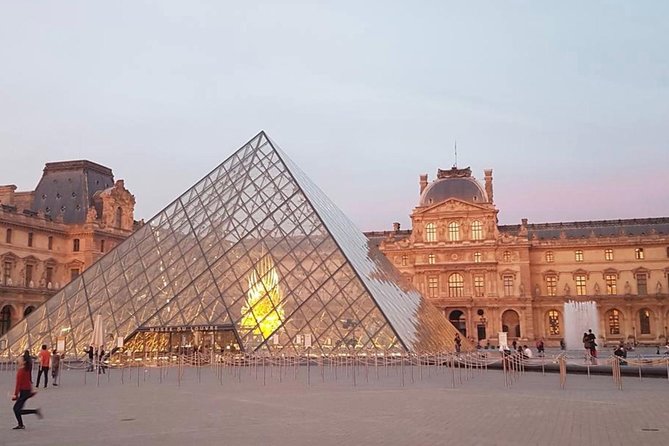
The Louvre Museum stop is focused on exterior viewing and context. You’ll hear history and stories, and you’ll have a photo window, but you should not plan on going inside.
If you’re the kind of traveler who likes to choose your own museum time later, this approach is ideal. You get the landmark significance and can decide whether you want a full Louvre day during the remainder of your trip. If you go expecting an inside visit, you’ll be disappointed—so set your expectations now.
The time spent here (about 20 minutes) is enough to orient you and understand where the Louvre sits in the broader grid of Paris sights. From there, the tour continues toward other icons, so you won’t get stuck in a single place too long.
Eiffel Tower from outside, plus Moulin Rouge atmosphere
The Eiffel Tower portion is explicitly an outside visit. You’ll get about 30 minutes to see it and hear the stories behind it, but you don’t go inside. For many first-timers, that’s a good trade: the lines and planning load of Eiffel Tower tickets can swallow an afternoon, and the tour still delivers a major emotional hit from the sidewalk.
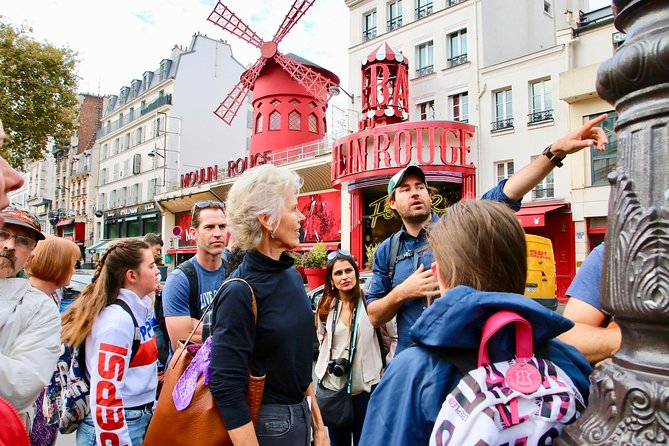
Then comes Moulin Rouge, where the stop is short but it has purpose. You’ll learn the background and get quick photo access, which helps you place the area in your mental map. Moulin Rouge is one of those Paris references people think they know, until they stand there and realize it’s both a landmark and a neighborhood with its own mood.
If you’re hoping for a long artistic immersion here, you’ll want a separate return trip. If your goal is “see it, learn it, move on,” the timing fits.
Latin Quarter, Tuileries gardens, and Champs-Élysées orientation
The walk then threads through Quartier Latin, with time to hear the neighborhood’s history and stories. This part works well because the Latin Quarter is not just a landmark stop—it’s a living area with texture. Even at a glance, you start to see why students, writers, and visitors keep circling back here.
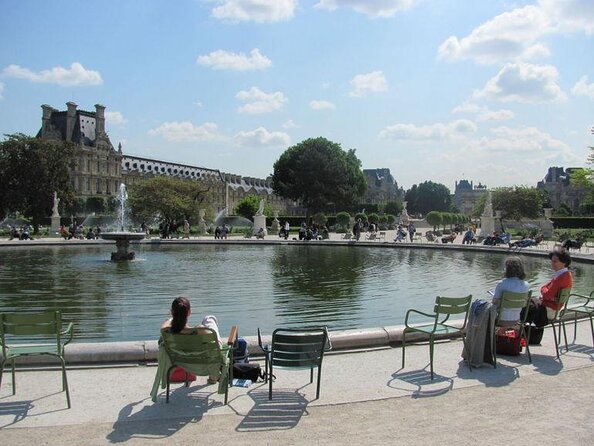
Next is the Jardin des Tuileries. You’ll have time (about 20 minutes) for the gardens plus background so you can appreciate it beyond a pretty walk. The Tuileries is a great “reset” zone during a long route, especially if you’ve been climbing in Montmartre earlier.
Then you reach Champs-Élysées. The stop is brief, but it helps you connect the big boulevard to what you’ve already seen. It’s also useful for photography and for understanding where to turn later depending on where you want to explore more deeply.
Seine river views and ending on Île de la Cité
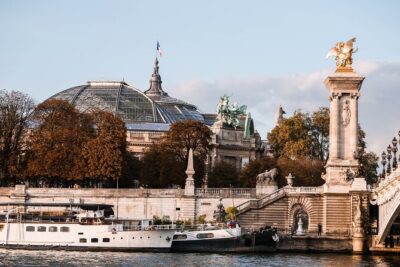
After you’ve built up the west-to-center big sights, the tour shifts toward the river. The day includes admiring the Seine riverfront, and that’s one of the best ways to understand how Paris works. The river ties together distances that look impossible on a map but feel manageable on foot and Metro.
Finally, you visit Île de la Cité, with a key stop at Notre-Dame Cathedral for sightseeing and photos. The time here is short, but it’s an important “anchor” moment for many visitors. Even when you don’t go inside, standing in the cathedral’s orbit helps you understand why so many other Paris sights are measured against this part of the city.
The tour ends in central Paris at the Louvre Museum area. That’s a very practical finish point, because it puts you close to a lot of shops, cafés, and museums—plus you can easily extend your day depending on what you feel like doing next.
Group size, pacing, and how to get the most photos
A maximum of 15 people is a real quality-of-life advantage. You’re less likely to lose the guide, and you can hear stories without constantly craning your neck.
Pacing is also gentle enough that people can keep up while still getting photo time. The schedule includes multiple “sightseeing and photos” windows, so you’re not forced to rush through every view. I’d still tell you to plan your own pace too: if you want more photos at Montmartre viewpoints or at the Eiffel Tower exterior, speak up early so the guide can manage time.
One small but important tip: arrive a few minutes early. Some guides and groups treat start time seriously, and it’s easier on your nerves if you’re already in place when the group forms.
Who this tour is best for
This tour makes the most sense if you’re:
- In Paris for the first time and want a strong mental map fast
- Short on time, but you still want to see icons like Arc de Triomphe, Louvre area, Eiffel Tower, and Notre-Dame
- The type who prefers guided context over museum ticket planning for every stop
It also works well if you want to learn how to use the Metro confidently. The tour includes a dedicated Metro-related moment (and the guide helps people with transit setup). That’s especially valuable if you’re switching neighborhoods quickly and want fewer wrong turns.
If you’re the type who only values tours where you go inside major attractions, you’ll likely want to add separate tickets for the Louvre, Eiffel Tower, and any other interiors you care about.
Should you book this Paris Top Sights half-day tour?
Yes, I’d book it if your goal is a guided route that gives you instant orientation and memorable landmark photos without over-planning. The best value is the combination of a small group, a clear path across multiple neighborhoods, and a guide who brings the city’s stories to life while also helping you navigate the Metro.
Skip it or pair it with other tickets if your dream Paris day is mostly inside visits. This one does what it promises—street-level views, strong context, and a finish near the Louvre—so use it as your launchpad, then build the rest of your days around the attractions you want to go into.
FAQ
How long is the Paris Top Sights half-day walking tour?
It runs about 4 to 5 hours.
How many people are in the group?
The tour has a maximum of 15 travelers.
Is the tour in English?
Yes, it’s offered in English.
What’s included in the tour price?
You get an experienced guide and a walking city tour with major landmarks like the Louvre and Eiffel Tower admired from the outside. Sacré-Cœur includes admission (listed as free).
What isn’t included?
Metro costs are not included. You need an Easy Pass card topped up with a Mobilis ticket for Zones 1–5 (€12.00 per person). Entrance fees for other sights are not included, and you do not go inside the Eiffel Tower or Louvre on this tour.
Do we go inside Notre-Dame?
The tour includes sightseeing and photos at Notre-Dame, and the plan presented is not described as an interior visit.
Where does the tour start and end?
It starts at 72 Blvd Marguerite de Rochechouart, 75018 Paris (at the kiosk opposite Metro Anvers on Line 2). It ends at the Louvre Museum area in 75001 Paris.
Is the tour appropriate for most travelers?
The tour notes that most travelers can participate.
Can I cancel for a full refund?
Yes. You can cancel up to 24 hours in advance for a full refund. After that window, refunds aren’t available.
Is mobile ticketing used?
Yes, you’ll have a mobile ticket.