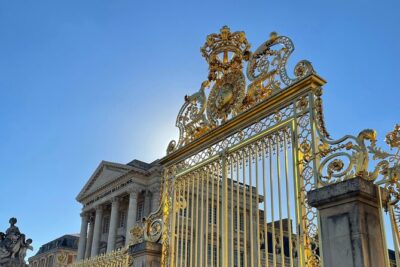
Montmartre rewards slow steps. This 90-minute tour strings together famous landmarks and quieter corners, with a guide turning the hilltop neighborhood into a living story you can walk through. I love how the route gives you a sense of everyday Paris, not just postcard angles, and I also like that you get scenic viewpoints near Sacré-Cœur without needing a long day.
I also appreciate the mix of art, music, and local culture, from the words on the I Love You Wall to the artistic legends connected to Bateau-Lavoir and the Montmartre windmill area. The one thing to think about is effort: Montmartre is hilly and some streets can be narrow and busy. If you prefer flat walking, or if mobility is a concern, you may want to plan your pace carefully.
In This Review
- Key highlights worth your attention
- Price and logistics: what you really pay for
- Where you start and end on the hill
- Your feet set the tempo: pace, hills, and crowd reality
- Stop 1: I Love You Wall, where the walk starts with poetry
- Stop 2: Montmartre’s older street energy and bohemian grit
- Stop 3: Bateau-Lavoir and the artists who changed modern art
- Stop 4: Moulin de la Galette outside, a classic windmill memory
- Stop 5: The man through a wall sculpture and a wink of surrealism
- Stop 6: Dalida’s bronze bust in a peaceful square
- Stop 7: The pink house café and your best photo chance
- Stop 8: A tiny vineyard with 1933 roots
- Stop 9: Sacré-Cœur views from the highest point in Paris
- Stop 10: The square where artists do their thing
- Guides make the difference: what the top names are doing well
- Who should book this Montmartre walking tour
- Should you book it? My quick decision guide
- FAQ
- How long is the Montmartre walking tour?
- Is Sacré-Cœur Basilica entry included?
- What language is the tour offered in?
- Where do I meet the guide?
- Where does the tour end?
- Is the ticket mobile?
- What should I bring for the walking conditions?
- How early should I arrive?
- How big is the group?
- Do I get confirmation after booking?
Key highlights worth your attention
- English storytelling from a real local: guides like Laura, Sylvia, David, Denise, Sonia, and others are praised for clear, funny, and engaging explanations
- Art scenes in motion: Picasso, Modigliani, and Braque connect you directly to the Bateau-Lavoir era
- A photo-friendly Montmartre route: the Moulin de la Galette area, the pink house, and the Sacré-Cœur viewpoint are built for wandering
- You get structure without feeling rushed: the walk is described as easy-paced and well organized, with a chance to ask questions
- It’s not a ticket to go inside Sacré-Cœur: you see the basilica exterior, then decide on entry afterward
Price and logistics: what you really pay for

At $38.70 per person for about 1.5 hours, you’re paying mostly for two things: a guide who can explain what you’re seeing, and a smart route through Montmartre so you don’t waste time zigzagging uphill. This isn’t an all-day museum ticket. It’s a walk built for perspective—where the neighborhood’s art history shows up right on the streets.
A big practical plus is the small group size, up to 25 people. That matters in Montmartre, because crowds can turn a walking tour into a stalled conversation. Most guides on this route also seem to keep a relaxed pace, which helps you actually look, not just follow.
One logistics note that affects your experience: the tour starts on time, and you’re asked to arrive 15 minutes early to check in. If you’re late, you might not catch up. For a hilly neighborhood like this, showing up early also gives you a buffer to breathe, use the restroom nearby, and get your bearings.
You can also read our reviews of more walking tours in Paris



Where you start and end on the hill
You meet at 19 Rue des Abbesses in the 18th arrondissement, and the tour ends at La Bonne Franquette, 18 Rue Saint-Rustique. That matters because Montmartre is a place where walking in the right direction can feel smoother than fighting the terrain.
The tour runs regardless of weather, so bring a light rain layer if clouds roll in. The route is designed around walking through the Montmartre area with narrow, sometimes busy streets. Even when the walk isn’t packed with stairs, you’ll still feel hills in your legs.
Your feet set the tempo: pace, hills, and crowd reality

The tour is listed for moderate physical fitness. The good news is that the route doesn’t include stairs, but it does involve hills and narrow streets, sometimes crowded. Translation: you can do it with average walking stamina, but you should not book it if you want a completely effortless stroll.
Also, Montmartre gets busier fast. One of the strongest pieces of advice from guide-led experiences is to consider an early tour if you want it calmer. Going earlier helps you hear your guide, see street scenes more clearly, and enjoy the viewpoints before they feel packed.
Stop 1: I Love You Wall, where the walk starts with poetry
The tour kicks off at a small square featuring the I Love You Wall, a poetic installation with the phrase I Love You written in over 300 languages. It’s a simple start, but it works. You’re not yet dealing with major crowds or steep climbs; you’re setting an emotional tone for Montmartre.
What I like here for your first 10 minutes: it gets you noticing details. Before the guide starts connecting art and history, you’re already training your eyes for small things—language styles, repetition, and the way people gather around it to take photos.
If you hate crowds, arrive right when you meet. In Montmartre, the first stop can attract casual photos quickly.
Stop 2: Montmartre’s older street energy and bohemian grit
From there, you move to one of Montmartre’s oldest streets—known for its eclectic mix of cafés, boutiques, and historic architecture. This section is where the neighborhood vibe becomes real. You’re not just looking at landmarks; you’re walking through the kind of street that made artists want to live here.
Your guide’s job in this stretch is to give you context. Expect stories about why Montmartre developed its artistic reputation and how the area changed over time. This is also a good moment to slow down, read shop fronts, and watch how people move through the hilltop lanes.
One practical drawback: narrow streets can mean limited space to group up. If your tour group is bigger at your time slot, you might need to stay alert and keep your walking line clear so you don’t get stuck behind photo stops.






Stop 3: Bateau-Lavoir and the artists who changed modern art
Next up is Bateau-Lavoir, once an artists’ residence. It’s the kind of place where you can almost feel the creative churn, even though it’s now part of regular city life. The guide connects it to big names like Picasso, Modigliani, and Braque, linking the building to the revolution of modern art.
This stop is valuable because it helps you understand Montmartre beyond the postcard layer. You begin to see why people talk about studios, communities, and ideas. Even without entering any museum, you get the “why” behind the neighborhood’s artistic gravity.
If you love art history, ask your guide to explain how this creative environment differed from a more formal art world. If you don’t, just enjoy the stories and let the context make later Montmartre visuals more meaningful.
Stop 4: Moulin de la Galette outside, a classic windmill memory
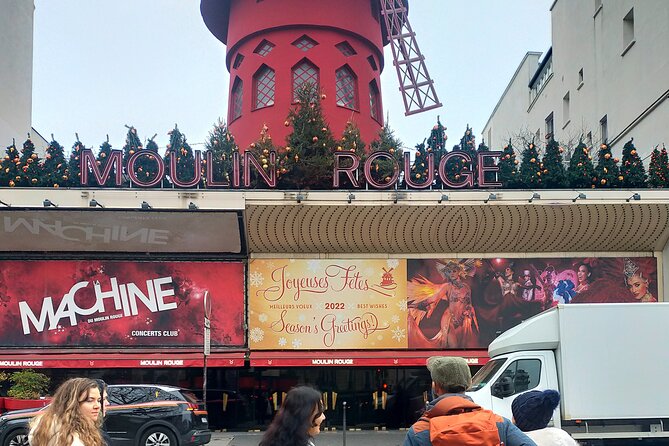
Then you reach the windmill area tied to Moulin de la Galette—a historic windmill featured in paintings by Renoir and Van Gogh. It’s now a symbol of Montmartre, and the walk is designed to let you see it from the outside while your guide sets the scene.
Outside viewing is still worth it. You get the overall geometry—the way the windmill sits in the neighborhood fabric—and you can line up photos without buying timed entry. It’s a great contrast to earlier art stops: this one gives you an iconic visual anchor.
What to watch for: the angles. Since you’re on foot and the streets shift in slope, you’ll have a few chances to get a better view than you’d get standing in one place.
Stop 5: The man through a wall sculpture and a wink of surrealism
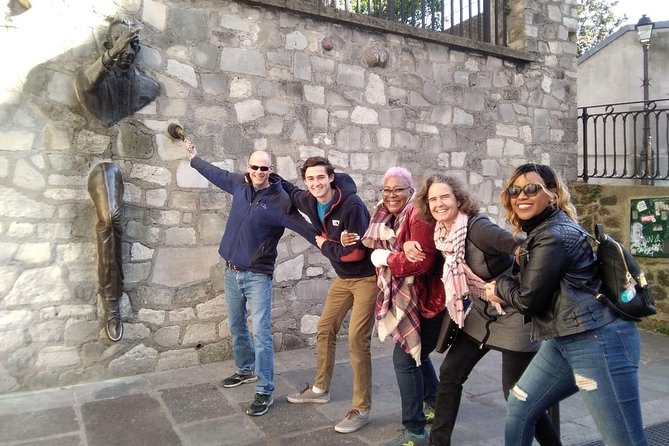
Near the former home of Marcel Aymé, you’ll encounter a whimsical sculpture inspired by a short story: a man walking through a wall. This is one of those stops that feels playful rather than strictly historical.
Why it works on a tour like this: it matches Montmartre’s reputation for surreal humor. The guide can connect it to the neighborhood’s tendency to mix art, imagination, and real street life. It also gives you a breather from the bigger landmarks.
If you’re the type who likes to understand symbols, this stop is a good one. If you just want fun photos, it still delivers.
Stop 6: Dalida’s bronze bust in a peaceful square
After the whimsical moment, the route shifts tone to a quieter tribute: a bronze bust of Dalida, a long-time Montmartre resident. The guide points out this landmark in a peaceful square where fans can pay tribute.
This stop matters because it broadens the definition of art in Montmartre. It isn’t only painters and sculptors. It’s music, celebrity culture, and the way a place becomes part of someone’s identity.
Take a minute here to step out of the walking line and look around. Even if the city is busy, the square gives you a tiny pocket of stillness.
Stop 7: The pink house café and your best photo chance
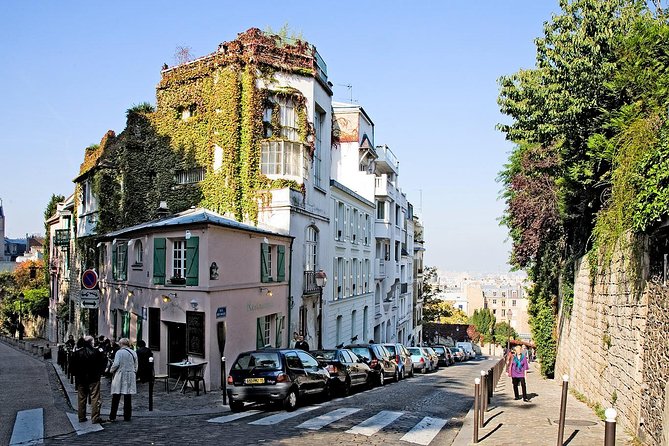
One of the most talked-about moments on the route is a quaint pink house that’s been emblematic of Montmartre for decades. The guide ties it to visits by Picasso and Utrillo and notes that it now operates as a café offering French food. It’s also a strong photo op.
This stop is practical because it’s a natural pause point. You can grab a drink or snack after the walking segments, and you also get a clear backdrop for photos.
Keep in mind: cafés can be busy. If you want the best shots with fewer people in the frame, time it with your group rather than going rogue and drifting into the street.
Stop 8: A tiny vineyard with 1933 roots
Hidden in Montmartre’s interior, the tour includes a small vineyard that produces wine connected to the neighborhood’s winemaking heritage. It was established in 1933 to preserve Montmartre’s tradition, and today it’s a charming reminder of rustic roots in the middle of a dense city.
Even if you’re not a wine person, this stop adds variety. It’s a visual change from stone streets and café signs. Your guide can help you connect the vineyard to how Montmartre has always balanced city life with small pockets of agriculture.
Because it’s a small place, you might want to keep moving with the group. You’ll get more value from looking around quickly and then moving on, rather than trying to hold the spot for long.
Stop 9: Sacré-Cœur views from the highest point in Paris
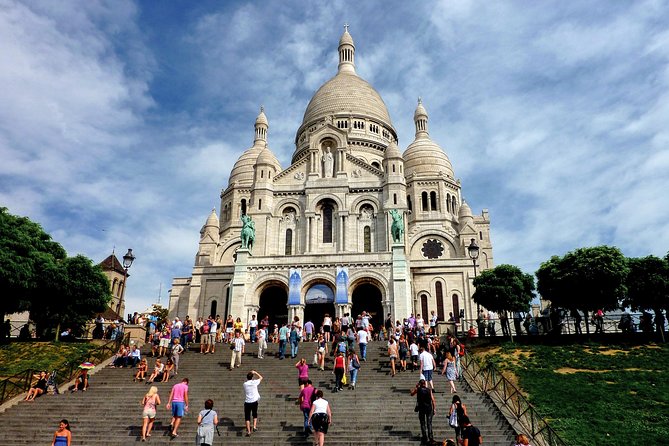
The walk reaches the hilltop area with Sacré-Cœur Basilica. You see the basilica from the outside, and the guide shares tips on what to look for inside if you plan to enter on your own after the tour.
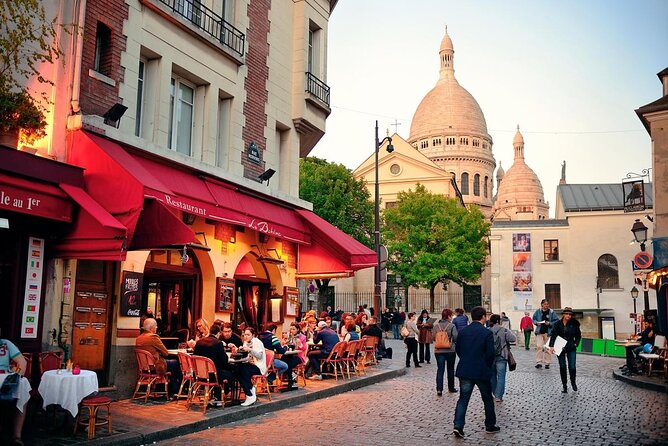
This stop is the emotional peak for many people. The domes and mosaics are striking even when you’re not stepping inside. And because Sacré-Cœur sits at the highest point in Paris, you also get panoramic city views.
What to do while you’re there: look for the way the basilica’s white surfaces catch the light, then scan the skyline. Even if you’ve seen photos, being there makes the scale feel real.
One important consideration: entry is not included. If Sacré-Cœur is a must-do interior experience for you, plan to add it later independently.
Stop 10: The square where artists do their thing
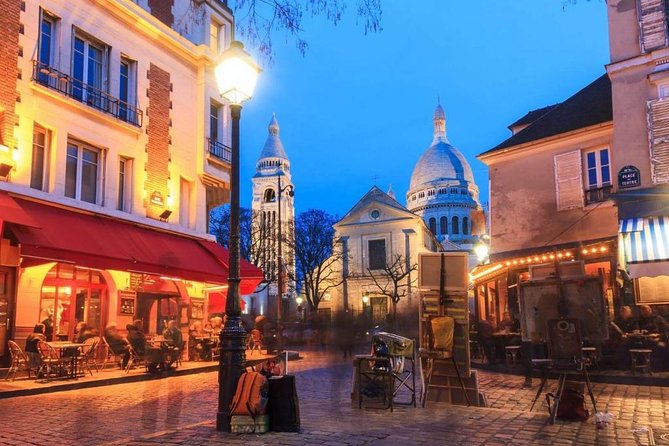
Finally, you end in a lively Montmartre square filled with painters, caricaturists, and street performers. It’s surrounded by cozy cafés and restaurants, which means this is a great place to relax and soak up the bohemian atmosphere at street level.
If you want to keep your day going, this is also where you can plan your next steps. The tour ends at La Bonne Franquette, so you’re positioned to continue with a meal nearby.
If you’re sensitive to noise or constant movement, pick your spot carefully. Street performer areas can be fun, but they can also be loud.
Guides make the difference: what the top names are doing well
The route’s success seems tightly linked to guide style. Names that come up frequently include Laura, Sylvia, David, Denise, Ben, Sonia, Linda, Tetiana, Anastasia, Sophie, and Katie. Across these experiences, the common thread is storytelling that stays on track and doesn’t feel like a lecture.
A few guide qualities worth noting for your expectations:
- Humor and clear pacing: you’ll likely have time to ask questions
- Focus on what you’re actually seeing: the tour points out details you might otherwise miss
- Advice for after: guides often help people decide what to do next in Montmartre
If you want a low-stress intro that still feels meaningful, this kind of guided format is a strong match.
Who should book this Montmartre walking tour
This tour fits well if you:
- want a short, organized way to learn Montmartre without getting lost
- care about art and culture connections, not just monuments
- enjoy walking with a guide who explains what you’re looking at
- want views and iconic streets, but without spending all day
It may be less ideal if you:
- want only one specific type of landmark, like strictly interior monuments or museum-heavy days
- struggle with hilly cobblestone walking and need fully flat terrain
- prefer long, slow wandering over a set route and timed stops
One more personal note: if you dislike any modern street expression in the neighborhood, you might want to confirm the tour’s balance with your provider before you go. Montmartre blends old and new, and the street scenes reflect that.
Should you book it? My quick decision guide
Book this tour if you want a smart, efficient Montmartre intro with excellent storytelling and a route that ends with the kind of atmosphere that makes you want to stay for dinner. It’s good value for a 90-minute plan, especially if you’re short on time or arriving in Paris without a clear Montmartre game plan.
Skip it or pair it carefully if you need a lot of interior access, flat walking, or a tour that focuses on only one category of sites. For many people, though, this walk hits the sweet spot: iconic views, art references, and enough local texture to make Montmartre feel like a real neighborhood.
FAQ
How long is the Montmartre walking tour?
It’s approximately 1 hour 30 minutes.
Is Sacré-Cœur Basilica entry included?
No. The tour includes seeing Sacré-Cœur from outside, and the guide shares tips if you enter on your own later.
What language is the tour offered in?
The tour is offered in English.
Where do I meet the guide?
The meeting point is 19 Rue des Abbesses, 75018 Paris, France.
Where does the tour end?
The tour ends at La Bonne Franquette, 18 Rue Saint-Rustique, 75018 Paris, France.
Is the ticket mobile?
Yes, you’ll receive a mobile ticket.
What should I bring for the walking conditions?
Plan for hills and narrow, sometimes busy streets. The route doesn’t include stairs, but it does involve uphill walking, so wear comfortable shoes and dress for the weather since it runs in all conditions.
How early should I arrive?
Please arrive 15 minutes early for check-in because the tour starts on time and you may not be able to catch up if you’re late.
How big is the group?
There’s a maximum of 25 travelers.
Do I get confirmation after booking?
Yes. Confirmation will be received at the time of booking.