REVIEW · PARIS
History of Paris City Center w/ Notre Dame Semi-Private 12ppl Max
Book on Viator →Operated by Babylon Tours Paris · Bookable on Viator
Paris has a way of grabbing you fast.
This semi-private walk (max 12) turns the city center into a clear story, starting on Île de la Cité and ending at Place de la Concorde, with a guide who explains what you’re seeing as you go. I especially like the Notre-Dame focus paired with the quick-hit route through the most important landmarks, so you get oriented fast without trying to plan every step.
The main drawback is also the tradeoff: you’ll do moderate walking in all weather, and not every major site is a guided interior stop. Notre-Dame’s interior visit is included, but it’s unguided due to regulations, so you’ll get context from the guide before you go in.
In This Review
- Key things to know before you go
- Why this 2.5-hour Paris city-center loop feels efficient
- The pace and your group size: what max 12 changes
- Starting at Cité Métro: how the tour sets up Notre-Dame
- Notre-Dame de Paris: what you get inside (and what you won’t)
- Île de la Cité beyond Notre-Dame: Palais de Justice, Sainte-Chapelle, Conciergerie
- Saint-Michel Fountain and Place Dauphine: the story turns more human
- Cross Pont Neuf to Pont des Arts: bridges that explain Paris geography
- Palais-Royal, Louvre courtyards, and the Pyramid: seeing the Louvre without doing the full Louvre
- Tuileries Gardens and Place de la Concorde: the walk lands in a big finale square
- How guides like Tamari, Alasdair, and Ren shape your experience
- Price and value: why $59.69 can work for you
- Practical tips so you enjoy every minute
- Should you book this History of Paris City Center tour?
- FAQ
- How long is the tour?
- What is the group size?
- Where does the tour start and end?
- Is Notre-Dame interior included, and is it guided?
- What language is the tour in, and does it run in bad weather?
- Is hotel pickup or drop-off included?
Key things to know before you go
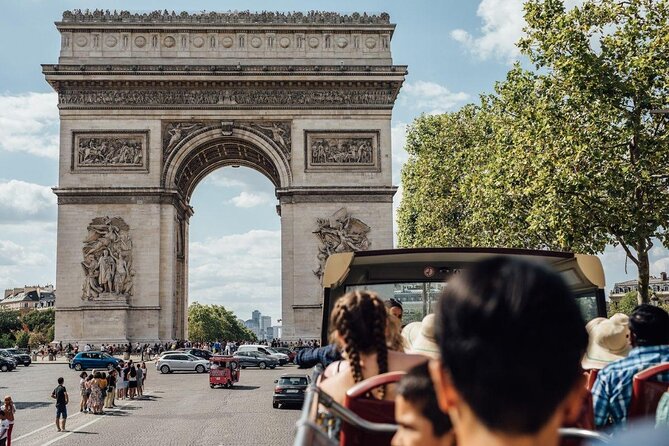
- Max 12 people keeps the walk from feeling crowded and helps the guide manage questions.
- Small-group timing is built for a first pass through Paris, not a slow museum day.
- Notre-Dame inside, unguided gives you access, but you’ll rely on the guide for the story.
- A bridge-to-gardens finish takes you from Pont Neuf onward to Tuileries and Place de la Concorde.
- Route tweaks happen if national celebrations affect the streets, while still aiming to hit the highlights.
Why this 2.5-hour Paris city-center loop feels efficient
If it’s your first time in Paris, you want two things: the key sights and the “what am I looking at” context. This tour is built for exactly that. It runs about 2 hours 40 minutes, and the pace is steady enough that you can see a lot without feeling like you’re rushing your way through photo stops.
The route also makes smart geographic sense. You start on the Île de la Cité (the old core of Paris), then you cross out through the Seine, thread past the Louvre area without turning it into a full museum day, and finish in one of the city’s most dramatic public squares. Even if you later come back for a deeper look, this kind of overview helps you navigate with confidence.
It’s also designed to work in real life. The tour runs rain or shine, so you’re not stuck waiting for perfect weather. Bring what you need for walking, and you’ll be fine.
You can also read our reviews of more city tours in Paris



The pace and your group size: what max 12 changes
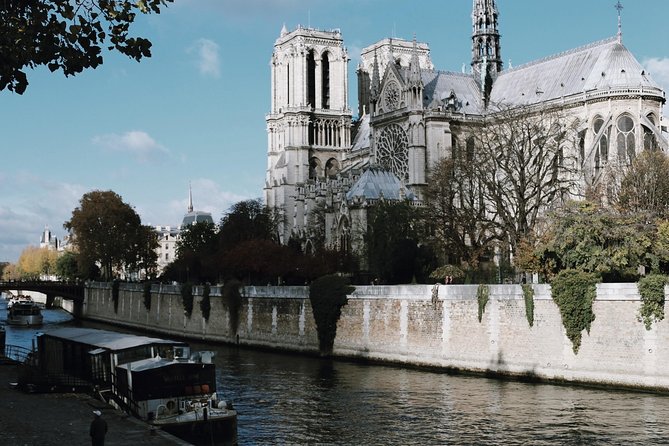
A max group size of 12 might sound small on paper, but it changes the feel on the street. You get a more human tour experience: the guide can point things out more clearly, and it’s easier to hear explanations while you’re stopped at busy corners.
The walk is “moderate,” which matters in Paris. That usually means pavement, frequent short stops, and some time spent moving between sites. If you’re doing your Paris highlights walk while also carrying a day bag, keep it light. Large bags or suitcases aren’t allowed on this tour, so plan accordingly.
Because it’s capped at 12, the tour also tends to feel like a guided stroll, not a bus of people moving as one. That matters for questions. In past groups, guides named Tamari, Alasdair, Hugo, Lili, François, Ren, Alex, and Claudia have been praised for staying engaging and answering questions instead of speaking nonstop.
Starting at Cité Métro: how the tour sets up Notre-Dame
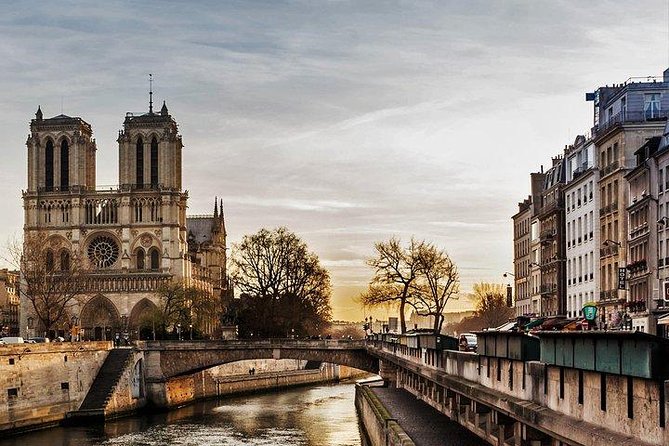
Your meeting point is in central Paris, in front of the entrance to the Cité Métro station (Cité 75004). The logic is simple: start near the island, and you avoid a lot of time spent commuting. From there, you walk toward Notre-Dame while the guide sets the historical frame.
Île de la Cité is the oldest settlement in Paris. Once known as Lutetia, it predates the modern city layout and became the seed from which Paris expanded outward. That context is useful because Notre-Dame isn’t just a famous building. It’s a product of centuries of power, belief, and urban change happening in the same small area.
Expect the guide to point out what to notice as you approach: the Gothic architecture, the timeline of the structure, and why this cathedral became such a lasting symbol for the city. And because you’re walking, you also get quick views from street level, where you’ll notice details you might miss if you arrive only at one entrance point.
Notre-Dame de Paris: what you get inside (and what you won’t)
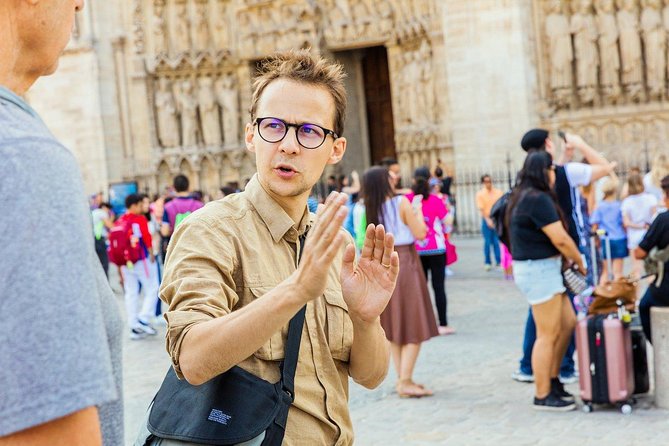
Notre-Dame is one of those places where you might think you already know it. Then you’re there, and the scale and craftsmanship hit. This tour includes Notre-Dame Cathedral interior access, but it’s unguided. Regulations prevent a guided interior visit, so you won’t have the guide talking in the same room.
That’s not a dealbreaker, but it changes how you should think about the stop. You’ll get the “why it matters” part outside and in the lead-up. Once inside, you shift into your own pace: look for the architectural details and soak up the atmosphere.
The other thing to know is timing. The stop is about 10 minutes, so treat this less like a full cathedral visit and more like a focused window. If you want extra time, this tour is still a great setup because you can decide later whether you want to return for a longer, self-guided visit.
Also, the tour notes that Notre-Dame’s entrance is free and open to all, and the service you’re buying is the guided experience around it. That helps explain the “free interior, unguided” format.
Île de la Cité beyond Notre-Dame: Palais de Justice, Sainte-Chapelle, Conciergerie
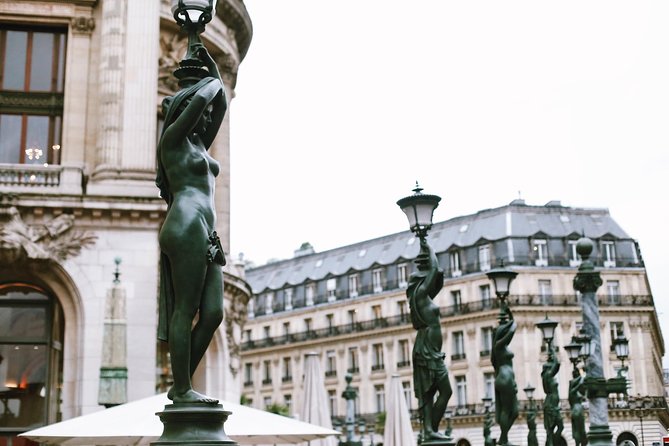
After Notre-Dame, the tour moves through the legal and royal-religious side of the island—where Paris history gets intense fast.
Palais de Justice / Palais de la Cité is the next stop. You’ll be in the heart of the island’s historic power zone, and the guide focuses on buildings that have survived from earlier eras. This is one of those areas where a quick visual tour helps you understand why Paris feels layered, not just “old.”
Then comes Sainte-Chapelle, widely loved for its Gothic style. The tour highlights that it was built in seven years to house precious Christian relics, including Christ’s crown of thorns, acquired by Saint Louis. Even if you don’t spend long inside (the stop time is short), you’ll come away knowing why it’s famous and what to look for.
Next is the Conciergerie, the oldest remaining part of the Palais de la Cité. It used to function as a notorious prison, including for many “enemies of the Revolution,” and famous names like Marie Antoinette are tied to this place. This is history with a pulse. You’ll feel the shift from royal-religious Paris into revolutionary-era drama.
Because these stops are time-limited, don’t expect a deep courtroom or prison museum day. Expect a guided orientation to the right facts, plus enough context that you’ll know where to focus if you come back later.
You can also read our reviews of more private tours in Paris





Saint-Michel Fountain and Place Dauphine: the story turns more human
One of the best parts of this itinerary is that it doesn’t stay stuck in monumental buildings. It slides into the streets and small squares that make Paris feel like a city, not a set.
You pass by the Fontaine Saint-Michel, commissioned by Haussmann under Napoleon III. The sculpture shows the archangel Michael vanquishing the Devil, which gives the fountain a symbolic tone beyond plain decoration. It’s also a good landmark for keeping your bearings while your legs keep moving.
Then you reach Place Dauphine, a historic square tucked on the western tip of the island. It was one of the early projects commissioned by Henri IV. These moments matter because they break up the heavy-history stops and remind you that Paris is built on public life—walking, chatting, lingering.
The tour’s rhythm works here: short stops, clear explanations, then you’re back on the move. If you like history that feels connected to everyday space, this part delivers.
Cross Pont Neuf to Pont des Arts: bridges that explain Paris geography
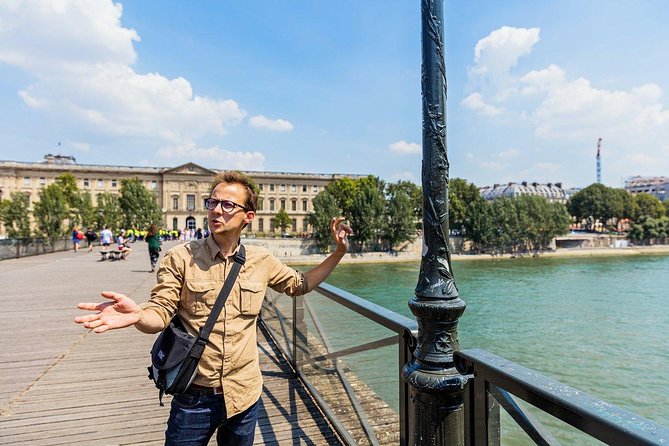
Bridges sound like filler until you realize Paris history runs through the Seine. This tour uses two key crossings to help you understand the city’s layout.
You’ll see the equestrian statue of Henri IV in the middle of the bridge area. The statue you see today is a replica, because the original from the 1600s was destroyed during the French Revolution. It’s a neat example of how Paris keeps reworking its symbols.
Then comes Pont Neuf, considered the oldest stone bridge in Paris. Today, Pont Neuf sits within the banks of the Seine listed as a UNESCO World Heritage site. That UNESCO note matters because it tells you this isn’t just a bridge for crossing—it’s part of an urban landscape recognized for its cultural importance.
Next is Pont des Arts, built between 1801 and 1804, and described as the first iron bridge in Paris. You’ll also catch views toward the Louvre area as you cross. For first-timers, it’s one of the easiest ways to connect the “cardinal landmarks” you’ve heard about with the real streets you’re standing on.
Palais-Royal, Louvre courtyards, and the Pyramid: seeing the Louvre without doing the full Louvre
The tour doesn’t pretend to be a full Louvre visit. That’s a strength. The Louvre is massive, and trying to do it all inside a walking tour window usually leads to disappointment and aching feet.
Instead, you pass through the area and focus on iconic exterior and courtyard architecture. You’ll move toward the Louvre by seeing the Cour Carrée and the Louvre Pyramid, designed by Chinese-American architect I.M. Pei. You get the moment without the time sink.
Before that, you’ll visit Domaine National du Palais-Royal (near the Louvre). Created by Cardinal Richelieu in 1633, it has a long connection to royal life, and the palace housed royal families until Versailles was built. The gardens are the real pause here: you’ll have a brief stretch of calmer space, plus contemporary sculptures and a mix of architecture you might not expect in this central location.
The tour uses this section to connect the dots. Once you’ve seen the Palais-Royal gardens and then the Louvre Pyramid, you understand the proximity of these places. You also get a clearer sense of where you’d want to return later, if you choose.
Tuileries Gardens and Place de la Concorde: the walk lands in a big finale square
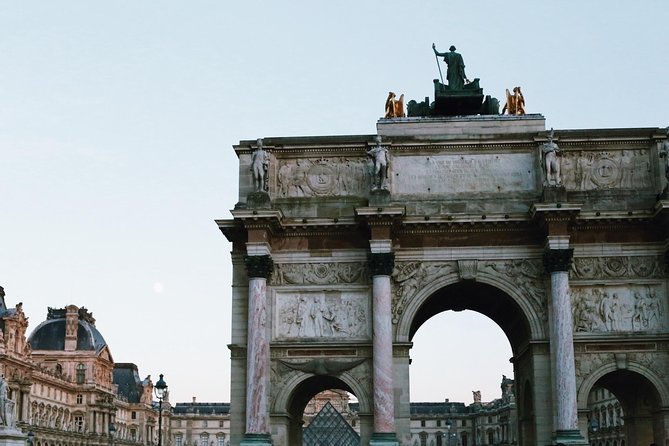
After the Louvre-area section, you’ll pass the Arc du Carrousel on your way to the Tuileries Gardens. The Arc du Carrousel is built to commemorate Napoleon’s military victories, so it fits the tour’s theme of power and transformation across centuries.
The Tuileries Gardens are described as the oldest park in Paris, with history dating back to the 17th century. You’ll stroll through and see why this area feels like a green channel running through central Paris. The tour also includes a brief passing stop by The Tuileries Gardens Bookstore, a small corner shop with gardening and landscape design books and garden-themed gifts.
Then you finish at Place de la Concorde, originally associated with executions during the French Revolution, and also known as marking the start of the Champs-Élysées. Ending here is smart because it’s a major hub. Even if you don’t plan your day perfectly, Concorde gives you easy options for your next stop.
How guides like Tamari, Alasdair, and Ren shape your experience
A walking tour can be just a list of stops. This one aims to be a moving story. The guide’s role is the glue: explaining why each site matters and how the city’s layout evolved.
From the experiences associated with this tour, one theme repeats: guides who keep things engaging and adapt when you ask questions. Names like Tamari and François show up with praise for building the city’s past into what you’re seeing right now. Alasdair is specifically mentioned in connection with a rainy morning, which is a reminder that the tour runs even when weather makes everything harder.
Ren and Alex are described as tailoring the walk to personal interests and questions. That’s the kind of guide behavior that’s worth paying attention to. If you care about architecture, rulers, or everyday street life, your questions can steer what you remember most.
So even though the route is fixed, you’re not stuck with a script. The best version of this tour is when you use the guide like a live map.
Price and value: why $59.69 can work for you
At about $59.69 per person for roughly 2.5 hours, this is priced like a solid orientation experience. It’s not trying to be a bargain sightseeing sprint, and it’s not priced like a private guide either.
Where the value shows up is in the structure:
- A long, logical route through the historic core and major landmarks
- A group cap of 12, which helps the guide experience stay personal
- English-speaking guidance
- A format that works in bad weather
Also, some access is effectively practical. Notre-Dame interior entry is included, and the tour notes entrance is free. Other major stops are often pass-by or short views rather than long interior visits, which keeps the tour inside the time limit.
If you already plan to spend hours in museums, consider this tour your “get oriented fast” move. If you don’t want to plan at all and you want someone to connect the history to the streets, the price starts making a lot more sense.
Practical tips so you enjoy every minute
- Wear comfortable shoes. This is a walking tour, and Paris sidewalks can be uneven.
- Bring a small umbrella for rain, since it runs rain or shine.
- Pack water. You’ll walk between stops and your time is tight.
- In summer, plan for sun: a hat is smart.
- Keep your bag light. No large bags or suitcases.
- For the ticket, you’ll need a mobile phone number (with country code), since the tour uses a mobile ticket.
Finally, aim to arrive ready to start. The meeting point is at Cité Métro, and you’ll want to locate it quickly so the group doesn’t slow down.
Should you book this History of Paris City Center tour?
I’d book it if you want the highlights without building an itinerary from scratch. It’s a great match for first-time visitors who like history explained in plain terms while they walk. The small max group helps, and the route does a smart job moving from Île de la Cité to Notre-Dame, then across the Seine toward the Louvre area, the Tuileries, and a strong ending at Concorde.
I might skip it if you hate walking, want deep time inside major museums (this is not a Louvre deep-dive), or you strongly prefer fully guided interior experiences at every stop. Notre-Dame interior is included, but it’s unguided.
If you’re in between those extremes, this is an efficient, high-impact way to get your bearings fast and feel like you understand central Paris by the time you reach Place de la Concorde.
FAQ
How long is the tour?
It lasts about 2 hours 40 minutes (approximately).
What is the group size?
It is semi-private, with a maximum group size of 12 people.
Where does the tour start and end?
It starts at Cité 75004 Paris, in front of the entrance to the Cité Métro station, and it ends at Place de la Concorde (Pl. de la Concorde, 75008 Paris).
Is Notre-Dame interior included, and is it guided?
Yes, the Notre-Dame Cathedral interior visit is included, but it is unguided due to regulations.
What language is the tour in, and does it run in bad weather?
The tour is offered in English and it runs in all weather conditions (rain or shine).
Is hotel pickup or drop-off included?
No. Hotel pickup and drop-off are not included.