REVIEW · PARIS
The Famous Graves of Père Lachaise – Self-Guided Audio Tour
Book on Viator →Operated by Vidi Guides · Bookable on Viator
Père Lachaise is famous for a reason. This self-guided audio tour gives you a quick, budget-friendly way to hit the cemetery’s best-known names without needing a group schedule. I like that it uses location-aware GPS maps so you can keep moving even when the cemetery layout feels like a maze, and that it’s designed for your pace rather than a fixed walking tour.
My main caution is simple: this is audio, not a live guide. If your phone download fails or the app struggles with navigation, you can end up relying on your own map while the cemetery’s free entry means you’re not paying for admission—only for the storytelling and convenience.
In This Review
- Key takeaways before you go
- Père Lachaise in 90 minutes: how a GPS audio walk really works
- Before You Start: what I’d do to avoid common audio-tour headaches
- Stop-by-stop: the famous graves you’ll hear about
- 1) Père-Lachaise Cemetery: the “how it started” moment
- 2) Héloïse and Abélard’s tomb: the original love tragedy vibe
- 3) Jim Morrison: rock ’n’ roll legend and strange rituals
- 4) Père-Lachaise: politics, a controversial president, and secularity
- 5) Statue of Honoré de Balzac: who wrote what, anyway?
- 6) Crematorium of Père Lachaise: France’s cremation story in stone
- 7) Tomb connected to Yves Montand, plus Oscar Wilde and a tradition
- 8) Gertrude Stein, plus Le Mur des Fédérés: reflection in a wall
- 9) Edith Piaf statue: a final love-and-loss chapter
- What makes this audio route good (and when it falls short)
- Price and value: $17.81 for an audio tour in a cemetery with free entry
- Who this tour suits best
- Should you book this self-guided Père Lachaise audio tour?
- FAQ
- How long is the Père Lachaise famous graves audio tour?
- What language is the audio tour in?
- Is the tour self-guided, and do I need a guide with me?
- Does it work offline?
- Do I need my own earphones?
- Where does the tour start?
- What are the operating hours?
Key takeaways before you go
- Offline mode helps you keep listening with no Wi‑Fi once you download ahead
- GPS map support is built for staying oriented in a large cemetery
- Short stops (about 5 minutes each) fit a quick highlight loop
- Famous-name coverage spans love stories, politics, literature, and music
- Earphones aren’t included, so bring your own or plan to listen out loud
Père Lachaise in 90 minutes: how a GPS audio walk really works
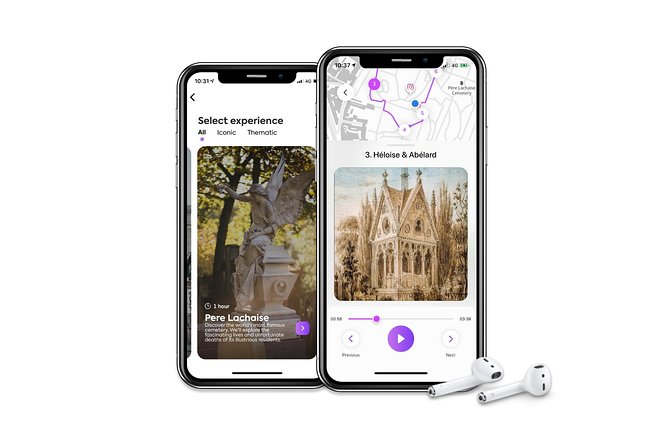
Père Lachaise is huge, and your biggest enemy isn’t distance—it’s decision-making. You’ll see dozens of major graves, but you can’t realistically track them all. This 45-minute to 1.5-hour format is built for first-timers who want the highlights and then keep strolling on their own.
The experience works through your smartphone: you follow the route, press play when you’re near a marked stop, and listen as the audio explains what you’re looking at. Because it’s location-aware, you don’t have to constantly open Google Maps just to figure out which direction to go.
One practical note: the tour ends back at the starting point, so you’re not dealing with a one-way walk across Paris. And with a small max group size of 10, the overall operation is meant to feel low-stress, even though you’re still doing it independently.
You can also read our reviews of more guided tours in Paris



Before You Start: what I’d do to avoid common audio-tour headaches
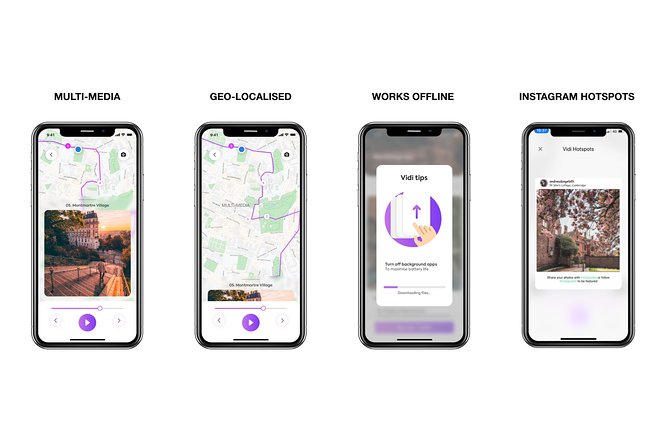
Bring a little “audio tour survival kit,” because your phone is doing the heavy lifting here.
First, you must have your mobile device and earphones (not included). If you forget, you may still hear audio, but it’s not comfortable—especially in a quiet place where you’ll want to listen without blasting sound.
Second, plan your download like you’re packing for a long day. The tour offers offline mode if you download in advance, which is exactly what you want at Père Lachaise. Still, some people run into trouble when their connection is weak at the moment they try to get the content. My advice: download on strong Wi‑Fi, keep your phone charged, and consider turning on airplane mode after downloading (so you’re not hunting for a signal).
Third, wear shoes for steps and rough paths. One of the tradeoffs of Père Lachaise is that “highlight walking” still means you’re climbing and turning. If your knees hate stairs, you can still do this, but go slower than you think you should.
Finally, timing helps. The stated hours are 8:00 AM–6:00 PM Monday–Friday, so try not to arrive near closing. A museum pace won’t work in a cemetery where you’re scanning monuments as you move.
Stop-by-stop: the famous graves you’ll hear about
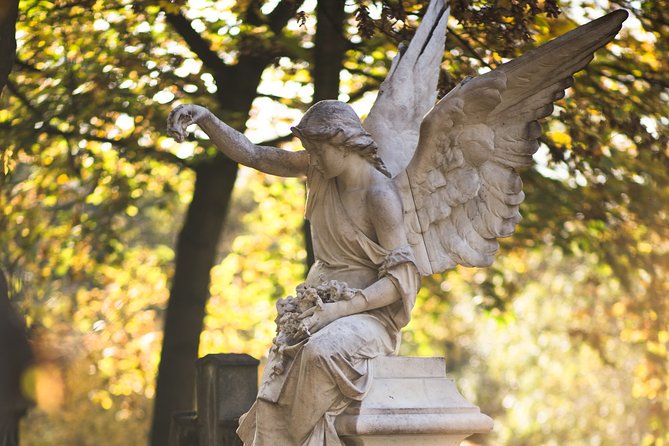
This route is designed as a string of short, high-impact moments. Expect each highlighted area to feel like a mini story with a clear takeaway, and then you move on. If you want more time at one place, you can—this is your pace.
1) Père-Lachaise Cemetery: the “how it started” moment
The tour starts by grounding you in the big idea: Père Lachaise is often called the world’s most famous cemetery, and Napoleon is part of its origin story. Even if you’ve seen photos of famous names, this first stop helps you understand why the cemetery became a magnet for remembrance.
If you’re the type who likes context, this is a good opener. If you just want famous tombs fast, you may feel like this is the slowest section—but it sets up everything that follows.
2) Héloïse and Abélard’s tomb: the original love tragedy vibe
Next up is one of the most emotional stories here: Héloïse and Abélard. The narration frames their relationship as a “Romeo and Juliet” style tale, which is useful because it gives you a cultural hook right away.
This stop works best if you pause for a moment. The monuments are meaningful, and the audio’s short story format makes it easy to remember the emotional arc while you’re still surrounded by marble and stone.
A few more Paris tours and experiences worth a look





3) Jim Morrison: rock ’n’ roll legend and strange rituals
Then you’ll get to Jim Morrison’s tomb. This is where Père Lachaise turns from classical grief into pop-culture mythology, with the tour touching on the unconventional side of his grave and the odd traditions people associate with it.
The value here is that the audio doesn’t just name-drop. It gives you a sense of why the site became a pilgrimage spot for music lovers, and why the atmosphere can feel different than it does near more “traditional” memorials.
4) Père-Lachaise: politics, a controversial president, and secularity
A later stop ties the cemetery to a broader French theme: secularity. The narration points to a controversial president as part of the story, and that political angle is more interesting than it sounds because it explains why certain religious and civic ideas show up in how places like Père Lachaise are treated.
If you like history that connects to visible facts, this is one of the stops that can make the stones feel less random. The drawback: it’s still a short audio segment, so if you want deep political background, you’ll likely want to read or watch more afterward.
5) Statue of Honoré de Balzac: who wrote what, anyway?
Then you’ll meet Honoré de Balzac’s monument. The audio asks a fun, slightly challenging question: who really wrote famous novels like The Three Musketeers and The Count of Monte Cristo?
This is a clever way to keep the tour from feeling like a list of names. You get a quick literary correction and a reminder that French literary history is layered—people borrow titles, stories get attributed, and legends grow.
6) Crematorium of Père Lachaise: France’s cremation story in stone
The route also includes the crematorium building and uses it to explain cremation in France. This stop is a useful change of tone because you’re no longer only focused on famous tombs; you’re looking at how the cemetery handles death and remembrance more broadly.
If you prefer architecture over celebrity graves, this is your “wait—look at that” moment. The narration makes the building feel purposeful rather than just another structure inside a big site.
7) Tomb connected to Yves Montand, plus Oscar Wilde and a tradition
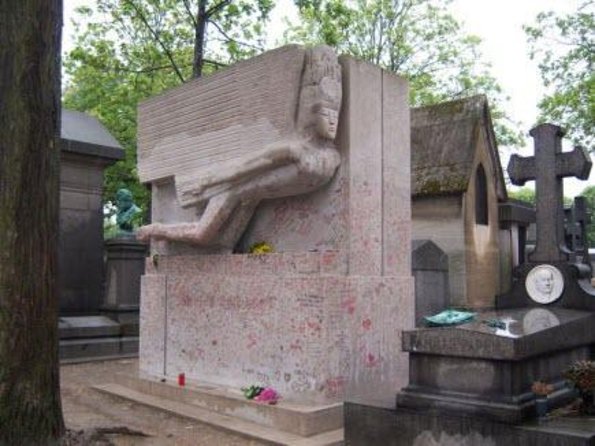
After that, you’ll reach the area associated with Yves Montand. The narration also brings in the tragic story of Oscar Wilde, plus a warm but weird tradition connected with that area.
This stop is likely to be memorable even if you don’t know the whole cast of characters yet, because the audio tries to connect literature, film/music fame, and how people interact with memorial spaces—like the way crowds create their own meaning over time.
8) Gertrude Stein, plus Le Mur des Fédérés: reflection in a wall
Next, you’ll be guided toward Gertrude Stein and a pause at Le Mur des Fédérés. This is the part of the tour that naturally slows you down. Even without long background reading, a wall of names carries weight, and the audio pushes you toward reflection.
This stop is also a reminder that Père Lachaise isn’t only about celebrities. It’s part of French memory culture, where politics and personal loss overlap.
9) Edith Piaf statue: a final love-and-loss chapter
You end with the Edith Piaf statue. The audio frames it as a final tale of love and loss for France’s most cherished singer, which works well as a closer because it ties the whole route together: every stop is essentially about how humans make meaning after heartbreak.
If you finish feeling emotional, that’s normal here. You’re standing in a place designed to hold emotion, not just sightseeing.
What makes this audio route good (and when it falls short)
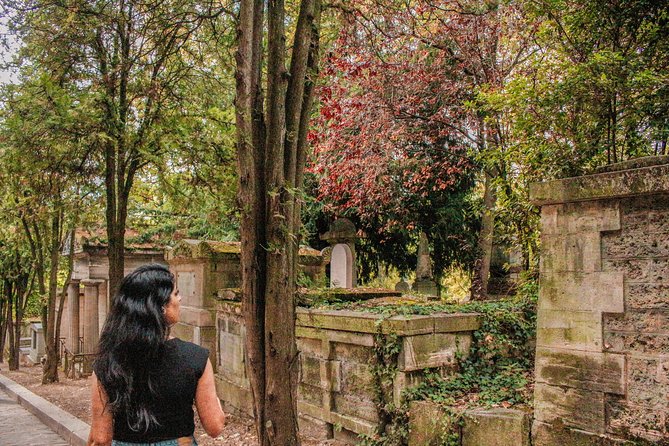
Here’s the honest value proposition: you’re not paying to get into Père Lachaise. The big “you win” here is that the audio tour saves you time and helps you avoid getting lost in a cemetery that can feel directionless.
The most praised aspect in the experience is how it lets you explore at your own pace. You can skip ahead, linger longer, and keep control of the rhythm. That matters because Père Lachaise isn’t like a timed museum line; it’s a wide open place where momentum can fade if you’re waiting for others.
The other strong point is the GPS map and location-aware setup. It’s meant to be practical, not just decorative. If the app is working, you’ll spend more time looking at stones and less time hunting for them.
The “when it doesn’t work” downside is also clear from the kind of issues people report: the audio tour is only as good as your phone experience. If the app can’t download properly, if playback glitches, or if directions feel unclear, the whole thing can become frustrating—especially because you’re relying on your own navigation anyway.
Also, keep your expectations calibrated. This is not a conversation with a person standing beside you. If you want a live guide who can correct confusion on the spot, you might be happier with a guided walking tour instead.
Price and value: $17.81 for an audio tour in a cemetery with free entry

Let’s talk value without pretending it’s complicated.
Père Lachaise is free to enter, so you’re paying for three things:
- Narration from a local or historian-style audio voice
- Navigation help through GPS maps and location cues
- Convenience features like offline mode and picture-friendly “Instagram hotspot” spots
So the question is: do you want the storytelling and the structure enough to justify the price? For many people, yes—because the cemetery is so broad that a curated highlight path can feel worth it.
But if your phone struggles, or if you prefer to wander freely without any guidance, the cost can feel steep because you’re paying for something you could replace with a free podcast or your own research. The best-fit buyers are the ones who want low effort, clear stops, and quick emotional context.
Who this tour suits best

This audio tour is a strong fit if you:
- want a highlights loop without booking a live guide
- like the idea of short stories tied to specific famous names
- enjoy going at your own speed and skipping ahead if your feet get tired
- will download offline and keep your phone charged
It’s probably not ideal if you:
- expect turn-by-turn directions to every grave in a huge area
- hate apps and prefer a human guide for navigation questions
- can’t rely on your phone battery or offline downloads
It can also be a smart choice for couples or small groups who want to stay together but don’t want to match a guide’s pacing.
Should you book this self-guided Père Lachaise audio tour?
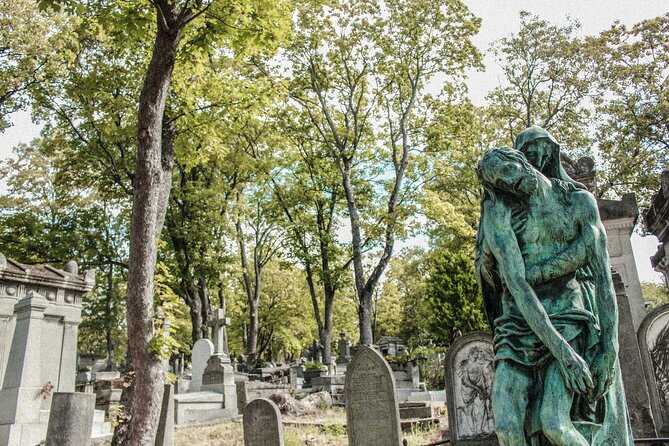
If you like independent sightseeing and you’ll do the prep (download offline, bring earphones, plan for steps), I think the tour is worth considering. The mix of big names plus meaningful themes—love stories, political context, literature, music, and remembrance—makes the cemetery feel less like a random walk.
But if you want a live docent-style explanation, or you know your phone tends to fail during app downloads, I’d skip it. You can always experience Père Lachaise freely and build your own route with offline maps and your own research. The audio tour only wins if the tech and your expectations line up.
FAQ
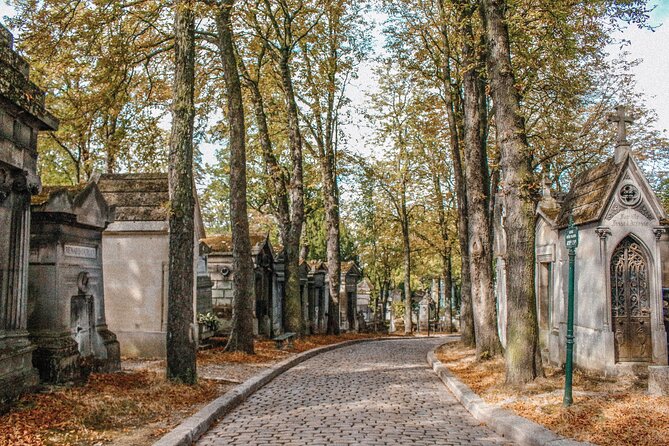
How long is the Père Lachaise famous graves audio tour?
It runs about 45 minutes to 1 hour 30 minutes depending on how you pace yourself and how long you stop at each site.
What language is the audio tour in?
The tour is offered in English.
Is the tour self-guided, and do I need a guide with me?
Yes, it’s self-guided. You use a smartphone app with GPS maps and audio narration; it’s not described as a live guide walking with the group.
Does it work offline?
Yes. You can use offline mode by downloading the tour in advance so you can listen without Wi‑Fi.
Do I need my own earphones?
Yes. Earphones are not included, and you’ll need your mobile device to access the tour.
Where does the tour start?
The tour starts at Père-Lachaise, 75020 Paris, France, and it ends back at the meeting point.
What are the operating hours?
The hours listed are 8:00 AM to 6:00 PM, Monday through Friday.