REVIEW · PARIS
Paris City Center Free Walking Tour (Tip-Based)
Book on Viator →Operated by StellarTours · Bookable on Viator
Paris makes more sense when someone points things out. This tip-based walking tour connects the big landmarks with the French Revolution, Napoleon, and the people who shaped the streets you’re walking today. You’ll move at a steady pace through central Paris, starting on the Seine island and finishing near the Tuileries and Eiffel Tower views.
I especially like the storytelling focus—not just dates, but why buildings and bridges look the way they do. I also like the practical route design: most stops are outdoors, with plenty of photo chances, and the walk stays manageable even when you’re stopping often for explanations.
One thing to consider: you won’t go inside the main sights. Notre-Dame and the Louvre are explained from the outside, so if you want tickets timed to enter, you’ll need a separate visit.
In This Review
- Key points before you go
- A tip-based Paris walk that feels like a city masterclass
- From Île de la Cité to the Eiffel Tower: how the route makes sense
- Île de la Cité: starting at the real heart of old Paris
- Notre-Dame from the outside: history, Revolution, and Napoleon’s era
- Fontaine Saint-Michel: the rebuilt Paris that still shapes today
- Pont Saint-Michel: WW2 scars you can still see
- Place Dauphine and the Henri IV vibe: power, commerce, and charming streets
- Pont Neuf: the oldest bridge and the human stories
- Louvre area, but no entry: Mona Lisa and the fortress-to-palace idea
- Arc de Triomphe du Carrousel: Napoleon’s statement, scaled for the city
- Jardin des Tuileries: from workshop origins to royal gardens
- Eiffel Tower view at the end: the payoff you can plan around
- Guides and pacing: what the best guides do differently
- Price and tips: the real value math
- Practical tips to get the most out of your walk
- Who should book this Paris city-center walk (and who might skip it)
- Should you book this Paris city-center free walking tour?
- FAQ
- Do we enter Notre-Dame or the Louvre on this tour?
- How long is the walking tour?
- Where does the tour start and end?
- Is the tour offered in English?
- How do tip payments work?
- Is the tour dependent on weather?
Key points before you go
- French Revolution and Napoleon context woven into everyday sights, from Île de la Cité to the Seine bridges
- Outdoor viewing, no entry pressure at Notre-Dame and the Louvre
- Seine history details like WW2 bullet holes on Pont Saint-Michel
- Strong guide delivery with clear English and microphones for busy, noisy streets
- A rewarding finish with the Tuileries stroll and Eiffel Tower sightlines
- Tip payments are card-based (credit/debit and electronic payments), with VAT added to contributions
A tip-based Paris walk that feels like a city masterclass
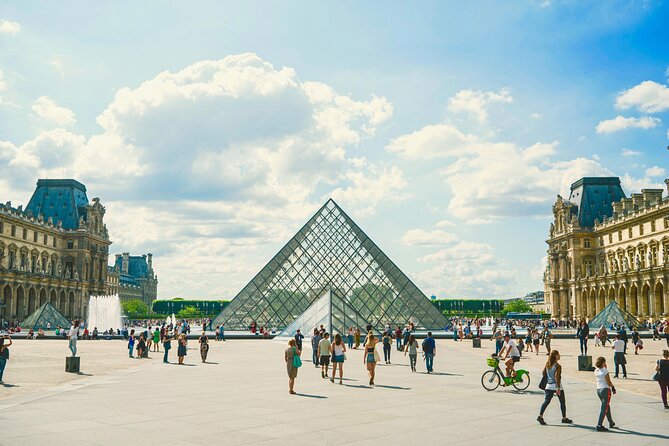
This is one of those tours that works because it doesn’t try to do everything. In about a little over two hours, you cover a big slice of central Paris—enough to give you bearings fast. You’re not stuck in a museum line, and you’re not just ticking boxes. The goal here is to help you understand what you’re seeing as you go.
Because it’s tip-based, the value is mostly tied to how good the guide is and how comfortable you are with group walking. The tour is also built for real city conditions: you’ll hear explanations while you stand, pause, and look—then you’ll walk again. It’s not constant motion, but it’s active.
One more practical note: the tour can be a bit more time on your feet than some “light stroll” tours, especially when you stop for a longer explanation. If you’re someone who needs lots of seated breaks, plan ahead with water and a quick bathroom check before you start.
You can also read our reviews of more walking tours in Paris



From Île de la Cité to the Eiffel Tower: how the route makes sense
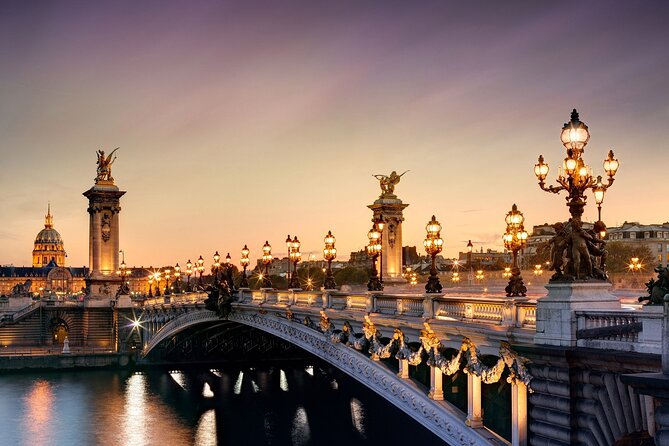
The route is clever because it uses geography like a timeline. You start on the island at the heart of Paris’s oldest core, then you move along the Seine toward west-central landmarks and the royal-to-imperial shift of power.
The walk begins near Fontaine Saint-Michel (your meeting point), and it ends at the Tuileries Garden. That means your finish is right where you can keep exploring on your own—whether you want another riverside walk, a café pause, or a later hop to museums.
Most stops are brief—around a quarter hour on the first big area and then roughly a dozen minutes each after that. But the “short” time can still feel substantial because the guide is trying to make each place connect to the next.
Île de la Cité: starting at the real heart of old Paris
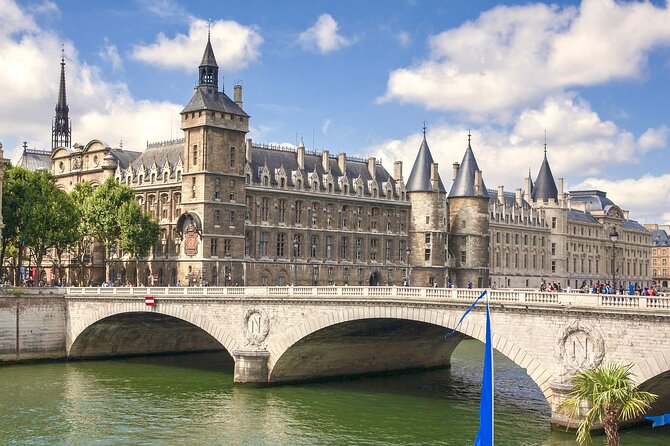
You begin on Île de la Cité, a small island that punches way above its size. This is where the Parisii tribe established temples more than 2,000 years ago, before the Roman Empire reshaped the area. Even if you’ve seen pictures of Notre-Dame nearby, starting here first helps you understand why the island became the center point again and again.
The key value at this stop is orientation. The guide doesn’t just say what’s here; they help you see why the island matters and why later rulers cared so much. If you’ve got even a basic curiosity about how cities grow, this opener gives you a mental map.
A small drawback: since it’s a starting point and a concentrated area, you may feel like you’re standing in place before you begin moving. If you’re sensitive to crowding, arrive a few minutes early and be ready to start promptly.
Notre-Dame from the outside: history, Revolution, and Napoleon’s era
Next comes Cathedrale Notre-Dame de Paris. You don’t enter the cathedral on this tour, which is a good thing if you’re trying to keep the walking schedule flowing. From outside, you’ll get the construction story that begins in 1163 and you’ll also cover the modern chapter, including the 2019 fire.
What makes this stop more than a photo-op is the political thread. You’ll hear about the French Revolution and Napoleon’s coronation—how a building can become a stage for power. The guide’s job is to connect symbolism to stone, and this is where that works well.
Potential consideration: if Notre-Dame is the reason you booked, and you’re hoping for an inside visit during this exact tour window, you’ll need to plan a separate ticketed time. This is about meaning and context, not interior access.
Fontaine Saint-Michel: the rebuilt Paris that still shapes today
At Fontaine Saint-Michel, you get a different kind of “Paris lesson.” This fountain is tied to the grand reconstruction of the city. In other words, you’re seeing how Paris responds after damage, political change, and shifting priorities.
This stop is short but useful. It gives you a reset in the middle of the morning walk: a place to pause, look around, and then keep going with a better sense of how Paris has layers. You’ll also be walking through a lively area with plenty of nearby cafés, so it’s a good moment to notice where you might want a quick coffee later.
You can also read our reviews of more city tours in Paris






Pont Saint-Michel: WW2 scars you can still see
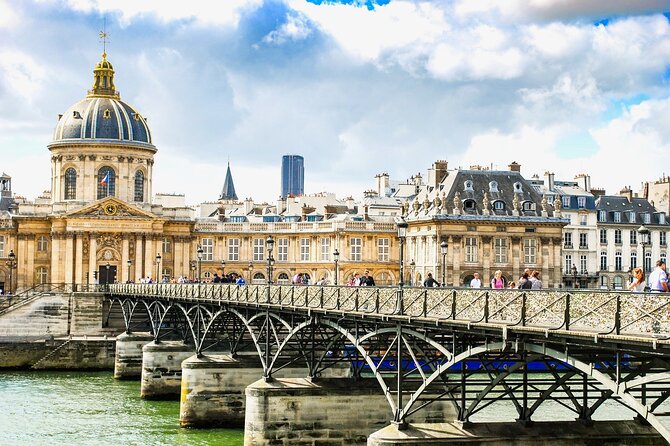
Crossing and stopping at Pont Saint-Michel adds one of the tour’s most memorable details: visible bullet holes from World War II. The guide explains why Paris wasn’t destroyed the way many cities were, which turns a quiet bridge moment into a powerful reminder of what “history” looks like in real life.
The “why it matters” part is what you’ll take with you after you leave. You stop looking at the bridge as just an angle for photos and start seeing it as a document.
Place Dauphine and the Henri IV vibe: power, commerce, and charming streets
Then you move to Place Dauphine, a square associated with Henri IV—one of the first projects built under his leadership. It’s the kind of place that feels calm and lived-in, and it’s also a great example of how Paris designs public space to serve everyday life.
From there you’re set up to enjoy river views while learning about another Henri IV landmark: the equestrian statue of the king. This isn’t just “look at this statue.” You’ll get the story of his short but meaningful reign and how his legacy shows up in what you’re looking at from the street.
If you’re hungry, this area is also practical. The square is known for restaurants, and it’s exactly the kind of stop where I’d plan a lunch later if your schedule allows.
Pont Neuf: the oldest bridge and the human stories
Pont Neuf is where the tour turns a bit into personality and folklore. Since it’s the oldest bridge in Paris, you get a base of “this has been here forever” history. And then the guide layers in the stories: Henry IV again, plus the famous tooth pullers of Paris.
That tooth puller detail may sound odd, but it’s a good reminder that the street-level Paris of earlier centuries wasn’t only grand monuments. It was daily life, trade, and very human services—some of them… less gentle than modern dentistry.
Practical note: you’ll stand on a bridge, so watch footing and keep your coat close if you’re there in cooler months. Bridges can feel colder than you expect.
Louvre area, but no entry: Mona Lisa and the fortress-to-palace idea
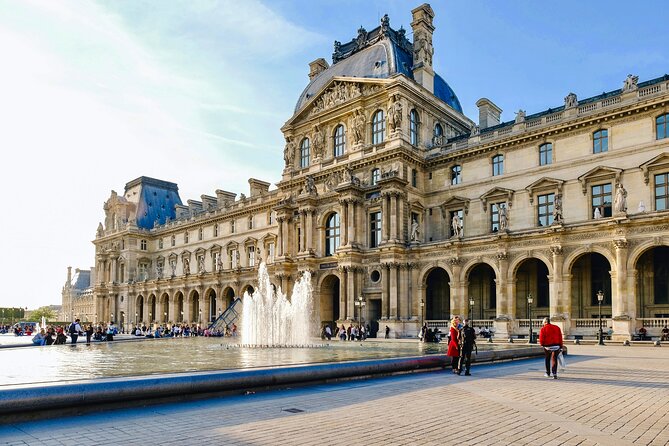
At the Louvre Museum stop, you don’t go inside. Instead, you get a guided understanding of why the Louvre matters and why certain names keep returning. You’ll hear the story about Leonardo da Vinci and why the Mona Lisa became so famous—plus the political architecture angle through Francis I, the king credited with foundations of the Louvre as a fortress and a palace.
Even from outside, the Louvre discussion helps you see the building differently. It’s not just a “big museum.” It’s a power structure that evolved over time.
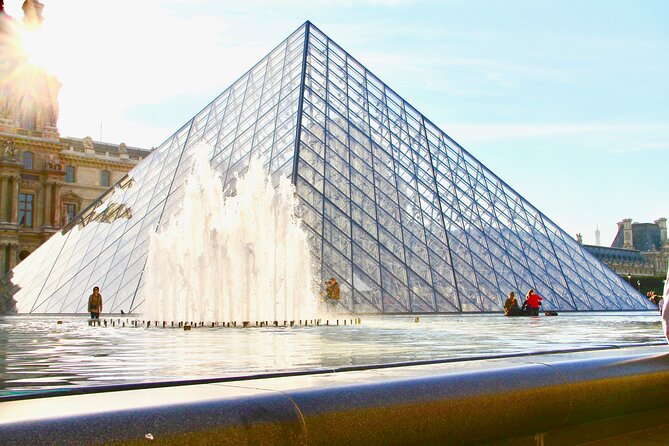
And you’ll likely catch strong views of the glass pyramid, which tends to anchor the modern identity of the complex. The guide’s job is to connect the old royal intent to the current iconic face.
Arc de Triomphe du Carrousel: Napoleon’s statement, scaled for the city
Next is the Arc de Triomphe du Carrousel, built by Napoleon. This stop is short, but it gives you a good contrast. You’re not only learning about Napoleon through battles—you’re seeing how he used monuments to broadcast ascension and authority.
It’s also a useful stop for photos because it’s less crowded than some other triumphal-arch viewpoints, depending on the day and time.
Jardin des Tuileries: from workshop origins to royal gardens
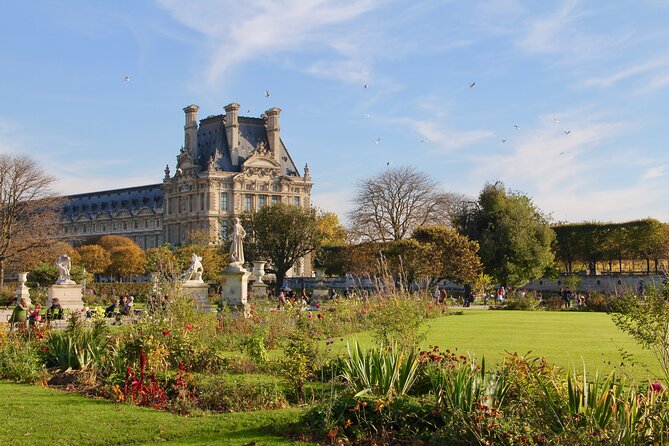
At the Jardin des Tuileries, you switch from stone and iron to gardens and sculpture. The Tuileries area has an origin story tied to tile factories, then transitions into royal gardens.
This stop also connects to the idea of design language. You’ll hear that the gardens were originally designed by the same landscape artist linked with the gardens of Versailles, meant to create a sense of mystique and majesty. Even if you’ve never visited Versailles, that reference helps you understand Paris garden design as a style, not an accident.
This is a great time to slow down and look around—statues, sculptures, and fountains give you details you might otherwise miss.
Eiffel Tower view at the end: the payoff you can plan around
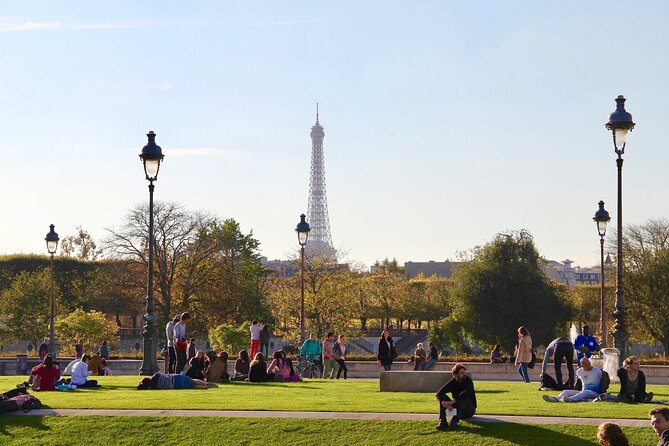
The finish near the Eiffel Tower is one of the best parts of the walk. From the Tuileries gardens, you can get views that feel framed and cinematic rather than random.
The guide explains how Gustave Eiffel pulled off the construction in 1889, which gives you a clear technical and historical anchor for one of the world’s most recognizable landmarks. Even if you’ve seen photos of the tower your whole life, this stop helps you connect it to the era that built it.
Guides and pacing: what the best guides do differently
A lot of walking tours claim they’re “fun.” This one tends to win because the guide performance is built for real group conditions—busy streets, noise, and lots of stopping points.
In the past, guides such as Ezra, Alberto, Sanna, Bruce, Kiara, and Michael have been praised for being friendly, engaging, and clear in English. Several of them also used a microphone or amplifier so everyone could hear in crowded areas. That matters, because if you can’t hear, the whole value drops—even if the landmarks are perfect.
Pacing is generally “manageable,” not marathon. One important thing: the explanations can be longer in certain stops than others. You might also spend more time standing than you expect, so wear shoes you can stand in comfortably.
Also, this is not a “same place you start” tour. You finish at the Tuileries, so decide ahead of time how you’ll get home.
Price and tips: the real value math
The headline price can look tiny—about $3.62 per group—but the real model here is tip-based. Tips are accepted only via credit/debit cards and electronic payments, and VAT is added to contributions.
So how do you judge value? I’d look at it like this: you’re paying mostly for a guided narrative that saves you time and helps you understand what you’re walking past. If you’re the kind of visitor who likes learning while moving—this can be a high-value start to your trip.
If you’re the kind of traveler who prefers self-guided audio tours and doesn’t like group stops, you may still enjoy the route, but you might not feel as rewarded by the tip model.
Practical tips to get the most out of your walk
- Start with a plan for photos. Several stops are bridges, fountains, and outdoor viewpoints. You’ll want your phone ready when the guide signals a best angle.
- Use the area for food planning. Place Dauphine in particular is a natural lunch target after the tour, since it’s known for restaurants and feels calmer.
- Bring water and plan for standing. Explanations happen while you’re stopped, and bridges can be breezy.
- If weather changes suddenly, be ready to adjust. The tour works best with good weather, and if it’s canceled for poor weather you should expect an offer for another date or a full refund.
Who should book this Paris city-center walk (and who might skip it)
This tour is a great fit if you want an efficient introduction to central Paris with a heavy emphasis on French history—especially the French Revolution and Napoleon’s era. It also works well if you like outdoor landmark walking more than museum interiors.
You’ll likely enjoy it if:
- You only have a few days and want quick bearings.
- You like stories that connect buildings to politics and everyday life.
- You’re comfortable walking and standing for short stretches.
You might skip or add a separate plan if:
- You specifically want to enter Notre-Dame or the Louvre during this time window.
- You dislike group dynamics or long stop-and-go pacing.
Should you book this Paris city-center free walking tour?
If your goal is to understand central Paris fast, I think this is a smart booking. The route hits the historic core, the Seine bridges, and the big “first-time visitor” landmarks—with context that makes the city feel less random.
I’d book it if you value story, outdoor viewpoints, and a finish near the Tuileries where you can keep exploring. I’d pair it with a separate museum plan if you know you want inside access to the Louvre or a full Notre-Dame visit later.
Bottom line: it’s a practical way to turn Paris from a list of sights into a connected story.
FAQ
Do we enter Notre-Dame or the Louvre on this tour?
No. The tour explains Notre-Dame and the Louvre from the outside, so you won’t go inside during the walk.
How long is the walking tour?
It runs about 2 hours 15 minutes (approx.).
Where does the tour start and end?
It starts at Fontaine Saint-Michel, Pl. Saint-Michel, 75005 Paris. It ends at the Tuileries Garden, 75001 Paris.
Is the tour offered in English?
Yes, it’s offered in English.
How do tip payments work?
Tips are accepted only via credit/debit cards and electronic payments, and VAT is added to contributions.
Is the tour dependent on weather?
Yes. The experience requires good weather. If it’s canceled due to poor weather, you’ll be offered a different date or a full refund.