REVIEW · PARIS
Le Marais/Paris – The Historic, Trendy, Jewish, LGBT district
Book on Viator →Bookable on Viator
Le Marais tells stories at street level. This guided walk stitches together Place des Vosges and Paris’s older aristocratic architecture, plus the Jewish quarter, with LGBT context explained along the way. I especially like the focus on what you can actually see right in front of you, and the way the guide—often Jill or Eric—works the walk around your interests. The only real catch: it is an outdoor, walking-focused tour, and snacks or coffee are not included.
You’ll spend about 1 hour 30 minutes to 2 hours moving between classic squares and quieter lanes, in a group of up to 10 people. It’s offered in English, you get a mobile ticket, and the tour finishes at the Musée des Archives Nationales (Hôtel de Soubise) area.
In This Review
- Key Things You’ll Notice (and Why They Matter)
- From Saint-Paul-Saint-Louis to the Archives: How the Route Feels
- Place des Vosges (Place Royale): Victor Hugo’s Square, in 20 Minutes
- Le Marais Streets and Hotel Particuliers: The Aristocracy’s Blueprint
- The Jewish Quarter: Courtyards, Gardens, and Casher Pastry
- LGBT History in the Marais: Context You Can Actually Place
- Small Group Size: Why Up to 10 People Changes Everything
- Price and Time: Is $48.39 Good Value?
- What to Do Before You Go (So You Get More Out of It)
- Pairing the Marais Walk with the Rest of Your Day
- Should You Book This Le Marais Walking Tour?
- FAQ
- How long is the tour?
- What language is the tour in?
- How many people are in the group?
- What is included in the price?
- Are snacks or drinks included?
- Where do I meet the guide?
- Where does the tour end?
- Will I get a ticket on my phone?
- Is there free cancellation?
- Is a service animal allowed?
Key Things You’ll Notice (and Why They Matter)
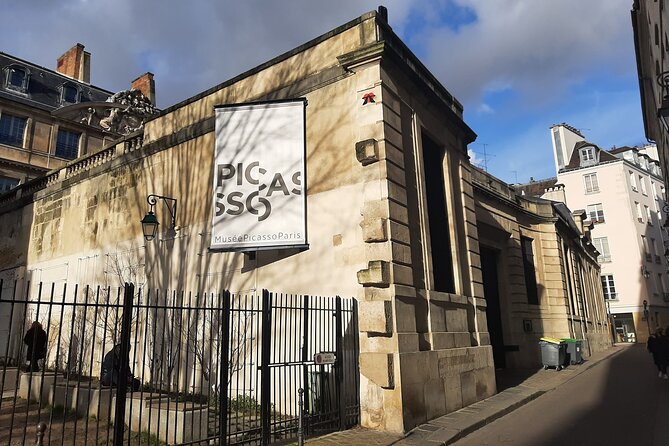
- Place des Vosges (former Place Royale): how Victor Hugo’s presence shaped the square’s story
- Hotel Particuliers architecture: the aristocrat-made “urban mansions” that define Le Marais streets
- Jewish Quarter courtyards and gardens: the feeling of hidden space inside busy neighborhoods
- Jewish food culture: casher pastry and everyday stores you can smell and point at
- LGBT context in the Marais: explained through sites and local historical angles, not vague talk
- A guide who adjusts fast: you’ll hear prompts early on about what you want to focus on
From Saint-Paul-Saint-Louis to the Archives: How the Route Feels
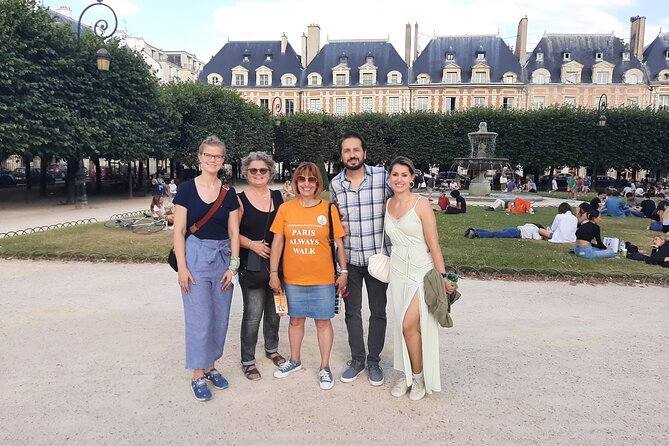
The tour starts near Paroisse Saint-Paul Saint-Louis at 99 Rue Saint-Antoine in the 4th arrondissement. From there, you walk through the Marais like a real local would: a mix of major landmarks and narrower streets where the buildings do the talking.
By the end, you’ll be near the Musée des Archives Nationales – Hôtel de Soubise at 60 Rue des Francs Bourgeois in the 3rd arrondissement. That ending location is useful if you want to keep exploring right after the walk, because you’re positioned in the heart of the historic core.
One practical note: because the route is spread across two adjacent neighborhoods (4th into 3rd), it’s a nice way to “cross-pollinate” your Paris day. You’re not just looping around one tiny area—you come away with a stronger mental map of the Marais.
You can also read our reviews of more historical tours in Paris



Place des Vosges (Place Royale): Victor Hugo’s Square, in 20 Minutes
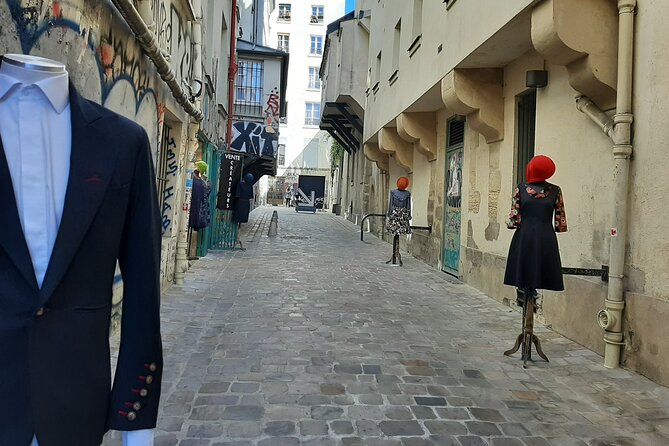
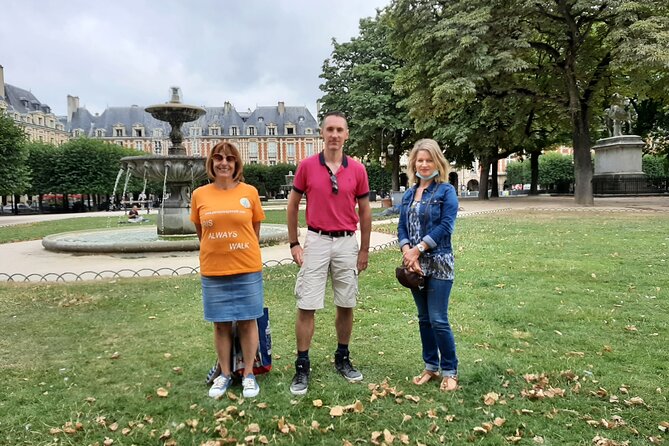
Your first stop is Place des Vosges, a standout square that used to be called Place Royale. Even if you’ve seen photos, standing here makes it click—this is one of those Paris places where the symmetry and the building lines do more than look pretty. They explain how power and culture once organized city life.
The guide ties Victor Hugo to what you’re looking at. Hugo lived and worked in this area and wrote parts of Notre-Dame de Paris here, so the square isn’t only about architecture—it’s also about where literature grew roots. Around the square, you’ll also notice modern art galleries, which helps you see how Le Marais keeps layering new culture over old stone.
What I like about this stop for your planning: it’s quick (about 20 minutes) but high-impact. You get orientation for the rest of the walk, so when you turn into narrower streets later, you’ll understand the urban logic faster.
A possible drawback: because this is such a famous square, you should expect some foot traffic around it. If you’re chasing quiet vibes, take your time once you step to the side streets—where the guide will steer you next.
Le Marais Streets and Hotel Particuliers: The Aristocracy’s Blueprint
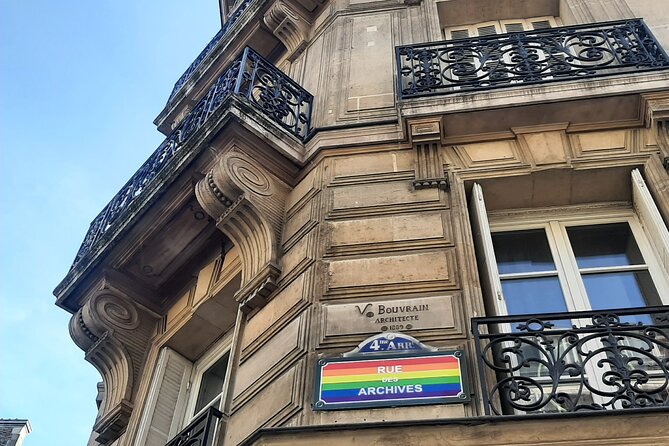
Next you move into the broader Le Marais area, where the main focus is French aristocratic and royal-era architecture. You’ll be watching the streets closely—especially the so-called Hotel Particuliers, French urban mansions that show how wealth organized space without needing to build something as obvious as a standalone palace.
Think of it like this: you’re not just seeing “pretty buildings.” You’re learning how the city was designed so that power, privacy, and social life all lived in the same neighborhood fabric. As you walk, the guide points out details that would slide right past most people—things you might not notice until someone explains what to look for.
This is the part of the tour where I’d tell you to bring your curiosity, not just your camera. Pay attention to the façades, courtyards you glimpse, and the way streets narrow and open. Even in a short window (about 15 minutes at this segment), it helps you understand why Le Marais is always “in motion” historically—you can feel multiple time periods stacked on top of each other.
One consideration: since the “Hotel Particuliers” concept is architectural, you’ll enjoy this more if you like details. If you mainly want big museum interiors, you may wish there were more inside stops. Still, the value here is learning to read the exterior city itself.
The Jewish Quarter: Courtyards, Gardens, and Casher Pastry
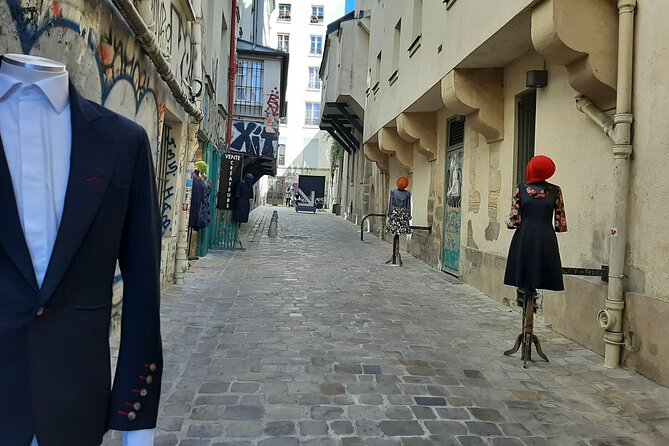
Then the walk shifts into the Jewish quarter of Le Marais, with a focus on spots that are less of the classic tourist circuit. The guide takes you off the busiest routes toward courtyards and gardens—places that change the pace instantly.
You’ll also spend time around the area’s food culture. The tour highlights typical stores and includes the refined feel of casher pastry. Even if you don’t plan to buy anything on the spot, it gives you a real sense of how daily life sits inside the neighborhood’s historic layers.
I like that this segment doesn’t treat the Jewish quarter as a single “sight.” Instead, it frames it as lived culture: buildings, spaces, and everyday commerce. That makes your mental picture of the neighborhood much more complete than a quick photo stop.
Drawback: because the tour is time-boxed (about 20 minutes here), you’ll come away wanting more. That’s not a bad thing—it’s a sign the stop works as an invitation. Just don’t schedule too many other things immediately afterward unless you’re sure you’re fine with leaving the Jewish quarter while you’re still curious.
LGBT History in the Marais: Context You Can Actually Place
One of the reasons this tour is so popular is that it doesn’t treat LGBT history as an add-on. It’s woven into how the district developed and how different communities shaped what you see.
What you can expect is context tied to the neighborhood’s landmarks and the story of the area over time. The guide explains the Jewish and LGBT angles together in a way that helps you connect the district to broader Paris history, instead of keeping it all in separate mental boxes.
If you’re coming in already aware of the Marais reputation, this is the tour that helps you turn reputation into specifics: names, locations, and local historical reasons you can remember later.
A practical note: because the tour is grounded in walking and street-level viewing, this works best if you’re comfortable asking questions. The guide’s approach tends to be interactive—if you want more detail on a particular theme, you’ll get better results by saying so early.






Small Group Size: Why Up to 10 People Changes Everything
The group stays small, with a maximum of 10 people. In my experience, that size matters because it affects pacing and attention. You’re not getting rushed through stops, and you’re more likely to be pulled into the conversation rather than just standing in the background.
This also explains why the guides earn so many top marks. Jill is repeatedly praised for high energy and tailoring the tour to different interests, and Eric is also singled out for adjusting the walk when someone wants the Jewish area emphasized. You can see the pattern: the guide asks what you care about at the start, then follows through during the walk.
If you’re traveling with kids, this style is especially helpful. Several people mention that the guide kept younger minds engaged, which is rare for neighborhood walks that can otherwise turn into long lectures.
If I had one caution: because the group is small, you’ll likely hear more questions and side notes. That’s usually a plus, but if you prefer pure silent viewing with minimal talk, you might want to pick a shorter, self-guided option instead.
Price and Time: Is $48.39 Good Value?
For $48.39 per person, you’re paying for a guided, English-language walking tour lasting about 1 hour 30 minutes to 2 hours. The tour includes the guide, and the stops listed are free in terms of admission tickets.
That combination is what makes the price feel reasonable. You’re not paying museum entry fees or adding major extras; instead, most of what you’re buying is interpretation—learning how to see the architecture, historical references, and the neighborhood’s cultural layers.
Two “value math” reminders:
- Snacks and coffee are not included, so you should budget a small extra amount if you plan to eat or warm up during your day.
- Since the walk is short enough to fit into many schedules, you’re not committing half your day. That helps if you want to stack it with another major Paris stop later.
If you hate uncertainty, book this ahead. It’s commonly reserved about 47 days in advance on average, which usually signals limited availability or a popular slot schedule.
What to Do Before You Go (So You Get More Out of It)
Because this is a street-level walk, the best prep is simple:
- Wear shoes that handle cobblestones and narrow sidewalks comfortably.
- Bring a warm layer if the weather turns cold or damp; you’ll be outside for most of the experience.
- Have a couple of interests in mind. If you want more LGBT context, more architecture details, or more Jewish quarter culture, say it at the start so the guide can steer accordingly.
Also, don’t rely on this tour to replace a neighborhood wander. Use it as a map maker. After you finish at Hôtel de Soubise, you’ll be in position to keep exploring on your own with a better sense of where to go next.
Pairing the Marais Walk with the Rest of Your Day
This tour is a great “anchor” for a Marais-focused day. It starts near Saint-Paul-Saint-Louis and ends by the archives, so you can keep moving through adjacent streets without a long transit break.
If you want to turn the tour into a full district day, here’s a practical approach:
- Use the tour to learn what the big squares and key streets mean.
- Then spend time shopping or snacking in the areas you now understand better—especially around the Jewish quarter segments the guide highlights.
If you’re aiming for a more museum-heavy day, you can still use this walk as your warm-up. You’ll get context before you go into anything indoor, so the city won’t feel like a set of disconnected attractions.
Should You Book This Le Marais Walking Tour?
Book it if you want an efficient way to understand Le Marais beyond postcard Paris—especially if you care about architecture, Victor Hugo’s place in the neighborhood, and Jewish plus LGBT context explained with real-world locations.
Skip or reconsider if you mainly want indoor stops and long museum time, or if you dislike walking tours where the guide talks often and answers questions throughout.
If you want a short guided hit that helps you see the Marais with better eyes for the rest of your trip, this is an easy yes.
FAQ
How long is the tour?
It runs about 1 hour 30 minutes to 2 hours.
What language is the tour in?
The tour is offered in English.
How many people are in the group?
The group is limited to a maximum of 10 people.
What is included in the price?
The price includes a tour guide, and admission tickets for the included stops are free.
Are snacks or drinks included?
No. Snacks and coffee and/or tea are not included.
Where do I meet the guide?
You meet at Paroisse Saint-Paul Saint-Louis, 99 Rue Saint-Antoine, 75004 Paris.
Where does the tour end?
The tour ends at Musée des Archives Nationales – Hôtel de Soubise, 60 Rue des Francs Bourgeois, 75003 Paris.
Will I get a ticket on my phone?
Yes, it’s a mobile ticket.
Is there free cancellation?
Yes. You can cancel for a full refund up to 24 hours in advance.
Is a service animal allowed?
Yes, service animals are allowed, and the tour is near public transportation.