REVIEW · PARIS
Le Marais District & Jewish Quarter Guided Walking Tour 12ppl Max
Book on Viator →Operated by Babylon Tours Paris · Bookable on Viator
Follow Paris history from kings to community. This small-group Le Marais and Jewish Quarter walk strings together the big sights and the human stories, led by an English-speaking guide (names like Hugo K and Eden Mele come up a lot for their energy and clear answers). I love that it mixes top-tier architecture stops like Place des Vosges with practical wayfinding through the neighborhood. I also like the way the Jewish Quarter portion explains daily life in the Pletzl area, not just dates on a timeline.
One thing to plan for: there’s no synagogue entry, and some stops may only be seen from outside due to security rules and opening limits.
In This Review
- Key highlights at a glance
- Why Le Marais and the Jewish Quarter fit together so well
- Meeting point, walking rhythm, and how to prepare
- Saint-Paul-Saint-Louis to Hôtel de Sully: setting the royal stage
- Place des Vosges and Rue des Francs Bourgeois: the postcard square with context
- Musée Carnavalet area: seeing Paris through the Marais lens
- The Pletzl streets: Rue des Rosiers and the Jewish Quarter story in motion
- Centre Pompidou and the shift to modern Paris
- Hôtel de Ville and Saint-Gervais-Saint-Protais: the end cap of power and faith
- Price value: what you get for $59.69 and where costs may pop up
- Small-group style: why the guide matters here
- Things you won’t see (and what that means for planning)
- Should you book this Le Marais and Jewish Quarter walking tour?
- FAQ
- Where does the tour start and end?
- How long is the walk?
- What group size should I expect?
- Is it offered in English?
- Does the tour include synagogue visits?
- Are museum or attraction tickets included?
- Is the tour wheelchair-friendly or for limited walking ability?
- Is it free to cancel?
Key highlights at a glance
- Max 12 people means a real conversation with your guide, not a lecture over foot traffic.
- Place des Vosges and Hôtel de Sully give you classic Marais shape in a short time.
- Pletzl streets (including Rue des Rosiers) help you understand what people were walking past every day.
- Joseph-Migneret garden stop adds WWII context tied to the neighborhood.
- Pompidou exterior + Hôtel de Ville ending gives you a satisfying full-circle view of Paris, from medieval to modern.
Why Le Marais and the Jewish Quarter fit together so well
Le Marais can feel like one of those neighborhoods where you keep seeing the same postcard views—until someone gives you the thread. This tour does that job fast. You start in the older, royal-bureaucrat Paris of churches, planned squares, and grand residences, then you move into the Jewish Quarter area where community life shaped the streets in the 18th and 19th centuries.
I like that the route is built for orientation. By the time you reach the Pletzl area, you’re not just hunting landmarks—you understand why they’re here and how the neighborhood evolved. That makes the later stops click: Rue des Francs Bourgeois turns from a trendy shopping street into a continuation of old Marais street life, and Rue des Rosiers reads like a story rather than a side street you pass.
It’s also practical that this is a 2.5-hour walking outing. You get a lot of stops without needing museum tickets for every single one.
You can also read our reviews of more walking tours in Paris



Meeting point, walking rhythm, and how to prepare
The tour begins in the Saint-Paul (75004) area and finishes back in the Marais-adjacent core near Hôtel de Ville. It’s designed for moderate physical fitness, with a steady walking pace across central Marais streets. If you know you tire fast, wear shoes you trust. This is the kind of route where sore feet can ruin your listening.
Because it runs rain or shine, I’d treat weather as part of the plan. Bring a compact umbrella and keep a bottle of water handy. Also note the rule about no large bags or suitcases—so if you’re traveling light, you’ll have a smoother time.
The tour also asks for a mobile phone number (with country code). That matters because they can coordinate updates quickly if route changes happen.
Saint-Paul-Saint-Louis to Hôtel de Sully: setting the royal stage
The first half is about grounding you in what the Marais used to be. You begin at the 17th-century church of Saint-Paul-Saint-Louis, built by the Jesuits with a design inspired by Rome’s Gesù. Even if you don’t go inside, it’s a strong early cue that religious power and European influence mattered here.
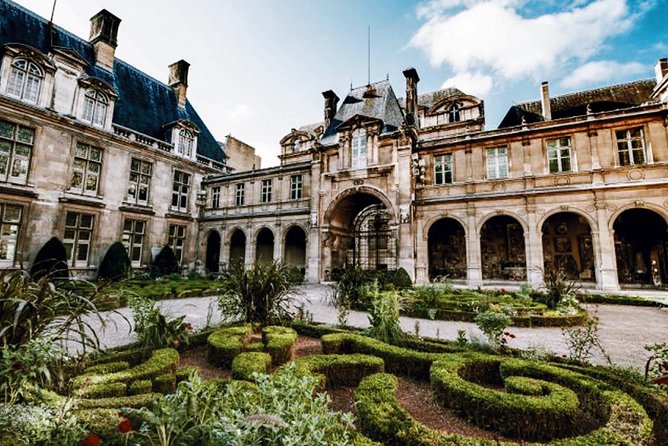
Next you pass the courtyard and garden area of Hôtel de Sully. This is one of those “wait, that’s right here?” moments. The building dates to the 1624–1630 period and shows Renaissance style with Baroque elements. The architects linked to the project—Jean 1er Androuet du Cerceau and Yves Boiret—aren’t just trivia. Your guide uses them to explain how this part of Paris moved toward monumental building and status, not just cramped streets.
If you like architecture, this is a good starter section because it trains your eye. You start noticing entrances, courtyard shapes, and the way mansions sit behind street walls.
Place des Vosges and Rue des Francs Bourgeois: the postcard square with context
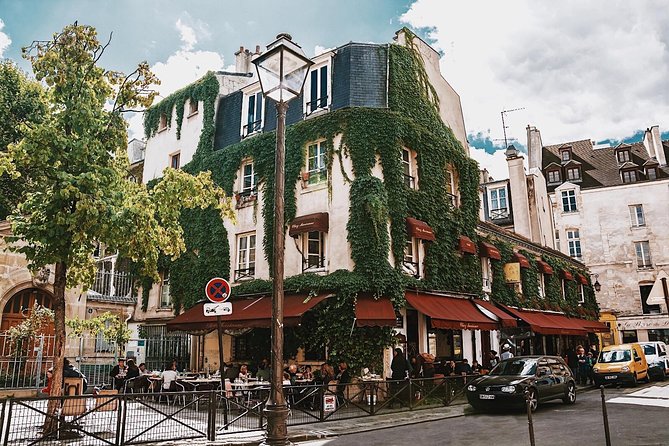
You then hit Place des Vosges, often described as the oldest planned square in Paris. The important value of this stop isn’t only the symmetry and beauty. It also helps you picture how the Marais was designed and ordered, not just grown organically.
After that, you walk along Rue des Francs Bourgeois, a long street known for fashion shops and a lively modern feel. The trick is that the tour doesn’t treat that as the whole point. You’re given background on the mansions lining the area—former homes of the nobility that later found new lives as museums or public spaces.
This is where you’ll start appreciating how Paris layering works. A street can be trendy today and still be tied to older patterns of wealth, power, and neighborhood identity.
Musée Carnavalet area: seeing Paris through the Marais lens
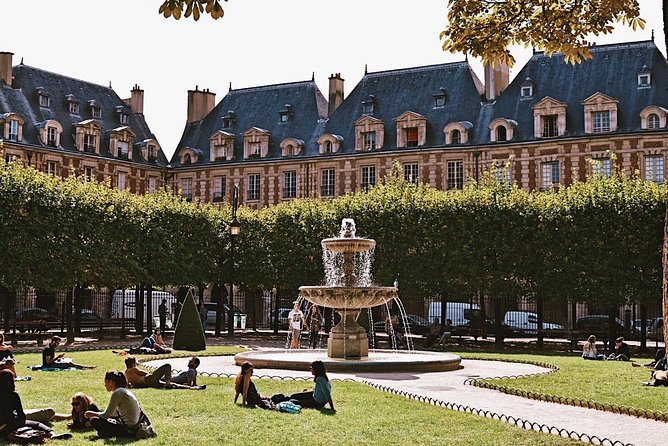
The tour includes a stop by Hôtel Carnavalet and the Musée Carnavalet area. The museum part isn’t listed as free, so plan on this as an optional-cost moment if you want to go in. Still, the value here is the context: Musée Carnavalet is focused on Paris’ past and helps you understand why the Marais looks the way it does today.
Even without paying for every inside visit, just being pointed toward where the city’s stories are housed can shape how you explore later. If you’re the type who likes to keep walking after the tour, this stop can turn into a “now I want to read the rooms” decision.
You can also read our reviews of more guided tours in Paris






The Pletzl streets: Rue des Rosiers and the Jewish Quarter story in motion
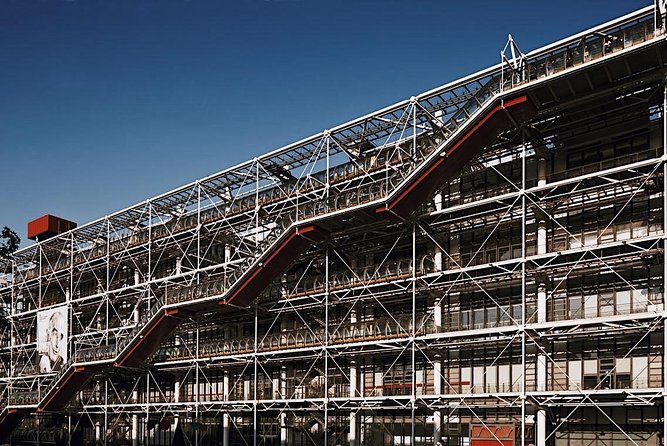
Now comes the heart of the Jewish Quarter component. You walk along Rue des Rosiers, described as sitting at the center of the Jewish quarter. This is one of those streets where the everyday feel matters. Instead of treating it as a historic exhibit, the tour frames it as an active community hub, shaped across the 18th and 19th centuries.
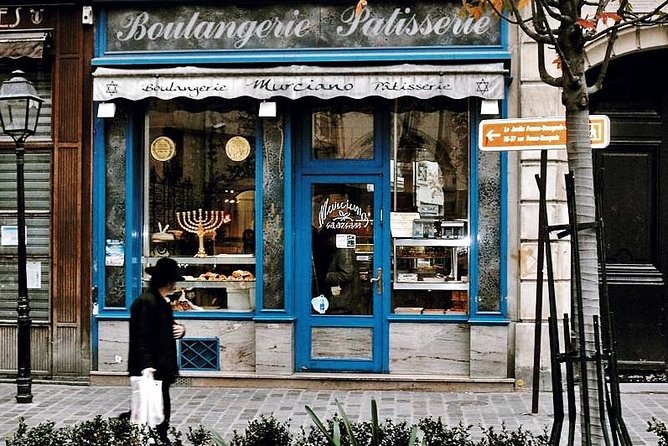
You also see the Pletzl area through the mix of bakeries and boutiques, which is exactly the point. The neighborhood wasn’t only about one building or one event—it was daily life: commerce, food, gathering, and community rhythm.
Then there’s a stop that adds real emotional grounding: the Jardin des Rosiers – Joseph-Migneret. This small garden is tucked between hotels and hidden behind shops, and it’s named for Joseph Migneret, a school principal who helped many students hide during WWII. He was eventually arrested and killed. A garden stop like this can be brief, but it changes how you read the street around it. It reminds you that history sits under normal city life.
Centre Pompidou and the shift to modern Paris
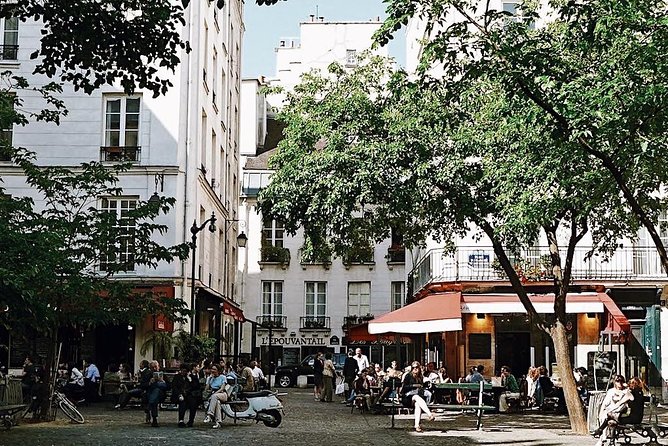
As the tour closes in, you make your way to Centre Pompidou. It’s famous for its exterior and high-tech style, and it shows you the modern direction Paris took after centuries of classic masonry and planned squares. Your guide connects it to the idea behind the complex: bringing together different forms of art and literature in one place.
Even if you don’t go inside (and the tour notes that some admissions aren’t included), seeing Pompidou as a “late chapter” helps your brain make sense of time. You’ve just walked through Renaissance and Baroque influences, plus neighborhood community history. Then you look at a structure that screams contemporary Paris values.
Hôtel de Ville and Saint-Gervais-Saint-Protais: the end cap of power and faith
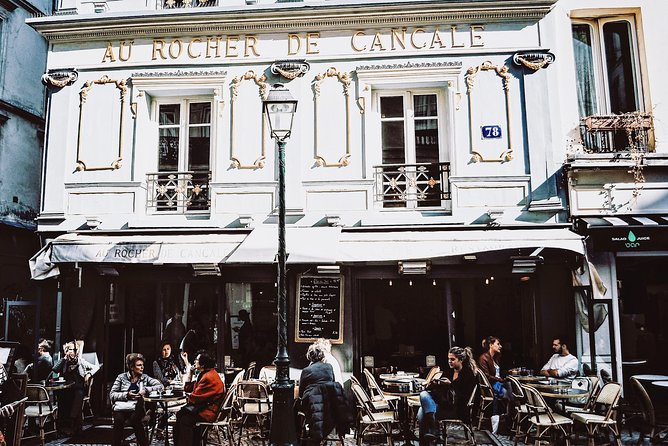
The tour ends near Hôtel de Ville, the City Hall building housing local administration since 1357. That end choice isn’t random. It gives you a strong “center of gravity” moment for Paris: government, public life, and official city identity.
Right next to that, you catch a glimpse of Église Saint-Gervais-Saint-Protais, noted as the first example of French Baroque style in Paris. The tour also mentions it’s now connected with the Monastic Fraternities of Jerusalem, which gives you a snapshot of how buildings can shift roles over time instead of disappearing.
When a tour ends here, you’re set up well for onward plans—cafés, metro connections, and other nearby sights—without needing a long transfer.
Price value: what you get for $59.69 and where costs may pop up
At $59.69 per person, the value is strongest if you care about three things:
- You want a guided walk that covers a lot of major sights without wasting time figuring out routes.
- You like historical context tied to street-level landmarks, not just stand-and-stare monuments.
- You’re okay with outside viewing for some places, because not every stop is an inside visit.
A big plus is that several stops are listed as free admission (including the churches and key outdoor architectural areas). The two spots where entry may cost extra are Musée Carnavalet and Centre Pompidou, listed as not included. So if you love museums and plan to enter both, you should expect additional spending.
The tour also caps group size at 12. That matters. A smaller group often means fewer distractions and more question time—especially useful when the route covers sensitive or complex history.
Small-group style: why the guide matters here
This is the kind of tour where the guide is half the product. The best moments usually come from storytelling and how your guide points out what most people walk past.
From the guide names shared in feedback—Hugo, Eden Mele, Adrien C., Manu, Tamari, Agustina, Emma, and Alasdair—the repeated theme is clear communication and an ability to answer questions without losing the thread. If your guide enjoys working with a group and keeping the pace friendly, it turns a 2.5-hour walk into something you actually remember.
Also, because it’s English-speaking, you can follow details like dates, architectural notes, and the WWII memorial context without guessing.
Things you won’t see (and what that means for planning)
Two planning points are important:
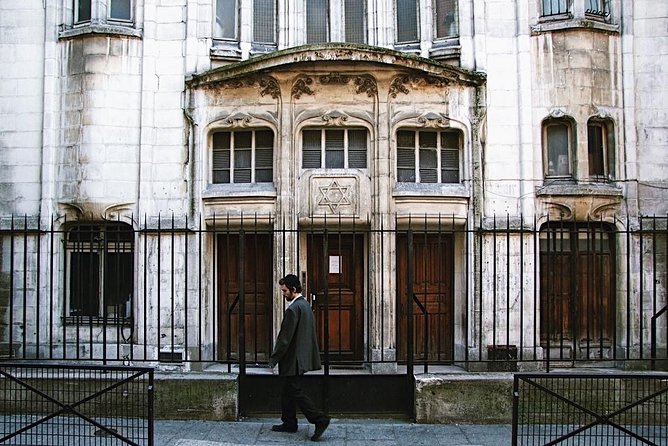
1) No synagogue entry. The tour explicitly does not include access to synagogues because entry is restricted to worshippers for security reasons. You can still understand the neighborhood’s story, but you should not expect interior visits of religious sites.
2) Some sites may be outside-only. Due to security measures at many attractions, some stops can’t be visited from the inside. That’s normal for central Paris sightseeing, but it’s worth keeping in mind so you don’t feel like you missed something.
So if your top goal is interior access—especially for religious buildings—this might not match your wishlist. If your goal is street-level context, architecture, and clear historical framing, you’ll likely feel satisfied with the route.
Should you book this Le Marais and Jewish Quarter walking tour?
I’d book this tour if you want:
- A compact 2.5-hour orientation to the Marais plus a focused Jewish Quarter segment
- A route built around big visuals (Place des Vosges, Hôtel de Sully, Pompidou exterior)
- A guide-driven experience where questions are part of the walk
I might skip it if:
- You specifically want synagogue interior visits (this tour doesn’t offer them)
- You have limited mobility or need wheelchair-friendly pacing (it isn’t recommended for that)
If you’re choosing between a self-guided stroll and a guided one, this is one of those rare situations where guidance saves time and improves understanding. You’ll walk the streets with a clearer map in your head—and that makes your next meal stop and shop wander more fun.
FAQ
Where does the tour start and end?
It starts at Saint-Paul 75004 Paris and ends in the Le Marais area. The route finishes near Hôtel de Ville.
How long is the walk?
The tour lasts about 2 hours 30 minutes.
What group size should I expect?
It’s a semi-private experience with a maximum of 12 travelers.
Is it offered in English?
Yes, the tour is offered in English.
Does the tour include synagogue visits?
No. The tour does not include entry into synagogues because access is restricted to worshippers for security reasons.
Are museum or attraction tickets included?
Some stops have free admission, but Musée Carnavalet and Centre Pompidou are listed as not included.
Is the tour wheelchair-friendly or for limited walking ability?
It is not recommended for those with walking disabilities or using a wheelchair.
Is it free to cancel?
Yes. You can cancel up to 24 hours in advance for a full refund.