REVIEW · PARIS
Paris Walking Tour , Historical Sites .
Book on Viator →Operated by Ned · Bookable on Viator
Paris on foot can feel like magic—especially when you’re not wandering at random. This 3-hour historical sites walk strings together five distinct central neighborhoods, from St-Germain-des-Prés to Le Marais, with stops that explain what you’re actually looking at. I like how the route keeps you moving while still giving you context for each place.
Two things I especially enjoy: the small group size (max 7), which makes it easy to ask questions and get personal answers, and the way the walk connects major monuments with everyday Paris street life. You’ll also hear a guide style that feels lively and human, not lecture-y—one reason people keep talking about Neda.
One possible drawback: because you’re covering a lot in about 3 hours, the pacing won’t be slow. If you want long photo stops, lots of café time, or deep museum breaks, you may need to plan a follow-up visit on your own.
In This Review
- Key takeaways before you go
- A Half-Day Route Through Paris from Saint-Sulpice to Place des Vosges
- Starting at 1 Pl. Saint-Sulpice: The “Why This Area Matters” Moment
- Eglise Saint-Sulpice: Second Largest Church Energy and the Four Cardinal Directions Fountain
- Saint-Germain-des-Prés Quarter: Museums, Food Shops, and a Literary Feel
- Pont Neuf: The Oldest Standing Bridge and Two Different Reigns
- Walking the Seine Toward Île de la Cité: City Island Views You Can Map in Your Head
- Le Marais: Jewish Traditions, Independent Fashion, and Modern Paris All in One Walk
- Place des Vosges: Perfect Symmetry and Victor Hugo’s Address
- Why the Max of 7 Travelers Changes the Whole Experience
- Value Check: Is $96.79 Worth 3 Hours of Walking?
- Practical Tips for This Saint-Sulpice to Le Marais Walking Route
- Who This Tour Fits Best (and Who Might Want Another Option)
- Should You Book This Paris Walking Tour of Historical Sites?
- FAQ
- How long is the Paris historical walking tour?
- Is the tour offered in English?
- How many people are in the group?
- Where do I meet, and where does the tour end?
- Do I need paid admission tickets?
- What ticket format is used?
- Can I cancel for a full refund?
Key takeaways before you go

- Max 7 travelers means better conversation and less “herding”
- A smart mix of Paris eras: 17th-century church, Renaissance bridge, Roman-era island, and 19th-century literature
- Le Marais focus on how Jewish traditions and modern fashion/food overlap in one neighborhood
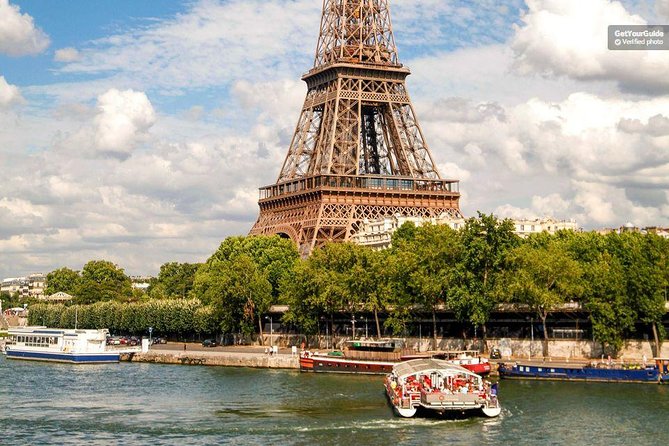
- Seine views on the walk with Notre-Dame and Sainte-Chapelle on your radar
- Place des Vosges finishes with symmetry and a Victor Hugo museum stop
A Half-Day Route Through Paris from Saint-Sulpice to Place des Vosges
This tour is built for people who want “Paris, but with reasons.” In about 3 hours, you cover a chain of sights that sit in different parts of central Paris, so the city doesn’t feel repetitive or like you’re crisscrossing inefficiently.
What makes the route work is the variety. You’re not only seeing famous landmarks—you’re also getting the texture of daily life in neighborhoods like Saint-Germain-des-Prés and Le Marais, where shops, food spots, and culture show up on the same block as history.
The walk also ends in a place that gives you a clean mental finish line. Place des Vosges is symmetrical and easy to reorient around, which helps if this is your first day or your first afternoon in town.
You can also read our reviews of more walking tours in Paris



Starting at 1 Pl. Saint-Sulpice: The “Why This Area Matters” Moment
You meet at 1 Pl. Saint-Sulpice (75006), which is already a good sign for the kind of tour this is. You’re starting on the Left Bank, near major cultural areas, so the early part of the walk sets you up for everything that comes later.
In the first stretch, you’ll get oriented to the area around Saint-Germain-des-Prés and the nearby open spaces. This matters because Paris is dense—once you understand the geography of the Left Bank, the Seine crossing and the move toward Île de la Cité feel more logical.
From a practical point of view, you’re also starting at a transit-friendly area. The tour is described as being near public transportation, so if you arrive early, you can grab coffee and reset before you start walking.
Eglise Saint-Sulpice: Second Largest Church Energy and the Four Cardinal Directions Fountain
The first stop is Eglise Saint-Sulpice, a 17th-century standout that’s described as the second-largest church in Paris. The big draw is the fountain of the four cardinal directions—that’s the kind of detail that’s hard to notice on your own unless someone points it out.
You’ll be seeing the church in an open space, which helps. Churches in Paris can feel like stand-alone monuments, but here the surrounding area gives you breathing room for photos and for simply looking at how the building sits in the neighborhood.
You’ll also be near one of the most pleasant “hang out” zones in the Left Bank area. The stop description notes the church is close to Luxembourg Gardens, so if you’re the type who likes to extend a walk into a slow stroll, you’ll have options right after.
Saint-Germain-des-Prés Quarter: Museums, Food Shops, and a Literary Feel
Next up is the Saint-Germain-des-Prés quarter, where the tone shifts from grand monument to lived-in neighborhood. The tour keeps it to about 35 minutes here, which is enough time to get a real sense of the area without turning it into a shopping marathon.
What I like about this segment is that it’s not just “pretty streets.” It’s framed around places you can actually use on your trip—fine shops, museums, and food markets/food shops. Even if you don’t stop to buy anything, you’ll come away with a clearer idea of where to find quality pastries, casual bites, and a more classic Paris vibe.
There’s also an easy “Paris cred” factor. The neighborhood is known for literary and artistic figures living and working here, so the guide can connect the modern streets to the kind of creative energy people associate with this part of town.
Pont Neuf: The Oldest Standing Bridge and Two Different Reigns

Then you hit Pont Neuf, described as the oldest standing bridge in Paris. You get a quick history hit that actually lands: work began under Henri in 1577, then the project resumed in 1599 during the reign of Henri IV.
That’s a useful lesson because Paris bridge history isn’t just trivia. Bridges shape how neighborhoods connect, where foot traffic flows, and which side feels like the “main” side. When you understand that, it’s easier to follow the river walk that comes next.
Pont Neuf is also one of those sights that works even if you only spend a few minutes there. If you like short, high-impact stops, this fits your style.
You can also read our reviews of more historical tours in Paris






Walking the Seine Toward Île de la Cité: City Island Views You Can Map in Your Head
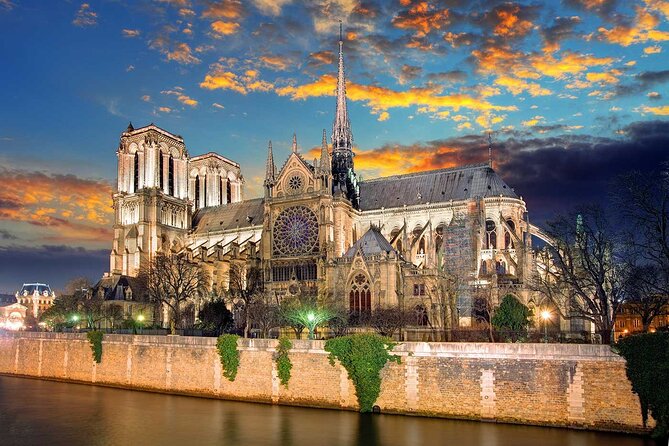
After Pont Neuf, the tour continues by walking along the river and around the City Island area. This part matters because it links major names you may have seen in photos—Notre-Dame de Paris and Sainte-Chapelle are explicitly mentioned as landmark sites you’ll pass by.
The description adds a historical layer that makes the walk feel grounded: City Island is noted as the site of the fortress of the Roman governor. That’s exactly the kind of context that turns a pretty river view into a “this place mattered long before modern Paris” moment.
You’ll also pass areas like the flower market and you’ll have plenty of signals that this is a zone where people linger—restaurants, ice cream spots, and the general “walk-and-sample” energy.
One consideration here: if it’s busy (or if you’re sensitive to crowds near popular landmarks), you may want to keep your expectations for slow movement. The tour format is designed to keep you moving, so you’ll likely be stopping more for viewpoints and orientation than for a long sit-down break.
Le Marais: Jewish Traditions, Independent Fashion, and Modern Paris All in One Walk

This is where the itinerary turns from famous monuments to neighborhood identity. Le Marais is described as a maze of small cobblestone streets with restaurants, independent fashion boutiques, contemporary art galleries, and museums.
What makes this stop especially compelling is the specific cultural angle: the tour highlights a Paris of Jewish life—including delis, bagel shops, and synagogues—alongside a Paris of today with brunch and trendy stores.
If you’ve ever felt like Le Marais is just “cute streets and stores,” this is the kind of route that helps you see it as a living cultural mix. You’re not only shopping with your eyes; you’re learning why certain food choices, traditions, and community institutions sit where they do.
The time here is about 1 hour, which is a sweet spot. It’s long enough to notice how the streets change block to block, but not so long that you lose the plot before reaching the finish.
Place des Vosges: Perfect Symmetry and Victor Hugo’s Address
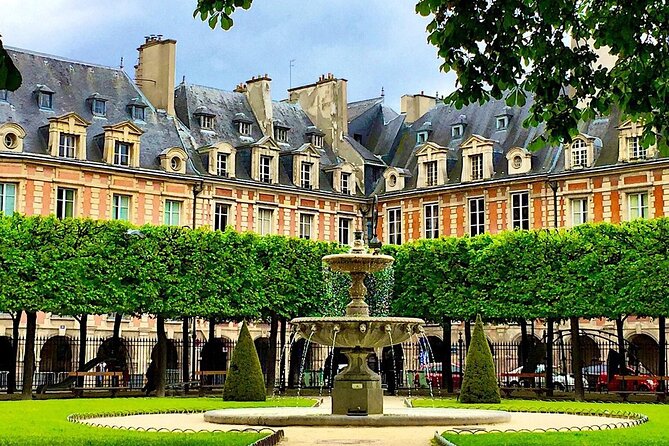
Your final major stop is Place des Vosges, described as one of the oldest squares in Paris and also one of the most beautiful. The key detail is the perfect symmetry—it’s bordered by 36 buildings—and once you stand in the space, that geometric order hits immediately.
The tour gives you a literature tie-in that makes the square more than a backdrop. The Victor Hugo House is mentioned as a museum here, and the tour notes he lived on the second floor from 1832 to 1848.
This ending works well because it gives you a calm, structured finish after a day of streets and landmarks. If you want to plan your next steps, you can use Place des Vosges as your anchor point. It’s easier to decide what to do next when you have a clear “home base” square to return to.
Why the Max of 7 Travelers Changes the Whole Experience
Tours that cap at 7 people can be a big difference in Paris, where it’s easy to get stuck behind the group. Here, the small size is directly tied to something you’ll feel in real time: guide interaction.
That shows up in how questions can get answered on the spot. In practice, it also helps you follow the story of what you’re seeing, instead of constantly catching up to the group’s pace.
It’s also a good setup if you like a two-way style. The guide is described in the feedback as energetic and humorous, and people highlight how well she answered questions and adjusted the walk based on what interested them.
And yes, the guide name that comes up often is Neda. That matters because it suggests continuity: you’re not just getting a generic guide script, you’re walking with someone who’s invested in helping you understand Paris.
Value Check: Is $96.79 Worth 3 Hours of Walking?
At $96.79 per person for about 3 hours, you’re paying for three things: a guided route through prime central areas, a small group experience, and context that would take you much longer to assemble on your own.
Most of the listed stops are marked admission ticket free, which supports the value side of the equation. You’re not spending your time sorting tickets while on the move—you’re paying for direction, timing, and interpretation of what you see.
Also, the tour is booked about 48 days in advance on average, which hints that it’s popular. If your dates are set, it’s smart to reserve early so you can fit it into your first or second day in Paris.
If you’re comparing this to a “see the famous stuff and hope for the best” walk, this one gives you a clearer payoff: you’ll know how and why the neighborhoods connect, and you’ll end in a place where you can keep exploring without feeling lost.
Practical Tips for This Saint-Sulpice to Le Marais Walking Route
A few things will make your day easier:
- Wear comfortable shoes. You’ll be on cobblestones in Le Marais and walking through multiple central areas in a short window.
- Bring water and a light layer. Church exteriors and river-side areas can shift in temperature depending on the time of day.
- If this is your first afternoon, consider using the walk to set your internal map. The route helps you orient the Left Bank, the Seine crossing zone, and the Marais area in one go.
- Since it’s in English with a mobile ticket, you’ll want to have your phone charged and ready to show the ticket when you start.
One more plus: service animals are allowed, and the start/end points are in neighborhoods near transit. That can matter if you’re planning the rest of your day around museums, meals, or a longer stroll afterward.
Who This Tour Fits Best (and Who Might Want Another Option)
This tour suits you best if you like:
- A structured walking plan with major historical and cultural stops
- Neighborhood stories that connect food, fashion, and community life (especially in Le Marais)
- A small group setting where it’s normal to ask questions
It may be less ideal if:
- You prefer slow, sit-down sightseeing with minimal walking
- You want deep museum time inside multiple major attractions during the same outing
Still, even for experienced Paris returnees, this kind of route can be helpful. It’s designed to connect well-known names like Notre-Dame and Sainte-Chapelle with specific neighborhood texture, so you’re not only collecting photos.
Should You Book This Paris Walking Tour of Historical Sites?
If you want a smart, concentrated way to see Paris from the Left Bank to the Marais, I’d book it. The price can make sense because you’re getting a short, guided route with free-admission-style stops and a group size that makes the experience feel personal.
I’d especially recommend it if Le Marais is on your list but you don’t want to treat it like a generic shopping district. The tour’s emphasis on how Jewish traditions intersect with food and fashion gives you a richer “why” than you’d get from wandering alone.
If your schedule allows only one guided walk early in the trip, this is a strong candidate. It sets up the rest of your Paris day with an internal map you can actually use.
FAQ
How long is the Paris historical walking tour?
It runs for about 3 hours.
Is the tour offered in English?
Yes, it is offered in English.
How many people are in the group?
The tour has a maximum of 7 travelers.
Where do I meet, and where does the tour end?
You start at 1 Pl. Saint-Sulpice, 75006 Paris and end at Place des Vosges, 75004 Paris.
Do I need paid admission tickets?
The listed stops for this tour are marked admission ticket free.
What ticket format is used?
You get a mobile ticket.
Can I cancel for a full refund?
Yes. Free cancellation is allowed up to 24 hours in advance for a full refund.