REVIEW · PARIS
From Paris: Normandy D-Day Landing Beaches Full-Day Tour
Book on GetYourGuide →Operated by Blue Fox Travel · Bookable on GetYourGuide
A 12-hour ride that lands you in 1944. This Normandy day trip focuses on the D-Day landing beaches, guiding you through the key sites of 6 June 1944 with battlefield maps, plans, and wartime photos that make the story click fast. You’ll also see real, stubborn German defensive structures—stuff that still looks like it belongs to the war.
I love the small-group minibus setup (max 8). It keeps the day personal, with time to ask questions and actually hear the guide without fighting for space. And I especially love the emotional finish at the American Cemetery, where more than 10,000 white cross graves make the scale of the sacrifice impossible to ignore.
The main drawback is that the day is packed timing. You’ll be moving from site to site for a full day, and food isn’t included—so plan ahead and don’t assume you can “grab something” whenever the day feels tight.
In This Review
- Key things I’d prioritize on this tour
- From Paris to Normandy: a long day, but it’s built to make sense
- Longues-sur-Mer battery: seeing the war from the German side
- Omaha Beach and German bunkers: tide, distance, and the cost of approach
- Operation Overlord Museum: campaign planning that you can actually see
- Lunch break: plan for your own food, not “automatic” meals
- Pointe du Hoc: the cliff that turns geography into danger
- Wine (or local producer) tasting: a short pause with a connection to the region
- American Cemetery at Omaha: 10,000+ crosses and the sound of remembrance
- Price and logistics: what you’re really paying for at $312 per person
- What you’ll learn (and what to bring mentally)
- Who this tour is best for (and who should skip it)
- Should you book this Normandy D-Day full-day tour?
- FAQ
- What time does the tour return to Paris?
- Where is the meeting point in Paris?
- How big is the group?
- How long is the tour?
- What’s included in the price?
- Is lunch included?
- Does the tour run in bad weather?
- What sites will we visit?
- Is the Overlord Museum guaranteed to be open?
- Is this tour suitable for children or wheelchair users?
- Will we have a chance to see Taps or a ceremony at the cemetery?
Key things I’d prioritize on this tour
- Max-8 small-group pacing that leaves room to reflect, not just photo-stop
- American Cemetery timing, with some schedules aimed at the flag ceremony and Taps
- Omaha Beach at the best tide, when your guide can line it up for what you need to see
- Overlord Museum with skip-the-line entry, so you don’t waste time in queues
- Clifftop scale at Pointe du Hoc, where the terrain explains the danger better than any map
- Guides who use real campaign visuals, including maps and D-Day photos in the van
From Paris to Normandy: a long day, but it’s built to make sense
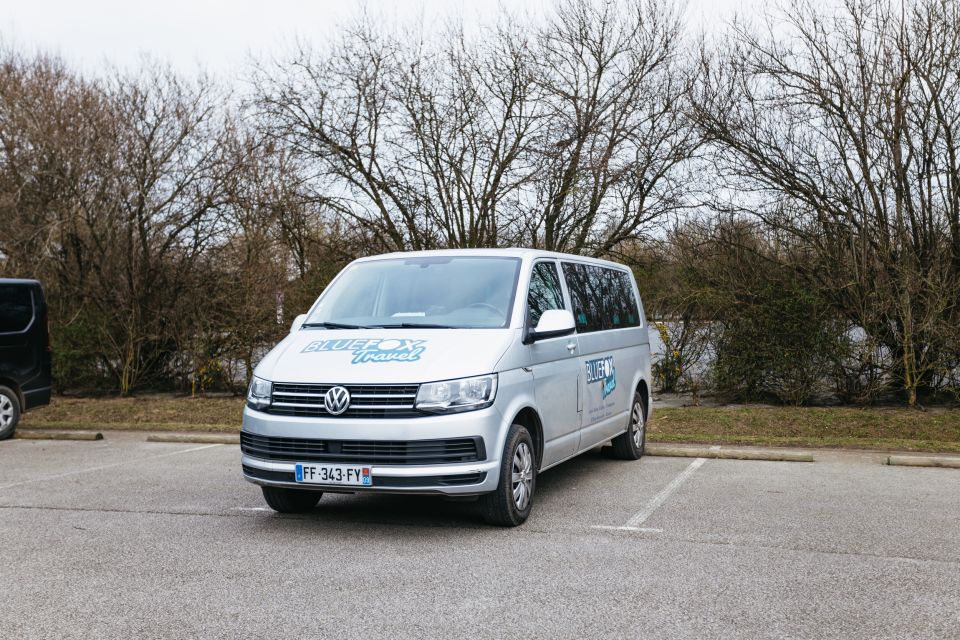
You start in Paris at 6 Avenue de Wagram, meeting your driver/guide in a gray minivan about ten minutes before departure. Then you’re on the road for roughly 2.5 hours each way, watching Normandy’s countryside roll by while your guide frames the day’s story.
Here’s what makes this format work for me: you don’t just drive past places and then run around. The guide sets up geography and strategy early, so when you finally reach the shoreline sites, you’re not lost in a fog of locations. Instead, you’re seeing why these spots mattered—what the attackers needed, what the defenders built, and how the campaign plans matched the terrain.
This is also why small-group matters. With a max of 8 participants, the guide can pause, re-explain, and keep the group together without turning every stop into a race.
A few more Paris tours and experiences worth a look


Longues-sur-Mer battery: seeing the war from the German side
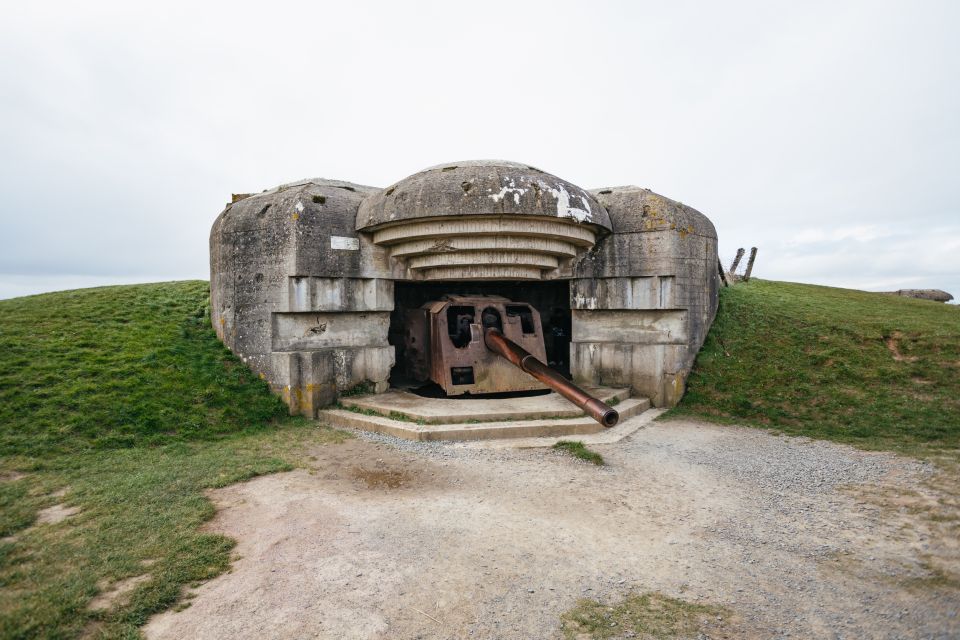
The day begins with a stop at the Longues-sur-Mer battery, where you get a short look at the kind of coastal defenses Allied troops had to contend with. Even if you’re not a military-gear person, you can start connecting the dots: the beaches weren’t just “sand and waves.” They were ringed with hardened positions built to resist landing craft and suppress movement.
Because you’re there early, you also get a mental warm-up. You’ll start noticing details that later become important at places like Omaha Beach—angles, lines of fire, and how the coast shape affects visibility and landing routes.
Time is tight here (about 30 minutes), so don’t expect a museum-style tour. Think of it as orientation: the goal is to help you look at the next sites with smarter eyes.
Omaha Beach and German bunkers: tide, distance, and the cost of approach
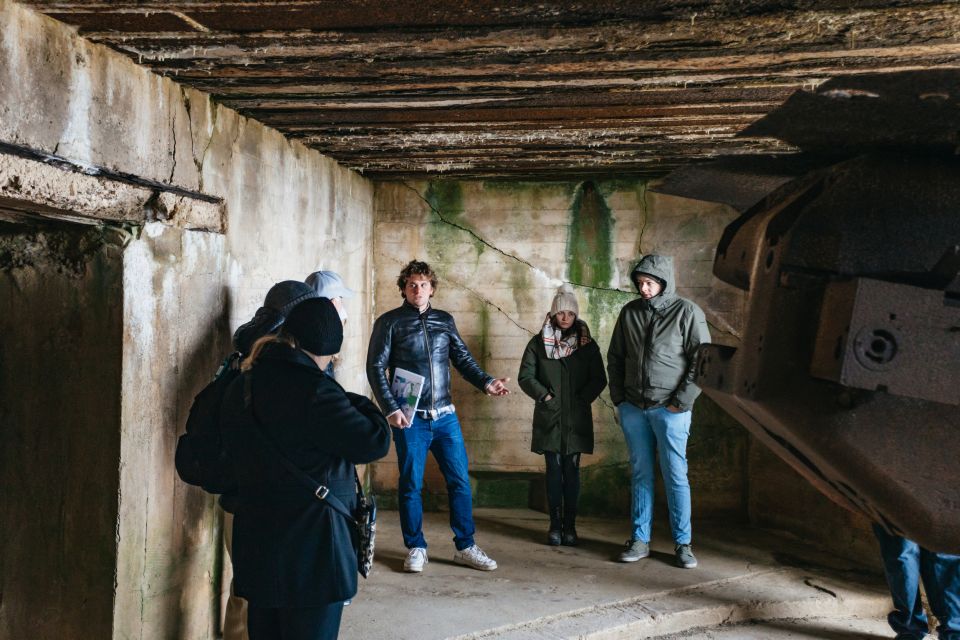
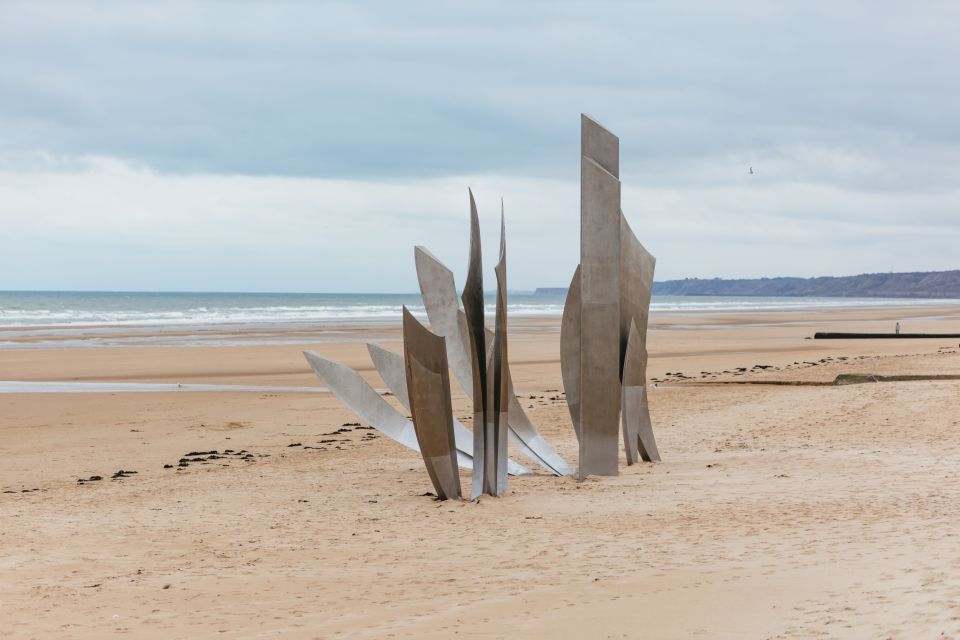
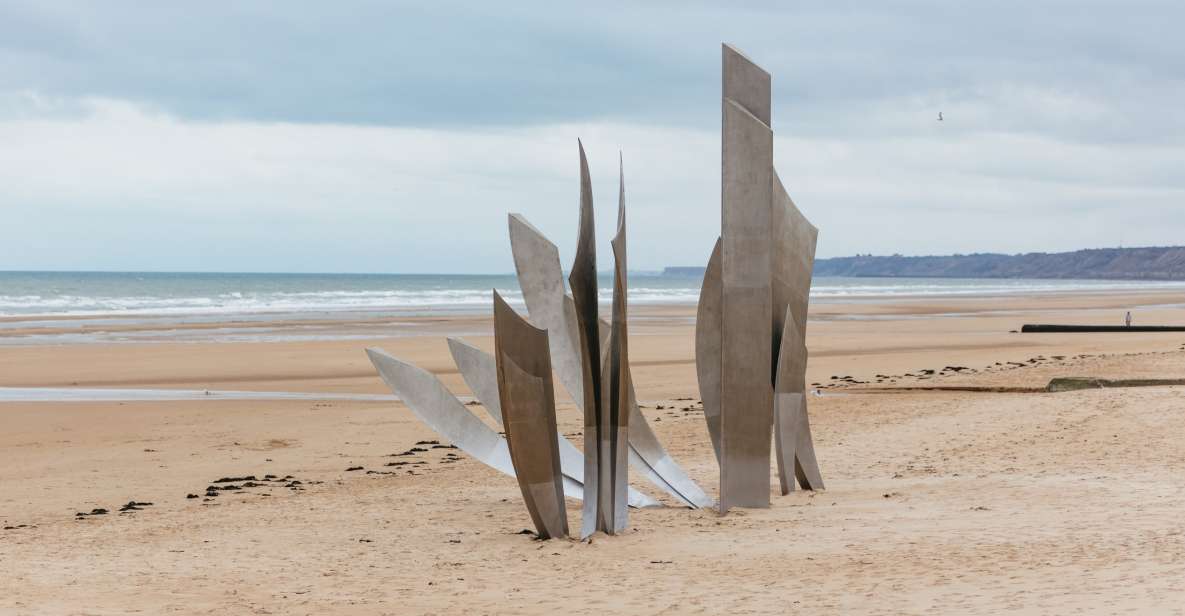
Omaha Beach is the headline stop, and for good reason. Your schedule gives you time to see the shore where American troops fought and died to help liberate Europe, then you move on to the wartime fortifications—German concrete bunkers—that Allied planners had to neutralize.
One detail I really like from the day-to-day operation: some guides time the Omaha experience for lower tide when conditions allow. That matters. When the waterline pulls back, you get a clearer sense of what soldiers faced—how far they had to travel under fire, and how the beach can look deceptively easy until you add the real-world chaos of landings.
This stop also tends to be where the guides’ style shows. People often mention that the day feels haunting and emotional, not because the guide tries to sensationalize, but because the guide connects visible terrain to what the soldiers would have seen and tried to do.
A small practical note: Omaha is a beach environment. Bring a layer even if Paris feels warm. Wind can make the day feel colder than you expect.
Operation Overlord Museum: campaign planning that you can actually see
Next up is Operation Overlord Museum. The big win here is simple: you get museum entry, and you skip the line using a separate entrance. For a one-day tour from Paris, that’s huge. It keeps you from losing time to queues and lets you spend it inside where you need it.
What I like about this museum stop is that it shifts you from “where things happened” to “how the operation was planned.” Since the tour also brings military maps, plans, and photos into the story throughout the day, the museum helps you connect those visuals to real artifacts and exhibits.
You get about 45 minutes at the museum, which is enough to leave you with a stronger framework for the rest of the battlefield stops. It’s not a full deep-study experience, but it’s a good anchor for the day’s main question: how did the Allies translate intelligence and strategy into an attack on a hostile shoreline?
In an exceptional closure scenario, the museum may be replaced by the American Cemetery Visitor Center, so it’s still possible to get a meaningful context stop even if the museum can’t be accessed.
Lunch break: plan for your own food, not “automatic” meals
Lunch happens as a 75-minute break, but food isn’t included in the tour price. That means you should treat this as your one real chance to reset during a long day.
From what’s been described, the lunch stop is typically at a local restaurant rather than a tourist trap. I’d still recommend you bring a backup snack or plan a quick coffee after lunch, because the rest of the day continues to move at a steady pace.
If you’re the type who hates making choices under time pressure, consider this your moment to decide before you’re hungry.






Pointe du Hoc: the cliff that turns geography into danger
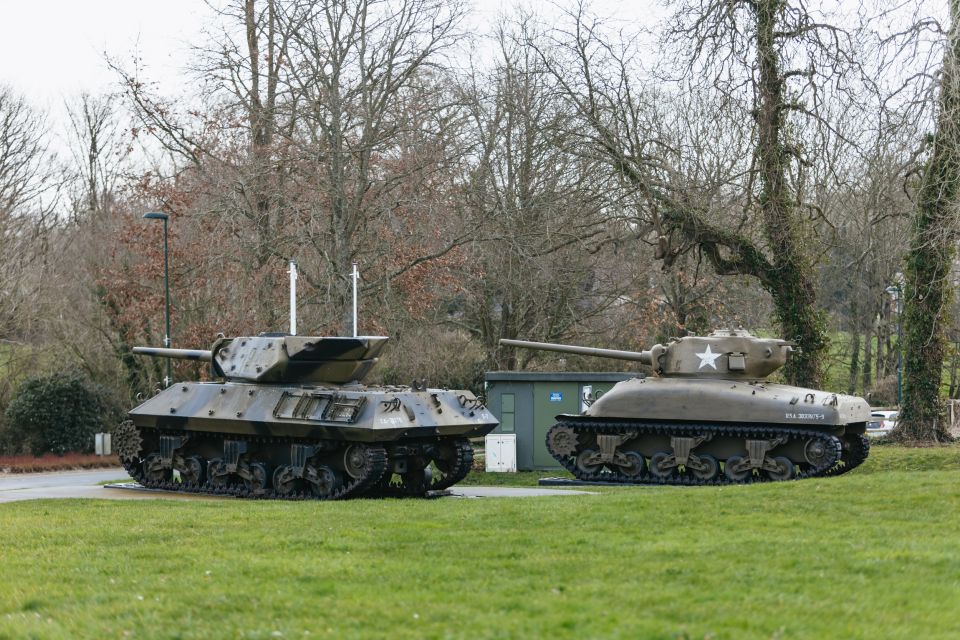
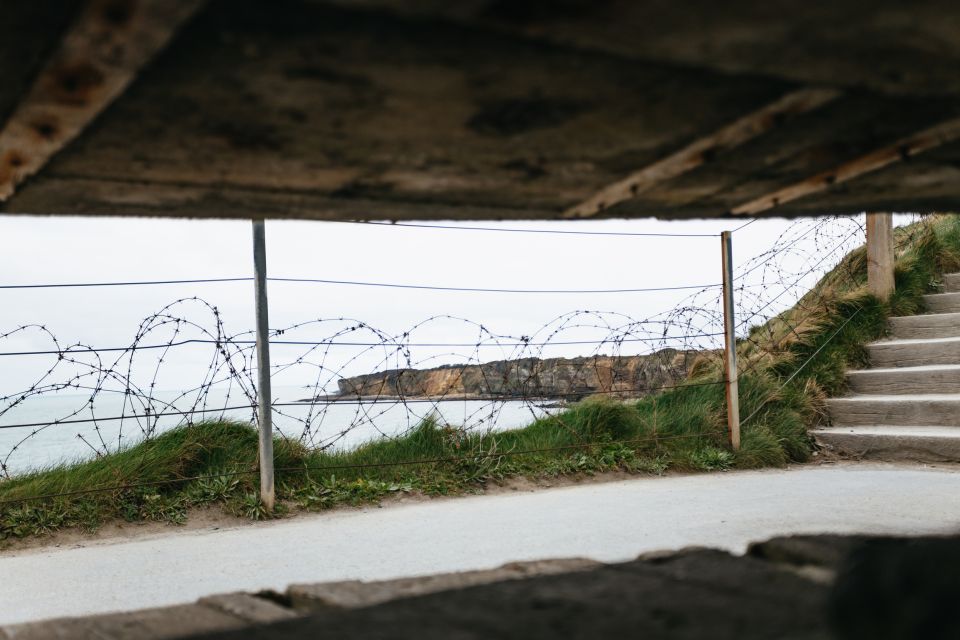
After lunch you head to Pointe du Hoc, with about 45 minutes there. This is the kind of site where the landscape isn’t background—it’s the whole point.
You’ll stand in the area tied to the fight for the high ground, where Allied troops faced steep terrain and a brutal question: can you reach the objective while defenders are watching? Standing there makes it harder to treat the battle like a timeline on a screen. The cliffs force your brain to do the math on distance, exposure, and timing.
Here’s a practical tip: wear shoes that handle uneven ground and possible slippery surfaces. This isn’t a groomed city sidewalk moment. It’s battlefield terrain.
Wine (or local producer) tasting: a short pause with a connection to the region
You’ll have about 15 minutes for a tasting stop. The tour description lists it as wine tasting, and in past days people have also talked about an apple cider stop at a multi-generation property, so expect a quick regional sip-and-learn moment rather than a full “activity.”
I don’t think this stop is the main reason to book the tour. It’s more like a mental breather between heavier scenes. If you’re not into tastings, use this time for a restroom break and a chance to cool down (or warm up) before the emotional finish.
The best way to enjoy it is to treat it as a palate reset, not a centerpiece.
American Cemetery at Omaha: 10,000+ crosses and the sound of remembrance
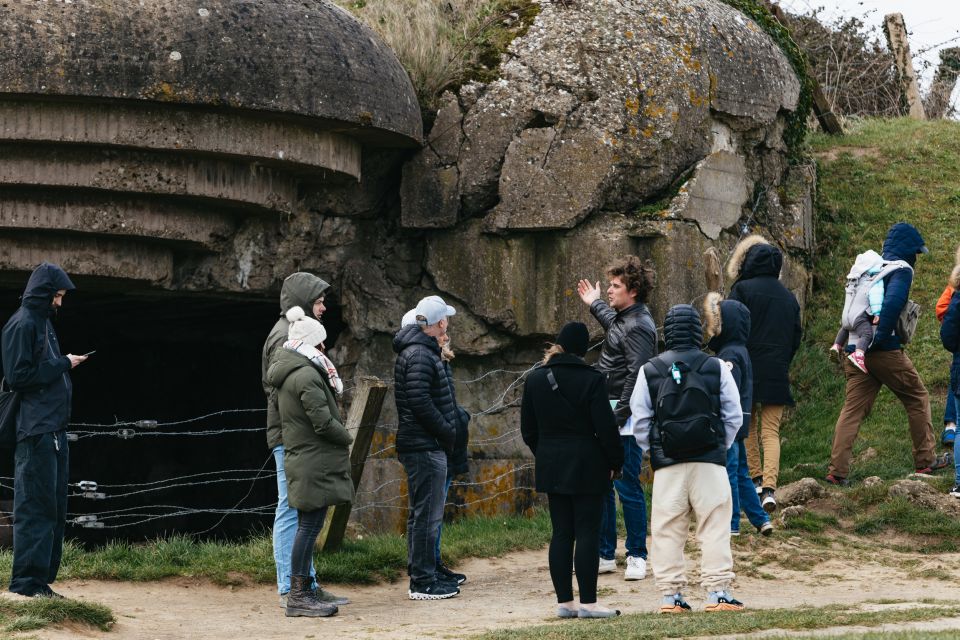
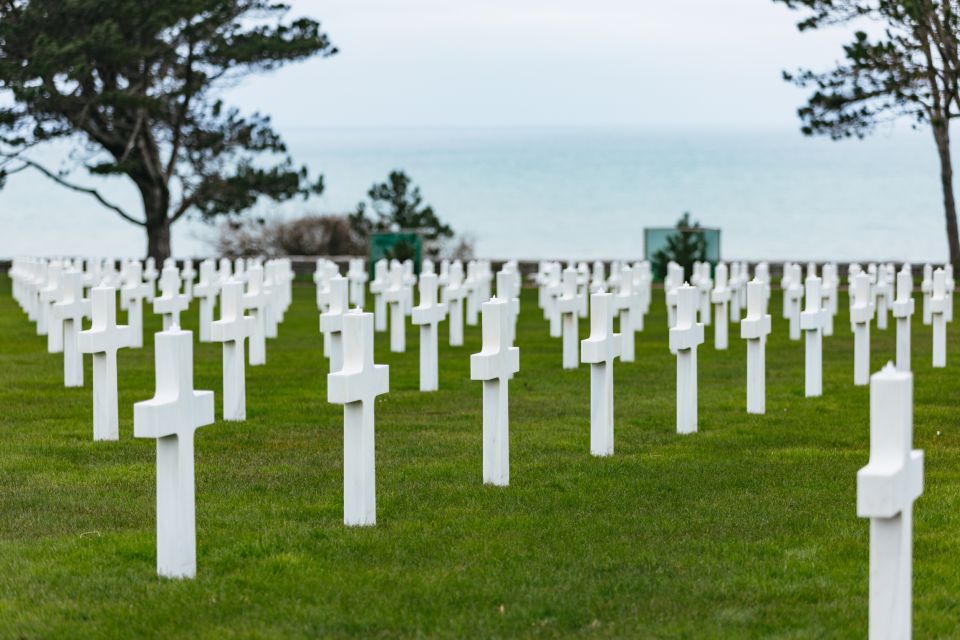
The emotional core of the day is the Normandy American Cemetery, with time for about 45 minutes. This is where you look at more than 10,000 white cross graves, each one marking a fallen soldier. The cemetery is meticulously maintained, and that matters, because it makes the scale feel even more personal.
One reason people get emotional here is schedule. Several groups note that their guide aimed to reach the cemetery for the flag ceremony and the playing of Taps (around 4pm when timing works). Even if you don’t catch the ceremony, the site still lands with full force.
What I really appreciate is that guides usually give you room to be quiet. Not everyone needs a lecture at the exact moment their brain starts to process loss. A good guide helps you hold the moment without stealing it.
If you’re prone to getting overwhelmed, bring that awareness with you. The cemetery hits hard, and a controlled pace makes it easier to take it in.
Price and logistics: what you’re really paying for at $312 per person
At $312 per person for about 12 hours, this isn’t a cheap day trip. So let’s talk value the practical way.
You’re paying for four things you’d have trouble replicating smoothly on your own from Paris:
- Transportation in a comfortable small minibus for the full drive time
- An English-speaking guide who connects sites with campaign context
- Operation Overlord Museum entry with skip-the-line handling
- Small-group pacing that keeps the day from becoming a sprint
The main cost you still handle is food, since lunch isn’t included. Also, the itinerary is time-boxed, so you won’t get days and days in Normandy. But for someone who wants the highlights—Omaha Beach, Pointe du Hoc, the Overlord context, and the cemetery—this one-day format is often the best return on time.
If you want a slow, multi-day deep dive, you might feel the time limits. If you want a sharp, guided storyline with the biggest sites covered, the price starts to look fair.
What you’ll learn (and what to bring mentally)
This isn’t just a list of places. It’s a guided storyline about how the landings affected the liberation of France and the end of the war. The guide’s approach tends to be visual and practical: military maps, plans, and photos are used to show what attackers tried to do and where things went wrong or right.
Many people also mention that their guides brought wartime realism into the van—like playing broadcasts from 1944 during the drive between battlefield sites. Even if you’ve read about D-Day before, hearing the campaign atmosphere while you travel between locations can make the day feel more connected.
So come with two expectations:
1) You’ll cover a lot of ground.
2) You’ll leave with better mental links between the sites, instead of isolated memories.
Who this tour is best for (and who should skip it)
This works best for you if:
- You want a one-day Normandy hit with the core D-Day sites
- You like learning in a guided, map-based way rather than wandering solo
- You value a small group (max 8) and better attention at stops
You may want to skip it if:
- You need a fully accessible tour (the tour is not suitable for wheelchair users and has a minimum age of 7)
- You dislike long days and tight schedules (it’s a full-day commitment)
- You’re extremely sensitive to emotionally heavy sites. The cemetery is powerful, and the day aims to include that impact.
Should you book this Normandy D-Day full-day tour?
If your goal is to see the most important Normandy landing sites in one organized day, I think this is a strong choice. The biggest winners are the small-group setup, the guide-led context (including maps and campaign visuals), and the emotional finish at the American Cemetery. If you’re willing to handle a packed schedule and plan for your own food, you’ll likely feel like you made real progress—not just checked boxes.
If you’re still undecided, use this simple test: do you want a guided storyline and maximum key sites in limited time? If yes, book it. If you want a slow, detailed Normandy stay with zero pressure, consider a multi-day trip instead and spread the sites out.
FAQ
What time does the tour return to Paris?
The tour returns to Paris at around 20:00, depending on traffic.
Where is the meeting point in Paris?
Meet your driver/guide at 6 Avenue de Wagram. The minivan typically arrives about 10 minutes before departure.
How big is the group?
This is a small-group tour with a maximum of 8 participants.
How long is the tour?
The total duration is about 12 hours.
What’s included in the price?
Included are an English-speaking guide, transportation by minibus, and Operation Overlord Museum entry. You also get skip-the-line museum access via a separate entrance.
Is lunch included?
No. Food is not included. The day includes a lunch break, but you’ll pay for your meal.
Does the tour run in bad weather?
Yes. The tour operates rain or shine.
What sites will we visit?
You’ll visit Normandy’s landing-area sites including Longues-sur-Mer battery, Omaha Beach, Operation Overlord Museum, Pointe du Hoc, and the Normandy American Cemetery.
Is the Overlord Museum guaranteed to be open?
If the museum is closed unexpectedly, it may be replaced by the American Cemetery Visitor Center.
Is this tour suitable for children or wheelchair users?
It is not suitable for children under 7 and not suitable for wheelchair users.
Will we have a chance to see Taps or a ceremony at the cemetery?
Your schedule may be arranged so you can be at the cemetery for the flag ceremony, and some groups report being there for Taps around 4pm when timing works.