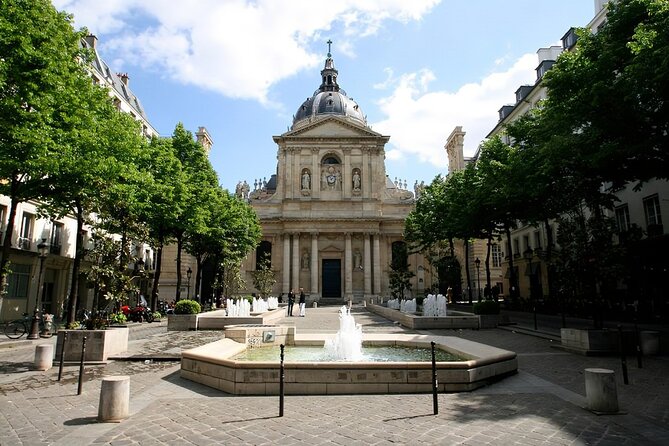
If you like your Paris with context, this walk fits. You’ll move fast—covering big sights in about 1 hour 30 minutes—while a local guide explains how each place fits into the city’s story. It’s a strong first-time option when you want orientation without spending your whole day in museums.
I like two things a lot here. First, you get major historic Paris stops close together, so you’re not hopping around between far-flung neighborhoods. Second, the guide-led explanations connect religion, politics, and everyday street life—from early Christian Paris to WWII-era memory—so you leave with a mental map, not just photos.
One caution: several stops are exterior or brief photo points, and admission tickets aren’t included for many major sights. If you want longer inside time at Notre-Dame, Sainte-Chapelle, or the Louvre, you’ll need extra planning (or tickets) after the tour.
In This Review
- Key things to know before you go
- Paris history walking tour: a smart way to get your bearings fast
- Where the tour starts: Parvis Notre-Dame to Tuileries finish
- Notre-Dame on day one: why this building carries more than beauty
- Eglise Saint-Julien Le Pauvre: the quieter clues of early Paris
- Sainte-Chapelle: saints, kings, and why the stories matter
- Pont Saint-Michel and the Latin Quarter: WWII memory in plain sight
- Pont Neuf: geography, ancient origins, and a famous king
- Eglise St-Germain l’Auxerrois: a darker thread near the Louvre
- Louvre courtyards: why history outside the museum still counts
- Arc de Triomphe du Carrousel and the Tuileries: Napoleon to everyday culture
- Price and value: $36.12 for 90 minutes of context
- The walking level: fast, focused, and mostly outside
- Who this tour is best for
- Should you book the Paris History Walking Tour?
- FAQ
- FAQ
- How long is the Paris History Walking Tour?
- What’s the group size like?
- Is the tour offered in English?
- Do I need tickets for the places we stop at?
- Where does the tour start and where does it end?
- Is it easy to reach the meeting point and finish?
- What level of walking should I expect?
- Is free cancellation available?
Key things to know before you go

- Small group (max 15) keeps the pace human and questions realistic
- English-speaking guide adds context you won’t get from wandering alone
- Notre-Dame to the Tuileries gives quick, practical orientation for first visits
- Some sites require separate admission, so you’re mostly there for story + views
- Finish near two Metro stations for an easy hop to your next stop
- Most stops are short (about 10 minutes each), so expect a brisk-but-doable walk
Paris history walking tour: a smart way to get your bearings fast

Paris can feel like a thousand separate trips glued together. This tour helps you stitch it into one readable timeline—without making you wait hours in lines or commit to a full-day museum plan.
The format is simple: you’ll walk a compact route through some of the most recognizable corners of central Paris, pausing at key sites to learn how they relate to one another. The route focuses on the old heart of the city and its power centers, moving from the Île de la Cité (Notre-Dame and Sainte-Chapelle) toward the Latin Quarter, then into the Louvre/Tuileries orbit.
The small-group limit (up to 15 people) matters. It keeps the group from spreading out across sidewalks, and it makes it easier to hear the guide’s explanations as you move. If you enjoy asking questions mid-walk, this setup gives you that chance.
And the timing works: at about 90 minutes, you’ll get a broad overview and still have the rest of the day for choosing what to revisit.
You can also read our reviews of more walking tours in Paris



Where the tour starts: Parvis Notre-Dame to Tuileries finish

The tour begins at the Parvis Notre-Dame – Place Jean-Paul II (75004). That location is ideal because it drops you right at the symbolic center of the city’s medieval story. You’re also close to transport, which helps on arrival day when your feet and time are already under pressure.
It ends at the Tuileries Garden (75001). The best part here is convenience: there are two Metro stations within about a 3-minute walk. That means you can finish the tour and get moving immediately—whether you’re heading to a café in the 1st/2nd arrondissement, an afternoon activity, or an evening plan.
The finish location is also strategically helpful. The Tuileries sits between major sights (and tourist routes), so it’s a natural launching point for whatever you decide next.
Notre-Dame on day one: why this building carries more than beauty
You start at Cathedrale Notre-Dame de Paris. The guide frames it as a place with a layered past: the conception of the cathedral, and then the controversies and wars it has endured over time. Even if you only see it from the outside (the tour notes admission isn’t included), you’re learning how Notre-Dame became more than architecture—it turned into a symbol of national identity and cultural memory.
Here’s why this stop works so well early in your visit. Notre-Dame sits at the crossroads of major themes that keep showing up in Paris: faith and state power, wealth and conflict, and the constant rebuilding of the city after upheaval. When you understand that, the rest of the walk feels less random.
Timing is also realistic. This is a short pause (about 10 minutes), enough for context and photos without pretending you can truly “see” the cathedral in one break. If you want a longer interior visit later, the tour is still a good opener.
Eglise Saint-Julien Le Pauvre: the quieter clues of early Paris

Next up is Église Saint Julien le Pauvre. This stop is about evidence—Roman and early Christian Paris—plus the idea that the streets here remind you of Paris before the 19th-century Haussmann rebuilding.
What I like about this kind of stop is that it changes the pace of your attention. You’re not only chasing famous monuments. You’re learning how layers of time can exist in the same small area. This church is a hint that Paris isn’t just “famous sights,” but also smaller survivals that tell you what the city was like long before modern boulevards.
One practical note: the tour gives you a brief look (about 10 minutes), and admission is not included. If you’re specifically interested in church interiors, you might want to treat this stop as orientation and plan a separate revisit.
Sainte-Chapelle: saints, kings, and why the stories matter

The tour then moves to Sainte-Chapelle, located in the heart of the Île de la Cité. The guide focuses on saints, kings, and relics—so even if you’ve seen pictures, you’re getting the human meaning behind the artistry.
This stop is valuable because it shows how religion and politics were tangled together in medieval Paris. Saints and relics weren’t just devotional topics; they were part of a world where power, legitimacy, and public spectacle often marched together.
Again, it’s a short stop (about 10 minutes), and admission isn’t included. That means you should go in knowing your time here is more about understanding the place than spending a long chunk of time inside. If you want the full Sainte-Chapelle experience, consider adding extra time before or after your guided walk.
You can also read our reviews of more historical tours in Paris






Pont Saint-Michel and the Latin Quarter: WWII memory in plain sight

From there, you cross at Pont Saint-Michel. This is where the story shifts into the 20th century. The guide uses the bridge to talk about WWII and the idea of the Lost Generation, tying it into the Latin Quarter.
I like this approach because it breaks the “medieval only” spell people can fall into on history trips. Paris history is not just old stones—it’s also trauma, remembrance, and how modern life sits on top of older streets.
The tour notes this is a free admission stop. That’s good value if you want to keep costs down while still learning. It’s also a reminder that you don’t need to pay at every stop to feel like you’re “doing something.”
Pont Neuf: geography, ancient origins, and a famous king

Next is Pont Neuf, another excellent teaching point for how Paris fits together. The guide uses the bridge to explain the geography of Paris as well as its ancient beginnings, then connects it to one of France’s most famous kings.
Pont Neuf is a great place to learn from because bridges are natural viewpoints. They give you a sense of direction and scale—how the city bends around water and how key areas link up.
This is another free admission stop, and it also keeps the cost-per-stop feeling friendly. At about 10 minutes, it’s enough time to absorb the story without making you feel trapped on one sidewalk corner.
Eglise St-Germain l’Auxerrois: a darker thread near the Louvre

Then you head to Église St-Germain l’Auxerrois, perched right on the edge of the Louvre complex. The focus here is on the French Wars of Religion and the roots of some of the darker moments. It’s not a stop you’d necessarily pick just by walking around—so it adds variety to the route.
What I appreciate about this stop is that it balances the “pretty Paris” narrative. The church connects to conflict and consequence, helping you understand why the city has both art and wounds in the same neighborhood.
This stop is brief (about 10 minutes), and admission isn’t included. If you want to linger, treat the guided visit as the story primer and then decide on your own whether you want more time inside later.
Louvre courtyards: why history outside the museum still counts
The tour walks through the courtyards of the Louvre complex. Instead of treating the Louvre as a full museum day, the focus is on the history of the complex and glimpses of iconography you might otherwise miss.
This is where the tour shines for time-pressured visitors. Many people think you must go inside the Louvre to understand it. But courtyards still communicate how the Louvre functioned—power, prestige, design choices, and symbolism—often right in plain view.
Expect this to be a quick stop (about 10 minutes) with no included admission. In other words: it’s a guided orientation and a visual nudge, not a ticketed museum tour. If you plan to do the Louvre later, this walk can make your later visit much more meaningful.
Arc de Triomphe du Carrousel and the Tuileries: Napoleon to everyday culture
You’ll then learn about Napoleon Bonaparte at the Arc de Triomphe du Carrousel, before heading into the Tuileries Garden. This part of the route acts like a bridge between “power monuments” and “Parisian culture.”
The final stop in the Jardin des Tuileries is about stories of Parisian life tied to some of the most famous kings. Even though it’s the end of the tour, it doesn’t feel like a random finish. It’s a practical place to land: open space for a breather, close to transport, and surrounded by major nearby sights.
Since admission isn’t included for the garden stop (it’s part of the outdoor experience), it’s a good place to take in the scale of the central Paris layout before you go off on your own.
Price and value: $36.12 for 90 minutes of context
At $36.12 per person for about 1 hour 30 minutes, this tour sits in a sensible budget zone for what you get: guided storytelling across multiple landmark areas that would otherwise require you to piece together information yourself.
Here’s the value logic I use for tours like this:
- You’re paying for time saved and context delivered.
- The route hits major sights, but it’s not an all-day museum slog.
- The small group size helps you get meaning, not just movement.
Now for the drawback tied to value: several stops don’t include admission tickets. That means the price covers the guide experience and walking route, but not full ticketed entry for major interiors. If you want to do lots of inside time, you’ll still pay separately afterward.
Still, as an “orientation + history framework” purchase, it can be a strong deal—especially if it helps you decide which places deserve your attention later.
The walking level: fast, focused, and mostly outside
The tour is marked as suitable for moderate physical fitness. With short stops (about 10 minutes each), you’re not doing long stretches of unbroken walking. But you are on your feet through multiple central-city sections, so comfortable shoes matter.
Also, a history-walk like this is meant to be efficient. You’ll likely spend more time listening and looking than standing around waiting. If you prefer long, unhurried museum pacing, you might find the tour’s momentum a little brisk. If you like moving, learning, and then choosing your next stop on your own, you’ll feel right at home.
Who this tour is best for
This is a good fit if you:
- are seeing Paris for the first time and want a fast overview
- like history that connects people and events to specific places
- want to learn in English without building your own research plan
- prefer small groups (up to 15) over large coach-style crowds
It’s also a strong choice if you’re the kind of traveler who enjoys a guided “map in your head” before exploring further. The route ends in an area where it’s easy to continue your day.
Should you book the Paris History Walking Tour?
I’d book it if you want a compact, guided story from Notre-Dame through the Latin Quarter and into the Louvre/Tuileries zone—and you’re okay with many stops being short and exterior-focused. At $36.12, the price makes sense as a history primer, not a full ticketed museum day.
I would hesitate if your top priority is spending a lot of time inside the big-ticket sites. Since admission isn’t included for multiple stops, you’ll need extra tickets and extra time to get the full interior experience.
If you’re trying to decide between wandering on your own and doing one structured learning session, this is the structured option that still leaves you time to explore.
FAQ
FAQ
How long is the Paris History Walking Tour?
It’s about 1 hour 30 minutes (approx.).
What’s the group size like?
The tour has a maximum of 15 travelers.
Is the tour offered in English?
Yes, it’s offered in English.
Do I need tickets for the places we stop at?
Admission tickets are not included for several stops. Some stops are free (like Pont Saint-Michel and Pont Neuf), but you should plan on separate tickets if you want to go inside specific sites.
Where does the tour start and where does it end?
It starts at Parvis Notre-Dame – Place Jean-Paul II, 75004 Paris. It ends in the Tuileries Garden, 75001 Paris.
Is it easy to reach the meeting point and finish?
It’s near public transportation, and there are two Metro stations within about 3 minutes walk of the finish point in the Tuileries area.
What level of walking should I expect?
The tour calls for moderate physical fitness. It’s a walking-focused route with several short stops.
Is free cancellation available?
Yes. You can cancel for a full refund up to 24 hours in advance of the experience start time. Confirmation is received at booking.