REVIEW · BAYEUX
Dday experience Full Day Tour US Sector
Book on Viator →Operated by NORMANDY EXCURSIONS · Bookable on Viator
D-Day hits different when you see the ground where it happened. This full-day US Sector tour from Bayeux takes you to Utah Beach and Omaha Beach with guide Cedric-type storytelling that uses photos, stories, and maps to make June 6, 1944 feel personal. I also love that the group stays small (up to 8), with hotel pickup that keeps the day moving instead of wasting time on logistics. The main thing to plan for is the long day and the extra cost of lunch, since the tour price covers transportation but not food.
You’ll start around 8:00am (or 8:15am on some departures) and finish around 6:00pm, with drop-off back in Bayeux or near your lodging. Pickup can be at your hotel/BnB or at Place de Quebec, so you can match the day to how your trip is actually set up, not how a tour bus planner imagines it. If you’re juggling a train, you can request luggage storage and have bags held for your ride back to the station right after the tour.
The big payoff is focus. Instead of bouncing around Normandy randomly, you get a tightly packed arc of key US sites: Ste Mere Eglise, Utah Beach, Pointe du Hoc, Omaha Beach, the American Cemetery, and then Arromanches with its artificial harbor.
In This Review
- Key Things to Know Before You Go
- A US D-Day Day Trip That Moves With Purpose
- Price and Value: What $138.55 Really Buys You
- Getting Picked Up in Bayeux Without the Daily Headache
- The Morning Flow: Ste Mere Eglise to Utah Beach
- Pointe du Hoc and Omaha Beach: Where the Questions Get Real
- American Cemetery: Reflection Time and Timing for Taps
- Arromanches and the Artificial Harbor: Seeing the Aftermath
- Lunch Near the Cemetery: Budget for the Break
- Transfers, Train Connections, and Luggage Handling
- Group Size and Guide Style: Why It Feels Personal
- Who This Tour Is Best For (And Who Might Want a Different Option)
- Should You Book This D-Day US Sector Tour From Bayeux?
- FAQ
- What places does the tour visit?
- How long is the tour?
- Is hotel pickup and drop-off included?
- Is lunch included in the price?
- What languages are offered?
- Is this tour suitable for families?
- Can you store luggage if I have a train after the tour?
- How large is the group?
- Can I cancel and get a refund?
Key Things to Know Before You Go

- Small group size (max 8) helps the guide keep the pace humane and the questions flowing.
- Hotel pickup and drop-off in Bayeux means you can start and end with less hassle.
- US Sector lineup hits the major beaches plus the American Cemetery and Arromanches in one day.
- Cedric-style guiding brings the story to life with photos, stories, maps, and real context.
- Lunch is near the sights but costs extra, so bring a plan (or appetite).
- Trains and luggage can be handled on request, including holding bags after the tour.
A US D-Day Day Trip That Moves With Purpose
This tour is designed for one job: show you the key places where American forces fought in Normandy on June 6, 1944, then bring you through to the aftermath at Arromanches. You’re not just ticking off famous names. You’re learning what happened there, in what order, and why it mattered—without turning the day into a lecture that runs out of oxygen before lunch.
The structure helps. You start early, you hit the beaches and memorial sites while your head is still clear, and you end at Arromanches, where the “why it all mattered” feeling tends to land. It’s also a solid choice if you want a guided interpretation but don’t want to spend the whole day on a bus with strangers.
And yes, it’s emotional. That’s the point. The American Cemetery is where you slow down, look closely, and let the scale of what you’re seeing settle in.
A few more Bayeux tours and experiences worth a look
Price and Value: What $138.55 Really Buys You

At $138.55 per person, this tour isn’t the cheapest way to see Normandy—but it is priced like a full-day guided experience with transport baked in. Here’s the value math that matters:
- You get hotel pickup and drop-off, so you’re not paying separately for transit or trying to time local buses around a tight schedule.
- The tour is long enough (about 8 to 10 hours) to see multiple major sites, not just one beach and a drive-by.
- You travel with a professional guide in English, and the group cap (up to 8) suggests you’ll get more interaction than on a larger bus.
Lunch isn’t included, so that’s the one predictable add-on. But if you eat well near the cemetery and Omaha Beach area, you’re turning a “mandatory stop” into an actual break.
If you’re comparing against renting a car, keep this in mind: the cost difference often shrinks once you factor in gas, parking stress, and the time you spend figuring out where to go next. A guided route compresses that decision-making into one morning and one afternoon.
Getting Picked Up in Bayeux Without the Daily Headache

One of the most practical parts is how pickup works. You can be collected anywhere in Bayeux (at your hotel or BnB), or you can meet at Place de Quebec, the main departure point for excursions. That flexibility is underrated. Bayeux is walkable, yes—but when you’re on a tight day plan, convenience beats perfect geography.
Start time is 8:00am, with some departures starting around 8:15am, and the day usually wraps around 6:00pm. That timing matters because it shapes how crowded the major stops feel and how much breathing room you get at each site.
Also worth noting: the tour is capped at 8 travelers. A smaller group usually means fewer delays and a better chance that the guide can adjust the rhythm to your needs, especially with questions or time spent looking around.
The Morning Flow: Ste Mere Eglise to Utah Beach
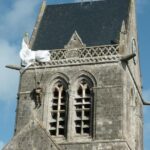
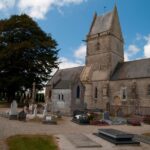
After pickup, your guide starts turning the day into a story. The morning focuses on the US-side narrative of June 6, 1944, with stops including Ste Mere Eglise and Utah Beach.
Ste Mere Eglise is a key stepping stone because it helps you understand the wider picture of what was happening around the American landing zone. You’re not just arriving at a beach and staring at the water. You’re getting context so you can picture movement, timing, and the human reality behind the maps.
Then comes Utah Beach, where the guide’s approach is particularly useful. A professional guide can help you “read” the shoreline better than you would on your own—what you’re seeing, why it looks the way it does, and how the day unfolded from the ground-level perspective. If you like history that feels grounded rather than abstract, this is the sweet spot.
Pointe du Hoc and Omaha Beach: Where the Questions Get Real
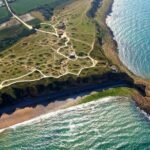
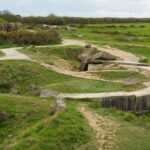
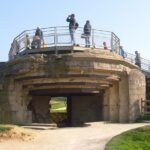
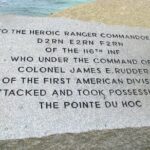
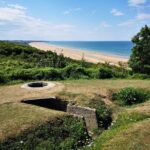
After Utah, you move into the heavier hitters: Pointe du Hoc and Omaha Beach. This is where many people expect the biggest wow factor, but the real win is how the guide frames the places so the scale makes sense.
At these stops, I’d plan on a mix of guided explanation and time to look around at your own pace. The pacing matters. On a day like this, you want enough structure to understand what you’re seeing, but you also need moments where you can just stand, read markers, and let your brain catch up.
If you’re someone who asks questions (good), this tour is set up for that. In guides like Cedric’s style, you get answers that connect details instead of handing you random facts. One review highlighted how the guide shared stories about soldiers and helped visitors understand the personal sacrifices behind the operation—exactly the kind of context that turns beach sightseeing into real comprehension.

American Cemetery: Reflection Time and Timing for Taps

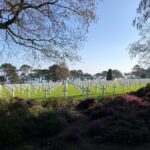
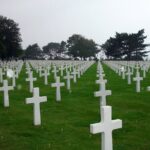
The American Cemetery is often the emotional center of the day, and this tour gives it the respect it deserves. You’re there as part of a route that moves from the beaches to the memorial space, so it feels like a natural landing in the story rather than a sudden change of mood.
Here’s a practical tip: plan for your visit to be slower than you expect. Even if you only have a set window, you’ll want time to walk, read, and take photos thoughtfully. The cemetery experience isn’t just about seeing names. It’s about absorbing the way the site holds memory.
One standout detail from the guidance style: the guide can suggest timing so you may be able to hear Taps around 5:00pm if your day lines up with that moment. That’s the kind of timing bonus you don’t get when you’re driving yourself and hoping you stumble into it by chance.
Arromanches and the Artificial Harbor: Seeing the Aftermath
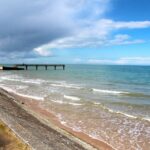
You finish with Arromanches and its artificial harbor. This is a great closing chapter because it shifts the focus from the instant impact of fighting to what came next: the work required to keep supplies flowing and make the landings meaningful over time.
Arromanches also tends to change how people feel about the beaches. Standing by the water with the harbor story in your head helps you connect dots between the dramatic first phase and the longer effort that followed.
The end-of-day location can also help with logistics. You’re not spending your last hours trapped in a late-afternoon gridlock. The tour is designed so you’re back with time to manage your next step, whether that’s dinner in Bayeux or a train connection.
Lunch Near the Cemetery: Budget for the Break

Lunch is intentionally placed near the major sites (cemetery and beach area). That means you get a real break without spending the meal time commuting.
But lunch isn’t included in the tour price, so you should plan for it. If you’re picky about food or you have dietary needs, think about where you’ll sit, what time you’ll eat, and how much time you’ll want after lunch to still feel like the afternoon is yours.
The upside is convenience. The lunch stop is part of the flow, not a random detour that steals time from the sites you came for.
Transfers, Train Connections, and Luggage Handling
If you’re traveling by train in Normandy, this tour has a useful option: you can request help with train transfers and luggage storage. The setup can include holding your bags in the vehicle and then driving you back to the train station right after the tour.
That’s valuable if you’re doing more than just “base yourself in Bayeux.” Some people combine Bayeux with other stops in Normandy or hop onward quickly. Knowing you can keep your luggage handled without juggling it across town can save a lot of stress.
Group Size and Guide Style: Why It Feels Personal
With a max group size of 8 travelers, the day doesn’t feel like a scripted conveyor belt. You’re more likely to get direct answers, and the guide can adjust when the group needs a moment—whether that’s extra time at a site or a question that turns into a short lesson.
The guide experience matters here. Multiple accounts mention Cedric using photos, stories, and maps, plus deep historical knowledge delivered in a way that keeps attention. One review even noted how the guide managed the day so time at each stop included space to explore on your own. That mix—guided context plus your own wandering—often creates the best kind of memory.
Also, being picked up from your lodging tends to help. You start the day calmer, and calmer usually means you actually remember more of what you’re hearing.
Who This Tour Is Best For (And Who Might Want a Different Option)
This US Sector D-Day tour is a strong match if you want:
- a guided day that covers multiple major sites without planning every turn
- English-speaking instruction and a guide who can explain the story clearly
- a more intimate group size (max 8)
- a route that ends with Arromanches so you see the aftermath, not only the beaches
It may be less ideal if you:
- hate long days (8 to 10 hours is a time commitment)
- need a fully packed-in meal plan (lunch costs extra)
- prefer total independence with no schedule, since you are following a set order and timing
If your goal is “I want to understand this day, not just see it,” this tour fits that goal very well.
Should You Book This D-Day US Sector Tour From Bayeux?
If you’re choosing between DIY driving and a guided day, I’d lean toward booking this one if you want your time to count. The pickup and drop-off, small group size, and multi-site coverage (Utah, Pointe du Hoc, Omaha, the American Cemetery, and Arromanches) create a full narrative arc in one day.
Book it if you’re the type who likes asking questions and appreciates a guide who can connect details with stories. The best part isn’t just the famous locations—it’s how the day is organized so you can actually process what you’re seeing.
Skip it only if the cost of lunch-on-your-own, the long day, or your preference for total independence are deal-breakers. If those are fine, this is a straightforward, high-value way to experience the US D-Day story from Bayeux.
FAQ
What places does the tour visit?
The tour visits Ste Mere Eglise, Utah Beach, Pointe du Hoc, Omaha Beach, the American Cemetery, and ends in Arromanches.
How long is the tour?
It runs about 8 to 10 hours. It starts at 8:00am (and sometimes 8:15am) and ends around 6:00pm.
Is hotel pickup and drop-off included?
Yes. Hotel pickup and drop-off are included, and pickup can be arranged at your Bayeux hotel or BnB, or at Place de Quebec.
Is lunch included in the price?
No. Lunch is not included. There is a restaurant stop near the cemetery and beach, and you pay for your own meal.
What languages are offered?
The tour is offered in English, and it may be operated by a multi-lingual guide in English and/or French.
Is this tour suitable for families?
Children must be accompanied by an adult. The tour also notes that most travelers can participate.
Can you store luggage if I have a train after the tour?
Yes, on request. The tour can provide train transfer support and can hold your bags in the vehicle to drive you back to the station right after the tour.
How large is the group?
The maximum group size is 8 travelers.
Can I cancel and get a refund?
Yes. You can cancel for free up to 24 hours in advance for a full refund. If you cancel less than 24 hours before the start time, the amount paid is not refunded.