REVIEW · PARIS
The French Revolution: Self Guided Audio Tour of Paris
Book on Viator →Operated by VoiceMap Audio Tours · Bookable on Viator
The most interesting thing about this walk is how it turns ordinary Paris streets into evidence from the French Revolution. You begin at Place de la Bastille, where the prison once stood, then follow a route through the Marais to the Palais de Justice, connecting royal homes, churches, prisons, city offices, and public squares. The route explains the revolution through real places, not just dates and famous names.
I like the offline access, since you can download the audio, maps, and location data before setting out. I also like the narration and automatic GPS playback, which let you look at Paris instead of constantly checking your phone. The main drawback is that this is a phone-based walk with no live guide, and the experience is non-refundable, so you should be sure of your plans before booking.
In This Review
- Key points to know before you go
- Why this Paris walk works better than a standard sightseeing loop
- Starting at Place de la Bastille
- Place des Vosges and the end of royal certainty
- Hôtel de Sully and aristocratic property
- Place Sainte-Catherine and Saint-Paul-Saint-Louis
- Musée Carnavalet and the cost of confiscation
- Vestige de la Petite Force and the price of bread
- Saint-Paul-Saint-Louis and the moral fight over change
- Hôtel de Sens and the changing city
- Hôtel de Ville and the birth of new political power
- Saint-Jacques Tower and Place du Châtelet
- Pont au Change and the Palais de Justice finish
- How the app affects the experience
- Is $19.99 a fair price?
- Who should book this self-guided walk?
- Should you book it?
- FAQ
- Where does the French Revolution audio tour begin?
- Where does the tour end?
- How long does the audio tour take?
- How much does the tour cost?
- Is a live guide included?
- Which app provides the tour?
- Can I use the audio tour offline?
- Is the tour available in English?
- Are museum tickets or attraction entrance fees included?
- Do I need to bring my own phone and headphones?
Key points to know before you go

- Start at Place de la Bastille: The former prison site gives the tour a strong opening and immediate political context.
- Walk through the Marais: You pass Place des Vosges, Hôtel de Sully, Place Sainte-Catherine, Musée Carnavalet, and other historic locations.
- Follow the revolution beyond Bastille Day: The route covers aristocratic property, bread prices, prisons, political power, and the royal family.
- Use GPS without mobile data: Audio, maps, and geodata are available offline through the VoiceMap app.
- Plan for 90 to 105 minutes: The route ends at the Palais de Justice, with no transport included.
- Best for independent history fans: Families with teenagers can use it well, but younger children may find the political detail demanding.
Why this Paris walk works better than a standard sightseeing loop
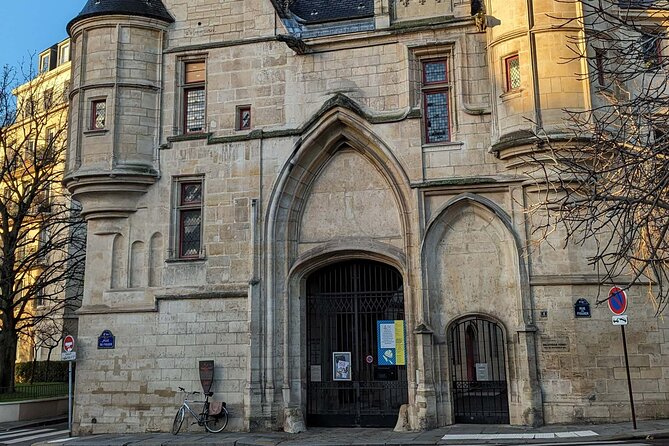
Many Paris walks collect famous buildings without explaining how they fit together. This one has a clear subject: the French Revolution and the pressure it placed on ordinary people, aristocratic families, churches, and the city government.
That focus gives the route a useful shape. You are not simply moving from one photo stop to another. You begin with the prison that became a symbol of royal power, pass through places linked to privilege and social change, then reach the public institutions where political authority shifted.
The app supplies turn-by-turn directions and automatic GPS playback. When you reach the next point, the narration begins without requiring you to search through a long list of tracks. You still need to pay attention to your surroundings and follow the map, but the system reduces the usual stop-start fuss of a self-guided walk.
You receive lifetime access to the English audio tour and virtual tour. That makes the $19.99 price more reasonable if you expect to revisit Paris or want to hear sections again after the walk. Still, the value depends on your style. A live guide can answer questions and adjust the pace. This tour cannot.
You can also read our reviews of more guided tours in Paris



Starting at Place de la Bastille
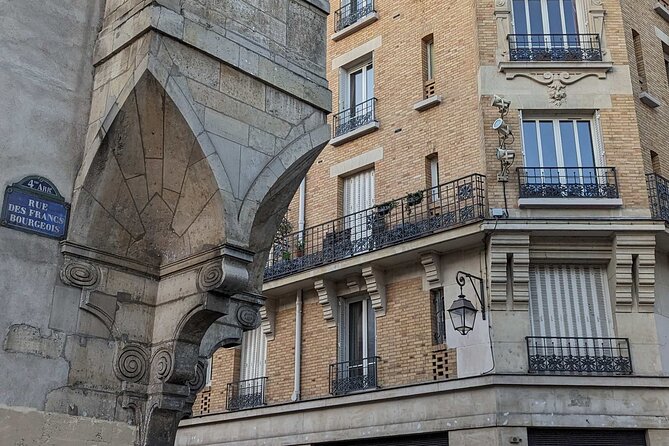
The walk begins at Place de la Bastille, one of the most useful starting points for a French Revolution theme. The prison itself no longer dominates the square, but the narration helps you picture why its storming became such a powerful event in French political memory.
This is a good place to get your bearings before you set off. The square is an active Paris crossroads, while the tour asks you to think about the older city and the authority once represented by the Bastille. The opening gives you the basic story without requiring a museum visit.
From here, the route heads into the Marais. That change matters. The district is often associated with attractive streets, old mansions, and lively cafés, but the audio points out how these buildings were tied to class, property, and political power before and during the revolution.
Place des Vosges and the end of royal certainty
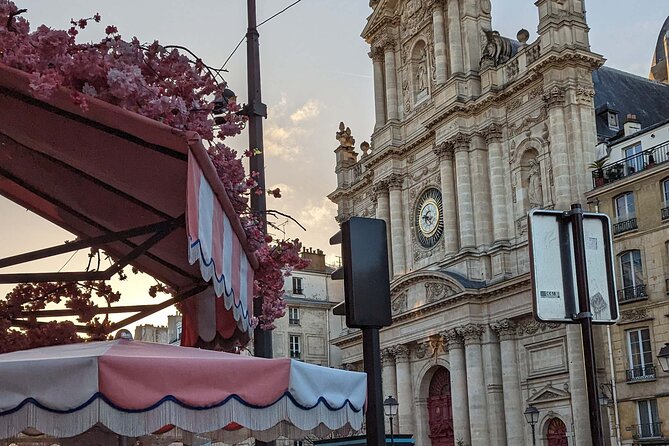
Place des Vosges offers a calmer setting than Bastille. Its orderly arcades and square form can make it feel removed from revolutionary conflict, which is exactly why the stop is useful. The narration connects this elegant public space with the swift change from monarchy to republic.
You will hear about the speed and force of the political transformation. France did not move through a slow, tidy reform. The monarchy, social order, and idea of citizenship were challenged within a short period.
I like this part because the setting lets you consider the contrast between polished architecture and social tension. You are not being asked to enter a museum or inspect a monument closely. Instead, the square becomes a place to listen and look around while the audio supplies the political frame.
Hôtel de Sully and aristocratic property
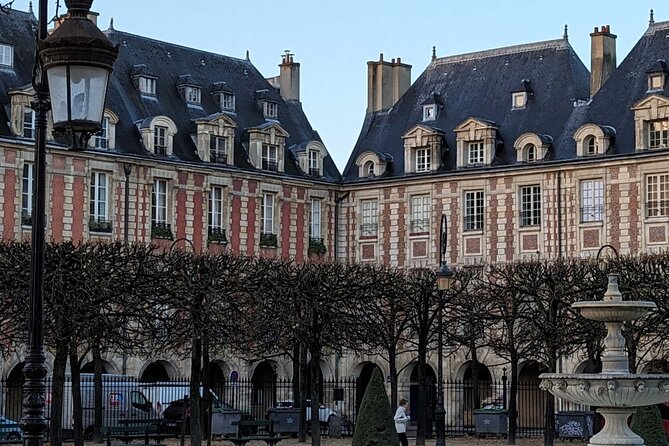
The Cour et Jardin de l’Hôtel de Sully brings the route to one of the Marais buildings connected with aristocratic life. You pass through or alongside an architectural setting that recalls an earlier Paris, then hear how the revolution changed the meaning and ownership of such places.
The tour also covers Hôtel de Sully itself. These two related stops help explain that the revolution was not only fought in public squares. It affected houses, fortunes, owners, servants, and the visible shape of the city.
This section should appeal to you if you like social history as much as battles and political speeches. The narration looks at what happened to aristocratic properties during the upheaval, giving you a better sense of how revolutionary ideas reached into private life.
The itinerary describes these as pass-by and exterior locations rather than included attraction visits. No museum or site admission is included in the $19.99 price, so treat the buildings as outdoor stops unless you arrange any separate entry yourself.
Place Sainte-Catherine and Saint-Paul-Saint-Louis
At Place Sainte-Catherine, the route returns to a smaller public setting with a medieval feel. The square helps show how old Paris survived alongside revolutionary change. It is a useful pause between the grander locations.
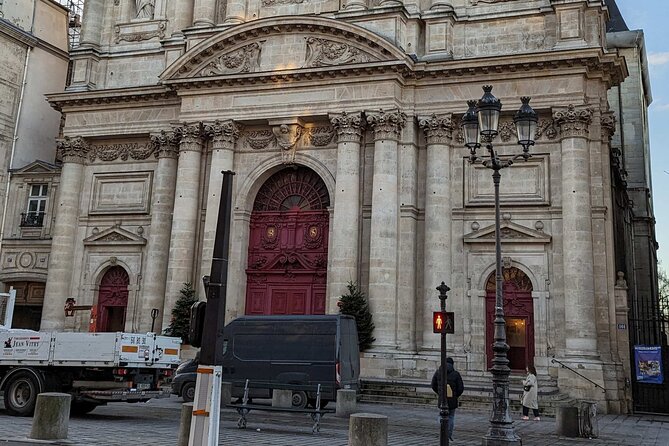
The nearby Parish Church of Saint-Paul of Saint-Louis brings religion into the story. Churches became politically charged during the revolution, and this stop looks at the moral and political struggles surrounding them.
The tour later includes the church again, so do not be surprised by the repeated reference. The first mention introduces the setting, while the later stop develops its revolutionary meaning. If you are listening closely, the repeat can reinforce the point. If you prefer a fast-moving route, it may feel slightly redundant.
This is one of the places where the audio format helps. A guide standing beside you could point to details or answer questions about the church. With the app, you need to let the narration do the work and give yourself enough time to look at the building.
A few more Paris tours and experiences worth a look





Musée Carnavalet and the cost of confiscation
The route passes Musée Carnavalet, an important Paris history museum, but entrance is not part of this experience. The audio uses the museum area to discuss buildings confiscated from aristocratic owners during the revolution.
That subject adds needed balance. It is easy to tell the revolution as a heroic tale of citizens defeating royal power. The story becomes more complicated when you consider property seizures, forced changes, and the disruption faced by families connected to the old order.
You can book this walk without adding museum time, which keeps the outing within its stated 90 to 105 minutes. If Musée Carnavalet is already on your Paris plans, you might choose to visit separately on another day, but the tour itself does not provide tickets or a dedicated museum visit.
Vestige de la Petite Force and the price of bread
The Vestige de la Petite Force offers one of the route’s sharper reminders that prisons and hunger were central to the revolutionary story. This remnant is linked to the Petite Force prison, while the narration turns to Parisian workers struggling with very high bread prices.
That detail is important. Political slogans make more sense when you connect them to the cost of food. For many ordinary people, the crisis was not an abstract argument about government. It affected what they could buy and how secure their families felt.
I find this kind of stop especially useful because it keeps the walk from becoming a tour of grand residences alone. The route moves between aristocratic property and working people facing hardship, showing the widening gap that helped drive unrest.
The physical remnant may be modest compared with a major monument. Its value comes from the explanation and the connection to the wider story. Listen before moving on, since a quick glance will not tell you why the site matters.
Saint-Paul-Saint-Louis and the moral fight over change

The return to the Parish Church of Saint-Paul of Saint-Louis gives the tour another chance to explore the conflict between older institutions and revolutionary ideals. The church is tied to questions of belief, public authority, and the moral choices people faced as the political order shifted.
This is less a photo stop than a listening stop. You may not find a dramatic scene laid out in front of you, but the audio links the building to the choices and pressures of the period.
The route works best if you approach it as a connected lesson rather than a hunt for spectacular monuments. Some locations are powerful because of their associations, not because they look dramatically different from the surrounding street.
Hôtel de Sens and the changing city
Hôtel de Sens adds another architectural marker from the older city. The narration uses it to consider the effects of revolution on both aristocratic families and ordinary Parisians.
By this point, you will have heard the story from several angles: royal power at Bastille, elite property around Hôtel de Sully, religious authority at Saint-Paul-Saint-Louis, and working-class hardship near the Petite Force. Hôtel de Sens helps tie those threads to the wider city.
This variety is one of the strongest features of the route. You are not confined to one type of site, and the changing surroundings keep the walk from feeling like a single long lecture.
Hôtel de Ville and the birth of new political power
Hôtel de Ville, Paris City Hall, is one of the route’s most politically important stops. The narration asks you to consider the final days of the royal family and the larger shift in authority that followed.
The courtyard receives its own attention. Here, the tour discusses the birth of the National Assembly and the push by independent citizens to shape laws. That takes the story beyond protest and violence. You hear about the attempt to create a new political system and about citizens claiming a direct role in public life.
The City Hall area also makes a natural midpoint or late-stage pause because it connects the street-level story with national events. You can listen to the discussion while looking at a place still used for civic purposes, which gives the past a clear link to the present.
Saint-Jacques Tower and Place du Châtelet
The route continues past the Square of Saint-Jacques Tower, where you can catch sight of a section of city wall said to be more than 800 years old. This stop broadens the time frame. Paris was already an old, protected city long before 1789, and the revolution altered a place with centuries of built-up power and memory.
You then see Tour Saint-Jacques, a familiar Paris landmark with its own long story. The audio places it within the route’s larger account of upheaval, rather than treating it as an isolated monument.
At Place du Châtelet, the tour explains the symbolism of the ornate column in the square. This is a good example of why a self-guided audio walk can be useful. A symbol that might look decorative at first becomes part of the political story once you know what to notice.
The square also helps shift the mood toward the final stages of the walk. You are moving through central Paris, but the audio keeps asking you to think about how public spaces can carry political meaning.
Pont au Change and the Palais de Justice finish
Crossing Pont au Change gives the tour a final stretch through a major Paris passage. The bridge provides a moment to reflect on how dramatic events reshaped the city and influenced the wider course of French history.
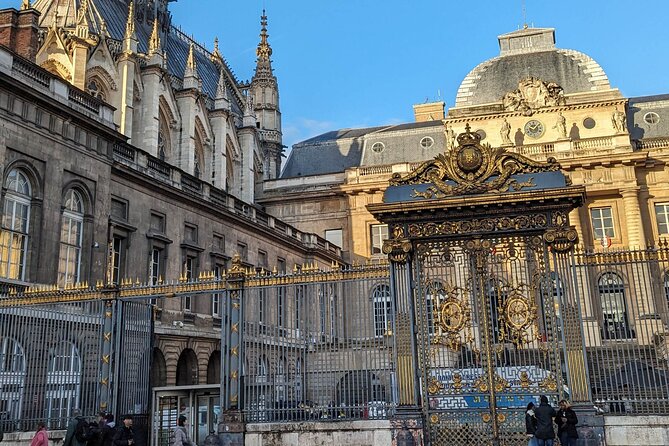
The walk ends at the Palais de Justice de Paris, also called the Paris Law Courthouse. The final narration brings together political upheaval, climate events, social injustice, and the pressures that changed France.
The ending is thematically strong because the Palais de Justice connects to law and state power. After hearing about citizens demanding new laws, aristocratic property being seized, prisons, hunger, and the royal family, you finish at a place associated with the legal order itself.
The tour ends at 08 Bd du Palais in the first arrondissement. Transportation is not included, so plan your next move after reaching the courthouse. The stated opening information lists the endpoint as available around the clock, but that does not mean every interior area or court service is open for sightseeing. Think of it as the finish point for the walk.
How the app affects the experience
VoiceMap supplies the tour for Android and iOS. You need your own smartphone and headphones, neither of which is included.
The biggest practical advantage is offline access to the audio, maps, and geodata. Download everything before leaving a reliable Wi-Fi connection. That way, the tour does not depend on a strong mobile signal while you walk.
Automatic GPS playback is helpful, but no navigation system is perfect. Keep the map available and check that the audio has started at the right point. Turn-by-turn directions should make the route manageable, but you remain responsible for crossing streets and staying aware of traffic.
The tour is private in the sense that only your group uses it. It is not a scheduled group walk, and you will not be matched with strangers. That gives you freedom to pause, replay a section, or move at your own pace.
Is $19.99 a fair price?
At $19.99 per person, the walk is priced below many in-person guided tours, though the comparison is not exact. You are paying for recorded narration, route guidance, maps, offline data, and lifetime access, not for a person walking beside you.
The value is strongest if you want a focused introduction to the French Revolution and plan to explore without a fixed meeting time. Lifetime access also means you can reuse the audio later, perhaps after visiting Musée Carnavalet or reading more about the period.
The value is weaker if you want detailed questions answered on the spot, a custom pace, or included attraction entry. You will also need to supply your own phone, headphones, food, drinks, and transportation.
The 90 to 105 minute duration is easy to fit into a Paris day. Allow extra time if you stop for photos, pause the audio, or spend time looking at the buildings. The route is best treated as a substantial walk, not a quick transfer between two metro stops.
Who should book this self-guided walk?
I would recommend it most to independent visitors, history fans, and families with teenagers. The narration has enough political and social material to keep older children engaged, especially if they already know a little about the revolution.
It is also a good choice if you dislike large groups or do not want to reserve a guide for a fixed departure time. You can start at Place de la Bastille and set your own rhythm.
You might skip it if your priority is entering museums and monuments. Most stops are viewed from outside or passed along the route, and entrance fees are not included.
You should also think twice if your Paris schedule is uncertain. The experience cannot be refunded or amended for any reason. Since it is often booked about nine days ahead, make sure your plans are firm before buying.
Should you book it?
Book this walk if you want a compact, well-organized way to connect the Marais with the French Revolution. The strongest features are the clear route from Bastille to the Palais de Justice, the well-received narration, the family-friendly format for teenagers, and the ability to listen offline.
Skip it if you need a live expert, extensive interior visits, or flexible cancellation. For the right kind of visitor, $19.99 buys a useful historical frame for a long stretch of central Paris. Bring charged devices, headphones, and enough time to walk without rushing.
FAQ
Where does the French Revolution audio tour begin?
It begins at Place de la Bastille, Pl. de la Bastille, 75004 Paris, France.
Where does the tour end?
The tour ends at the Palais de Justice de Paris, also called the Paris Law Courthouse, at 08 Bd du Palais, 75001 Paris.
How long does the audio tour take?
The approximate duration is 1 hour 30 minutes to 1 hour 45 minutes.
How much does the tour cost?
The listed price is $19.99 per person.
Is a live guide included?
No. This is an app-based, self-guided audio tour. It does not include a live guide.
Which app provides the tour?
The tour uses the VoiceMap app, available for Android and iOS.
Can I use the audio tour offline?
Yes. Offline access includes the audio, maps, and geodata.
Is the tour available in English?
Yes. Lifetime access to the English version is included.
Are museum tickets or attraction entrance fees included?
No. Tickets and entrance fees for museums or other attractions along the route are not included.
Do I need to bring my own phone and headphones?
Yes. A smartphone and headphones are required but are not included. Transportation, food, and drinks are also not included.