REVIEW · COLMAR
Colmar: Private Guided Walking Tour
Book on GetYourGuide →Operated by Travmonde OÜ · Bookable on GetYourGuide
Colmar’s prettiest streets tell a serious story. Behind the half-timbered houses and flower-box charm are tales of Charlemagne, the Thirty Years’ War, French and German rule, and the city’s time as a free imperial city. This private walk gives you a local guide to connect those scattered chapters.
I like the private format, since your group gets the guide’s attention and can ask questions without keeping pace with a large crowd. I also like the chance to adjust the tour on the spot, plus the personal touch of guides such as Rudolph and Andrew, whose colorful storytelling has included memories from the 1970s Los Angeles pop scene.
The main drawback is the short 90-minute length. You will get a useful introduction and a look at major sights, but not a full museum visit or an exhaustive tour of every lane. Entrance fees are not included, so this works best as a first walk through Colmar rather than a complete day of sightseeing.
In This Review
- Key points to know before you book
- Why Colmar works so well on foot
- Half-timbered houses and early Renaissance details
- Saint-Martin Church gives the walk a solid landmark
- Charlemagne and the Saxon wars add an older layer
- Colmar as a free imperial city
- The Thirty Years’ War and the Peace of Nijmegen
- From French rule to the German Empire
- What the private format is worth at $369
- Guide style and the small details that matter
- Who should book this Colmar walk
- FAQ
- Where does the Colmar walking tour meet?
- How long does the private tour last?
- How many people can join the private group?
- Which languages are available?
- Are entrance fees included?
- Can I cancel the tour for a refund?
- Should you book it?
Key points to know before you book
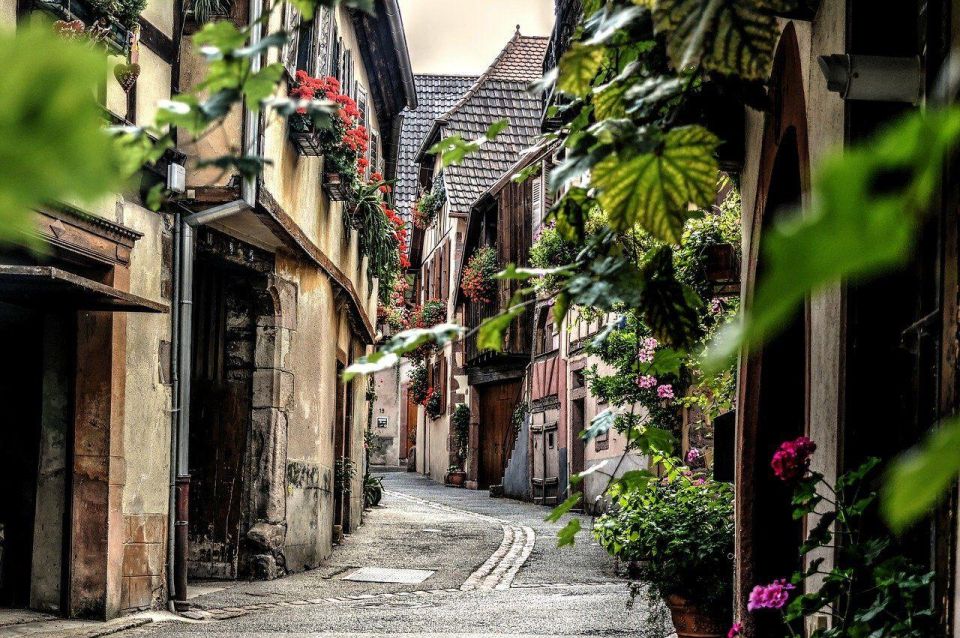
- Colmar’s medieval center: Walk cobbled lanes lined with half-timbered houses and early Renaissance buildings.
- A private guide for up to 15 people: The $369 group price can be good value for a full party, but less so for only one or two people.
- Saint-Martin Church: See one of Colmar’s major Gothic landmarks, dating from the 13th century.
- History from Charlemagne onward: The route places Colmar’s architecture within the Saxon wars, the Thirty Years’ War, and later German rule.
- English or French guiding: Guides may include Rudolph or Andrew, and the tour can be adjusted during the walk.
- A practical 90-minute introduction: Use it to get your bearings, then continue on your own after the guide leaves.
Why Colmar works so well on foot
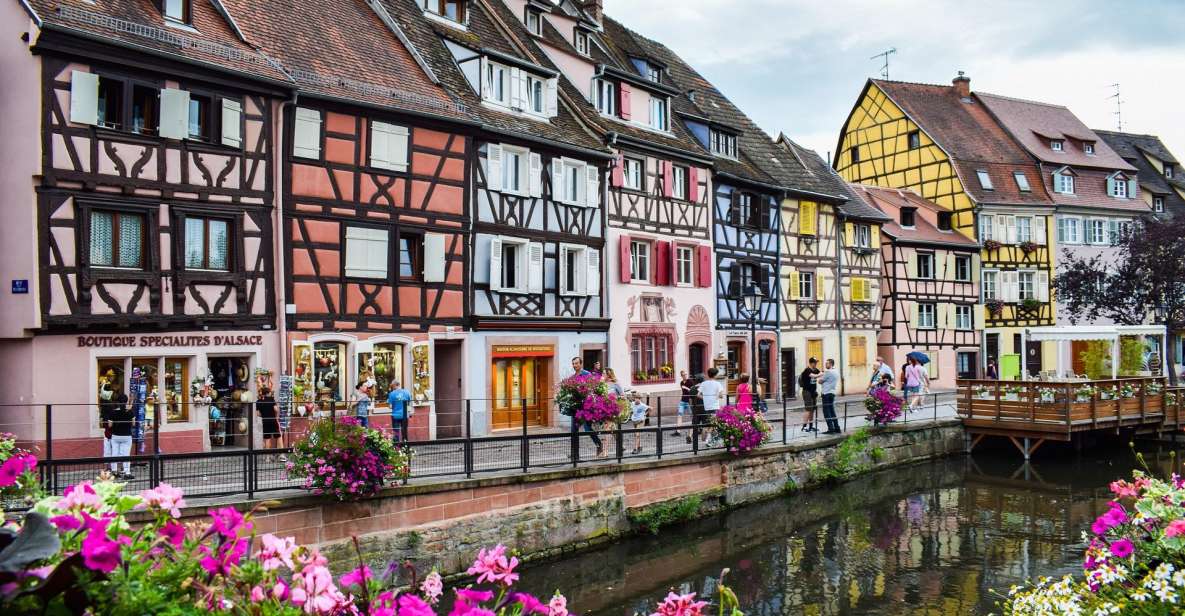
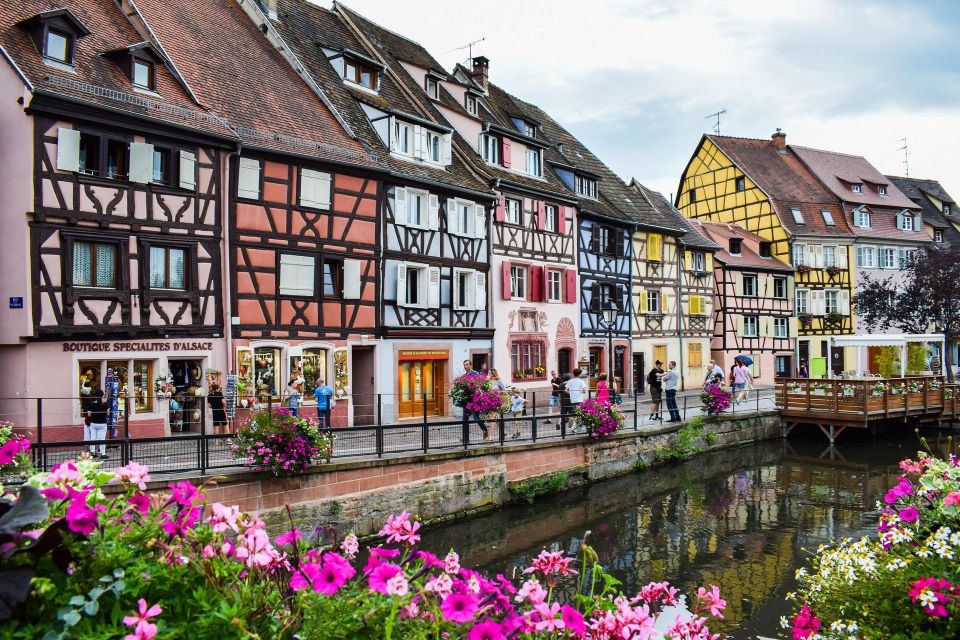
Colmar is compact in the area most people come to see, and walking is the right way to meet it. Cars cannot give you the same view of crooked upper stories, wooden beams, narrow passageways, and sudden little squares.
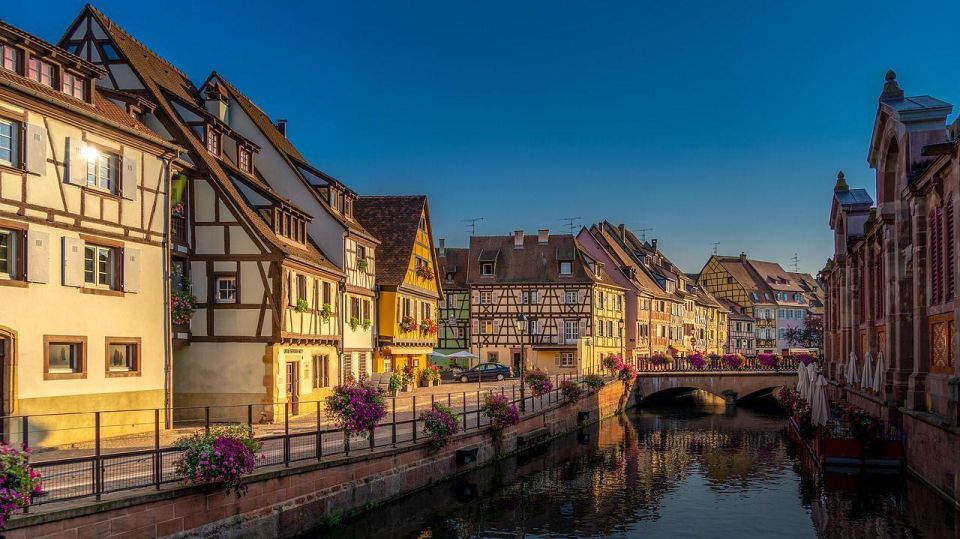
The city is often called the Little Venice of France because of its canals and waterways. That nickname captures the postcard side of Colmar, but it can also make the place sound like a stage set. The walking tour helps correct that impression by showing how the town grew through changing rulers, wars, trade, and political arrangements.
I would expect the tour to begin near the Covered Market at 13 Rue des Ecoles. This is a useful starting point because it places you close to the old center while giving you an easy landmark for meeting the guide. From there, the walk can move into Colmar’s historic streets without the need for a bus or taxi.
The private setting matters here. Colmar can feel crowded around its best-known lanes, especially when everyone pauses for photographs. With only your own group and guide, you can ask why a building looks French, German, medieval, or Renaissance, instead of simply collecting pictures.
You can also read our reviews of more walking tours in Colmar



Half-timbered houses and early Renaissance details
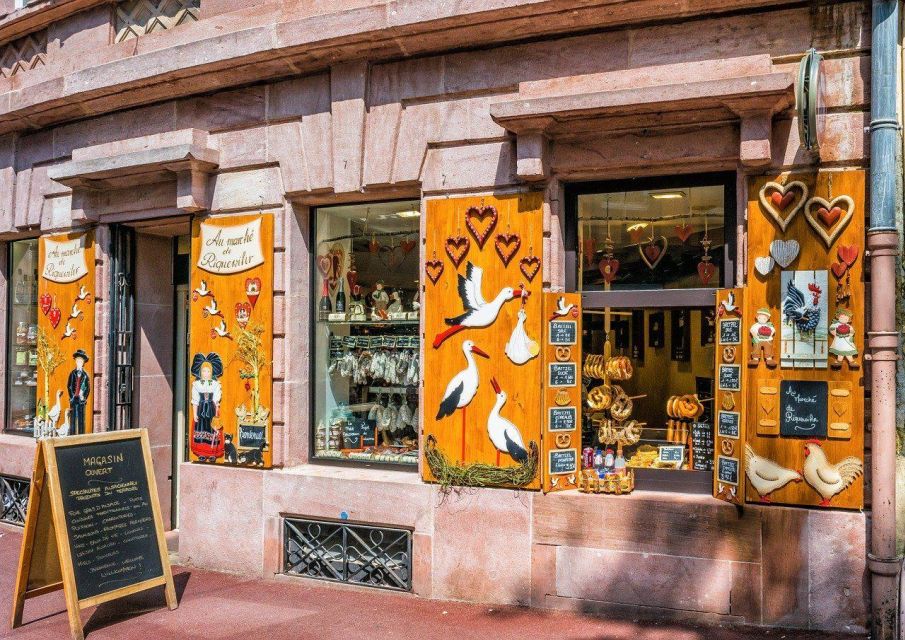
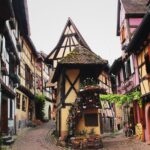
The first pleasure of the walk is visual. Colmar’s old town has tightly packed houses with timber framing, plastered walls, steep roofs, and details that reward a slower pace. Some streets look almost theatrical, with bright colors and carefully maintained façades.
That beauty can be misleading. A half-timbered building is not simply decoration. Its frame reflects older construction methods, and its shape can tell you something about the age and use of the house. A local guide can point out details you might pass without noticing, then connect them to the city’s development.
The early Renaissance buildings add another layer. They bring different proportions and decorative styles to streets that still preserve their medieval street pattern. You are not just looking at one historical period. You are seeing several centuries pressed together within a short walk.
Colmar is also linked with the village in Beauty and the Beast. That comparison is easy to understand once you see the winding streets, timbered houses, and storybook silhouettes. I would treat the connection as a fun visual reference, not the main reason to book. The real value is learning how the town became so architecturally distinctive.
The guide’s role is especially useful in this section. You can photograph a pretty house on your own, but you need someone to explain why the street matters and how the buildings survived Colmar’s many political changes.
Saint-Martin Church gives the walk a solid landmark
Saint-Martin Church is one of the tour’s clearest stops. This 13th-century Gothic church is a major architectural marker in the city, and its scale gives you a break from the smaller houses and narrow lanes.
The church is valuable even if you are mainly interested in streets and façades. Gothic architecture makes more sense when you see how a large religious building shaped the surrounding town. The church helps you understand Colmar as a place of civic life, worship, and local power, not just a picturesque quarter.
The activity does not include entrance fees. That means you should not assume admission inside the church is part of the $369 price. The supplied details describe seeing Saint-Martin Church during the walk, so ask the guide about current entry options if going inside matters to you.
That limitation is easy to manage. A 90-minute route can give you the exterior, setting, and historical explanation, then you can decide if you want to return for more time. I prefer this arrangement to rushing through an interior simply because it was included in a fixed schedule.
Charlemagne and the Saxon wars add an older layer
The historical scope begins well before Colmar’s famous painted houses. The tour includes Charlemagne and the Saxon wars, which places the city within the wider political world of the early medieval period.
You do not need to arrive with a detailed knowledge of Carolingian history. The guide’s job is to make the connection clear and brief. Listen for how power, territory, and religious authority shaped the region around Colmar.
This part of the tour may appeal most to people who want more than architecture. If you only want the best photo locations, the political background may feel like a detour. I think it earns its place because it explains why this small city belongs to a much larger European story.
A private guide can also adjust the amount of detail. If your group is full of history fans, you can ask for more context. If children or first-time visitors are losing interest, you can keep moving toward the canals and colorful houses.
Colmar as a free imperial city
One of the most useful ideas on the route is Colmar’s era as a free imperial city. This status helps explain why Colmar developed its own civic identity within the Holy Roman Empire.
The phrase can sound abstract, so this is a good moment to ask the guide what it meant in everyday terms. A free imperial city had a special political position and links to the emperor rather than being controlled in the same way as a town under a local lord. That background helps you read the old center as a place shaped by commerce, town government, and regional power.
I like this historical stop because it connects directly to the architecture. The impressive houses and civic buildings make more sense when you understand that Colmar was not merely a rural village. It was a town with political importance and economic interests.
Do not expect a long lecture. The tour lasts only 90 minutes, so this topic will likely be one part of a broader story. Still, it is the kind of context that can change the way you see the streets after the guide has gone.
You can also read our reviews of more guided tours in Colmar


The Thirty Years’ War and the Peace of Nijmegen
The tour also addresses Colmar’s part in the Thirty Years’ War. That conflict reshaped much of Central Europe, and Alsace did not remain outside its effects.
This is where the walk becomes less decorative and more grounded. Colmar’s buildings may look calm today, but the region has repeatedly sat between competing powers. Hearing about war in the same streets where you have just admired colorful houses gives the city a sharper edge.
The Treaties of Peace of Nijmegen are another listed part of the historical story. They help explain later changes in control and diplomacy. You do not need to memorize treaty dates to benefit from this section. The point is to see Colmar as a border-region city whose identity was shaped by negotiations as much as by local tradition.
For me, these subjects are strongest when the guide keeps them tied to places you can see. Ask how the conflict or treaty affected Colmar directly, rather than letting the discussion become a general European history lesson. A private tour gives you room to make that request.
From French rule to the German Empire
The walk finishes its historical arc with Colmar’s transformations through the German Empire. This is essential context for understanding why the city can feel both French and German in its architecture, culture, and past.
Colmar’s position in Alsace means national identity has never been a simple matter. Buildings and institutions can carry traces of different periods, and a guide can help you sort out what belongs to which era.
This section should be particularly helpful if you arrive wondering why the town’s appearance does not fit a single idea of France. The answer is not that Colmar is confused. It is that its history crosses political borders and includes repeated shifts in power.
The tour’s historical sequence, from Charlemagne to the German Empire, gives you a useful framework. You will not master every chapter in an hour and a half, but you should leave knowing what questions to ask as you continue exploring.
What the private format is worth at $369
The price is $369 per group of up to 15 people. For a full group, that works out to about $24.60 per person, which is reasonable for a private guide and a focused introduction to a major historic center.
For two people, the calculation is very different. You would effectively pay $184.50 each, so this tour makes the most financial sense for a family, a group of friends, or a small organized party that wants its own guide.
The private arrangement offers more than privacy. You can ask for explanations in English or French, request extra attention to architecture or wartime history, and make possible adjustments during the tour. That flexibility is harder to get on a standard group walk.
Still, the price does not cover entrance fees. If you want to spend time inside Saint-Martin Church or visit another site, plan for that separately. The walk itself is mainly a guided orientation through Colmar’s public streets and landmarks.
I would compare the cost with your alternative. If you already plan to wander for free and read a guidebook, you may not need this booking. If you want a personal introduction that saves you from piecing together Colmar’s complicated past, the fee can be worthwhile, especially with a larger group.
Guide style and the small details that matter
The guiding appears to have a personal, conversational side. Rudolph has been praised for friendly storytelling about Colmar, while Andrew, also called Andy, has brought an unusual background as a musician with stories from the 1970s pop scene in Los Angeles.
That does not mean you can guarantee a particular guide. It does mean the experience may feel less scripted than a basic points-and-dates walk. If Andrew is leading your group, ask about his music stories after the historical portion. They sound like a memorable extra, but they should complement the Colmar material rather than replace it.
Communication is another practical strength. The provider has sent a text the morning before a tour and another after it finished. That sort of contact can reduce uncertainty, particularly if you are coordinating a group in an unfamiliar city.
The tour is offered in English and French. Be clear about your preferred language when booking, and use the private format to ask questions at your own level.
Who should book this Colmar walk
I would recommend it to first-time visitors who want a short, guided introduction before exploring alone. It also suits families and mixed-interest groups, since the guide can move between architecture, local stories, and major historical events.
History-minded visitors will appreciate the range from Charlemagne to the German Empire. Architecture fans will enjoy the old houses, early Renaissance buildings, Saint-Martin Church, and the canals associated with Little Venice.
It is less suitable if you want a long museum visit, a full-day historical study, or a tightly specified list of every landmark. The route allows some customization, but the 90-minute limit places a natural boundary around what can be covered.
Wear shoes suited to cobblestones and allow time afterward to continue at your own pace. The tour should give you the background and orientation, while your later wandering can fill in the small details.
FAQ
Where does the Colmar walking tour meet?
The meeting point is the Covered Market at 13 Rue des Ecoles, 68000 Colmar, France.
How long does the private tour last?
The tour lasts 90 minutes.
How many people can join the private group?
The $369 rate covers a group of up to 15 people.
Which languages are available?
The live guide is available in English or French.
Are entrance fees included?
No. Entrance fees are not included in the tour price.
Can I cancel the tour for a refund?
Yes. You can cancel up to 24 hours in advance for a full refund. You can also reserve now and pay later.
Should you book it?
Book this tour if you want Colmar’s beauty explained, not just photographed. The strongest reasons are the private guide, the ability to adjust the walk, the clear historical range, and the chance to hear a more personal style of storytelling from guides such as Rudolph or Andrew.
Skip it if you are traveling alone or as a couple on a tight budget and feel comfortable exploring independently. For a larger group, though, the cost becomes much easier to justify. Use the 90 minutes to learn Colmar’s basic story, see Saint-Martin Church and the old streets, then spend the rest of your day following whichever corner catches your eye.