REVIEW · PARIS
Paris 2-hour WWII Walking Tour: Occupation history
Book on GetYourGuide →Operated by 1533 walks · Bookable on GetYourGuide
Paris gets darker when you learn why. This 2-hour WWII walking tour makes occupied Paris feel map-like, not myth-like, with a coherent route through the city center. I like that it uses exact, documented locations so the story stays grounded in real streets and real addresses.
My other favorite part is the way the guide turns heavy history into something you can follow on foot. Margaux, a Paris-born French guide, uses rare archival photographs and time for questions in a tight group of just 5. A small drawback: this is a classroom-sized walk through serious topics, so if you want light, quick sightseeing only, the tone may be heavier than you expect.
In This Review
- Key Things I’d Mark on Your Mental Map
- How Occupied Paris Becomes Understandable on Foot
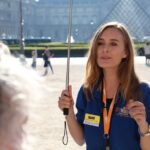
- Meet Margaux and Why the Group Size Matters
- The Route: A Single Thread From Concorde to the Louvre Area
- Place de la Concorde: Power Shows Up in Public Space
- Hôtel Meurice and Place Vendôme: When Big Buildings Gain Political Weight
- Opéra Garnier: Culture, Control, and the Occupation’s Reach
- Palais Berlitz: Using Photos to See What the Street Hides
- Rue de Rivoli and the Louvre Surroundings: Daily Life Under Pressure
- The Best Part: “Exact Facts” That Make the City Feel Real
- Price and Value: Why $12 Can Be a Smart History Spend
- What to Bring and How to Prepare for the Walk
- Who This WWII Occupation Tour Is Best For (And Who Should Skip It)
- Should You Book This Tour?
- FAQ
- FAQ
- How long is the Paris WWII walking tour?
- What does the tour cost?
- How big is the group?
- What language is the tour in?
- Where do I meet the guide?
- Which areas and stops are included?
- Is it suitable for children or people with mobility needs?
- Is the tour refundable if my plans change?
Key Things I’d Mark on Your Mental Map
- Small group size (max 5), so questions don’t get pushed aside.
- Margaux’s local, international perspective makes complex occupation history easier to hold.
- Rare WWII archival photos let you compare then-and-now directly on the street.
- A single geographic story through central Paris, so you never feel lost.
- Documented locations (not vague “symbolic” stops), including Concorde, Opéra, and the Louvre area.
How Occupied Paris Becomes Understandable on Foot
Occupied Paris isn’t just a set of famous images. It’s a system. What I like about this tour is that it helps you see how the city functioned between 1940 and 1944—who held power, how it was organized, and what it meant for everyday life.
You don’t just hear dates or generalities. You walk to places where decisions were made and where control was felt. That turns history into something your brain can actually sort through, because it’s attached to direction, distance, and street-level reality.
The tour’s core promise is simple: you’ll walk away with a clear mental map of occupied Paris. And that matters, because the biggest “history problem” in Paris is the opposite of this tour—too many stops that feel disconnected, like movie locations without context.
You can also read our reviews of more walking tours in Paris


Meet Margaux and Why the Group Size Matters
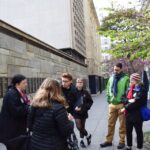
This tour runs in English with a licensed guide, and the group is limited to 5 participants. In practice, that small size changes the whole vibe. You can ask questions as they come up, instead of saving everything for the end.
Margaux is a Paris-born guide with an international perspective. That combination shows. She handles complex occupation history with sensitivity, but she doesn’t talk like you’re in a museum lecture. The tone is respectful, human, and practical—exactly what you want when the subject matter is heavy.
You’ll also feel that she’s not reading a script. The best moments come when she adjusts to what your group wants to understand more: daily life, political control, or how resistance and survival worked in real streets.
The Route: A Single Thread From Concorde to the Louvre Area
The walk keeps things coherent by staying in central Paris and moving through a connected chain of sites. You get a route that works geographically, so you’re not bouncing around the city.
You pass through a series of stops that help you link place to role. The themes repeat in a useful way: daily routines under pressure, German power in the city, and how political control shaped everyday decisions. That repetition is not boring here. It’s how the tour builds memory.
Also, the route is designed to be legible without you needing to study afterward. By the time you’re near the Louvre area, you’re already starting to connect earlier stops into a single story of control and consequence.
Plan on about 2 hours, with the pace occasionally running a bit longer when questions take off. In winter, dress warm—this is still a street walk, and Paris can bite.
Place de la Concorde: Power Shows Up in Public Space
The tour begins with Place de la Concorde, and that’s a smart choice. Big plazas are easy to read today. Under occupation, they were still big and visible—so they’re perfect for understanding how power used public space.
Here, you’ll start with the idea of how the city operated day to day during the German occupation. The guide sets up the framework: how authority was organized, how it played out across the city center, and what daily life looked like for Parisians living with that reality.
This stop works because it gives you orientation. After Concorde, each next site feels like a new “layer” of the same system rather than a random detour.
Hôtel Meurice and Place Vendôme: When Big Buildings Gain Political Weight
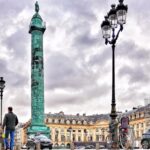
Next comes Hôtel Meurice and then Place Vendôme. These are exactly the kinds of places where you can easily think: yes, it’s pretty, yes, it’s famous. The tour flips that instinct.
You’ll learn why these locations mattered in wartime, and how the occupation shaped more than the obvious “front page” events. The focus is on concrete functions—how control was exercised and how Parisians experienced that control in their routines.
I like how the tour treats luxury and visibility as part of the story. Under occupation, the contrast between what the city looked like and what it meant was often part of the psychological pressure people lived with.
You can also read our reviews of more historical tours in Paris


Opéra Garnier: Culture, Control, and the Occupation’s Reach
At Opéra Garnier, the theme expands. This is where you can feel how occupation wasn’t only about military moves. It was also about political reach into institutions and public life.
The guide ties this stop back to the larger picture: German power and political control, and how those forces shaped everyday life from street-level decisions to bigger cultural and administrative structures. You’re not learning history as a distant concept here. You’re watching how the city’s own identity got pulled into the machinery of occupation.
If you’ve walked past Opéra a dozen times, this is still worth doing. The tour makes you look at it like a document—something you can read for meaning, not just architecture.
Palais Berlitz: Using Photos to See What the Street Hides
Then you hit Palais Berlitz. This is one of the places where the tour’s archival-photography approach really shows its value.
A recurring method here is then-and-now comparison. You stand near where the wartime images were taken, then you connect what you see today with what existed during the occupation. That visual link is what turns the facts from trivia into understanding.
This stop also helps you see a key skill you’ll use later in Paris: noticing what a building does for history. You’ll learn to ask, what role did this site play, and how did people experience that role from the street?
Rue de Rivoli and the Louvre Surroundings: Daily Life Under Pressure
Finally, you walk through the area around Rue de Rivoli and the surroundings of the Louvre. This end section matters because it anchors the occupation story in how people lived—literally where they moved and what they had to manage.
From the guides’ focus and the discussions you’re invited to have, you’ll come away with a clearer sense of daily constraints. One review mentioned ration realities in a memorable way: food rations could amount to around 1200 calories per day. That kind of detail sticks because it makes the occupation physical, not abstract.
You’ll also hear about Parisians facing fear and uncertainty, plus stories related to resistance. The goal isn’t sensationalism. It’s clarity about how people responded, what risks they took, and how occupation shaped choices.
And because the tour ends near a dense cluster of landmarks, it gives you one last chance to connect the dots. You don’t leave with a list of sites. You leave with a logic.
The Best Part: “Exact Facts” That Make the City Feel Real
So what makes this tour different from the usual WWII walking experiences? It’s the insistence on precise, documented locations rather than generic “symbolic” stops.
That matters because occupied Paris is crowded with stories, and it’s easy to get lost in the mythology of war. The tour’s structure fights that problem by keeping the route coherent and the explanations anchored to actual places and visible context.
The rare archival photographs help too. Even if you’re a history fan, you’ll likely see images you haven’t encountered before. The point isn’t to impress you with rarity. It’s to give you a mental handle for what the city looked like and how it felt under occupation.
And because the group stays small, you can ask follow-up questions when you want to go deeper on daily life, political control, or what specific sites were doing in the wartime system.
Price and Value: Why $12 Can Be a Smart History Spend
At $12 per person for a 2-hour guided walk, this is strong value—especially with a group capped at 5. You’re paying for a licensed guide, on-site explanations, and a structured route that’s meant to build understanding, not just deliver a few photo ops.
There’s also a 25% off during the launch phase, so it can get even better if you time it right. In my view, that’s a good sign: the tour isn’t priced like an expensive “only for serious collectors” experience. It’s priced for people who want real understanding without going broke.
If you compare this to museum entry plus a guide, you’re getting a very different kind of value: history tied to walking, sight lines, and the physical geography of central Paris. For many travelers, that’s the more lasting memory.
What to Bring and How to Prepare for the Walk
Bring comfortable shoes. This is a walking tour, and the route goes through central streets and plazas where you’ll want stability.
Bring water. Even on cool days, you’ll be listening closely, stopping often, and thinking—dry air and winter layers can surprise you.
One more tip: dress for cold. Reviews mention winter comfort and warmer clothing being important, and that tracks with how Paris streets feel once you’re out for a couple of hours.
Who This WWII Occupation Tour Is Best For (And Who Should Skip It)
This tour is a great match for adults and teens who want something more grounded than movie-style history. It’s especially strong if you live in Paris or you’ve already seen the big monuments and want to understand how occupation changed the city’s meaning.
It’s also a good choice for solo travelers, because the small group format makes the experience feel interactive rather than awkward.
Skip it if you need wheelchair access or visual accommodation—the tour isn’t suitable for people with mobility impairments, wheelchair users, or those who are visually impaired. It also isn’t suitable for children under 12. And if your day includes a lot of drinking or a party atmosphere, note that alcohol and party groups aren’t allowed.
Should You Book This Tour?
Yes—if you want WWII Paris to make sense in your head, not just on your camera roll. I’d book it if you like structured walking, precise locations, and a guide who explains daily life, political control, and occupation realities with sensitivity.
It’s also a good bet if you’re curious but don’t want a long museum session. The timing is tight, the story has a clear thread, and the small group format helps you get your questions answered.
FAQ
FAQ
How long is the Paris WWII walking tour?
The tour lasts 2 hours.
What does the tour cost?
It’s priced at $12 per person.
How big is the group?
The tour is a small group limited to 5 participants.
What language is the tour in?
The tour is in English.
Where do I meet the guide?
The guide will be wearing a black cap.
Which areas and stops are included?
You’ll walk through central Paris and see sites including Place de la Concorde, Hôtel Meurice, Place Vendôme, Opéra Garnier, Palais Berlitz, Rue de Rivoli, and the surroundings of the Louvre.
Is it suitable for children or people with mobility needs?
It’s not suitable for children under 12. It’s also not suitable for people with mobility impairments, wheelchair users, or visually impaired people.
Is the tour refundable if my plans change?
Free cancellation is available up to 24 hours in advance for a full refund.
If you tell me your travel dates and whether you prefer morning or afternoon walks, I can suggest a smart way to fit this into a day around central Paris.