REVIEW · BAYEUX
Normandy WW2 Full Day Classic Jeep Tour
Book on Viator →Operated by GoldBeachCompany · Bookable on Viator
A WWII Jeep day saves you hours of driving. You’ll cover key D-Day ground from Bayeux in about eight hours, with a guide who turns each stop into a clear piece of the story. Riding in a real WWII-style jeep also makes the countryside feel closer.
I especially like how the itinerary feels tight and logical, moving from the American Ranger landing at Pointe du Hoc to the Omaha Beach experience and then on to the Atlantic Wall and Allied engineering at Arromanches. I also came away impressed by guides such as Kate, Adrian, and Arnaud, who stay approachable and keep the big picture grounded in concrete details, including human-scale stories shared by guides like David through connections with D-Day veterans.
One thing to consider: you’re on an outdoor-style ride, and even good weather can bring wind. If you get cold easily, pack warm layers, because the breeze can be frigid.
In This Review
- Key points to know before you go
- Normandy’s D-Day story, told in motion from Bayeux
- Price and value: what you’re really paying for
- Meeting in Bayeux: the pickup that keeps your day sane
- Stop 1: Pointe du Hoc and why that climb was the point
- Omaha Beach: courage, not just photos
- The American cemetery at Colleville-sur-Mer: a needed human pause
- Scallops, oil operations, and the smaller port story
- Longues-sur-Mer Atlantic Wall fortification: German defenses in real space
- Arromanches and Mulberry B: British engineering you can still picture
- The real secret sauce: guides like Kate, Adrian, and Arnaud
- What the jeep ride adds (and what to pack)
- Timing: eight hours that don’t feel like eight hours
- Should you book the Normandy WW2 Full Day Classic Jeep Tour?
- FAQ
- How long is the Normandy WW2 full day Jeep tour?
- What does the price include, and what’s the group size?
- Where does the tour start and what time is it scheduled?
- Which stops are included in the day?
- Is admission included for these sites?
- What’s the weather situation, and what if it gets canceled?
Key points to know before you go

- Private group up to 3 people means more Q&A and fewer awkward silences
- WWII jeep experience that makes bocage and country lanes feel immediate
- Free time at each major site (about 30–45 minutes) keeps the day moving without a museum-only vibe
- Guides bring the connection to real people, not just dates and facts
- Bayeux pickup and round-trip transport reduces hassle and lets you focus on the sites
- Emotional stop at the American cemetery gives the day a needed human pause
Normandy’s D-Day story, told in motion from Bayeux
If you want Normandy WW2 sites without spending the day stuck in a rental-car parking lot, this jeep tour is a smart fix. The starting point is in Bayeux, and the day is built around a clear route. You don’t just see famous places—you see how they connect, with stops that build from assault to aftermath.
What makes the experience feel practical is the pacing. You get set amounts of time at each location, which helps you avoid the usual problem of “too much rushing” in one day. It’s also set up for English speakers, with the note that a guide may be multi-lingual if needed.
The “one concise tour” idea really works here. You still visit heavyweight sites, but you’re not trying to win a marathon against your own schedule.
A few more Bayeux tours and experiences worth a look
Price and value: what you’re really paying for

At $1,141.33 per group (up to 3), this is not a budget day. But it’s also not just paying for a driver and a list of stops. You’re paying for three big value drivers:
First, you’re paying for private, guided time. A smaller group means you’re not fighting for attention at the cemetery gates or trying to hear over a busload.
Second, you’re paying for the jeep ride itself—a WWII vehicle-style experience that makes the tour feel more than observational. One of the clearest bits of feedback is how fun it is to travel on farm tracks and down country lanes, while the guide explains what you’re looking at.
Third, you’re paying for site access and time efficiency. The tour includes free admission tickets for the stops listed, which helps keep the day straightforward.
If you’re traveling solo, the price might sting. If you’re two or three people, it starts to look a lot more reasonable, especially compared with booking separate options or spending time piecing together transit and driving on your own.
Meeting in Bayeux: the pickup that keeps your day sane

The tour starts at Place du Québec (Pl. du Québec, 14400 Bayeux) at 9:00 am, and it ends back at the meeting point. Pickup is offered from central Bayeux, which matters more than it sounds.
Why? Because Normandy days can get eaten by small frictions: finding parking, working out directions, and negotiating “where exactly do we meet?” With this tour, you’re already staged. That’s time you can spend looking at the terrain—hedgerows, coastal lines, and the Atlantic Wall pieces that make the history feel real.
You’ll also get a mobile ticket, and you’ll want that handy. Service animals are allowed, and children must be with an adult.
Stop 1: Pointe du Hoc and why that climb was the point

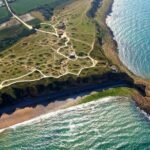
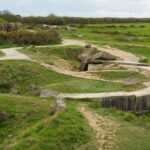
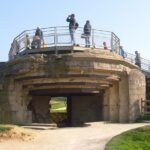
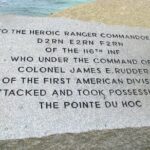
Your first major stop is Pointe du Hoc, tied to the landings carried out by the 2nd Ranger Battalion. This is one of those places where the guide’s job is half the experience. If you walk it alone, you might see defenses; with a strong guide, you see intent.
You get about 30 minutes, which is a short window, but it’s enough for what Pointe du Hoc does best: it shows how brutal planning met the coastline. The key is understanding why this hold mattered. The guide’s explanations are meant to clarify the target logic—what the Allies needed to neutralize and what made the position so difficult.
Practical note: plan for time on uneven ground and stairs/steps near fortifications. If you have moderate mobility needs, this is still described as requiring moderate physical fitness, so wear supportive shoes and keep a steady pace.
Omaha Beach: courage, not just photos

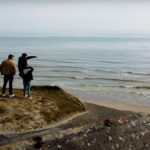
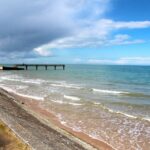
Next comes Omaha Beach, again with about 30 minutes. This is one of the world’s most photographed shorelines, but the tour angle is different. The goal isn’t to collect a postcard; it’s to understand what the beach meant for the people who went in.
The guide helps connect the visuals you see with the reality of the landing. That shift is what turns Omaha from scenery into comprehension. You don’t need extra time to understand courage here—you need context, and the tour is designed to give it.
One thing to expect: it’s a popular place. You’ll want to use your time well—stand where the guide directs you, listen for the specific references to what made this landing uniquely hard, and then take a moment to look at the waterline with fresh eyes.
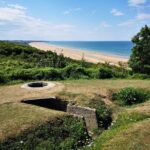

The American cemetery at Colleville-sur-Mer: a needed human pause

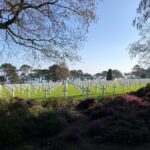
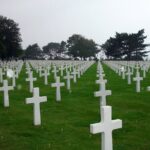
Then you head to Cimetiere Americain de Colleville-sur-Mer for 45 minutes, and this stop is the emotional anchor of the day. The space is calm. You’re given time to reflect, not just move through.
What I like about including this cemetery is that it slows the narrative down. After Omaha, it would be easy to keep speeding. Instead, you get a place built for remembrance, where the guide’s role is supportive—helping you understand what you’re seeing and why it matters without turning it into a lecture.
If you’re sensitive to solemn sites, this is still a respectful fit. And if you’re not, it’s still worth it. The contrast between adrenaline history and quiet names makes the whole day click.
Scallops, oil operations, and the smaller port story

Your itinerary includes a charming little fishing port known for scallops, with an additional link to a wartime role: an oil operation that followed D-Day.
This is a smart inclusion because it reminds you that the invasion wasn’t just beach fighting. It was logistics. Harbors, fuel, supply lines—these were the engines that made continued operations possible.
You’ll have a short window here (the tour info lists a separate stop with no clear minutes in the notes you provided, so expect it to be a quick but guided break). The value is in the side-story: seeing a working coastal town and then hearing how it ties back to the months after the landings.
If you like travel that mixes food culture with history, this stop can be surprisingly memorable.
Longues-sur-Mer Atlantic Wall fortification: German defenses in real space

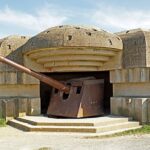
The tour then heads to the Batterie Allemande de Longues-Sure-Mer, a German fortification point representing part of the Atlantic Wall.
You get about 30 minutes. That’s just enough time to absorb the shape and structure—how the defenses were built and what kind of threat they were meant to provide. The guide helps you avoid the common trap: thinking of these sites as static ruins. They were built for function, and seeing them in place gives you a better sense of what attackers faced.
If you care about military engineering, this stop is a highlight. It’s one of the clearest places to understand the “enemy landscape”—how the Germans shaped the shoreline and inland approaches, not just the battles that followed.
Arromanches and Mulberry B: British engineering you can still picture
The final big site is Arromanches-les-Bains, with about 30 minutes. This area connects to British engineering and the artificial harbor called Mulbury B.
This is where the tour shifts from assault to building. You’re looking at how the Allies solved the practical problem of supply after the invasion. The “why this mattered” point lands because the harbor concept is physical and visual. Even in a shorter time window, you can understand the idea: the Allies couldn’t rely on instant ports, so they created a workaround.
The Arromanches stop is also a good closing note because it gives the day a forward-looking feel. It’s not only about what happened in hours—it’s about how the Allies kept the war moving.
The real secret sauce: guides like Kate, Adrian, and Arnaud
A day like this lives or dies by the guide. The strongest pattern in the experience is how well guides communicate without turning everything into a textbook.
I really like when a guide can do two things at once:
1) explain what you’re seeing in plain terms, and
2) make the human angle show up naturally.
Names that came through in the tour feedback include Kate, Adrian, Arnaud, David, Dean, and Amandine, and the consistent theme is engagement—clear explanations, approachable delivery, and a willingness to connect large events to individual stories. One guide example included volunteering experiences shared by David, with first-hand connections to D-Day veterans, which is exactly the kind of detail that makes history feel less distant.
Also, one practical bonus: if you need help hearing the story, you can choose your spot and ask the guide to repeat or clarify. The tour includes notes about understandable, clearly delivered guiding.
What the jeep ride adds (and what to pack)
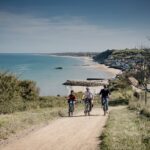
Traveling by jeep changes the feel of Normandy. The ride down country lanes and farm tracks helps you actually see the bocage terrain—those hedgerows and tight lines of view that shaped how fighting unfolded. It also makes you notice small-scale geography that’s easy to miss if you’re zooming by in a normal car.
The downside is comfort. Even on a nice day, the breeze can cut. The tour info says it operates in all weather conditions, and that means you should plan for wind, drizzle, and cool air. Reviews included a specific warning that it can be frigid.
Bring:
- Warm layers (even if Bayeux looks mild at 9:00 am)
- A light rain layer you’ll actually wear
- Comfortable shoes for short walks at sites
- A small scarf or cap for the breeze
Also, because this is a private experience for your group, the driver can adapt. If you want a bit more time at one stop, you may be able to request it, especially within the day’s overall pacing.
Timing: eight hours that don’t feel like eight hours
The tour is about 8 hours. Each site has a listed time window—mostly 30 minutes, with 45 minutes at the American cemetery. That structure matters because it prevents the day from turning into a long waiting game.
Here’s what you’ll likely feel:
- You’ll start energized at Pointe du Hoc
- Omaha Beach will become more meaningful as you hear what to look for
- The cemetery will slow you down in the right way
- The fortification and harbor stops will restore momentum with engineering and defenses
- The port stop gives a lighter pause that still connects back to war logistics
The value of this timing is mental. You’ll remember the day as a sequence with themes, not as a string of separate places.
Should you book the Normandy WW2 Full Day Classic Jeep Tour?
Book it if you want:
- A private, high-effort guided day focused on major WWII sites
- The jeep experience as part of the history (not just transportation)
- A guide who can connect terrain to what happened there
Skip it if:
- You hate cold wind or open-air riding, and you don’t plan to dress for it
- You prefer ultra-long stays at museums or you’re more interested in one site than the whole arc of D-Day and aftermath
If you’re visiting Normandy for the first time and want your time to count, this is a strong choice. The combination of major landmarks, tight pacing, and human storytelling is exactly what turns WWII sites from facts into understanding.
FAQ
How long is the Normandy WW2 full day Jeep tour?
The tour lasts about 8 hours.
What does the price include, and what’s the group size?
The price is $1,141.33 per group, up to 3 people, and it includes the Jeep plus guide services. It also lists GST and TripAdvisor Experiences brokerage fee as included.
Where does the tour start and what time is it scheduled?
It starts at Place du Québec, 14400 Bayeux, France, with a 9:00 am start time, and it ends back at the meeting point.
Which stops are included in the day?
The day includes stops at Pointe du Hoc, Omaha Beach, the American cemetery at Colleville-sur-Mer, a scallop fishing port tied to a post-D-Day oil operation, the Batterie Allemande de Longues-sur-Mer, and Arromanches-les-Bains (Mulberry B harbor).
Is admission included for these sites?
The tour notes admission tickets are free for the stops listed in the itinerary.
What’s the weather situation, and what if it gets canceled?
It operates in all weather conditions, and it also notes that it requires good weather. If it’s canceled due to poor weather, you’ll be offered a different date or a full refund.