REVIEW · BAYEUX
Guided tour from Utah Beach to Omaha Beach with Jeep immersion
Book on Viator →Operated by Normandy Discovery Tours · Bookable on Viator
A D-Day day, guided with wheels and walking. This private trip links the big set-pieces from Utah Beach to Omaha Beach, plus the airborne and cliff-top ranger action around Sainte-Marie-du-Mont, Sainte-Mère-Eglise, and Pointe du Hoc. Two things I really like: the Jeep immersion style that helps you see the terrain like you’d never get from a standard coach ride, and the way the guides bring the story to life with patient, detail-focused explanations from start to finish, whether you end up with Flavie & Thomas or guides like Raphaëlle and Noé.
One thing to consider: the price is per group (up to 6), so if you’re traveling solo or as a pair, you’ll feel that cost more than families or small groups who can fill the seats. You should also plan for a full 8-hour day with a mix of driving and time at multiple memorial stops.
In This Review
- Key things to know before you go
- How the Utah-to-Omaha route makes sense
- Jeep immersion: how it changes the way you read the battlefield
- Starting in Bayeux and getting picked up
- Sainte-Marie-du-Mont and the paratroopers: the airborne side of D-Day
- Thomas Meehan Crash Memorial: a small stop with a specific story
- Utah Beach: Atlantic Wall construction, Roosevelt’s landing, and memorials
- Sainte-Mère-Eglise: 101st and 82nd in the paratrooper sector
- Omaha Beach and the idea of Bloody Omaha
- Cimetiere Americain de Colleville-sur-Mer: the cemetery that changes your pace
- Pointe du Hoc: rangers, cliffs, and bomb craters you can still see
- Timing, pacing, and what it feels like as a full day
- Price and value for a private group (not just a per-person number)
- Who should book this Jeep immersion D-Day tour
- Should you book it
- FAQ
- What is the duration of the tour?
- Where does the tour start, and what time does it begin?
- Is pickup available from my hotel?
- What does the tour cost?
- Is the tour private, or will I share with strangers?
- Is the tour offered in English?
- Are the sites on the itinerary paid entry?
- What is the cancellation policy?
- Are service animals allowed?
Key things to know before you go

- Private Jeep immersion, not a full-time bus tour: you get a meaningful time in the Jeep to read the ground better.
- A tight cluster of Normandy’s most important D-Day stops: Utah, Sainte-Mère-Eglise, Omaha, Colleville cemetery, and Pointe du Hoc in one day.
- Guides who slow down for details: people have praised guides like Raphaëlle and Noé for being thorough and photo-friendly.
- Most admissions are free: the itinerary lists free entry for each site, so you’re paying mainly for the guided day.
- Hotel pickup in the Bayeux area: if you’re staying around Bayeux, Carentan, or Sainte-Mère-Eglise, pickup is offered.
- Small group size: it’s limited to your group, up to 6, which keeps the day from feeling rushed.
How the Utah-to-Omaha route makes sense
This tour is built like a story you can walk through. You start on the Utah Beach side, then sweep through the airborne areas tied to Sainte-Marie-du-Mont and Sainte-Mère-Eglise, and you end at the Omaha Beach zone and the nearby American cemetery. The final stop at Pointe du Hoc adds the ranger perspective, including the cliff-top German battery positions.
Why that matters for you: instead of bouncing around Normandy on your own schedule, you follow a logical arc of D-Day. That makes it easier to remember who did what, where the fighting happened, and why certain places were targeted.
It’s also a good length for a first Normandy battlefield day. Around 8 hours is long enough to cover the major locations, but not so long that you lose the plot after lunch. If you like structured touring (but with room to look and take photos), this format is a strong fit.
You can also read our reviews of more guided tours in Bayeux

Jeep immersion: how it changes the way you read the battlefield

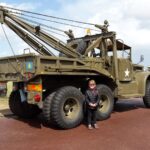
This is not a “sit back and watch” kind of outing. The Jeep element is the difference between learning about the terrain and actually feeling it.
In practice, it helps you get a sense of how the land shapes decisions—approaches, movement, sightlines, and where vehicles and troops could or couldn’t go. People often worry that a Jeep stop can feel like a gimmick. Here, the Jeep time is treated like part of the history lesson, not a side show.
If you want the best balance, you may like that the day doesn’t force you into the Jeep nonstop. One hour in the Jeep can be enough to give you the terrain perspective while still keeping the focus on the actual beaches, monuments, memorials, and walking stops. For most people, that’s the sweet spot: Jeep time for context, walking time for impact.
Starting in Bayeux and getting picked up

The tour meets at Parc Michel Ornano, 11 Bd Sadi Carnot, 14400 Bayeux, France, with a 9:00 am start.
If you’re staying in or near Bayeux, Carentan, or Sainte-Mère-Eglise, you can also get pickup from your hotel. That’s a big deal because it cuts down on the hassle of finding parking or getting yourself across a busy region before the day even begins.
From a comfort standpoint, the day includes multiple stops with set time blocks (for example, 1 hour 30 minutes at Utah Beach and the American cemetery, and 1 hour 30 minutes at Pointe du Hoc). That structure helps you pace yourself. Just come ready for walking and for a lot of looking—Normandy memorial sites are meaningful, and you’ll want a few minutes at each one.
Sainte-Marie-du-Mont and the paratroopers: the airborne side of D-Day

The day starts with Sainte-Marie-du-Mont and the paratroopers. This stop is all about the airborne angle—the kind of operation people often know as a headline, but don’t fully picture in terms of where and how those divisions moved.
You’ll get context for the paratrooper sector around Sainte-Marie-du-Mont and then carry that understanding forward as you head to Sainte-Mère-Eglise. The tour ties these locations to major airborne units—specifically the 101st and 82nd Airborne Divisions—the same names many people recognize from war storytelling.
What I like here for your first-time Normandy visit: it prevents the day from becoming only beach-and-boat focused. Airborne operations are a huge part of how D-Day unfolded, and having it explained in the setting where it happened makes the later stops feel clearer.
One consideration: if you’re expecting only beaches and monuments, this first segment might feel more “context-heavy” than “dramatic.” But it pays off when you reach the airborne-linked sites.
Thomas Meehan Crash Memorial: a small stop with a specific story
Between the Sainte-Marie-du-Mont area and Sainte-Mère-Eglise, you stop at the Thomas Meehan Crash Memorial. It’s one of those locations that changes the mood of a day like this: the fighting story becomes personal.
This stop is listed as its own stop in the route, which matters. Your guide isn’t just moving you from one big site to the next. You get time to read, reflect, and connect the larger campaign to the specific people whose lives were changed.
If you’re the kind of traveler who appreciates details—names, context, and why certain places were memorialized—this is the kind of stop that tends to stick with you long after the beach photos fade.
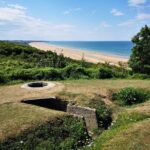

Utah Beach: Atlantic Wall construction, Roosevelt’s landing, and memorials

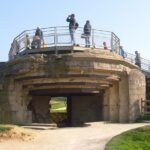
At Utah Beach, you’ll spend about 1 hour 30 minutes. This stop covers how the Atlantic Wall was constructed, which German forces were present in the area, and what happened on June 6 at Utah.
It also includes the place where General Theodore Roosevelt Jr. landed. That detail helps you anchor the history in a human story, not just a battle map.
Then there are monuments built after the war, including one tied to the first special engineering brigade. The result is a stop that covers several layers at once: fortifications, the landings, and later remembrance.
Practical tip for you: Utah Beach can be visually wide, so don’t just rush to the “main view.” Use your guide’s direction to understand what you’re looking at. This is exactly where a good guide makes time feel faster—because explanations turn empty space into something you can “read.”
Sainte-Mère-Eglise: 101st and 82nd in the paratrooper sector

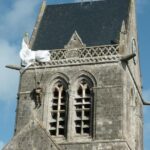
Next up is Sainte-Mère-Eglise, with about 2 hours 30 minutes allocated. This is the long, story-rich segment, tied directly to the airborne divisions known from popular WWII accounts—the 101st and 82nd.
Because the stop lasts longer, you can expect the guide to slow down and connect the dots: how airborne action fit into the broader D-Day plan, how the sector around Sainte-Mère-Eglise influenced what came next, and what made this area so important.
Why you’ll likely enjoy it: it’s the best chance in the day to build a mental map. Once you understand the airborne sector here, later stops (especially Omaha and the cemetery) feel more grounded.
Small consideration: this is the kind of location where you might want a bit of quiet time. If you’re traveling with people who want constant movement, agree on how often you’ll stop for photos and where you’ll prioritize reading the memorial plaques.
Omaha Beach and the idea of Bloody Omaha

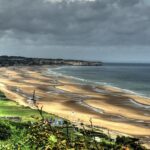
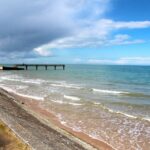
You’ll reach Omaha Beach for about 1 hour. This is the famous stretch people associate with the phrase Bloody Omaha, including cultural references like Saving Private Ryan. Even if you’ve seen the film, the real value here is seeing what those depictions are trying to convey: the scale of the landing and the cost.
The time block is shorter than some other stops, so treat it like a focused visit. Look first, then let the guide’s commentary fill in the details behind what you’re seeing.
For many first-timers, Omaha is where the day turns from “history lesson” into “emotional reality.” That doesn’t mean you need to rush the visit. But it does mean your attention will naturally narrow to a few key points.
Cimetiere Americain de Colleville-sur-Mer: the cemetery that changes your pace
After Omaha, the tour heads to Cimetiere Americain de Colleville-sur-Mer. Plan on 1 hour 30 minutes.
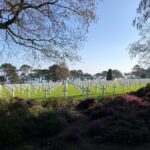
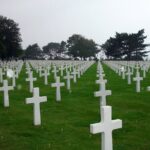
This cemetery is described as immense and impressive, with 9,388 American soldiers buried from the Battle of Normandy. That number matters—not as trivia, but as a reminder that this place is not just a monument. It’s a resting ground, maintained for generations.
What’s valuable for you: the guide’s interpretation helps you avoid the common trap of treating cemeteries as “just another stop.” With the right pacing, it becomes part of understanding the entire operation: the planning, the landing, the fighting, and the aftermath.
If you want to make the most of your time here, give yourself permission to slow down for reading. Even short stops at specific sections can do more than standing at the biggest view.
Pointe du Hoc: rangers, cliffs, and bomb craters you can still see
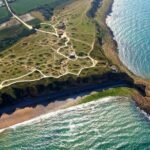
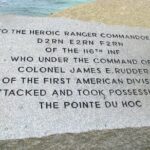
The final major site is Pointe du Hoc, with about 1 hour 30 minutes. This is a ranger mission in the story: taking and destroying a German battery perched on a cliff.
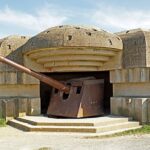
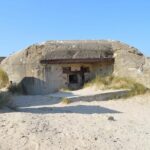
Here you get what makes Pointe du Hoc so memorable—the walk through areas where bomb craters are still clearly visible in the landscape, plus how the Germans lived in the bunkers. It’s not abstract. You see the marks and then you understand what they were for.
For your photos: think in layers. Wide shots help you understand the cliff and the reach of the area. Then close shots (like bunker remnants or crater fields) show the texture of the fighting ground. A patient guide can help you find angles that show both the setting and the details.
Timing, pacing, and what it feels like as a full day
This is a structured day with multiple set time blocks, and that helps you plan mentally. For example, Utah Beach is 1 hour 30 minutes, Sainte-Mère-Eglise is 2 hours 30 minutes, and both the American cemetery and Pointe du Hoc are 1 hour 30 minutes.
Because the stops are spaced across the Normandy beaches and nearby areas, you’ll spend some time traveling. That’s normal for a day like this. What makes it work is the guide’s ability to keep the context flowing while you’re on the move—so the driving time doesn’t feel like dead time.
Group size is capped at up to 6 and it’s private, meaning only your group is included. That tends to make the day calmer, and it also helps the guide tailor pacing. If you like taking photos, it’s worth knowing guides have been praised for being patient and letting you shoot without rushing you out of each moment.
Price and value for a private group (not just a per-person number)
The price is $918.18 per group (up to 6), lasting about 8 hours. If you divide that across a full group, the cost per person becomes much easier to swallow than when you’re traveling with fewer people.
What you’re paying for isn’t only transportation. You’re paying for:
- a private guide who explains the sequence of D-Day and connects each site
- a Jeep immersion component that helps you experience the terrain
- a route that strings together Utah, Sainte-Mère-Eglise, Omaha, the American cemetery, and Pointe du Hoc without you having to coordinate everything yourself
Also, the itinerary lists free admission for the sites mentioned. That’s value that adds up across a day, especially when multiple stops are involved.
If you’re a couple, you might treat this as a “one big Normandy day” investment. If you have friends or family nearby, filling the group can make it one of the better deals for a guided, private battlefield day.
Who should book this Jeep immersion D-Day tour
This tour fits you best if you want:
- a full day that hits the big Normandy stops without driving yourself
- a guide who can explain what you’re seeing, not just read a script
- a Jeep component that supports the story with terrain perspective
- a smaller private group, so the day stays personal
It’s also a good pick if you’re combining Normandy with other stops in France and want a first-time D-Day experience that doesn’t require heavy planning. English is offered, and the tour provides a mobile ticket.
Service animals are allowed, and it’s listed as near public transportation. Most travelers can participate, which suggests the day is designed for general mobility levels, though you should still expect memorial walks and time outdoors.
Should you book it
Book it if you want one guided day that moves from Utah Beach through the airborne sector to Omaha Beach, then ends with the cliff-top story at Pointe du Hoc—and you want Jeep immersion to help you actually understand the ground. This is the kind of tour where the guide’s care with details makes the stops feel connected instead of like a checklist.
Don’t book it if you’re only interested in a single beach and you don’t want a full-day schedule. In that case, you might prefer something shorter and more focused.
If you can fill a group of up to six, the value looks especially strong. If you’re traveling solo or as a duo, it’s still doable, but think of it as a private, premium historical day rather than a budget-friendly excursion.
FAQ
What is the duration of the tour?
The tour runs for about 8 hours.
Where does the tour start, and what time does it begin?
It starts at Parc Michel Ornano in Bayeux at 9:00 am and ends back at the meeting point.
Is pickup available from my hotel?
Pickup is offered if your hotel is located around Bayeux, Carentan, or Sainte-Mère-Eglise.
What does the tour cost?
The price is $918.18 per group, up to 6 people.
Is the tour private, or will I share with strangers?
It is a private tour/activity, and only your group participates.
Is the tour offered in English?
Yes, English is offered.
Are the sites on the itinerary paid entry?
The itinerary lists admission ticket as free for the listed stops.
What is the cancellation policy?
Free cancellation is available up to 24 hours in advance for a full refund.
Are service animals allowed?
Yes, service animals are allowed.