REVIEW · BAYEUX
Full-Day Tour of the American D-Day Beaches IN YOUR CAR start / end in Bayeux
Book on Viator →Operated by Normandy Battle Tours · Bookable on Viator
D-Day becomes far easier to understand when you are standing at the actual drop zones, beaches, and cemetery rather than trying to piece the invasion together from a museum display. This private day with historian and author Stuart Robertson follows the American sector from Sainte-Mère-Église to Utah and Omaha beaches, ending at the American Cemetery.
I like two things right away: you use your own car, so the day is private and flexible, and Stuart’s approach connects military movements with personal stories of courage and loss. The main drawback is also clear: you must supply the transportation, and the day involves a lot of walking and standing.
In This Review
- Key points to know before booking
- Why a private D-Day guide makes such a difference
- Starting in Bayeux with your own vehicle
- Sainte-Mère-Église and the airborne assault
- Utah Beach, the smoother landing and midday pause
- Omaha Beach and the human cost of the landing
- The American Cemetery at Colleville-sur-Mer
- What the guide brings to the experience
- Price, time, and what you actually receive
- Who should book this Normandy day
- Should you book it?
- FAQ
- Where does the tour start?
- What time does the tour begin?
- Where does the tour end?
- How long does the tour last?
- Do I need to provide transportation?
- Is this a private tour?
- Which sites are included?
- Is lunch included?
- Can I visit the Utah Beach Museum?
- Is the tour suitable for people with reduced mobility?
- Is the tour refundable?
Key points to know before booking
- Stuart Robertson leads the day: He is presented as an academically trained historian, published author, and full-time Normandy battlefield guide.
- Four major American sites: The route covers Sainte-Mère-Église, Utah Beach, Omaha Beach, and the American Cemetery at Colleville-sur-Mer.
- Your car is required: Transportation is not included, so you need a rental car or another suitable vehicle for the day.
- A private experience: Only your own group takes part, making it easier to ask questions and focus on family connections.
- Lunch is at Utah Beach: Lunch costs extra, and the Utah Beach museum is an optional visit at your own expense.
- Allow eight and a half hours: The advertised start is 9:00 a.m. in Bayeux, with the day ending back at the meeting point.
Why a private D-Day guide makes such a difference
The Normandy invasion covers a huge area and involves airborne troops, naval bombardment, infantry assaults, German defenses, and the fighting that continued long after the first landing. At first glance, the sites can feel disconnected. Sainte-Mère-Église is inland, Utah and Omaha are on the coast, and the cemetery seems like a quiet ending. A good guide supplies the links.
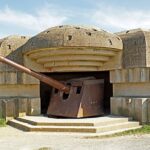
That is the real reason to consider this tour instead of simply driving to the beaches on your own. You can see the same sand, bunkers, church towers, and memorials without help, but you may miss why one road mattered, why a particular beach was so difficult, or how the airborne landings affected the assault that followed.
Stuart Robertson’s role is especially useful for people who want more than dates and troop numbers. The material provided about his work points to a guide who uses maps, facts, military detail, and stories about individual soldiers. His book, Command and Valour, is also mentioned by several past clients, so history readers may appreciate having an author at the wheel of the day, even though you remain the driver.
The private format matters. You are not trying to keep up with a large group or wait for strangers to finish at each stop. If your family has a relative connected to Normandy, you can bring that subject into the day. If one person in your group is new to military history, Stuart can explain the basics without making everyone else start over.
A few more Bayeux tours and experiences worth a look
Starting in Bayeux with your own vehicle
The meeting point is Place du Québec in Bayeux, with a 9:00 a.m. start. The tour is described as a drive in your car, so transportation is not part of the $166 price. Plan this carefully before booking. You need access to a car for the full day, and the guide joins your group rather than supplying a tour vehicle.
That setup keeps the day personal, but it also puts a little more responsibility on you. You handle the car, fuel, parking, and driving. The benefit is that your group does not share space with anyone else, and you can travel with the people you actually came to Normandy with.
The tour lasts about eight hours and 30 minutes. That is a full day, not a quick coastal outing. Wear shoes that can handle uneven ground, bring water, and expect to be outdoors in changing weather. The physical requirements are moderate, with considerable walking and standing. This is not a good fit if you have reduced mobility.
Sainte-Mère-Église and the airborne assault
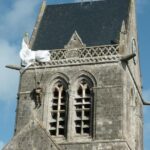
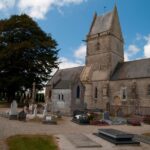
The first stop is Sainte-Mère-Église, with about an hour set aside. This town is linked to the American paratroopers who dropped into Normandy during the night before the beach landings.
Beginning here gives the day a useful shape. D-Day did not begin when the landing craft reached the shore. American airborne troops were already moving through the darkness, trying to seize roads, bridges, and key points behind the German coastal defenses. Sainte-Mère-Église helps you picture that confused opening phase before the main assault was underway.
An hour is enough for a focused explanation, but it is not a long museum visit. The emphasis is on the guide’s account of the paratroopers and the role of the town in the night operation. If you want to spend a great deal of time indoors reading displays, this stop may feel brief. If you want the larger battle explained at the place where it began for many American troops, it is a strong opening.
I particularly like the order. Starting inland, then moving toward the beaches, lets you see the invasion as a connected operation. You are not treating the airborne landings as a separate story. They become part of the plan to protect and support the beach assault.
Utah Beach, the smoother landing and midday pause
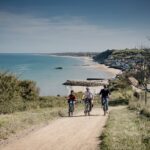
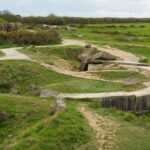
The tour then reaches Utah Beach for about two hours. The focus here is the American landing that achieved the best results among the D-Day beaches. The guide explains what made Utah different, while lunch takes place in the area.
The extra time makes sense. Utah is not simply a place to stop, take a photograph, and move on. It is a chance to discuss how the landing unfolded and why the results were more successful than at other American beaches. Stuart’s job is to turn that broad statement into an understandable account of men, objectives, terrain, and decisions.
You may also choose to visit the Utah Beach Museum, but admission is at your own cost. This is a useful option for people who want additional exhibits and artifacts. Keep an eye on the clock, since the day has several major stops and the museum is not included as a required part of the tour.
Lunch is not included either. That is normal for a private full-day outing, but you should budget for it and remember that the lunch break is part of the two-hour Utah Beach stop. The pause gives you time to eat, regroup, and absorb the morning before moving to the more emotionally difficult part of the route.
Utah often works well for families because the military story can be explained in stages. Younger visitors may find it easier to follow a beach landing after first hearing about the airborne troops. Older children and teenagers who already enjoy military history can ask more detailed questions without being limited to a fixed group script.
Omaha Beach and the human cost of the landing
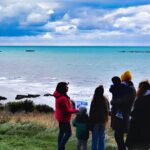
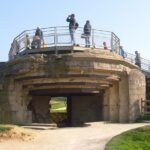
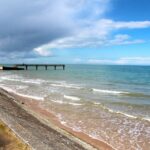
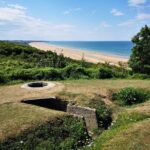
Omaha Beach receives about an hour, but the emotional weight of this stop is much larger than the clock suggests. It was the deadliest of the D-Day beaches, and the guide focuses on the first-wave assault and the men who faced the strongest resistance.
The value here is not just seeing a broad stretch of shoreline. Omaha can look peaceful, even ordinary, which makes an explanation essential. Without context, it is difficult to grasp how exposed the soldiers were or how quickly a planned operation could turn into chaos.
Stuart’s accounts are shaped by conversations with veterans who took part in that first assault. That personal connection gives the stop a human scale. Instead of leaving you with only an army’s movement on a map, the guide can connect the beach to individual choices, fear, bravery, and survival.
An hour is enough for a clear battlefield talk, though people who want a long, quiet walk along the shore may wish for more time. The tour is built around guided interpretation at several sites, not extended free time at each one. You should choose this experience for the explanation as much as for the views.
Omaha is also where the day’s balance matters. The tone is respectful and serious. This is not a lightweight sightseeing loop, and families should be ready for frank discussion of death, sacrifice, and battlefield loss. That seriousness is part of the point, but it may not suit very young children or anyone looking for a casual day by the sea.
The American Cemetery at Colleville-sur-Mer
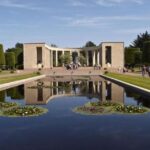
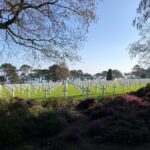
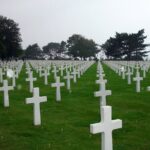
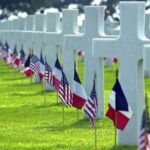
The final stop is the American Cemetery at Colleville-sur-Mer, with about an hour planned. Nearly 10,000 American service members are buried here, making it a fitting and sobering end to the route.
After hearing how the invasion was planned and fought, the cemetery gives those military events a clear human cost. Rows of graves are not a tactical diagram. They are a reminder that liberation came at a price paid by individual men and women.
I like ending here rather than beginning with a cemetery visit. The earlier stops provide context, so the memorial grounds carry more meaning. You have followed the airborne operation, examined Utah’s landing, and confronted Omaha’s losses. The cemetery then offers a quiet place to pay respect.
The one-hour visit should allow time for the guide’s explanation and personal reflection. As with the other stops, you should expect walking and standing. Comfortable footwear matters, and anyone with mobility concerns should think carefully about the full day before booking.
What the guide brings to the experience
The strongest reason to choose this outing is the guide. Stuart Robertson is described as an academically trained historian and published author who works full time as a battlefield guide in Normandy. The supplied details also identify a warm, clear communicator who can explain a complicated campaign in an organized way.
That combination is important. Military expertise alone can produce a flood of names, units, and dates. Personal storytelling alone can become vague. The best moments of this tour appear to come from joining the two: explain the operation, then show how it affected ordinary people.
I would especially value Stuart’s ability to adjust the discussion to the group. A family tracing a relative needs a different conversation from a group of serious military-history readers. The private setting gives you room to say what you already know, what you want to learn, and which part of the campaign matters most to you.
The guide’s passion is directed toward the soldiers rather than toward theatrical performance. That matters in Normandy. The subject calls for energy and clarity, but also restraint. You want a guide who can make events understandable without turning suffering into entertainment.
Price, time, and what you actually receive
At $166, the cost needs to be viewed alongside the format. You receive about eight and a half hours of private guidance from a specialist, covering four major American D-Day locations. Transportation and lunch are extra, and the Utah Beach Museum costs extra if you choose to enter.
For one person, the price may feel high once you add the car and food. For a couple or family sharing the private experience, the value becomes easier to see. A full day with a specialist can save you from spending hours driving between sites without understanding what you are seeing.
The price is strongest for people who want interpretation. If you mainly want to photograph the beaches and walk around independently, you can spend less by visiting on your own. If you want the route explained in a clear order, with military context and personal accounts, the private guide is the main product.
There are also practical limits. The day is non-refundable and cannot be changed after booking, so do not reserve it until your Normandy schedule and car plans are firm. Confirmation is provided within 48 hours, subject to availability, so leave room in your planning if your dates are tight.
Who should book this Normandy day
I would recommend it most strongly to:
- Families with a relative who served in the European campaign
- Visitors who want one focused day rather than several independent museum visits
- Adults and older children interested in military history
- People who value personal stories along with maps and battlefield facts
- Small groups who want to ask questions and keep the discussion private
It may be less suitable for people with reduced mobility, anyone who dislikes long days outdoors, or visitors who want a relaxed coastal drive with plenty of unstructured time. The schedule is focused, and the emotional subject matter is serious.
It is also worth thinking about the rest of your Normandy plans. This route gives you the main American stops, but it is not presented as a complete tour of every D-Day sector or every battle fought after June 6. Some past clients used Stuart for two or three days because Normandy’s story extends well beyond the initial landings. For a single day, this route gives you a strong American-sector foundation.
Should you book it?
Book this tour if you want the beaches and cemetery to make sense as part of one connected operation, and if you appreciate a guide who can combine scholarly detail with stories about individual soldiers. Stuart Robertson’s background, the private format, and the use of your own car make this a particularly good choice for families and small groups.
Skip it if you want a cheap, self-guided outing, dislike fixed full-day schedules, or cannot manage substantial walking and standing. Also confirm your vehicle and budget for lunch before committing.
For most visitors who have made the effort to reach Bayeux, I see the value here. You are not just checking off Utah and Omaha. You are giving those places a voice, a sequence, and a human meaning.
FAQ
Where does the tour start?
The tour starts at Place du Québec, Pl. du Québec, 14400 Bayeux, France.
What time does the tour begin?
The scheduled start time is 9:00 a.m.
Where does the tour end?
The activity ends back at the meeting point in Bayeux.
How long does the tour last?
The tour lasts approximately eight hours and 30 minutes.
Do I need to provide transportation?
Yes. Transportation is not included, and the experience is designed to take place in your own car.
Is this a private tour?
Yes. Only your group participates in the activity.
Which sites are included?
The route includes Sainte-Mère-Église, Utah Beach, Omaha Beach, and the American Cemetery at Colleville-sur-Mer.
Is lunch included?
No. Lunch is not included. The itinerary allows time for lunch at Utah Beach.
Can I visit the Utah Beach Museum?
Yes. An optional visit to the Utah Beach Museum is possible, but admission is at your own cost.
Is the tour suitable for people with reduced mobility?
No. The tour requires considerable walking and standing and is not recommended for people with reduced mobility.
Is the tour refundable?
No. The experience is non-refundable and cannot be changed for any reason after booking.