REVIEW · BAYEUX
Full-day Gold Beach and Omaha US Sector A4
Book on Viator →Operated by Normandy Sightseeing Tour · Bookable on Viator
D-Day on six beaches starts early. This full-day route links Gold Beach to Omaha and ends at the American Cemetery, with hotel pickup in Bayeux and an English-speaking guide who brings each stop into focus. Two things I really like: the way guides such as David, Jeremiah, Jérémy, Gwen, and Louis narrate the story clearly and with energy, and the smart mix of coastal sites plus the Arromanches museum, especially the Mulberry Harbour exhibit. One consideration: if the day runs late due to unexpected guide changes, the single one-hour visit at the American Cemetery can feel a bit tight.
You’ll move in a small group (up to 8) and you’re out for about 9 hours, starting at 8:30am. Most visits are free-entry except the Arromanches D-Day Museum (included), so you’re paying for the guide and the plan—not a pile of add-on tickets.
In This Review
- Key highlights worth planning for
- Why this Gold Beach to Omaha route feels so satisfying
- Meeting in Bayeux: a simple start for a long day
- Gold Beach: the landing area that sets the tone
- Arromanches-les-Bains and the Mulberry Harbour museum you’ll actually use
- Longues-sur-Mer Battery: concrete that explains how defenses worked
- Pointe du Hoc: why this place is so emotionally heavy
- Omaha Beach: the sector story becomes personal
- Colleville-sur-Mer American Cemetery: the best “final stop,” if you plan for the time
- Pace, walking, and how to stay comfortable
- Price and value: what $160.56 buys you in real terms
- Who should book this D-Day experience
- Should you book this full-day Gold Beach and Omaha tour?
- FAQ
- FAQ
- Where does the tour start?
- What time does the tour begin?
- How long is the tour?
- Is hotel pickup included?
- Does the tour include drop-off?
- What language is the tour offered in?
- How big is the group?
- What admissions are included?
- Is food provided?
- What if the weather is bad?
- Can I cancel for a full refund?
Key highlights worth planning for

- Hotel pickup and drop-off in Bayeux saves you time on a long coastal day.
- Arromanches D-Day Museum entry is included so you don’t have to line up or buy separately.
- German Atlantic Wall stops (Longues-sur-Mer battery and Pointe du Hoc) add perspective beyond the beaches.
- Omaha Beach and the American Cemetery finish the story with the human scale of the war.
- Small group size (max 8) keeps it easier to hear your guide and ask questions.
Why this Gold Beach to Omaha route feels so satisfying
A lot of Normandy tours show you a beach… then rush you to the next one. This day has a better rhythm. You start at Gold Beach, work your way through Arromanches, then hit key German coastal defenses at Longues-sur-Mer and Pointe du Hoc before finishing at Omaha and the Normandy American Cemetery. That order matters because it turns the day into a cause-and-effect story: landing zones, support harbors, defense points, then the cost.
I also like that the stops aren’t just random scenery. Each location you visit has a specific job in the D-Day picture. Gold Beach and Omaha are both Allied landing sectors, but they feel different in how you understand the terrain and the fighting. Arromanches connects the landings to the logistics—how the Allies kept moving after the initial shock. And Pointe du Hoc gives you a stark reminder that “what you see” from the beach isn’t always what mattered most for the battle.
A few more Bayeux tours and experiences worth a look
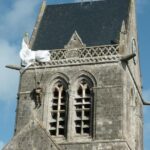

Meeting in Bayeux: a simple start for a long day
You meet at Place du Québec in Bayeux at 8:30am. If you’re staying in town, hotel pickup is offered from your hotel lobby, and you return to the meeting point at the end. That’s a big quality-of-life detail. You’re not hunting for a bus stop or trying to coordinate your own transport before a day that already runs long.
The tour uses a mobile ticket, which is handy if you don’t want to juggle paper on the go. The group is kept small (max 8), so you should feel more like you’re traveling with a practiced team than being shepherded through a checklist.
Gold Beach: the landing area that sets the tone
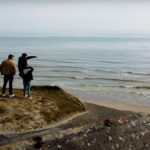
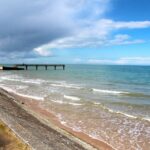
Gold Beach is stop number one, and it’s a great way to start because it plants the geography early. The tour’s framing here is clear: Gold Beach is the code name for one of the Allied invasion areas on June 6, 1944. In practice, that means you’re learning what this coastline meant to the plan before you start bouncing around to museums and fortifications later.
You’ll have about 30 minutes at Gold Beach with no paid admission required. That time is short enough that the guide’s narration matters. This is one of those stops where you’ll get more out of it if you’re ready to listen and look at the shoreline features the guide points out. If you pause to take photos, do it, but don’t let it swallow the whole window.
Arromanches-les-Bains and the Mulberry Harbour museum you’ll actually use
Arromanches-les-Bains is where this day connects to the “after the landing” problem: once troops hit shore, you still need ports, supplies, and a way to keep the operation alive. You’ll spend about 1 hour in Arromanches, then add another 30 minutes at the Arromanches D-Day Museum (included).
This is one of the most valuable parts of the itinerary because the museum focuses on the Arromanches landing aftermath and the Mulberry Harbour—the idea that the Allies could build functional harbor capacity even after the coast itself was a battlefield. I like that the museum time is built in rather than left as an optional add-on. You can think of it as your “big picture checkpoint.” After Gold Beach, it explains the mechanics; after that, the rest of the coastal defense stops feel less random.
Longues-sur-Mer Battery: concrete that explains how defenses worked
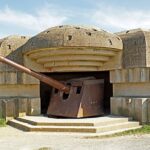
Next comes Batterie Allemande de Longues-Sure-Mer, also called the Longues-sur-Mer battery. You’ll have about 1 hour here. This is a World War II German coastal artillery battery, roughly a short distance north of Longues-sur-Mer.
What I love about this kind of stop is that it gives you a scale reference. A beach is one thing; fortifications are another. Standing near battery remains (and hearing how they fit into the coastal defense system) helps you understand why certain areas mattered to the attackers and why certain routes and timings were so critical.
Admittedly, this isn’t a “sit down and watch a film” stop. It’s more of a field explanation, and you’ll get more out of it if you’re comfortable doing some walking around viewpoints.

Pointe du Hoc: why this place is so emotionally heavy
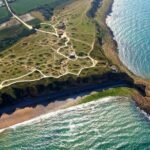
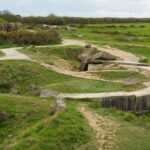
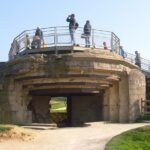
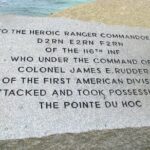
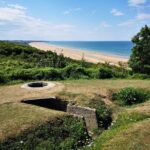
Pointe du Hoc is one of those D-Day sites that people remember even years later. You’ll have about 1 hour there, free admission. The guide will cover the basics: German bunkers and machine gun posts were installed in concrete casemates and gun pits before the invasion. On D-Day, the U.S. Army Provisional Ranger Group attacked and captured it after scaling the cliffs.
In my view, Pointe du Hoc works best when you treat it like a story set in place, not just a photo stop. The guide’s job is to help you picture what the attackers could and couldn’t see, and what defenders could do from fortified positions. If you like hearing the “how” behind the “what,” this is the moment to lean in.
If you’re traveling with kids, this stop can be a strong teaching moment too, since guides often build the narrative around clear roles and decisions. Just note that it’s still a historical site—keep an eye on footing and distances.
Omaha Beach: the sector story becomes personal
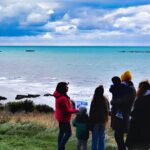
Then you move to Omaha Beach for about 1 hour. Omaha is one of five landing sectors in Operation Overlord’s amphibious assault component, and the tour’s structure helps you understand that Omaha wasn’t just one action—it was part of a wider system.
The time here is not meant for a long stroll along the whole coast. It’s meant for orientation: shoreline context, where the fighting fit into the larger plan, and why the place still carries weight. If you’ve seen Omaha from books or TV before, expect to feel the difference once you’re standing in the real space. The scale can surprise you, and it’s often the first time you truly grasp how big these beaches are compared with how small the battlefield stories can feel on paper.
Colleville-sur-Mer American Cemetery: the best “final stop,” if you plan for the time
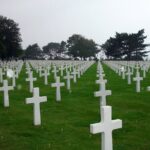
Your last major stop is Normandy American Cemetery and Memorial in Colleville-sur-Mer. You’ll have about 1 hour there, free entry.
This visit is where the day shifts from strategy to people. The cemetery honors American troops who died in Europe during World War II, and the space encourages a slower pace. I recommend using the hour with intention: take a moment before you rush into photo mode. If you want to visit the visitors’ center area too, try to prioritize early so you’re not racing the clock.
One thing to keep in mind: the itinerary is built around set time blocks, and if the day runs behind for any reason, this one can feel compressed. On a perfect day it’s enough to see the key parts, but don’t assume you’ll have unlimited time to wander.
Pace, walking, and how to stay comfortable
This is a full-day coastal route, and you should plan on a good amount of walking, plus driving time between stops in a van. Between sites, you’ll get brief transit stretches, but the overall day still adds up to time on your feet.
So pack for comfort:
- Wear supportive shoes (stone, uneven ground, and long view walks are common).
- Bring a light layer. Coastal weather changes fast.
- If food isn’t included (it isn’t, unless specified), bring a snack. You’ll likely want something to reset between stops.
- Bring water if you can. This kind of day turns your brain on and your body follows.
Also, small-group tours sound leisurely until you realize each stop has a timing plan. If you’re the type who likes to linger, you’ll still have moments to pause, but you’ll want to do it in a way that respects the next location.
Price and value: what $160.56 buys you in real terms
The price is $160.56 per person for a tour that runs about 9 hours. That’s not cheap, but it can be fair value when you look at what’s included.
You’re paying for:
- Hotel pickup and drop-off in Bayeux (real time saver).
- A professional guide who handles navigation and tells the story across multiple sites.
- Admission for the Arromanches D-Day Museum.
- The structure of visiting multiple major points—Gold Beach, Arromanches, Longues-sur-Mer, Pointe du Hoc, Omaha Beach, and the American Cemetery—in one day.
Most other listed stops are free entry. That means you’re not overpaying for tickets. You’re paying for a curated, timed route with interpretation. For many people, that’s the difference between “I saw the places” and “I understood the sequence.”
Who should book this D-Day experience
I’d book this tour if you want a guide-led day with a clear flow: beaches first, harbor context next, then the defensive system, then Omaha and the cemetery. It’s also a good fit if you like questions and conversation—small group size helps.
It may be less ideal if:
- You want total freedom to linger at each stop without time limits.
- You struggle with walking and uneven ground.
- You prefer a lighter emotional day (the cemetery and Pointe du Hoc are powerful).
It’s offered in English, and the group is kept at a maximum of 8, which typically makes it feel more personal and easier to manage.
Should you book this full-day Gold Beach and Omaha tour?
If your goal is to understand D-Day as a connected story—landing zones, harbor support, defenses, and then the human outcome—this tour is a strong choice. The included Arromanches museum time and the guided stops at Longues-sur-Mer and Pointe du Hoc make it more complete than a simple beach-hopping day.
I’d say book it if you’re comfortable with a full schedule and you want interpretation more than unstructured wandering. Just go in with one mindset: time is planned, so arrive ready to listen and move with purpose—especially toward the American Cemetery.
FAQ
FAQ
Where does the tour start?
The tour starts at Place du Québec, Pl. du Québec, 14400 Bayeux, France.
What time does the tour begin?
The start time is 8:30am.
How long is the tour?
The duration is about 9 hours.
Is hotel pickup included?
Yes. Hotel pickup in Bayeux is included, with pickup from the hotel lobby if you’re a client there.
Does the tour include drop-off?
Yes. The tour includes hotel drop-off back in Bayeux.
What language is the tour offered in?
The tour is offered in English.
How big is the group?
The tour has a maximum of 8 travelers.
What admissions are included?
Entries to the Arromanches D-Day Museum are included. Other listed stops show free admission.
Is food provided?
No. Food and drinks are not included unless specified.
What if the weather is bad?
The tour requires good weather. If it’s canceled due to poor weather, you’ll be offered a different date or a full refund.
Can I cancel for a full refund?
Yes. You can cancel up to 24 hours in advance for a full refund.