REVIEW · PARIS
Explore the Marais: History, Art & Local Culture
Book on GetYourGuide →Operated by Intrepid Urban Adventures - Europe · Bookable on GetYourGuide
Marais streets tell two stories at once, and this 2-hour walk stitches art, revolution, and local food into one easy route through the neighborhood. I love the small-group format (max 12) with an English-speaking local guide who actually steers the conversation. I also love the merveilleux pastry tasting, because it’s a very Paris way to end a history lesson.
You’ll start near the Pompidou area, then head toward Hôtel de Ville while spotting the Stravinsky Fountain, street art, and LGBTQIA+ landmark highlights along the way. The walk includes Saint Gervais Church, medieval lanes with quirky corbelled houses, and a proper look at the Jewish Quarter around Rue des Rosiers. One possible drawback: the pastry stop is not built for lactose-free, gluten-free, or vegan diets.
If you’re visiting Paris for the first time, or you want the Marais to feel like a lived-in place (not just postcard scenes), this is a smart way to get your bearings fast. It’s also child-friendly, and it covers about 2 km total—so you’ll leave with stories and an easier time navigating the area on your own.
In This Review
- Key things that make this Marais tour work
- Starting near Pompidou: quick orientation, then the Marais gets real
- Stravinsky Fountain to Hôtel de Ville: street art, LGBTQIA+ landmarks, and big-city Paris energy
- Saint Gervais Church and medieval lanes: where corbels and quiet courtyards do the talking
- Rue des Rosiers: the Jewish Quarter as a lively street, not a history slide
- The merveilleux pastry tasting: small bite, big Paris feeling
- Place des Vosges and Victor Hugo: literature, symmetry, and a chance to breathe
- Place de la Bastille: where the French Revolution started
- Guides make the difference: why Sarah, Maxi, Paloma, and others get praised
- Value for $49: a short tour with a real food moment and real context
- What to pack and how to handle the 2 km walk
- Who this Marais tour fits best (and who should choose something else)
- Should you book this Marais history, art, and culture walk?
- FAQ
- How long is the Marais tour, and how much walking is involved?
- What is the price per person?
- Where do I meet the guide?
- Is the tour suitable for vegetarians?
- Is this a small-group tour?
- What’s the cancellation and payment flexibility?
Key things that make this Marais tour work
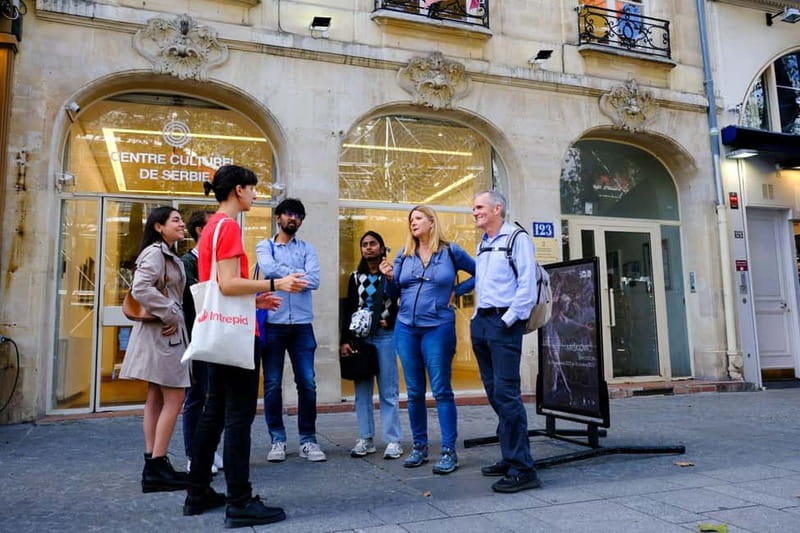
- Small group feel (max 12) means you get time for questions and small course corrections as you walk.
- Street art + Hôtel de Ville + Stravinsky Fountain gives you modern Paris energy right alongside historic sights.
- Saint Gervais Church and medieval side streets show the Marais at human scale, with architectural details you’d miss solo.
- Rue des Rosiers stop focuses on the Jewish Quarter as a living neighborhood, not a museum zone.
- Merveilleux pastry tasting adds a memorable food moment without turning the tour into a long meal.
- Place des Vosges and Victor Hugo, then the Bastille connect literature to revolution in a very walkable way.
Starting near Pompidou: quick orientation, then the Marais gets real
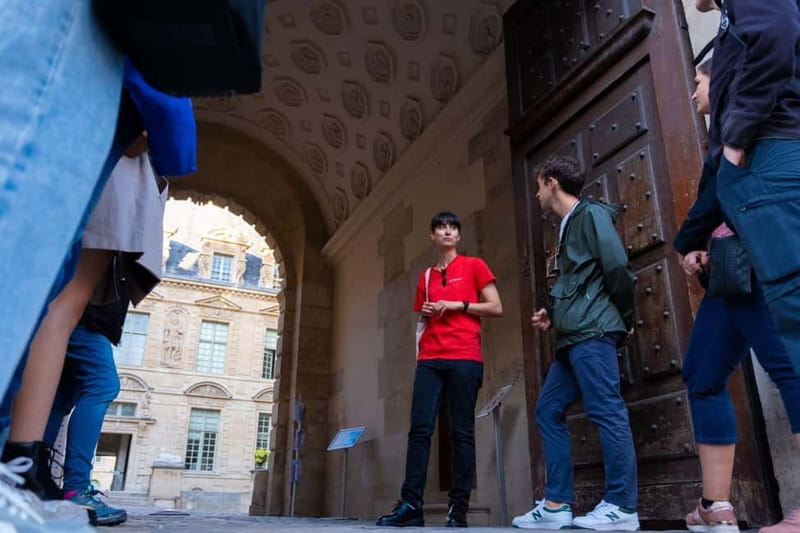
The tour begins at a meeting point on Rue Saint-Martin (opposite the Centre Pompidou area, by the Centre Culturel de Serbie). It’s a good start location because you’re close to one of Paris’s most recognizable modern landmarks, but you’re not stuck in crowds or museum lines for long. The early part of the route is designed to help you orient before you start slipping into older streets.
From there, you move into the Marais proper on foot. Expect a guided flow that doesn’t bounce you around: you’re meant to connect the dots between old stone streets, today’s street art, and the social layers that make this neighborhood feel distinct.
What I like here is the pace-setting. In about the first stretch, you get context for what you’re about to see next—so the later stops land better. You’ll also get practical guidance from the guide, the kind that helps you notice details like architecture edges, not just big names.
If you’re the type who likes to walk with a purpose, this format is ideal. You’re not wandering for two hours hoping you hit the right streets. The guide keeps the sequence logical and the talk tied to what’s in front of you.
You can also read our reviews of more historical tours in Paris



Stravinsky Fountain to Hôtel de Ville: street art, LGBTQIA+ landmarks, and big-city Paris energy
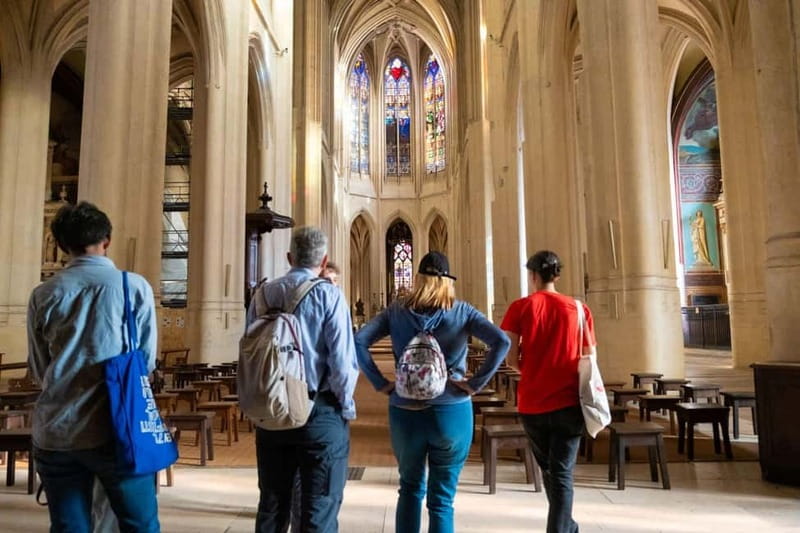
One of the most fun parts is how the tour frames Paris as both old and current. As you head toward Hôtel de Ville, you pass the Stravinsky Fountain—a colorful, playful stop that works as a visual “warm-up.” Then street art enters the story in a way that feels integrated, not stuck on as a random detour.
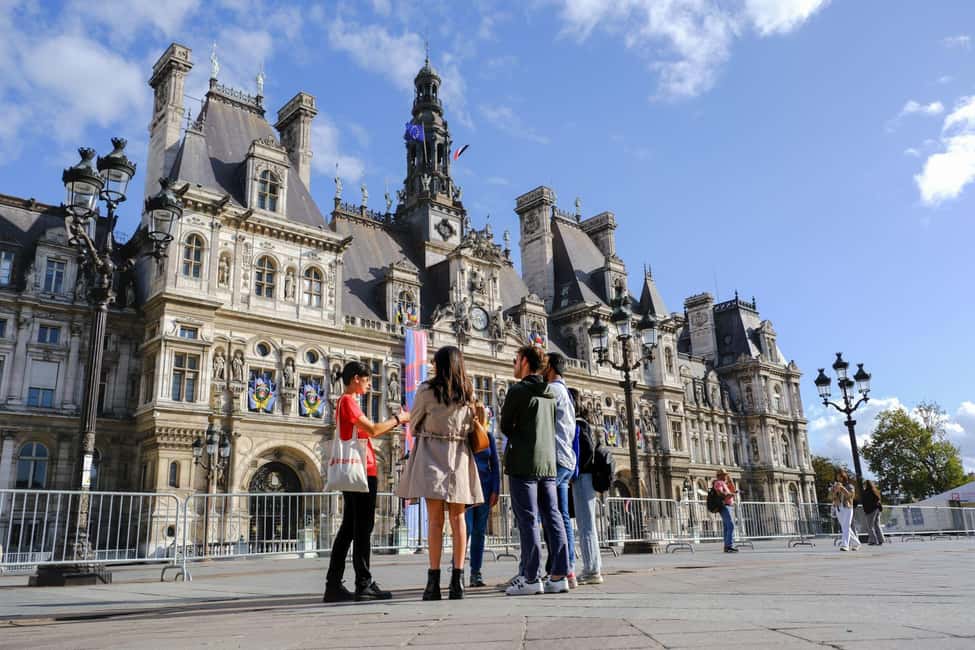
The Hôtel de Ville stop is more than a photo moment. This is where the tour links the neighborhood to political and civic life, and it sets up later connections to the Revolution. Even if you’re not a hardcore history buff, you’ll understand why these squares and streets matter.
You’ll also get LGBTQIA+ landmark highlights as you walk. This is one of those details that changes how you see the Marais. Instead of thinking only about medieval Paris, you start to notice modern Paris has its own history, too—one that’s still being written on the sidewalk.
I’d treat this section like your “eyes-on” phase. Look up at facades and corners where street art appears, and watch how the neighborhood changes street by street. The guide’s job here is to help you read the scenery like it has footnotes.
Saint Gervais Church and medieval lanes: where corbels and quiet courtyards do the talking
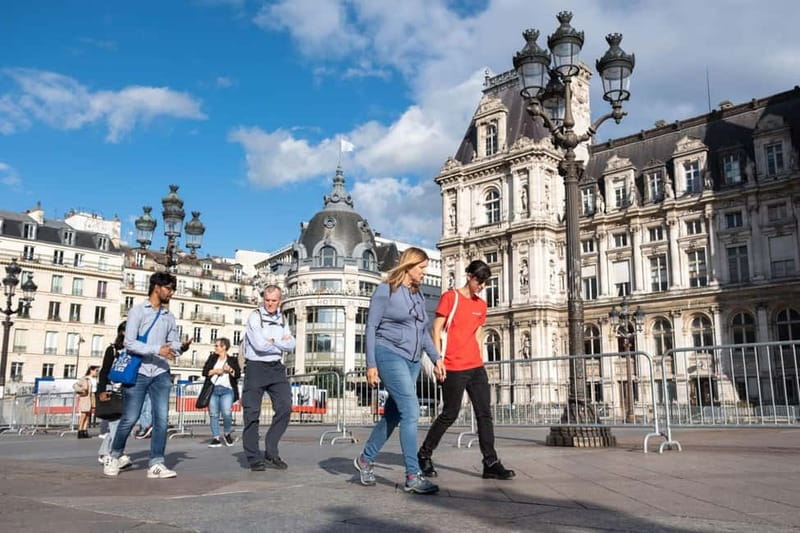
Saint Gervais Church is one of the tour’s anchor stops, and it’s a great choice because it feels like an actual pause in the walk. You’re not just passing through; you get time to take in the atmosphere and the building’s role in this part of Paris. The Marais has plenty of big sights, but churches like this are where you really start to feel the neighborhood’s timeline.
After that, you’ll move into hidden medieval streets. The tour calls out quirky corbelled houses—those overhanging architectural details that make medieval buildings look both practical and odd in the best way. It’s the kind of feature that’s hard to spot if you’re rushing, but easy to appreciate when someone points out what you’re looking at.
This is also where you may notice the Marais isn’t one single “style.” You’ll see older forms, modern street art near the edges, and the everyday mess of city life that makes it feel real. The guide’s explanations help you stop viewing it as a neat time capsule.
Practical note: these streets can include tight turns and uneven footpaths. Bring comfortable shoes, and think twice about high heels or shoes with slick soles. An umbrella can also help if the sky does its Paris thing.
If you like photography, this is where you’ll get the angles that look “accidental.” Courtyard-like spaces and side lanes create natural frames, especially when you pause for a moment instead of walking through like a conveyor belt.
Rue des Rosiers: the Jewish Quarter as a lively street, not a history slide
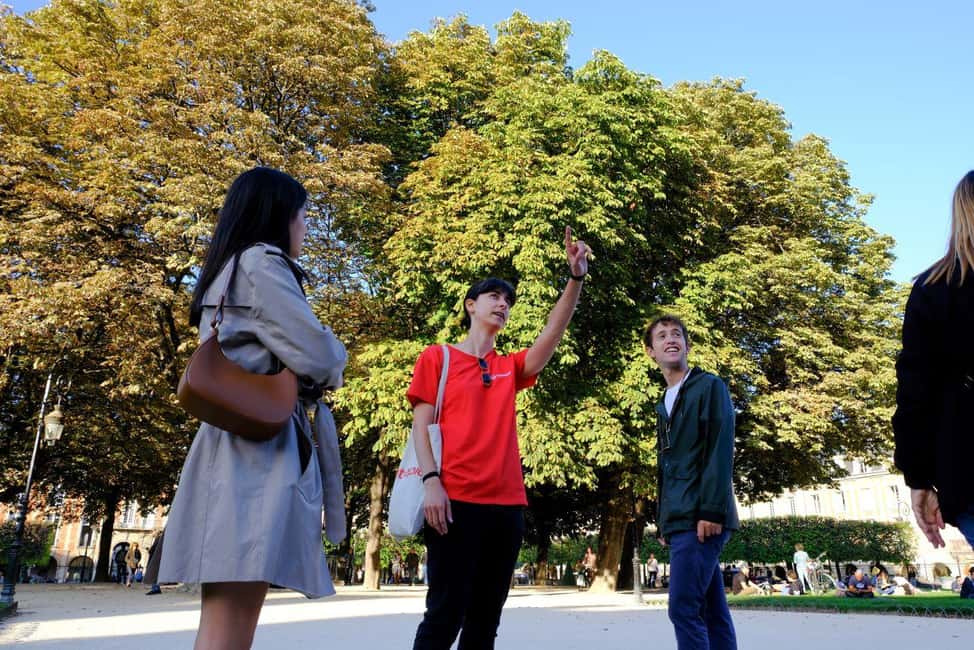
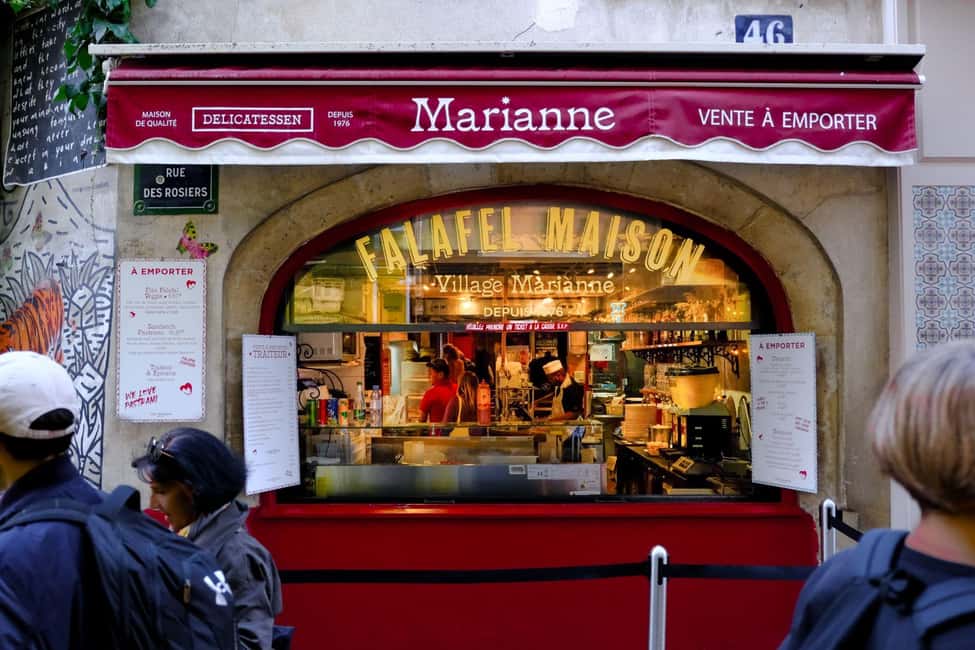
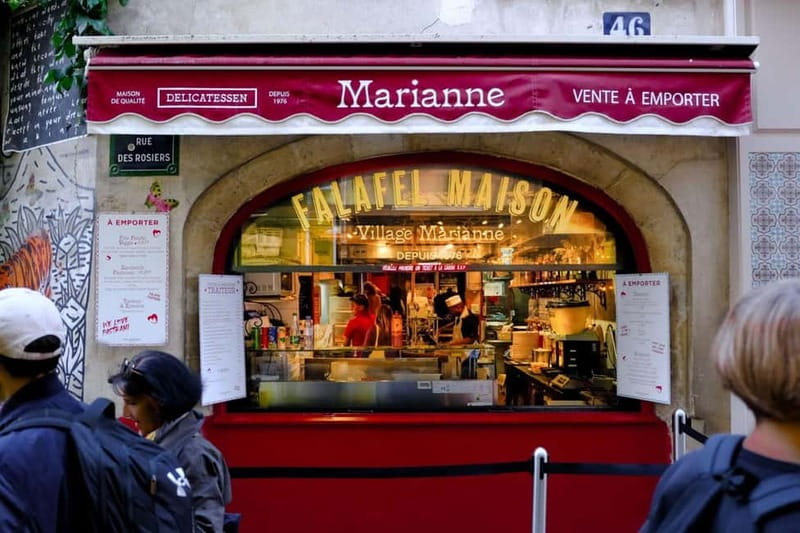
Rue des Rosiers is the heart of Paris’s Jewish community, and the tour makes it feel like a neighborhood you can actually picture yourself in. This isn’t only about cultural background. It’s about what you see while walking: storefront energy, everyday commerce, and the sense that people come here for food and identity, not just sightseeing.
You’ll learn how the area developed and what it represents within Paris culture. That context matters because it changes how you interpret everything from signage to the rhythm of the street. You’ll also see the food references in a way that feels grounded—especially with mentions of falafel as part of the area’s character.
If you’ve ever tried to eat your way through a city but didn’t know where to start, this stop helps. The guide’s role is to give you an understanding you can use after the tour—where to wander next, what to pay attention to, and how to avoid turning the experience into guesswork.
Even if you’re not planning a big meal later, Rue des Rosiers is a strong “taste of place.” The street itself teaches you something.
The merveilleux pastry tasting: small bite, big Paris feeling
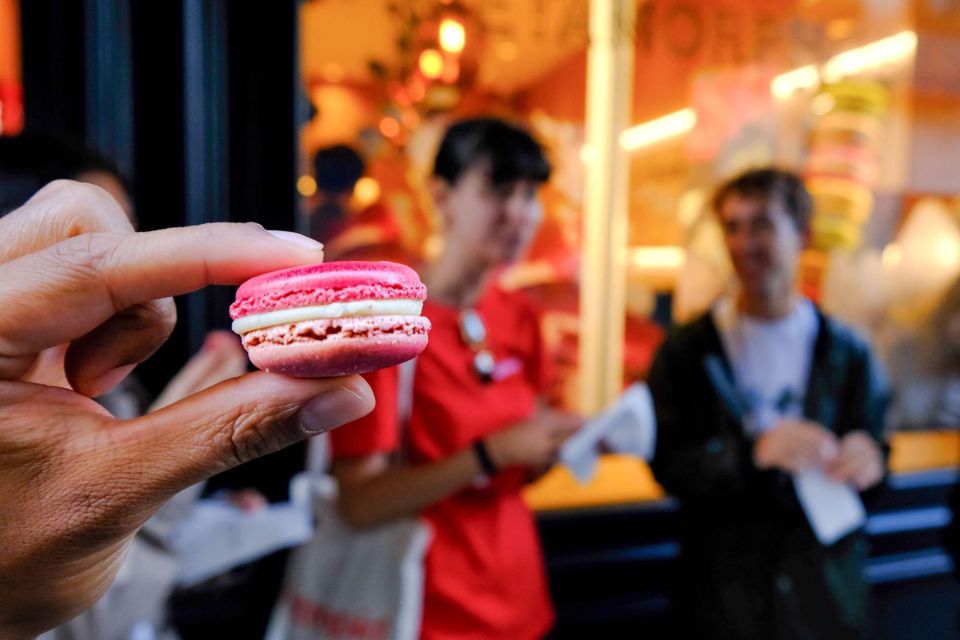
At some point, you’ll take a sweet break with a local pastry tasting: a merveilleux, described as a mind-blowing meringue. This stop works because it’s not just dessert for dessert’s sake. It’s a practical cultural moment—one of those things that’s easy to miss if you’re moving fast through Paris.
The tour is also upfront about fit and limitations. It’s suitable for vegetarians, but it’s unfortunately not suited for lactose-free, gluten-free, or vegan needs. So if your dietary restrictions are strict, plan accordingly and don’t expect substitutions here.
What I like about this tasting in a short tour is that it’s a “lesson in one bite.” You’ll get a clear sense of what to order (or recognize later) if you want to chase similar sweets after the tour. It’s the kind of food memory that can make a neighborhood stick in your head.
If you’re worried about sugar overload, don’t be. The rest of the walk continues at a comfortable pace, and the pastry stop is timed so you’re not dragging through the last stretch hungry or cranky.






Place des Vosges and Victor Hugo: literature, symmetry, and a chance to breathe
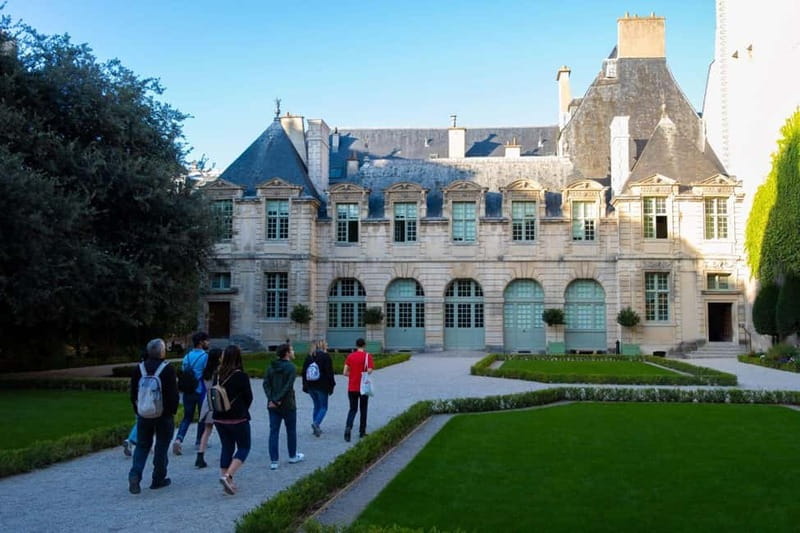
The tour’s next major mood shift is to Place des Vosges. This square has a clean, orderly feel, which is exactly why it’s such a good contrast to the more winding streets earlier. It’s also where the tour connects you to Victor Hugo—so the stop isn’t just architectural. You’ll understand why Hugo matters in this space.
I find squares like this useful during a city walk because they let you reset. After tight medieval lanes and busy market streets, Place des Vosges gives you visual breathing room. It also creates great photo conditions if the light cooperates.
If you’re the kind of traveler who reads plaques or likes knowing “why that place matters,” this is a rewarding stop. The guide’s explanations make it easier to see the square as part of the story of Paris, not just a pretty frame.
Even if you don’t want a long sit-down, taking a few minutes here can improve the rest of your sightseeing. You’ll start the final stretch with your head clear and your legs still functioning.
Place de la Bastille: where the French Revolution started
The walking route ends at Place de la Bastille, where the French Revolution started. That’s a huge claim, and the tour handles it in a practical way: it gives you the context so you can understand why this site has never really been “just another square.”
This final stop also makes sense logistically. Bastille is a place where you’ll likely find drink options nearby, so the tour naturally transitions into “what now?” time without requiring a ride or a long walk to somewhere else.
If you want to keep exploring after the tour, this ending point is helpful. It puts you in a lively transport and nightlife zone where you can continue at your own pace.
For history lovers, this is a satisfying finish because it ties back to earlier civic references. For first-timers, it’s a memorable landing point: you leave with one clear revolutionary anchor and enough context to recognize what you’re seeing.
Guides make the difference: why Sarah, Maxi, Paloma, and others get praised
A big strength here is the guide quality. Names that come up often include Sarah, Maxi, Cecilia, Camila, Paula, Paloma, Laure, Linda, Mitch, and Adele. The common thread is how the guide turns facts into a walk you can follow—pointing out street art, architecture details, and social context so you don’t feel like you’re listening to a lecture.
You’ll also benefit from good pacing. Several guides are noted for keeping the walk easy to process, not rushing you through the stories, and adjusting when someone asks questions. That matters because the Marais can feel visually overwhelming if you’re trying to do it alone.
There’s also a pattern of guides giving useful follow-up ideas for food and exploring, especially for people who are seeing Paris for the first time. Even if you’re not planning every recommendation, it helps you leave with a smarter next step.
Value for $49: a short tour with a real food moment and real context
At about $49 per person for 2 hours, the value comes from what’s included. You get a guided walking tour of the Marais district with an expert English-speaking local guide, plus time focused on the Jewish Quarter around Rue des Rosiers and LGBTQIA+ landmark highlights. The tour also includes a pastry tasting, which is usually the difference between a “facts and photos” walk and a “memory with flavor” walk.
You’re also getting the advantage of a cap of 12 guests. For a neighborhood walk, that headcount affects everything: question time, pace, and whether the guide can actually keep you together without turning into a sprint.
Private tours are also available, which can make sense if you’re traveling with kids, friends, or anyone who wants a more personalized route and pacing.
Price-wise, consider what else you’d do for the same time without a guide. If you’re doing the Marais solo, you’d still spend time walking and you’d still need to figure out what matters. Here, you’re paying for guidance that helps you interpret what you’re seeing—and that’s the part that usually costs you the most time.
One more value point: the tour is described as carbon neutral and run by a B Corp-certified company committed to using travel as a force for good. That won’t change your view of Place des Vosges, but it does give you an ethical checkmark if sustainability matters to you.
What to pack and how to handle the 2 km walk
This experience covers 2 km (1.2 mile) walking in about two hours, so it’s not a marathon. Still, the Marais has uneven sidewalks and quick turns, especially on the medieval lanes. If you bring shoes you can stand and walk in comfortably, you’ll enjoy the tour more because you won’t be thinking about your feet.
Bring an umbrella if you’re traveling in seasons when rain is possible. Weather can change quickly, and you’ll be outside the entire time.
Also consider snacks and hydration. Drinks and additional food aren’t included, so if you’re the type who runs low energy, plan for water before you meet your guide.
Who this Marais tour fits best (and who should choose something else)
This tour is a great match if you want:
- A guided introduction to the Marais with both history and street-level culture
- A food stop that’s short, clear, and easy to remember
- Stops that connect literary Paris (Victor Hugo) to political Paris (Bastille)
It’s also described as child-friendly, which makes it a solid option for families who want history without getting stuck in a museum building.
On the other hand, you may want to look elsewhere if you need lactose-free, gluten-free, or vegan options for the included pastry. The tour is suitable for vegetarians, but it doesn’t promise substitutions for those other dietary categories.
Should you book this Marais history, art, and culture walk?
If you want to see the Marais without losing the plot, I’d book this. The structure makes sense: orientation near Pompidou, moving through street art and major landmarks, then stepping into the Jewish Quarter and ending with the Revolution at Bastille. You also get a real payoff food moment with the merveilleux tasting, which makes it feel like more than a highlight slideshow.
I’d skip it (or at least carefully plan) only if your diet rules are strict beyond vegetarian. Otherwise, it’s a strong pick for first-timers, families, and anyone who likes learning while walking through streets that still function as real neighborhoods.
FAQ
How long is the Marais tour, and how much walking is involved?
The tour lasts 2 hours and covers about 2 km (1.2 mile) on foot.
What is the price per person?
The price is listed as $49 per person.
Where do I meet the guide?
You meet at 123 Rue Saint-Martin, 75004 Paris, opposite the Pompidou center by the Centre Culturel de Serbie. Your guide will be holding a Paris Urban Adventures sign.
Is the tour suitable for vegetarians?
Yes. The tour is suitable for vegetarians, but it is not suitable for lactose-free, gluten-free, or vegan customers.
Is this a small-group tour?
Yes. It’s designed as a small-group or private personalized tour with a maximum of 12 guests.
What’s the cancellation and payment flexibility?
You can cancel up to 24 hours in advance for a full refund. There’s also a reserve now and pay later option, so you can book without paying today.