REVIEW · NANCY
Art Nouveau visit to Nancy
Book on Viator →Operated by En Passant par la Lorraine · Bookable on Viator
Nancy’s Art Nouveau story is best read outdoors, one street at a time. On this 90-minute walk, you move from the grand setting of Place Stanislas into the city center to see the façades, glass roof, brasserie, and sculpture that made Nancy famous during the Belle Époque.
I like the small group limit of 25, which should make it easier to hear a guide and stop for explanations. I also like the focus on the École de Nancy, a local artistic movement that worked across architecture, furniture, ironwork, painting, and glass.
The main consideration is language: the tour is conducted in French. It also depends on good weather, so you need to keep your plans flexible if rain threatens.
In This Review
- Key Points About the Nancy Art Nouveau Walk
- Why Nancy Became an Art Nouveau Center
- Starting at Place Stanislas
- Reading the Art Nouveau Façades
- The Glass Roof, Sculpture, and Brasserie
- What the École de Nancy Adds to the Tour
- The Pace, Group Size, and French Language
- Is $17.45 Good Value?
- Booking Ahead and Cancellation
- Who Will Enjoy This Nancy Walk?
- Should You Book the Art Nouveau Visit to Nancy?
- FAQ
- Where does the Art Nouveau visit to Nancy begin?
- Where does the tour end?
- How long does the experience last?
- What language is the tour conducted in?
- What does the price include?
- How many people can join the tour?
- Can I cancel for a full refund?
Key Points About the Nancy Art Nouveau Walk
- A French-language tour led by historian Léopold Fousnaquer, with explanations at several points along the route.
- A 90-minute city-center walk beginning at Place Stanislas and ending at Brasserie L’Excelsior.
- Several forms of Art Nouveau, including façades, a glass roof, a brasserie, and sculpture.
- A close look at the École de Nancy, whose artists worked in architecture, cabinetry, ironwork, painting, and glassware.
- A maximum of 25 people, making this more personal than a large coach excursion.
- A modest price of $17.45 per person, with free cancellation up to 24 hours before the start time.
Why Nancy Became an Art Nouveau Center
At the end of the 19th century, Nancy sat at the center of Lorraine, one of France’s prosperous regions. The city gained the nickname Capital of the East, and its growing wealth helped support new work in business, culture, and the arts.
This was the Belle Époque, a period when artists and architects were eager to break from older design rules. New technology also gave them fresh materials and building methods. In Nancy, that freedom produced buildings with curved lines, elaborate decoration, plant-inspired forms, decorative metalwork, and colorful glass.
The local movement became known as the École de Nancy. It was not limited to one type of art. Its members worked in architecture, cabinetry, ironwork, painting, and glassware. That matters on this walk because you are not looking only at pretty façades. You are seeing how one artistic idea reached into many parts of daily life.
A guide can help you notice the connection. Without context, you might see a decorated building and simply call it old-fashioned or ornate. With the story of the École de Nancy in mind, you can look for the way structure, furniture, metal, glass, and sculpture were treated as parts of a single design.
You can also read our reviews of more tours and experiences in Nancy.


Starting at Place Stanislas
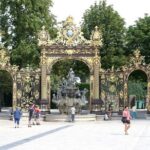
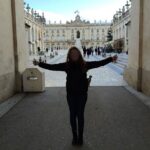
The meeting point is Place Stanislas, one of Nancy’s best-known public spaces. The tour begins here before moving into the city center and the area known as the Ville-Neuve, or New Town.
The square gives you a strong starting point because it presents Nancy’s grand public face before the walk turns toward the more decorative world of Art Nouveau. You begin with a clear sense of the city’s importance, then follow the later artistic changes that appeared in its streets and buildings.
The information provided for the route identifies Nancy as the sole stop, but this is not a one-site visit. The walk forms a small loop through the center, with several halts for explanations. That format suits the subject. Art Nouveau is not contained in one museum room. Its details appear on the outside of buildings, above entrances, in glass, in metal, and in public decoration.
You should arrive ready to walk and to pause often. The tour lasts about an hour and a half, so it is long enough to develop a theme without taking up half your day in Nancy.
Reading the Art Nouveau Façades
The façades are likely to be the main visual part of the tour. Nancy’s Art Nouveau buildings show how architects at the end of the 19th century used new materials and new design ideas to make individual structures distinctive.
Look for the way the building front is organized, not only for isolated decoration. Curves, plant forms, windows, ironwork, and carved details can work together. A guide’s explanation helps you separate a genuinely Art Nouveau design from any older building with a few decorative touches.
This is where a historian guide adds real value. The route includes stops for detailed explanations, and the supplied tour information specifically presents the guide as a historian. Léopold Fousnaquer is named as the guide connected with the experience, and his response to a French-language visit describes taking the group through the streets of the Ville-Neuve.
You should not expect a fast march from one photo stop to the next. The point is to pause and examine how the buildings were made unique. If you enjoy architecture, the stops give you a useful framework for noticing materials and forms. If architecture is not your main interest, the guide’s historical setting should help make the details easier to follow.
One practical limit is that the available description does not name every building on the route. You should book this for the overall Art Nouveau story rather than for one famous address that you absolutely must see.
The Glass Roof, Sculpture, and Brasserie
The route includes several different expressions of Nancy’s artistic style: a façade, a glass roof, a brasserie, and sculpture. This variety keeps the walk from becoming a repeated parade of building fronts.
The glass roof is especially useful for understanding the period’s technical side. Art Nouveau artists were not working with decoration alone. Advances in materials and construction allowed them to use glass and iron in new ways. A glass-covered feature can show how light, structure, and ornament came together.
Sculpture gives you another angle. Instead of reading the building as a flat surface, you can see how three-dimensional decoration was used to shape the character of a place. The tour’s subject is therefore broader than architecture in the narrow sense.
The walk ends at Brasserie L’Excelsior, at 50 Rue Henri-Poincaré. The brasserie is one of the route’s named features, and it gives the tour a fitting final stop. A traditional brasserie is a public interior as well as a place to eat, so it connects Art Nouveau with everyday social life rather than treating the movement as something found only on private houses.
The supplied information does not say that a meal, drink, or interior admission is included. Plan to see the brasserie as part of the guided route, not as a guaranteed dining experience. If you want to eat there afterward, treat that as a separate plan.
What the École de Nancy Adds to the Tour
The strongest reason to choose this walk is the chance to see the École de Nancy as a broad movement. The artists were active in several fields, and the tour links those fields through what you encounter in the city.
Architecture is the most obvious part. Buildings give you the scale and setting of the movement. But cabinetry, ironwork, painting, glassware, and sculpture show that the same concern for design reached into objects and interiors.
That wider view changes how you look at the streets. A balcony, window, entrance, or decorative panel may not be an isolated flourish. It may reflect a period when artists wanted useful objects and public spaces to be carefully designed.
The walk also places the movement in its economic setting. Nancy’s prosperity helped create the conditions for experimental art and architecture. That context is important because it explains why the city became an international name in Art Nouveau rather than simply a place with a few unusual buildings.
I would choose this experience if you want a compact introduction before visiting Nancy’s other cultural sights. It gives you vocabulary and context. Afterward, you can look at the city with a better sense of what to notice.




The Pace, Group Size, and French Language
The tour lasts about 1 hour and 30 minutes. That is a comfortable length for a walking experience, especially if you are fitting it between other visits in Nancy.
The maximum group size is 25 people. That is not a private tour, but it is small enough to keep the guide’s explanations manageable. You will still want to stand reasonably close during stops, especially on a busy street.
The experience is offered in French. You do not need to understand every word to appreciate the buildings, but the historical explanations are a major part of what you are paying for. If your French is limited, you may get more from the walk if you already know a little about Art Nouveau or bring a translation tool for key terms.
The tour is listed as suitable for most people, and service animals are allowed. It starts near public transportation, which makes reaching Place Stanislas easier within Nancy. No special transport is provided during the experience, so you should expect to move between stops on foot.
Because the route depends on good weather, comfortable shoes and a light rain plan make sense. The tour can be canceled if conditions are poor or if the minimum number of participants is not reached. In either case, you are offered another date or experience, or a full refund.
Is $17.45 Good Value?
At $17.45 per person, this is a low-cost guided introduction to one of Nancy’s defining artistic subjects. The price includes the historian-led walking tour, while tips are not included.
The value depends on how much guidance you want. You can walk through Nancy’s center on your own, but you may not know which details matter or how the buildings relate to the city’s Belle Époque prosperity. The guide turns a self-guided architecture stroll into a structured lesson with stops for explanation.
The 90-minute length also helps the value. You get enough time to cover several examples without committing to a full-day program. That makes the tour easy to add to a short Nancy visit.
There are limits. The price does not include a meal, drinks, or a separate attraction ticket. The listing identifies admission as free, which fits a public walking route rather than a tour based on paid museum entry. You are paying for the guide’s interpretation and the route, not for access to a private collection.
I consider the cost reasonable for anyone interested in architecture, local history, or decorative arts. It is less useful if you already know Nancy’s Art Nouveau buildings well or prefer to explore silently at your own pace.
Booking Ahead and Cancellation
The experience is booked about 13 days in advance on average. That suggests you should not wait until the last moment if the tour fits an important day in your schedule.
You receive confirmation at the time of booking, and the mobile ticket makes it simple to keep the booking on your phone. The meeting point is Place Stanislas, while the tour ends at Brasserie L’Excelsior, so you should note that the start and finish are different addresses.
Free cancellation is available up to 24 hours before the local start time. A cancellation made less than 24 hours ahead is not refunded, and late changes are not accepted.
The weather rule matters here. This is an outdoor walking tour, so poor weather can lead to a new date or a full refund. The same options apply if the minimum number of participants is not reached.
Who Will Enjoy This Nancy Walk?
You are a good match for this experience if you enjoy:
- Architecture that rewards close looking
- Belle Époque culture and design
- Short guided walks with historical explanation
- Seeing a city through public buildings and street details
- French-language tours
- Small groups rather than large sightseeing vehicles
It also works well for visitors who want an introduction before exploring Nancy independently. The guide can give you a clearer sense of the École de Nancy, and that makes later sightseeing more rewarding.
Families may find the 90-minute length manageable, though the value depends on children’s interest in buildings and decorative art. Most people can participate, but you should be comfortable walking and standing outdoors for the duration.
I would be more cautious if you need an English-language tour, want guaranteed access inside several buildings, or are looking for a food-focused experience. The brasserie is part of the route, but no meal or drink is included.
Should You Book the Art Nouveau Visit to Nancy?
Book this walk if you want a focused, affordable introduction to Nancy’s Belle Époque architecture and the École de Nancy. The best features are the range of examples, the historian guide Léopold Fousnaquer, the small group limit, and the chance to see Art Nouveau as a citywide movement rather than a single building style.
Skip it if French explanations will be difficult for you or if rain is likely to disrupt your plans. Also keep your expectations clear: this is a guided outdoor walk, not a museum tour or a brasserie meal.
For most architecture-minded visitors, $17.45 is a sensible price for 90 minutes of context and close looking. Schedule it on a dry day, begin at Place Stanislas, and leave room afterward to continue exploring Nancy on your own.
FAQ
Where does the Art Nouveau visit to Nancy begin?
The tour begins at Place Stanislas, Pl. Stanislas, 54000 Nancy, France.
Where does the tour end?
The walk ends at Brasserie L’Excelsior, 50 Rue Henri-Poincaré, 54000 Nancy, France.
How long does the experience last?
The guided walk lasts approximately 1 hour and 30 minutes.
What language is the tour conducted in?
The tour is conducted in French.
What does the price include?
The price includes a guided walking tour with a historian guide. Tips are not included.
How many people can join the tour?
The activity has a maximum of 25 participants.
Can I cancel for a full refund?
Yes. You can cancel up to 24 hours before the experience start time for a full refund. Late cancellations and changes made less than 24 hours before the start are not accepted for a refund.