REVIEW · NANCY
Nancy Private Guided Walking Tour
Book on GetYourGuide →Operated by Travmonde OÜ · Bookable on GetYourGuide
Nancy’s grandest story is written in its squares. On this private walk, you move from Place Stanislas through Place de la Carrière and Place d’Alliance while tracing the city from settlements dating to 800 BC, through the rule of Duke Gérard of Lorraine, and into the French kingdom. History and architecture share the same pavement here.
I like the private format, which gives your group room to ask questions and request a different focus on the spot. I also like the guide’s role: the strongest feedback praises a passionate, capable guide who kept the group engaged and did not rush explanations. The main drawback is the 90-minute limit. It is enough for the major highlights, but not for every corner of Nancy or a full look at its museums and Art Nouveau interiors.
In This Review
- Key points at a glance
- Starting beneath Place Stanislas’s grand design
- From ancient settlement to the Duchy of Lorraine
- Place de la Carrière and Place d’Alliance
- The War of Succession and Lorraine’s move toward France
- French Revolution context without losing the city’s character
- Nancy as a city of Art Nouveau
- What the private format changes
- Is $369 good value for 15 people?
- Who will get the most from this Nancy walk?
- Should you book the Nancy Private Guided Walking Tour?
- FAQ
- Where does the Nancy walking tour meet?
- How long does the tour last?
- What languages are available?
- Is the tour private?
- How many people can join one group?
- What places are covered?
- Does the tour discuss Nancy’s early history?
- Does the tour explain Nancy’s connection with France?
- Are entrance fees included?
- Can I cancel for a full refund?
Key points at a glance
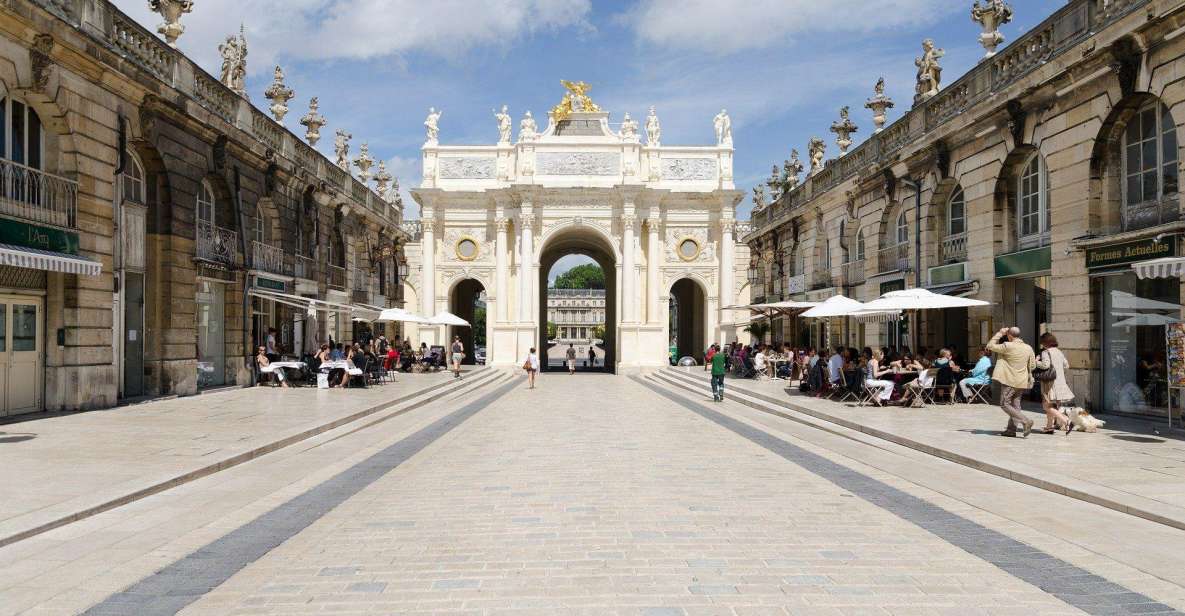
- Place Stanislas is your starting point: Begin in Nancy’s grand ceremonial square and use it as a visual introduction to the city.
- Three UNESCO-listed squares shape the route: See Place Stanislas, Place de la Carrière, and Place d’Alliance as one planned architectural ensemble.
- Nancy’s past spans centuries: Cover ancient settlement, the Duchy of Lorraine, the War of Succession, union with France, and the French Revolution.
- The tour is private for up to 15 people: Your guide works only with your group, so questions and on-the-spot adjustments are possible.
- English and French are available: Choose the language that suits your group when checking the booking details.
- Budget for paid entries separately: Entrance fees are not included, which matters if you hope to add an interior visit.
Starting beneath Place Stanislas’s grand design
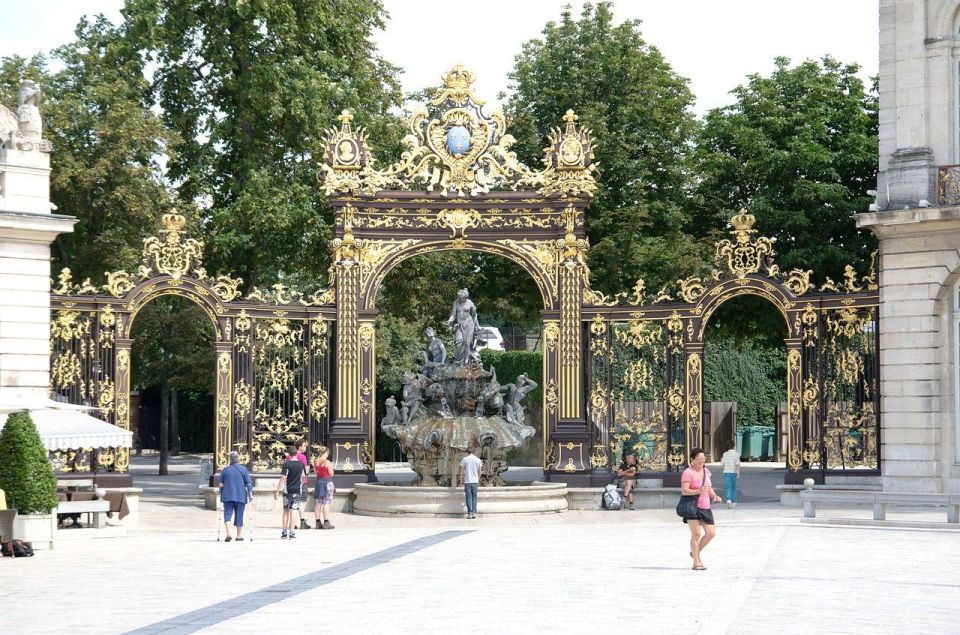
Meeting at Place Stanislas puts you in the right place immediately. This is not just a convenient meeting point. It is one of the main reasons to come to Nancy, and it gives your guide a strong opening scene for the city’s story.
The square belongs to Nancy’s celebrated eighteenth-century architecture. Its scale and formal design show a city trying to present itself with order, confidence, and style. On a guided walk, details that might blur into one grand view can become part of a larger explanation about Lorraine, political power, and urban planning.
You should expect the guide to use the square as a starting point rather than as an isolated monument. The city’s story moves through changes in rule and identity, and Place Stanislas helps make those changes visible. Nancy was once tied to the Duchy of Lorraine, later became part of the Kingdom of France, and then faced the upheaval of the French Revolution.
The square is also useful for getting your bearings. Since the tour lasts only 90 minutes, a central beginning helps keep the route focused. You will not spend precious time finding a distant meeting place or transferring between sights.
You can also read our reviews of more walking tours in Nancy

From ancient settlement to the Duchy of Lorraine
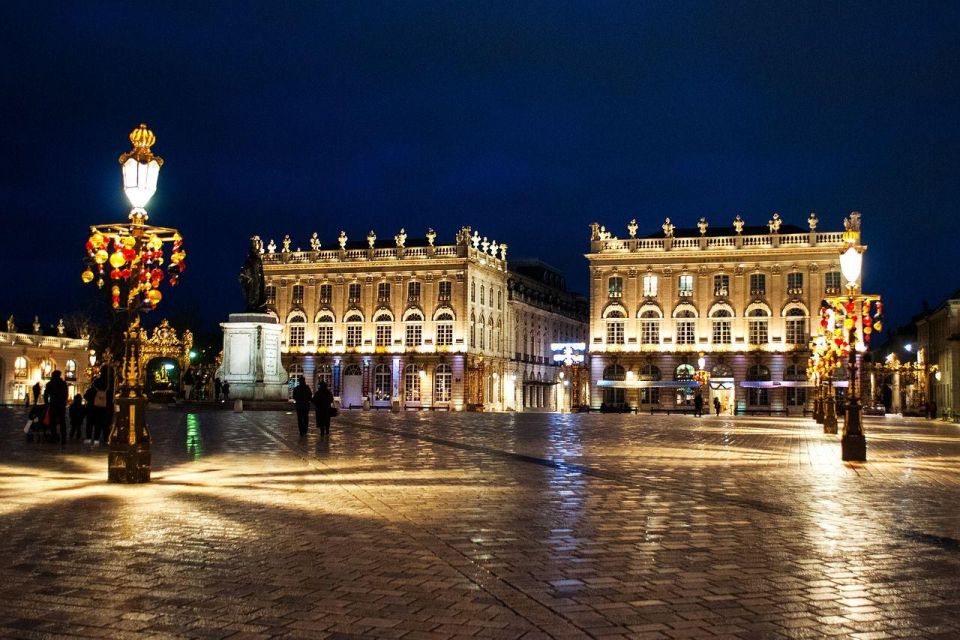
Nancy’s story reaches back to settlements dating to about 800 BC. That early date gives the walk a wider frame. You are not looking only at eighteenth-century façades. You are standing in a city shaped by many layers of occupation and political change.
The tour also introduces the founding of Nancy by Duke Gérard of Lorraine. This part matters because it connects the city’s physical growth to the rulers who shaped Lorraine. A local guide can explain that shift in a way a sign or map rarely can, tying the founding story to the streets and squares around you.
I find this historical sequence useful because it prevents Nancy from feeling like a pretty architectural stop with no clear plot. The city’s appearance makes more sense when you understand the role of the dukes, the importance of Lorraine, and the pressure created by its position within European politics.
The ancient material will likely be presented as context rather than as an archaeological tour. The supplied details do not promise excavated remains, a museum visit, or a specific ancient site. If your main interest is archaeology, ask the guide at the start how much time can be given to the earliest period.
Place de la Carrière and Place d’Alliance
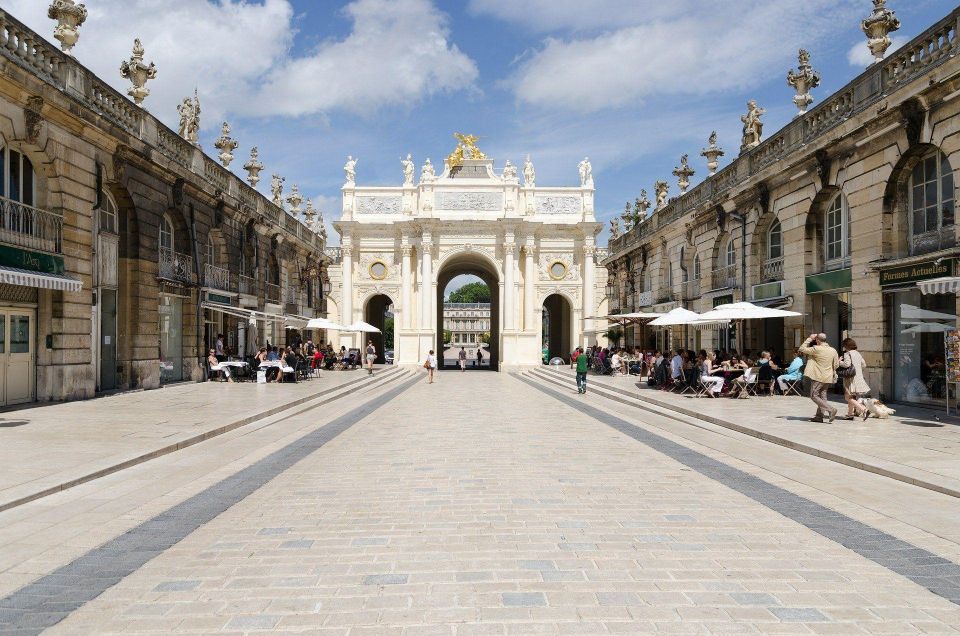
The route includes Place de la Carrière and Place d’Alliance, two squares that help complete Nancy’s famous architectural set. Seeing them with Place Stanislas gives you more than three separate photo stops. Together, they show how the city’s grand urban spaces relate to one another.
Place de la Carrière offers another view of eighteenth-century Nancy. After the openness of Place Stanislas, the change in scale and arrangement can help you notice how different kinds of public space were planned for different purposes. Your guide can point out the relationship between the squares and explain why the ensemble matters.
Place d’Alliance adds another piece to the same design story. The name itself hints at political connection, and the guide’s historical commentary can help link the square’s setting to the broader transition of Lorraine. This is where a private tour earns its keep. If one square interests you more than another, you can ask for extra explanation instead of following a fixed group script.
The UNESCO designation applies to this architectural ensemble. That status does not mean every building is open for entry, and it does not replace the need for interpretation. It does tell you that the three squares should be viewed as a connected achievement, not as unrelated monuments scattered around town.
The War of Succession and Lorraine’s move toward France
Nancy’s history turns sharply when the tour reaches the War of Succession. This conflict forms one of the key political chapters in the city’s past, and it helps explain why the transition from duchy to French rule was not a simple administrative change.
You will hear how Nancy’s identity was tied to the Duchy of Lorraine and how wider European struggles affected the city. The precise amount of detail depends on your guide and your group’s questions, but the subject gives the walk real political weight. Architecture here was not created outside history. It reflects the ambitions, fears, and alliances of the rulers who controlled the region.
The move from the Duchy of Lorraine to the Kingdom of France is especially important for visitors who know little about Lorraine. Nancy is French today, yet its past includes a distinct regional identity and a ducal court. The tour helps you see that France was not always the uniform country suggested by a modern map.
This is also a good point to ask the guide for a simple timeline. With ancient settlements, Duke Gérard, the War of Succession, French rule, and the Revolution all in the same 90-minute tour, dates can pile up. A private guide can adjust the explanation to your background, which is one of the better reasons to choose this format.
French Revolution context without losing the city’s character
The French Revolution is another major subject covered on the walk. In Nancy, that period adds tension to an otherwise elegant architectural setting. The squares may look composed and ceremonial, but the city’s political life was anything but calm.
A guide can show you how the Revolution fits into Nancy’s longer transition from ducal city to part of France. You are not simply hearing a national story pasted onto the city. You are following how national upheaval affected a place with its own regional traditions and political past.
The tour does not promise entry to a Revolution museum or a specific interior linked to the period. That is worth keeping in mind. Its strength is the street-level narrative, where the buildings and squares provide the backdrop for the explanation.
I would pay attention to how your guide balances the Revolution with the earlier history. Some visitors want dates and political detail. Others prefer to focus on what they can see. Since the group is private, you can signal your preference instead of accepting a one-size-fits-all pace.
You can also read our reviews of more guided tours in Nancy


Nancy as a city of Art Nouveau
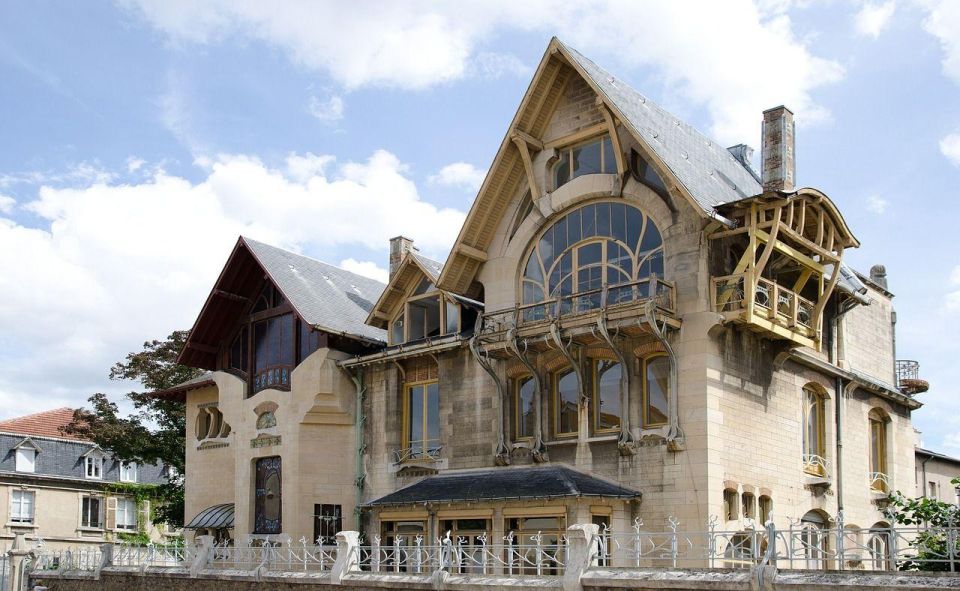
Nancy is also known as a city of Art Nouveau. This gives the tour a second architectural angle, separate from the formal eighteenth-century squares. You get the chance to connect Nancy’s older civic design with its later reputation for decorative, innovative architecture.
The available details do not specify a particular Art Nouveau building or interior on this 90-minute route. You should therefore treat the Art Nouveau theme as part of the city’s cultural identity and ask the guide which examples can be pointed out during your walk.
That limitation is practical, not a reason to dismiss the tour. A short central walk can introduce the contrast between Nancy’s grand planned squares and its Art Nouveau character. But if Art Nouveau is your main reason for visiting, you may need more time beyond this experience to pursue the subject properly.
I like that the tour presents Nancy as a city of both tradition and innovation. The eighteenth-century ensemble gives it formal polish, while Art Nouveau adds a later creative edge. Together, these elements explain why Nancy appeals to visitors who care about design, architecture, and city history.
What the private format changes
The booking covers one private group of up to 15 people. That size gives you privacy, but it is still large enough for a family, a circle of friends, or a small organized party. You are not placed with strangers, and the guide is assigned to your group only.
The most useful feature is the possibility of customizing the tour with your guide on the spot. This does not mean every request can be added to a 90-minute route. It does mean you can ask for more focus on the squares, Lorraine’s political past, the Revolution, or Art Nouveau if that fits your interests.
The guide service is clearly the heart of the experience. The feedback describes a guide who was competent, passionate, generous with time, and able to hold the group’s attention throughout the visit. That is exactly what you want on a history-heavy walk. Nancy’s buildings are attractive enough to see on your own, but the connections between them are harder to grasp without a clear narrator.
English and French are the available languages. If your group includes speakers of both, settle on the best working language before the walk begins so the explanations stay smooth.
Is $369 good value for 15 people?
The listed price is $369 for a group of up to 15. If the group is full, that works out to about $24.60 per person. A smaller group pays more per person, so the value depends heavily on how many people join your booking.
For a private guide in a UNESCO-listed city center, the price can make sense when you value personal attention and flexible discussion. A group of four or six will pay more per person than a full group, but you also get a quieter experience and more opportunity to ask questions.
The 90-minute duration keeps the total commitment modest. You can use it as an introduction early in your stay, then decide which parts of Nancy deserve more time. It is less useful if you expect a full-day examination of the city, museum entries, or a long Art Nouveau route.
Entrance fees are not included. The core experience is the guided outdoor walk, so plan for extra costs if you want to enter paid sites afterward. No specific admission prices are provided, so check them separately before you book.
You can cancel up to 24 hours before the activity for a full refund, and the reserve-now, pay-later option keeps you from paying at the time of booking. Those terms are helpful if your plans for the Grand Est are still moving around.
Who will get the most from this Nancy walk?
I would recommend this tour to first-time visitors who want a clear introduction to Nancy without committing to a long outing. It suits people who enjoy architecture but also want the political story behind the façades.
It is a good match for families and mixed-interest groups because a private guide can adjust the balance between dates, buildings, and visual highlights. It also works well for travelers who prefer English or French commentary rather than reading their way through a city alone.
History-minded visitors should appreciate the broad sweep from 800 BC to the French Revolution. Architecture fans will value the three squares, UNESCO context, and Art Nouveau connection. The short format also suits anyone with limited time in Nancy.
You may want something else if you need museum access, a detailed Art Nouveau study, or a slow photography walk. The tour gives you the city’s main story and major architectural highlights, but 90 minutes demands a firm focus.
Should you book the Nancy Private Guided Walking Tour?
Book it if you want Nancy’s major squares explained by a guide who can keep your private group engaged and adjust the emphasis as you go. The mix of Place Stanislas, Place de la Carrière, Place d’Alliance, Lorraine’s ducal past, the French Revolution, and Art Nouveau gives you a useful first look at the city.
Think twice if your group is very small and price per person matters, or if you expect entrance fees and extensive interiors to be included. For most first visits, though, the central meeting point, private format, flexible commentary, and focused 90-minute route make this a sensible way to begin exploring Nancy.
FAQ
Where does the Nancy walking tour meet?
The meeting point is Place Stanislas, 54000 Nancy, France.
How long does the tour last?
The walking tour lasts 90 minutes.
What languages are available?
The live guide is available in English and French.
Is the tour private?
Yes. It is a private group experience, with a local guide assigned only to your group.
How many people can join one group?
The price covers a group of up to 15 people.
What places are covered?
The tour covers Nancy’s major highlights, including Place Stanislas, Place de la Carrière, and Place d’Alliance.
Does the tour discuss Nancy’s early history?
Yes. The tour includes ancient settlements dating back to about 800 BC and the founding of Nancy by Duke Gérard of Lorraine.
Does the tour explain Nancy’s connection with France?
Yes. It covers the War of Succession, the transition from the Duchy of Lorraine to the Kingdom of France, and the French Revolution.
Are entrance fees included?
No. Entrance fees are not included in the tour price.
Can I cancel for a full refund?
Yes. You can cancel up to 24 hours in advance for a full refund.