REVIEW · BAYEUX
D-Day E-Bike excursion self guided
Book on GetYourGuide →Operated by Locvelo · Bookable on GetYourGuide
D-Day feels close on quiet bike paths. I like how this self-guided D-Day e-bike day turns the landing beaches into something you can actually move through, plus you get panoramic viewpoints that make the coastline hit harder. One thing to think about: the route includes a few rougher, off-road style patches that can be tricky if you prefer smooth pavement.
This is built for an outdoor day with training wheels for grown-ups: the bikes are high quality, well equipped, and supported with setup help and audio. You ride in autonomy, without a rigid clock, so you can stop for photos, read a marker, or linger at the kind of spots that make D-Day feel painfully real.
Before you go, pack your basics—water bottle and sunglasses are actually on the list for a reason. And if you’re expecting a carefree cruise with zero effort, plan on pedaling, because the assist is there to help you cover distance, not to remove the need to ride.
In This Review
- Key Things That Make This D-Day E-Bike Day Worth It
- A Self-Guided D-Day Day That Still Feels Supported
- The Bosch E-Bike Setup: Range, Bags, and Ride Readiness
- Picking Your Route: The Mulberry, Gold, Juno, Omaha, and Liberty
- Pointe du Hoc: Where the Coastline Feels Brutal
- Omaha Beach Trail: Tide Lines, Long Stretches, and Real Pedaling
- Gold and Juno Beaches: Different Angles, Same Intensity
- German Fortifications at Longue sur Mer: Ruins You Can Reach
- Arromanches and the Mulberry Harbor: The Engineering Story
- Navigation That Doesn’t Ruin Your Day
- What That “Off-Road” Bits Comment Actually Means for You
- Price and Value: About $116 for a Full-Day Equipment Package
- Who This D-Day E-Bike Excursion Fits Best
- Should You Book This D-Day E-Bike Day?
- FAQ
- FAQ
- How long is the D-Day e-bike excursion?
- What D-Day sites are included in the experience?
- What routes can I choose from?
- Is there navigation support for the self-guided ride?
- What kind of bike power and range should I expect?
- Do the bikes have a throttle?
- What’s included with each bike?
Key Things That Make This D-Day E-Bike Day Worth It

- Bosch motor + 400 Wh battery with a stated range up to 150 km
- Smartphone GPS bag plus a powerbank, so navigation stays simple
- Audio guide in English and French, timed to help you make sense of what you’re seeing
- Five route choices: The Mulberry, The Gold Beach, The Juno, the Omaha, and the Liberty
- Extra battery and repair kit on every bike, plus a lock and helmet
- Staff support at the start, including bike use tutorial and route guidance, even for a self-guided day
A Self-Guided D-Day Day That Still Feels Supported

The big selling point here is balance. You get independence to ride at your own pace, but you start with real support—bike setup, a tutorial, and route help—so you’re not left figuring it out mid-day.
In practice, that matters because Normandy’s best D-Day viewpoints don’t always line up with the easiest “follow a straight line” logic. With guidance upfront, you can choose practical loops that still hit the places you care about, like Pointe du Hoc and the Omaha coast.
The day is also built to feel secure and exhilarating at the same time. You’re outdoors the whole time, but you’re not stuck on a cramped tour schedule, and the bikes are designed for all sizes and skill levels.
You can also read our reviews of more cycling tours in Bayeux


The Bosch E-Bike Setup: Range, Bags, and Ride Readiness

Each e-bike comes ready for a full day of moving. You’ll get a helmet and a lock, plus practical carrying gear: a big rear rack bag and a front or rear bag, depending on the bike setup you receive.
Your phone isn’t just for selfies here. There’s a smartphone bag with a free bike GPS app, and you also get a powerbank so the navigation stays alive longer than a typical battery life. That’s one of those small details that quietly changes everything when you’re riding self-guided.
Power is handled with a Bosch motor system and a 400 Wh battery. The company states a range up to 150 km, and at least one rider reports getting through 60 km+ on a charge. Real-world range will depend on wind and how much you push the hills, but the setup is clearly meant for longer beach-to-beach exploring.
You’ll also have an extra battery plus repair tools. That’s not about drama. It’s about confidence. If something feels off—flat tire, minor issue—you’re not stranded waiting for rescue.
Picking Your Route: The Mulberry, Gold, Juno, Omaha, and Liberty

This isn’t one generic “see everything” day. You choose between five self-guided routes, and each one aligns with a set of must-sees.
Here are the route themes:
- The Mulberry: built around the artificial harbor site at Arromanches
- The Gold Beach: focused on the landing area at Gold Beach
- The Juno: built around Juno Beach
- The Omaha: centered on Omaha Beach
- The Liberty: another route option for hitting signature D-Day locations around the Bessin region
You don’t pick blindly. Staff can help you tailor a route based on the beaches you most want to see, and they’ll point out must-see stops before you ride out. That’s especially helpful if you’re mixing family needs (shorter segments, more breaks) with your own priorities.
If you’re traveling with kids or teen riders, this is also where route choice matters most. One review included ages 14 and 11 with bikes sized appropriately, which makes the trip feel realistic rather than “everyone must ride the same plan.”
Pointe du Hoc: Where the Coastline Feels Brutal

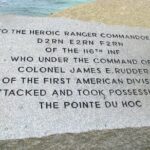
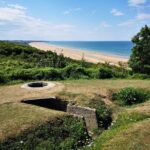
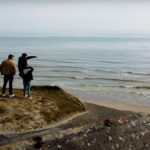
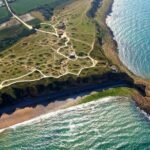
Pointe du Hoc is one of those places where the scenery can’t fully explain what happened—but it helps you understand why it mattered. When you approach by bike, you’re not just arriving at a single viewpoint; you’re moving through the surrounding terrain, which makes it easier to grasp the scale.
This is also where you can feel the day’s rhythm shift. Early on, the ride feels like exploration—small roads, coastal air, open visibility. Then Pointe du Hoc turns that into reflection fast, and you’ll probably want a few minutes longer than you first planned.
The e-bike format helps here because it keeps you from rushing. You can stop where you need to, read, look back along the coastline, and then keep moving. It’s a different way to take in a site like this, and it tends to make it more personal.
Omaha Beach Trail: Tide Lines, Long Stretches, and Real Pedaling

Omaha is a highlight for good reason, but it can surprise you on distance. One rider found the Omaha Beach Trail a bit longer than expected, even with e-bike assist.
That’s the key to know ahead of time: this is an e-bike day where you still pedal. One review specifically noted there’s no throttle—you have to work the pedals. So if you’re planning to treat this like an effortless glide, adjust expectations now. Plan for effort, and you’ll enjoy it more.
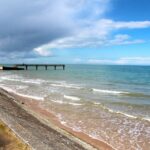
The upside is that you feel connected to the coastline as you ride. You’re not just watching the views from a bus window. You’re traveling through them, and you can pause at the spots that catch your eye—especially the wide outward-facing angles that give you that “how far does it go” perspective.
If you’re sensitive to longer distances, treat the morning and afternoon like two separate segments: ride hard early if you want extra time later, or pace yourself and plan to linger around the beach area without feeling you must catch up.
You can also read our reviews of more guided tours in Bayeux




Gold and Juno Beaches: Different Angles, Same Intensity

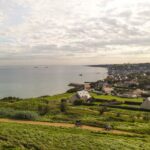
Gold Beach and Juno Beach are often spoken about as part of the same operation, but your experience changes when you ride them. You’ll feel it in the way viewpoints open and close as you travel between landing areas and inland roads.
Gold can feel broader in how it reads visually from the coast. Juno often has a different tone as you move through the surrounding region—more of that “you can understand the layout” feeling you don’t always get from a single stop.
The e-bike format helps you stitch the story together without turning the day into a museum sprint. You can ride from one focus point to the next, then take the small detours the land allows—without needing to hire a guide for each question.
If you like outdoor exploring, you’ll also appreciate that these routes keep you in motion. It’s fresh air all day, and you’re never stuck in long, slow transfers.
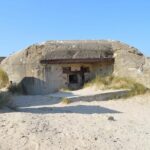
German Fortifications at Longue sur Mer: Ruins You Can Reach

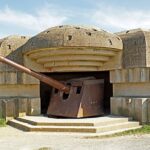
One of the more interesting stops is the German Longue sur Mer battery site. Seeing it by bike changes your perspective because you’re not just parking and looking; you’re riding through the surrounding geography that shaped defense lines.
This kind of site benefits from a self-guided audio guide. As you move from point to point, the audio helps you interpret what you’re seeing while you’re still in the scene, instead of trying to remember details later.
Also, because it’s part of a broader cycling route, it doesn’t feel like a “special mission.” It becomes part of your normal day’s flow—ride, pause, listen, ride on.
If you’re a detail person, this is the area where you might spend extra time. The battery-style sites tend to invite questions, and the audio can help you connect dots quickly.
Arromanches and the Mulberry Harbor: The Engineering Story

Arromanches is where the day turns toward reconstruction and logistics. The artificial harbor—the Mulberry—stands out because it’s a different angle of the story than the shore itself.
Riding to Arromanches by e-bike makes the site feel more tangible. You’re covering ground at a human speed, so you can notice how the area reads around you and not just the major landmark.
This is also a strong pick if you choose The Mulberry route. You’ll be spending your time on the right kind of narrative: how the Allies kept the supply lines moving as the battle progressed.
I like that this stop gives your day a second theme beyond beaches. If the landing coasts dominate your thoughts, your brain can feel overloaded. Arromanches helps reset it with a practical, engineering-focused viewpoint.
Navigation That Doesn’t Ruin Your Day

Self-guided works only if navigation stays easy. Here, you get a dedicated smartphone setup: a smartphone bag plus a free bike GPS app, and a powerbank to keep everything running.
That combination matters because it reduces decision fatigue. You’re not constantly stopping to check your phone in your pocket and watching battery percentage disappear. You can keep both hands ready for riding and just glance when needed.
You’ll also get an initial tutorial on how to use the bikes and how to run the navigation app. That’s huge on day one. It’s the difference between enjoying autonomy and worrying you’ll get lost.
If you’re the type who likes to read about each stop first, you might find it helpful to save your questions for the audio guide time rather than trying to research everything before you go. You’ll get the context right as you arrive.
What That “Off-Road” Bits Comment Actually Means for You
One common caution from reviews is the route includes a few off-roading spots. Translate that into your planning: think uneven ground, occasional rougher patches, and the need for balanced riding rather than pure cruising.
This doesn’t automatically mean the trip is difficult. But it does mean you should wear your helmet, stay alert, and avoid overthinking it like a technical mountain bike track.
If you’re traveling with kids, use route choice and pacing wisely. A bike that feels fine on smooth road can feel different on rougher segments, especially if someone is still building confidence on e-bike handling.
If you prefer fully paved routes, you might find part of the charm in dealing with small road irregularities anyway. The views at Pointe du Hoc and along the coast tend to be worth a few cautious moments.
Price and Value: About $116 for a Full-Day Equipment Package
At about $116 per person for a 1-day self-guided experience, the value comes from the package, not just the e-bike rental.
You’re not only paying for the bike. You’re paying for:
- Bosch-powered assistance with meaningful range potential
- an extra battery
- navigation help via smartphone GPS plus powerbank
- audio guide access in English and French
- a full set of safety and repair tools, including helmet and lock
That bundle matters because Normandy day trips add up fast once you factor in parking, transport, guided time, and equipment. This setup is designed to keep the day moving without you hunting for essentials.
Also, because staff can help you build a tailored path around your chosen beaches, your day is more likely to match what you truly want to see, instead of settling for a cookie-cutter loop.
If you’re comfortable riding independently and want more control than a bus tour, the price starts to make sense quickly.
Who This D-Day E-Bike Excursion Fits Best
This works best if you want the D-Day sites without a strict group pace. You’ll enjoy it if you like outdoor time, photo stops, and the feeling of traveling through places rather than just visiting them.
It also fits well for mixed groups. Reviews mention kids with appropriately sized bikes, and the staff made time for a bike tutorial. That points to an operation used to handling different comfort levels.
You might hesitate if:
- you expect a totally throttle-free, effort-free ride (the bikes require pedaling)
- you hate uneven ground and would rather avoid any rough segments
- your group wants a very scripted, museum-style order with no choice at all
If you fall into the middle—okay with pedaling, fine with a few rough patches—this is a strong match.
Should You Book This D-Day E-Bike Day?
I’d book it if you want autonomy with real support. The setup—Bosch e-bikes, GPS phone bag, powerbank, audio guide, extra battery, and repair tools—turns “self-guided” into something you can actually enjoy, not fear.
I’d skip it or switch expectations if your group treats e-bikes like automatic transportation rather than assisted riding. The no-throttle reality means you’ll pedal, and the off-road style bits mean you’ll need balance.
Bottom line: if your priority is hitting key D-Day locations like Pointe du Hoc, Omaha, Gold, Juno, the Longue sur Mer battery, and the Arromanches harbor areas—while staying flexible and outside all day—this one looks like a smart use of a Normandy day.
FAQ
FAQ
How long is the D-Day e-bike excursion?
It’s valid for 1 day.
What D-Day sites are included in the experience?
You can explore Pointe du Hoc, Omaha Beach, Gold Beach, Juno Beach, the German Longue sur Mer battery, and the artificial harbor of Arromanches.
What routes can I choose from?
There are five self-guided options: The Mulberry, The Gold Beach, The Juno, the Omaha, and the Liberty.
Is there navigation support for the self-guided ride?
Yes. Each bike includes a smartphone bag with a free bike GPS app and a powerbank.
What kind of bike power and range should I expect?
The bikes use a Bosch motor with a 400 Wh battery, and the stated range is up to 150 km.
Do the bikes have a throttle?
The information provided indicates there is no throttle—you need to pedal.
What’s included with each bike?
You get a helmet, a lock, repair tools, an extra battery, a big rear rack bag, and a bottle of cold water, plus phone carrying support via the smartphone bag.