REVIEW · STRASBOURG
Strasbourg: Guided Bike Tour with a Local Guide
Book on GetYourGuide →Operated by Cyclorama · Bookable on GetYourGuide
Strasbourg looks best at two speeds: your bike and your curiosity. This guided ride strings together Petite France, the Old Town landmarks, and then the Neustadt—ending with a clear view of the European Institutions that run the city’s modern story. It’s a smart way to understand how Strasbourg went from fortified river-town to major European stage.
I especially like how the route keeps changing textures: medieval corners with covered bridges and the Vauban Dam, then broader boulevards and monumental buildings. I also like the way the guide brings the places to life—people on the German option even said the guide adjusted and repeated explanations in simpler German when needed.
One thing to consider: the ride includes weaving through streets with pedestrians. If you feel shaky on a bike or you get anxious in traffic-like city flow, you’ll want to go in confident and focused.
In This Review
- Quick reasons this bike tour works
- How the 2.5-hour route makes Strasbourg click
- Petite France and the Old Town: where the postcards feel real
- Finding hidden corners near Place Saint-Étienne (without getting lost)
- The Neustadt ride: Germany’s imprint and a modern European face
- Parc de l’Orangerie: the break that keeps the tour fun
- The return loop: Ponts, cathedral squares, and the 14th-century wall
- Bike comfort, pace, and the real-world ride feel
- Languages and guides: what you’re really buying
- Price value: why $46 feels fair for what you see
- Who this bike tour suits best
- Should you book this Strasbourg guided bike tour?
- FAQ
- How long is the Strasbourg guided bike tour?
- What does the tour price include?
- Where do I meet the guide?
- Which languages are offered?
- Is there more than one start time or option?
- Do I need my own bike?
- Are helmets or bike accessories provided?
- Can I cancel if my plans change?
Quick reasons this bike tour works
- Petite France + covered bridges + Vauban Dam in one smooth loop
- Pont du Corbeau and Gutenberg Place as quick, high-impact wayfinding stops
- Notre-Dame de Strasbourg area shortcuts that save you from slow searching
- European Parliament, Council of Europe, and European Court for Human Rights on the same ride
- Parc de l’Orangerie breathing room instead of only “stop, stare, repeat”
- A final glide along the 14th-century wall that ties the old city story together
How the 2.5-hour route makes Strasbourg click
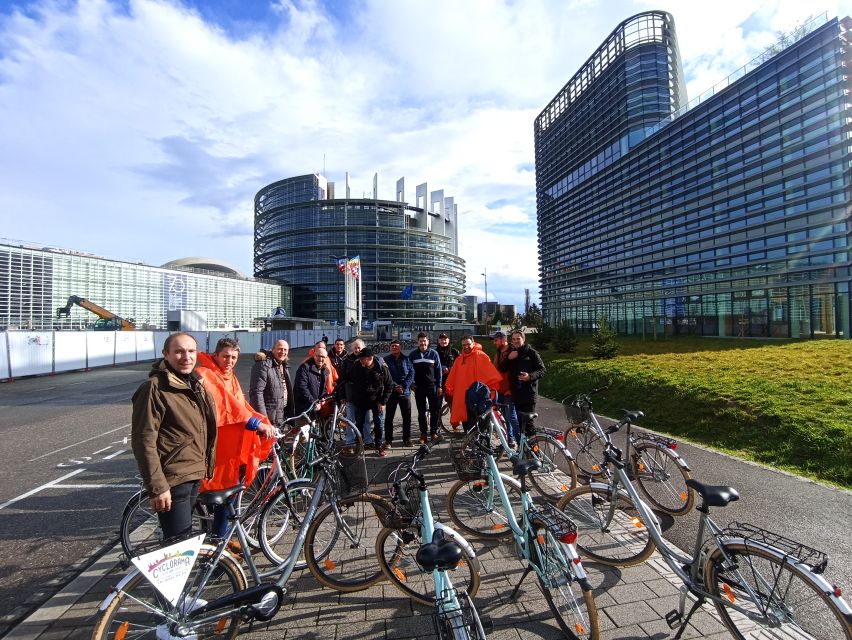
This tour is built for people who want city orientation fast—but not in a rushed, stamp-collecting way. With a duration of about 150 minutes, you get enough time to ride between districts, stop for photos, and still cover the top “Strasbourg worlds”: the historic river core and the later European-facing Neustadt.
You start from one of three meeting options: Café Lové, La Pépinière, or another Café Lové option depending on what you book. From there, the guide sets the tone with a short introduction to Strasbourg, then you’re moving quickly. The cycling part is the glue here. It connects sights that feel far apart on foot but actually link nicely by bike through the city’s flatter, more bike-friendly layout.
Group size is not specified, but the pacing described by many guests has a common theme: relaxed, with frequent chances to ask questions and capture pictures. A couple of guide names pop up repeatedly in the experience record—Katarina, Josh/Joshua, Vivienne, Jean, Barbara, and others—which is a nice reminder that what you’re paying for is not just movement between landmarks, but a local human who can answer follow-ups.
You can also read our reviews of more cycling tours in Strasbourg

Petite France and the Old Town: where the postcards feel real
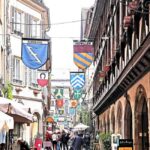
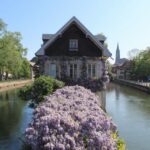
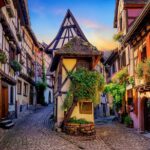
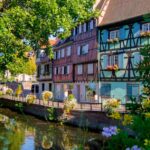
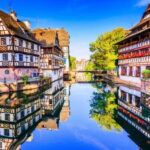
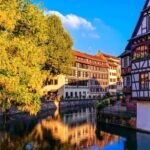
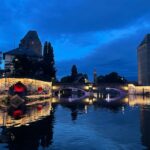
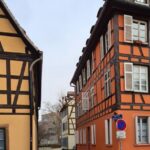
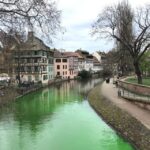
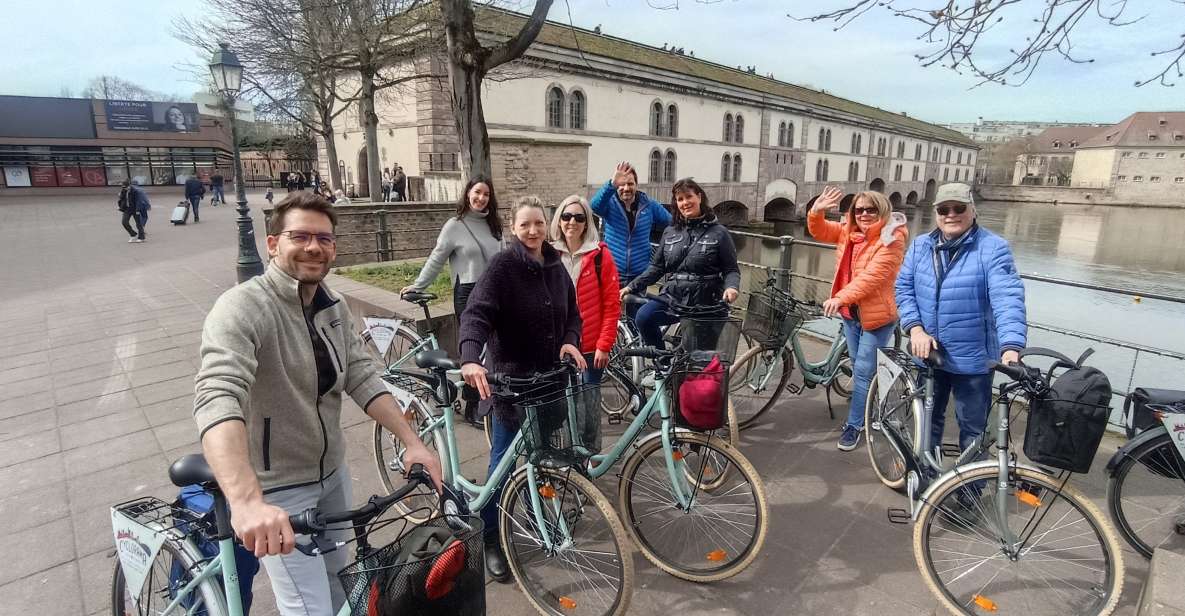
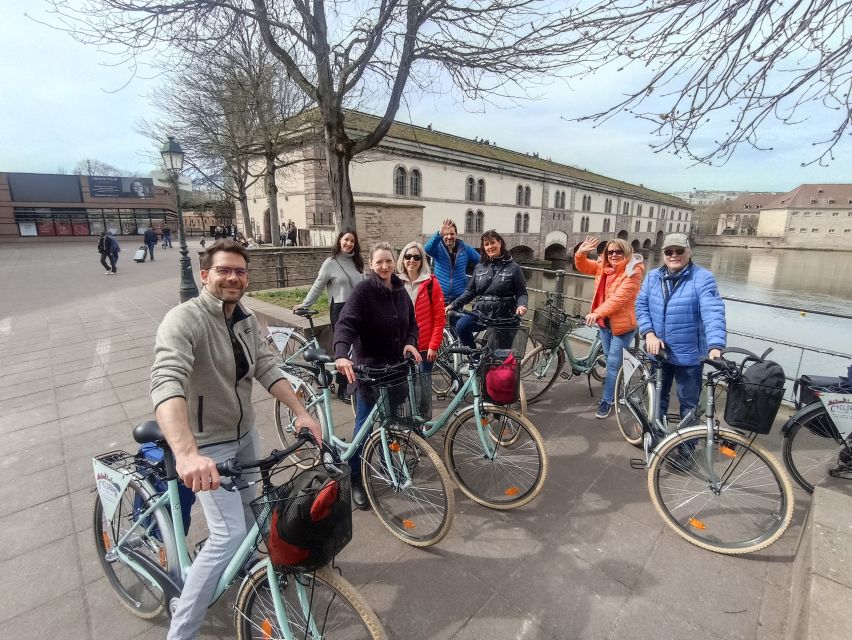
The Old Town section is where Strasbourg earns its reputation. You ride into Petite France, the area known for its canals, craft-history vibes, and those famous covered bridges that look like something straight out of a storybook. Seeing them from a bike is a sweet spot: you get a steady view without the “tourist traffic” frustration you can get when you’re walking slow and stopping every few steps.
Then there’s the Vauban Dam, another highlight that helps you understand Strasbourg as a fortified river city, not just a pretty one. Even if you don’t call yourself a history person, the tour framing makes the structures easier to place. The guide doesn’t just point; they connect what you’re seeing to why the city shaped itself this way.
The ride also includes the Pont du Corbeau. It’s the kind of crossing that gives you a quick visual “reset” as you turn from Old Town details toward key squares and bigger sights. Nearby, you pass Gutenberg Place, which helps anchor the narrative beyond canals and façades.
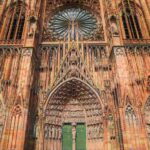
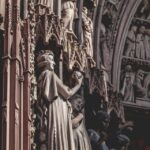
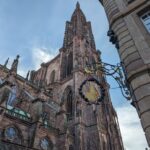
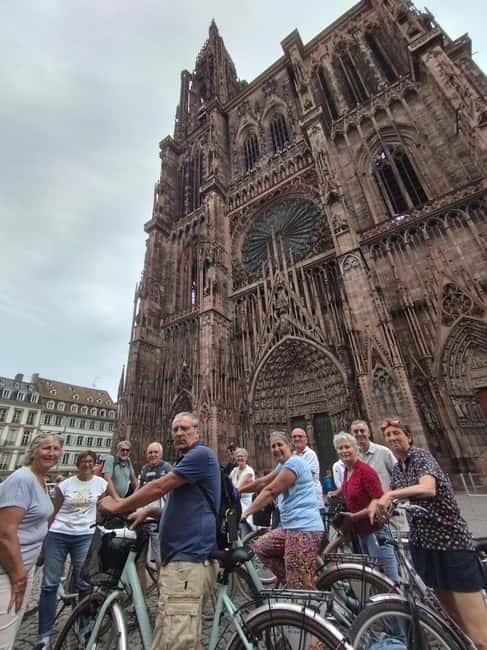
And yes, the big moment arrives: you ride toward Notre-Dame de Strasbourg Cathedral, one of the tour’s top skyline draws. The route is designed so you don’t waste time searching around the cathedral area. Instead, you get a practical vantage while the guide explains what matters and where to look—especially helpful if you only have a day or two in the city.
Finding hidden corners near Place Saint-Étienne (without getting lost)
After the cathedral area, the tour stays nimble. You cycle along small streets around the cathedral, and you’ll also spend time near Place Saint-Étienne with chances to notice smaller spots that are easy to miss if you’re wandering alone. This is one of my favorite parts of the format because it turns the Old Town from a list of icons into a navigable place.
You also see the Opera house on Place Broglie, which is a nice contrast stop. It breaks up the medieval intensity with a more formal, “city stage” feeling—good pacing for the brain. Strasbourg can feel dense. These shifts in scenery keep the ride from turning into one long look-around.
One practical advantage here: riding means you can keep moving even if you’re not in a museum mood. The guide’s stops are spaced so you can breathe, take photos, and still make it through the rest of the highlights by the end of the 2.5 hours.
The Neustadt ride: Germany’s imprint and a modern European face
The tour doesn’t stop at postcard Strasbourg. A major part of the experience is cycling through the Neustadt, the area tied to 19th-century imperial German influence. This is where the architecture changes character—broader, more monumental, and visually more “government-city” than “river-town.” It’s a strong way to understand why Strasbourg looks the way it does today.
Then comes the part that many first-timers find surprising: you don’t just pass the European buildings from the outside—you get them framed as a key chapter of the city’s identity. In the European district you’ll see the European Parliament, the Council of Europe, and the European Court for Human Rights.
Even if you’re not a policy nerd, seeing these places on a bike tour helps you connect the dots. These sites feel “important” in brochures, but on the ground they become real blocks of a working city. You get to understand their scale, their placement, and how the surrounding streets funnel you from one institutional landmark to the next.
One guest highlight that stands out: the German-language option. People noted that the guide checked comprehension and adjusted when needed—great if you’re practicing German or if you simply want explanations that land clearly.
Parc de l’Orangerie: the break that keeps the tour fun
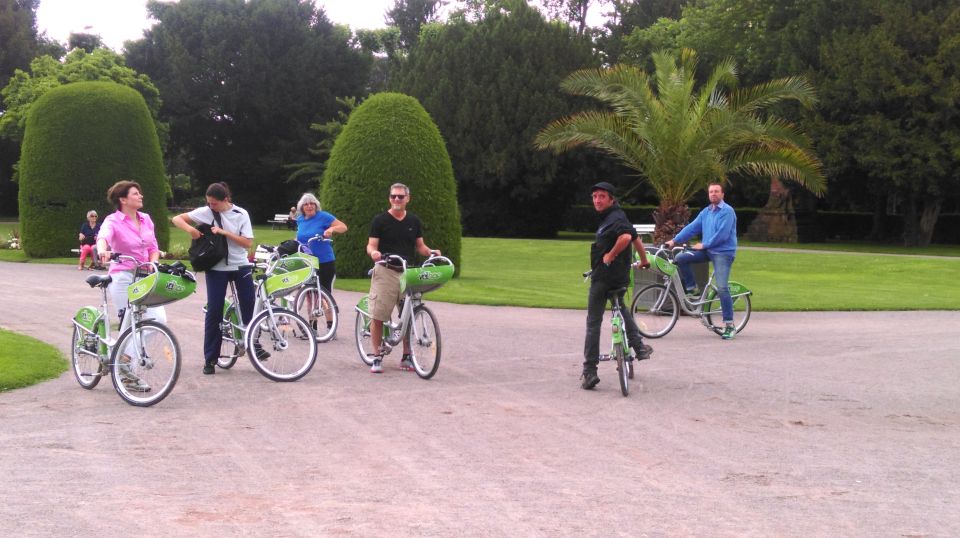
After all the major sights, the tour shifts into a calmer rhythm with Parc de l’Orangerie. You get fresh air instead of constant sight-stops, which matters because 150 minutes can feel long if every minute is an explanation and a photo pause.
This park segment works as a reset. It lets you stretch your legs mentally, and it keeps the ride from feeling like a whirlwind of stone and signage. It’s also a good moment if you want to ask one more question of the guide before returning to the final city loop.
One reason I think this balance is smart: when you’re seeing both Old Town and the European district, you’re switching between different “modes” of attention. The park gives your brain a landing spot.
You can also read our reviews of more guided tours in Strasbourg
The return loop: Ponts, cathedral squares, and the 14th-century wall
On the way back, you ride along the city’s story threads rather than bouncing around randomly. You’ll pass Place d’Austerlitz on the return and cycle along a section of the city’s 14th-century wall. This part is valuable because it gives you a tangible sense of Strasbourg’s defensive past right as you finish the tour.
The route also keeps the “river and bridges” theme alive—so even when you move through more modern sections, you don’t lose the sense that Strasbourg is defined by water and crossings. The Pont du Corbeau and the canal-zone vibe help the whole tour feel like one connected narrative.
Bike comfort, pace, and the real-world ride feel
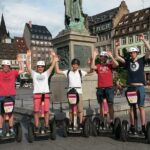
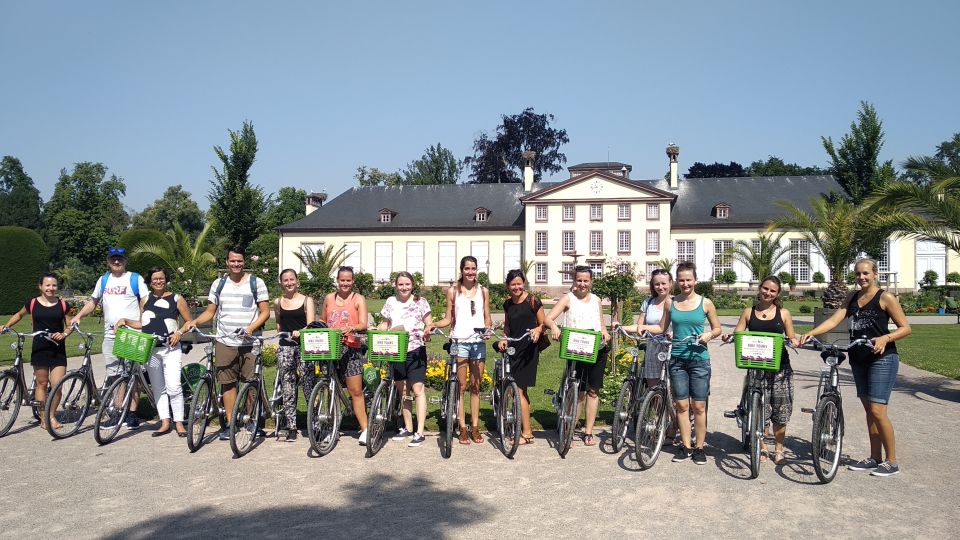
A lot of guests praise the bikes and the pace. Several comments mention that the bikes were new or easy to ride, which matters because this tour includes city turns and mixed foot and bicycle zones.
Still, one practical note: you should feel comfortable riding in a busy urban environment. One guest described the weaving as slightly daunting among pedestrians. You don’t need to be an athletic cyclist, but you do need to be confident enough to keep line, slow down when required, and stay attentive.
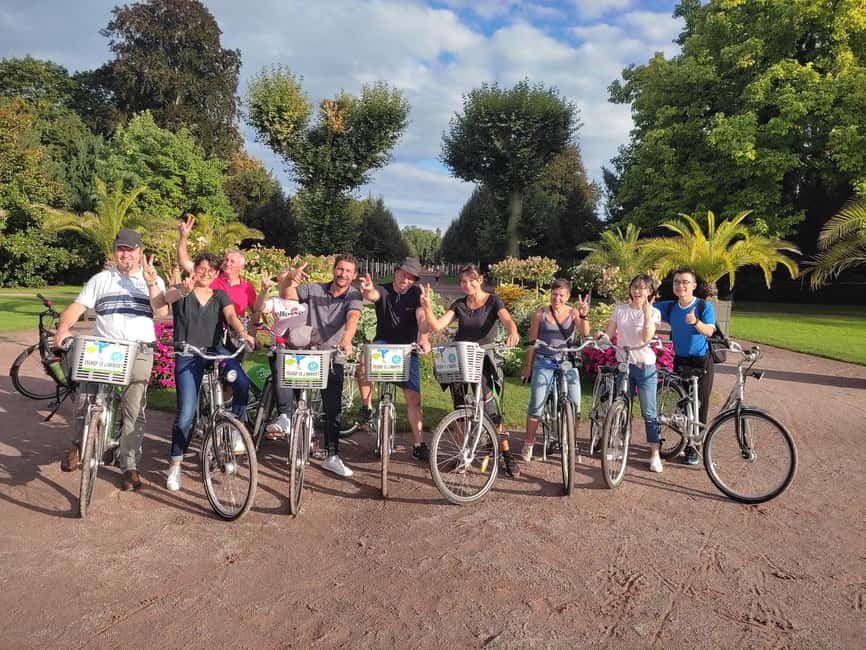
Helmets are available, and baskets can help carry a small bag. That’s worth noting if you’re planning to bring a camera, a light layer, or a bottle of water.
Weather-wise, you’re in Strasbourg’s open streets. One guest mentioned rain didn’t ruin the day. That doesn’t mean the experience is “rainproof,” but it does suggest the tour doesn’t grind to a stop when conditions turn gray. Bring a light layer and consider a compact rain shell.
Languages and guides: what you’re really buying
This experience includes a multilingual guide with German, Dutch, and English options. What I like about that is not just language coverage, but the way guides reportedly handle questions. In the German option, guests described the guide repeating in simpler German and checking understanding, which makes the tour feel easier to follow.
You’ll also notice a pattern in the guide praise: people call out friendly personalities, a relaxed flow, and frequent opportunities for questions. Names that show up include Katarina/Katarina, Josh/Joshua, Vivienne, Jean, Barbara, and Maude/Catherine in different tour entries. That’s a helpful sign that the experience is built around real guiding skill, not just a scripted checklist.
One more small but meaningful point: one guide reportedly adjusted the start time so a guest wouldn’t miss travel connections. If you’re juggling trains or a tight schedule, that kind of flexibility can help.
Price value: why $46 feels fair for what you see
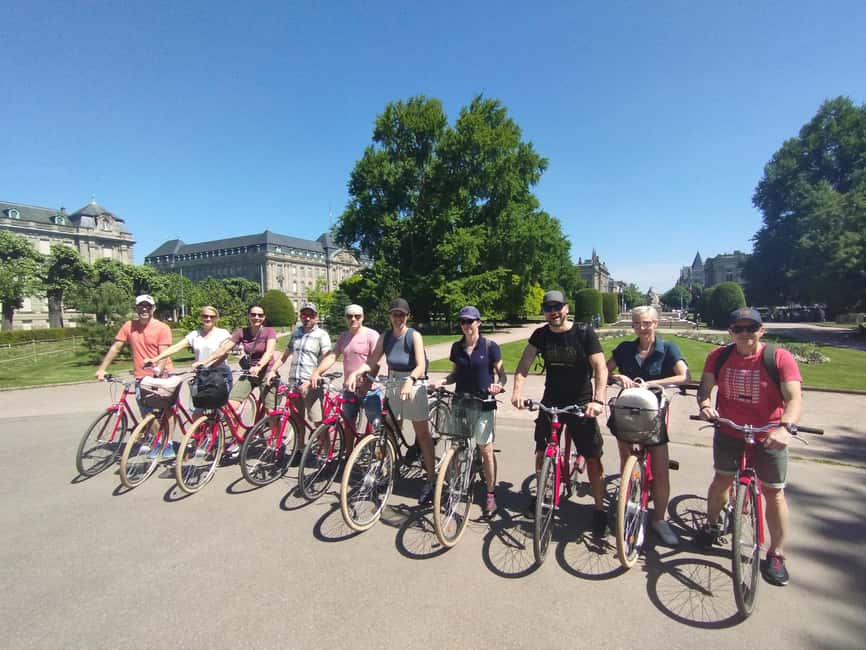
At about $46 per person for roughly 150 minutes, this tour can feel like good value because it bundles three things people often pay separately for:
- A bicycle (so you’re not stressing over rentals or parking)
- A guide (so you’re not guessing what you’re looking at)
- Transit between distant-feeling districts (so you cover Old Town, Neustadt, and the European district in one afternoon)
If you only have limited time in Strasbourg, the math gets even easier. Walking all these pieces separately takes longer and often leaves you missing the “why this matters” connections. This ride compresses that into a format that’s efficient without being frantic.
If you’re the kind of traveler who likes to return to a place later, this tour is also a high-leverage intro. You’ll know where to go next: the cathedral area, the canals of Petite France, the European district buildings, or the park zone.
Who this bike tour suits best
This guided bike tour is a great fit if you:
- Have a short stay and want a structured orientation fast
- Want both medieval old-city charm and the modern European Institutions in one outing
- Like learning through on-the-ground storytelling rather than reading plaques
- Feel comfortable riding in a city environment and following a guide through busy areas
It might be less ideal if you:
- Want to focus almost entirely on medieval-era sites with minimal time in the Neustadt
- Prefer a fully leisurely, car-free ride with no pedestrian mixing (the route does involve city interaction)
Should you book this Strasbourg guided bike tour?
I’d book it if your goal is seeing Strasbourg in one afternoon while still understanding what you’re looking at. The combination of Petite France, Notre-Dame de Strasbourg, and the European Institutions is a rare pairing that’s hard to self-plan well in a short time.
If you’re unsure, think about your travel style: if you want a clear overview plus room to explore later, this tour delivers. If you’re craving only medieval corners with no architectural “detour” into the Neustadt, you might feel the time split is a bit off.
Bottom line: for first-timers, short-stay visitors, and anyone who enjoys a bike-first way of learning a city, this is a strong, practical choice.
FAQ
How long is the Strasbourg guided bike tour?
It runs for about 150 minutes (around 2.5 hours).
What does the tour price include?
The price includes a multilingual guide and a bicycle.
Where do I meet the guide?
The meeting point can vary depending on the option booked, with starting options including Café Lové and La Pépinière.
Which languages are offered?
The live guide is available in German, Dutch, and English.
Is there more than one start time or option?
The tour notes duration and that starting times vary by availability, and there are multiple starting and drop-off locations.
Do I need my own bike?
No. A bicycle is included.
Are helmets or bike accessories provided?
Helmets are available, and baskets for carrying a small bag have been mentioned in guest feedback.
Can I cancel if my plans change?
Yes—free cancellation is offered up to 24 hours in advance for a full refund.