REVIEW · STRASBOURG
Strasbourg Walking Tour with Audioguide on Your Smartphone
Book on Viator →Operated by TouringBee · Bookable on Viator
Strasbourg gets easier when your phone narrates. This self-guided walk lines up 33 stops with an offline route and short audio tracks, so you can move at your own speed without chasing a strict itinerary.
I love the offline map and audio, which keeps you from worrying about signal while you wander. I also like that the stops are bite-sized, so you get the basics fast and then can look longer at what you actually care about.
The trade-off is phone life. Bring your own headphones and keep your battery charged, because it’s fully dependent on your device.
In This Review
- Key highlights worth your attention
- What this Strasbourg audio walk actually feels like
- Route basics: GPS, offline use, and pacing
- Start: Pont Kuss and Église Saint-Pierre-le-Vieux
- Grande Rue to Place Benjamin Zix: half-timbered streets that actually work
- Pont du Faisan and the engineering of Petite France
- Petite France by audio: Ponts Couverts and Barrage Vauban
- Église Saint Thomas: Mozart’s organ connection
- Rue Mercière to Place Gutenberg: the Cathedral corridor
- Cathédrale de Strasbourg: the stop you plan around
- Maison Kammerzell, Place du Marché aux Cochons de Lait, and food at history speed
- Pont du Corbeau: river views plus the darker side
- Musée Alsacien: when you want more than the street can give
- Price and value: what $6.73 buys you
- Small phone-tour hacks that make the difference
- Who this Strasbourg audio walk is best for
- Should you book this smartphone audio tour in Strasbourg?
- FAQ
- How long is the Strasbourg walking tour with an audio guide?
- How much does the tour cost?
- Is this tour offered in English?
- Do I need Wi‑Fi to use the audio guide?
- Is there a human guide with this experience?
- What do I need to bring?
- Where does the tour start?
- Does the purchase include access after the day of the walk?
- Can I cancel for a refund?
Key highlights worth your attention
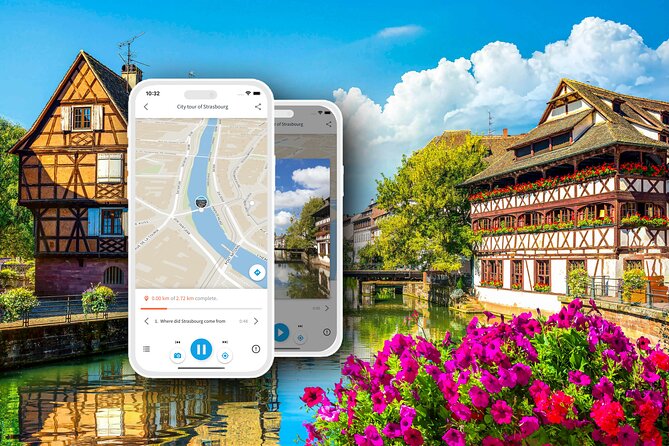
- 33 sights in one loop with short, easy-to-follow segments
- Offline map + offline audio so you can keep walking without Wi‑Fi
- No human guide pressure; you’re free to pause, snack, and re-start
- Professional historian narration (including the voice of Pier in the audio)
- Big Strasbourg hits: Cathedral views, Petite France bridges, and river architecture
- App illustrations to spot landmarks when streets get twisty
What this Strasbourg audio walk actually feels like
This is a smartphone guided walk, but it acts more like a friend who knows the city well—minus the group logistics. Once you download the TouringBee audio guide app and activate your purchase, you follow a GPS-programmed route on your phone.
The audio is narrated by a professional historian and split into 33 landmark recordings. Most stops are short, so it’s great if you want orientation and context quickly, without committing to a long lecture.
You’ll also notice small visual helpers in the app—illustrations meant to help you recognize each landmark on the street. That matters in Strasbourg, where the buildings can look similar until the moment they don’t.
You can also read our reviews of more walking tours in Strasbourg



Route basics: GPS, offline use, and pacing
The route is designed for easy navigation: offline map with a programmed path, plus audio narration available without Wi‑Fi. In practice, that means you can start wherever feels comfortable, then stick to the sequence when you’re ready.
Timing-wise, plan about 2 hours 30 minutes on average. If you stop often for photos, café breaks, or slower walking around the Petite France area, give yourself extra time. There’s no requirement to keep moving like you’re late for a train.
One important practical note: you’ll need to supply your own smartphone, plus headphones. A few batteries die late in the day—so charge fully before you start, or bring a small power bank. (I’m not joking. Phones get hungry walking routes.)
Start: Pont Kuss and Église Saint-Pierre-le-Vieux
Your walk begins at Pont Kuss, Rue du Maire Kuss, 67000 Strasbourg, and ends back at the same meeting point. From the start, you’ll get your first historical jolt at Église Protestante Saint-Pierre-le-Vieux.
This church dates back to the 13th century and is split into Catholic and Protestant sections, a physical reminder of Strasbourg’s religious layers. The architecture is described as Gothic and Romanesque, and the narration points out stained glass and the calmer interior spaces. It’s a strong opener because it teaches you how to read the buildings instead of just looking at them.
Even better, the stop notes free admission. So you can step in if you want a quiet moment before the streets get lively.
Grande Rue to Place Benjamin Zix: half-timbered streets that actually work
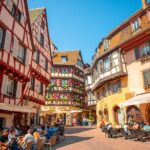
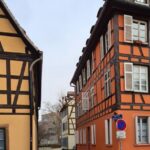
Next comes Grande Rue, one of Strasbourg’s best-known streets for walking and people-watching. The standout here is the look of the street: half-timbered houses, plus a mix of shops, cafés, and restaurants. The audio keeps things practical—what you’re seeing, where you are, and what to notice as you go.
Then you head to Place Benjamin Zix, in the Petite France side of town. This small square is named for the 19th-century Alsatian artist Benjamin Zix. It’s a good breather stop because you can sit, grab a coffee, and reset before the bridges and canals.
If you like photogenic details—canal views, classic façades, and that postcard-y canal atmosphere—this section delivers without rushing you.
Pont du Faisan and the engineering of Petite France
From Place Benjamin Zix, your route takes you to Pont du Faisan, sometimes called the turning bridge. This bridge pivots to let boats pass through the narrow canals, and the audio highlights it like a mini engineering story.
That’s one of the joys of this format: you end up paying attention to things you’d normally skip, like how the waterway system and street design fit together. On the bridge itself, the views over the surrounding half-timbered houses and canal lines make it easy to connect the story to the scenery.
This is also a nice “slow down” stop. Even if you only give it a few minutes, you’ll feel like you saw something specific, not just another pretty bridge.
A few more Strasbourg tours and experiences worth a look


Petite France by audio: Ponts Couverts and Barrage Vauban

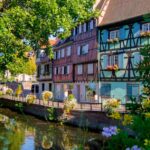
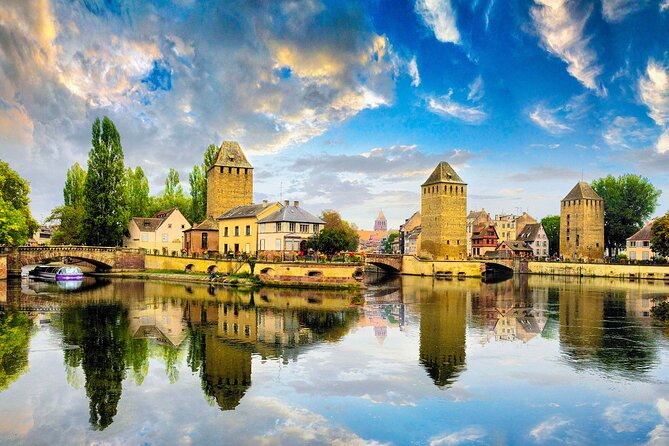
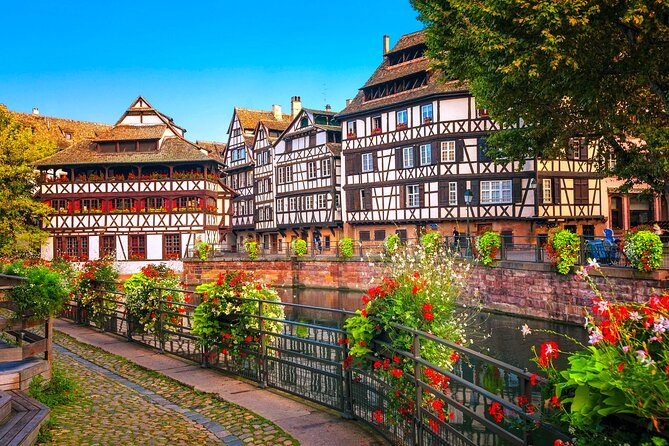
Now you’re in the heart of the show: La Petite France, along the Ill River. The audio points out flower-adorned balconies, well-preserved medieval half-timbered buildings, and the winding cobblestone lanes. Historically it was tied to trades like fishermen, millers, and tanners, and the narration helps connect that working past to what you see now—cafés, artisan shops, and waterfront dining.
After that, you’ll reach Ponts Couverts, a set of three bridges with defensive towers dating back to the 13th century. This is where the “history you can walk across” idea becomes real. You’re not just reading about medieval fortification; you’re standing on it.
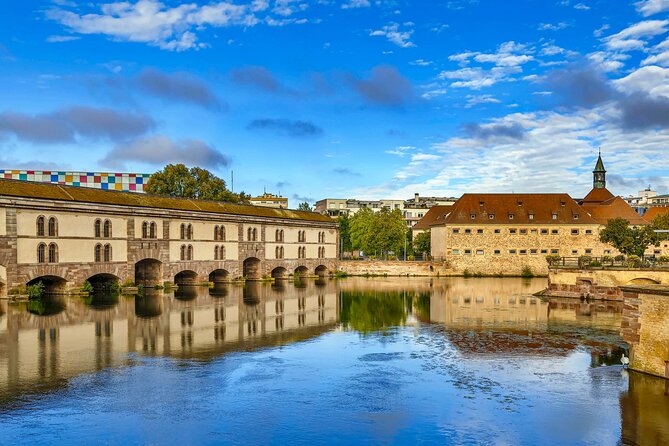
Nearby, the route includes Barrage Vauban, a 17th-century defensive weir and bridge designed by Sébastien Le Prestre de Vauban. The audio stresses the covered gallery with sculptures and exhibits, plus the panoramic terrace views over Petite France and the city skyline.
Practical tip: bring time for this stretch. People often rush bridges because they assume the fun is in the photo. Here, the fun is also in the structure—how the towers, bridges, and water system all work.
Église Saint Thomas: Mozart’s organ connection
The walk continues to Église Saint-Thomas, completed in the 13th century and famous for its Gothic design. What makes it extra compelling is the music-history link: the church houses an 18th-century Silbermann organ, famously played by Wolfgang Amadeus Mozart, according to the audio description.
You’ll also hear about the Mausoleum of Maurice de Saxe. This adds variety to the stop—architecture, music, and a person tied to European history.
Admission is marked as free here too, so it’s a low-cost way to experience a top-tier interior. If you’re into organs or sacred music, this is one of the strongest stops on the whole walk.
Rue Mercière to Place Gutenberg: the Cathedral corridor
Next you’ll hit two classic Strasbourg waypoints that set up the big centerpiece: Place Gutenberg and Rue Mercière.
Place Gutenberg is named for Johannes Gutenberg, inventor of the printing press. The square has a statue, plus cafés and shops, and it’s often used for events like markets and fairs. You’ll also get views toward the Strasbourg Cathedral, which the audio naturally tees up for the next section.
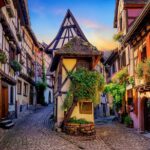
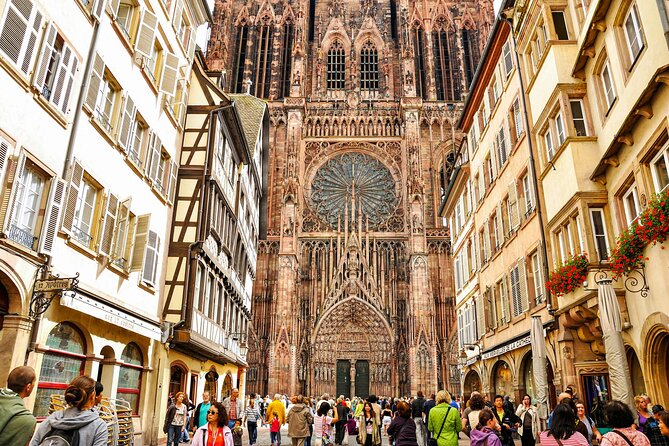
Then walk Rue Mercière, a picturesque street of preserved half-timbered buildings. The route advice here is simple: take your time and look toward the end of the street where the Cathedral becomes the visual payoff.
This is the part where your audio tour stops being just informational and starts shaping your walk like a mini route design. It makes you turn your head at the right times.
Cathédrale de Strasbourg: the stop you plan around
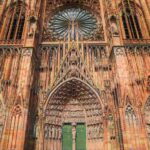
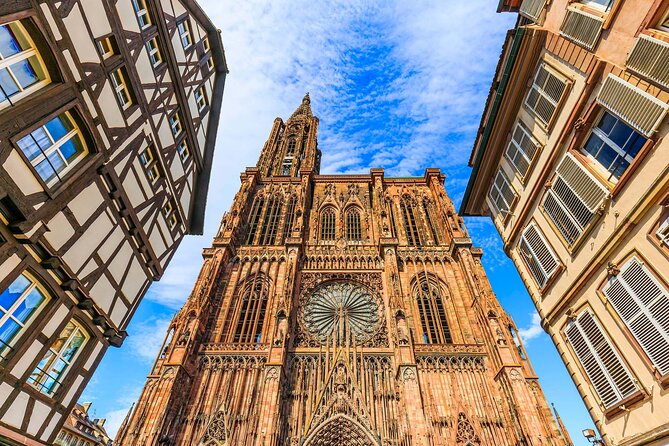
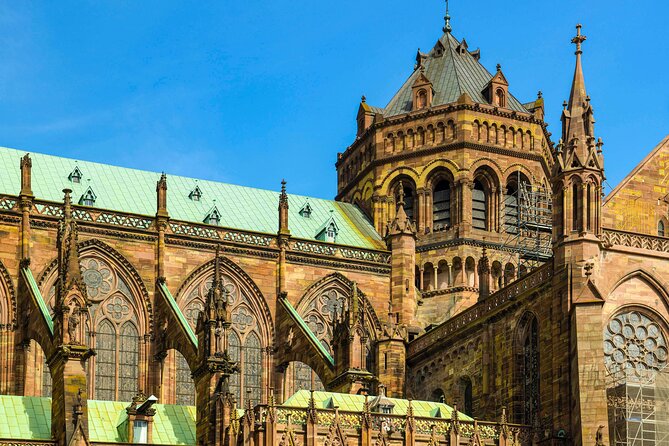
No Strasbourg walk is complete without the Cathédrale de Strasbourg. The audio frames it as a major Gothic masterpiece completed in the 15th century, with a soaring spire, an intricate façade, and sculptures worth noticing up close.
Inside, you’re pointed toward the stained-glass windows, the astronomical clock, and the grand organ. And if you want the best view, the narration also includes the big climbing detail: 332 steps to reach the spire’s platform.
Practical consideration: climbing those steps means you should treat this stop like your pacing anchor. If you’re tired, do the interior first and skip the climb. If you want city views, plan for the steps and give yourself enough time to come down without rushing.
Maison Kammerzell, Place du Marché aux Cochons de Lait, and food at history speed
From the Cathedral area, you’ll reach Maison Kammerzell, a 15th-century Alsatian Renaissance building. The audio focuses on its wooden façade decorated with whimsical sculptures and detailed frescoes. Today it’s also a restaurant, so it works as both a landmark stop and a possible food break—traditional Alsatian cuisine in a building that looks like it stepped out of a story.
Then comes Place du Marché aux Cochons de Lait, the so-called suckling pig market square. The route keeps it light and enjoyable: half-timbered façades, a cozy square feel, and cafes plus local boutiques. It’s a good moment to reset if you’ve been walking for a while and want something a little less monumental than the Cathedral.
If you’re hungry, this is the spot where I’d decide what kind of lunch I’m in the mood for: sit down and slow down, or keep it quick and continue.
Pont du Corbeau: river views plus the darker side
Next is Pont du Corbeau, the Raven Bridge over the Ill River connecting Grande Île and Neustadt. The audio adds a darker historical note: it once served as a public execution spot in medieval times.
Today, you’re there for the river views and the way the bridge frames the city’s architecture along the water. It’s an important reminder that Europe’s beautiful streets often have older, heavier stories underneath. Here, the audio doesn’t hide that; it gives you a fair context.
This stop is short, marked as free admission, and it’s a good “brief but meaningful” crossing before you head into museums.
Musée Alsacien: when you want more than the street can give
If you still want Alsace culture after walking, your route includes Musée Alsacien. The museum is housed in several historic 17th-century buildings along the Ill River, and the audio guide describes it as a look into traditional Alsatian life.
Expect rooms with period furnishings, painted furniture, regional costumes, and everyday objects. There are also recreated interiors of traditional homes and workshops, which help you picture daily life and craftsmanship instead of only seeing grand monuments.
Practical reality check: museum time can expand your day. If you have a train or dinner reservation later, you might skim the areas that match your interests and save the rest for another trip.
Price and value: what $6.73 buys you
At about $6.73 per person, this is one of those travel buys that feels almost too easy. You’re getting audio coverage of 33 sights plus an offline navigation map, with narration by a professional historian.
The value mainly comes from flexibility. You’re not paying for a live guide’s time. You’re paying for structure plus context when you want it, and the freedom to skip or repeat stops whenever your feet and attention decide.
Could it be “cheap enough to be superficial”? That depends on your style. One downside that shows up with short audio segments is that they can feel more like orientation than full storytelling. If you crave deep narratives, plan to spend extra time at the Cathedral, the museums, or a second reading afterward.
Small phone-tour hacks that make the difference
A few practical tips can turn this from good to smooth:
- Download before you start and activate your purchase so you are not stuck troubleshooting mid-walk.
- Use airplane mode if it helps your battery and keeps distractions low (and yes, battery life can run tight).
- Bring comfortable headphones and keep the phone volume at a level you can still hear your surroundings.
- Watch for the app illustrations at each stop. In tight streets, a visual cue can save a lot of aimless wandering.
- If you notice the narration pronouncing Strasbourg in a way that makes you smile, don’t fight it. It’s still giving you useful context.
This tour works best when you treat your phone as a guide, not a leash.
Who this Strasbourg audio walk is best for
This is a strong fit if you:
- want to cover a lot of the city center in one day
- like a self-paced plan without joining a big group
- enjoy architecture, bridges, and the Cathedral area
- travel solo or with people who walk at different speeds
It’s also a great option for first-timers who need a fast way to understand where everything fits together—Petite France’s water-world, the defensive bridges, and the Cathedral corridor.
If you want a full-service experience with a human guide answering questions on the spot, this isn’t that. It’s designed for autonomous walking.
Should you book this smartphone audio tour in Strasbourg?
If your goal is to see the core sights without stress, I’d book it. The price-to-sights ratio is excellent, and the offline design means you can keep walking even if your phone signal is shaky. Plus, the route includes the Cathedral, Petite France, and the big bridge-and-weir engineering stops—stuff you’d want anyway.
Skip it only if you strongly prefer long, story-heavy commentary at each stop or you know you’ll hate phone navigation and battery management. If you can handle a little tech prep and you’re happy with short, clear narration, this is a very practical way to get your bearings in Strasbourg.
FAQ
How long is the Strasbourg walking tour with an audio guide?
It runs about 2 hours 30 minutes on average.
How much does the tour cost?
The price is $6.73 per person.
Is this tour offered in English?
Yes, it’s offered in English.
Do I need Wi‑Fi to use the audio guide?
The map and audio narrations are available offline, so you don’t need Wi‑Fi during the walking route.
Is there a human guide with this experience?
No. It’s self-guided, and there’s no human guide at the meeting point.
What do I need to bring?
Bring your own headphones. Smartphones are not included, since you’ll use your own phone with the audio guide app.
Where does the tour start?
It starts at Pont Kuss, Rue du Maire Kuss, 67000 Strasbourg, France.
Does the purchase include access after the day of the walk?
Yes. You get 1 year access to the tour, available in your preferred language.
Can I cancel for a refund?
Yes, free cancellation is available. You can cancel up to 24 hours in advance for a full refund.